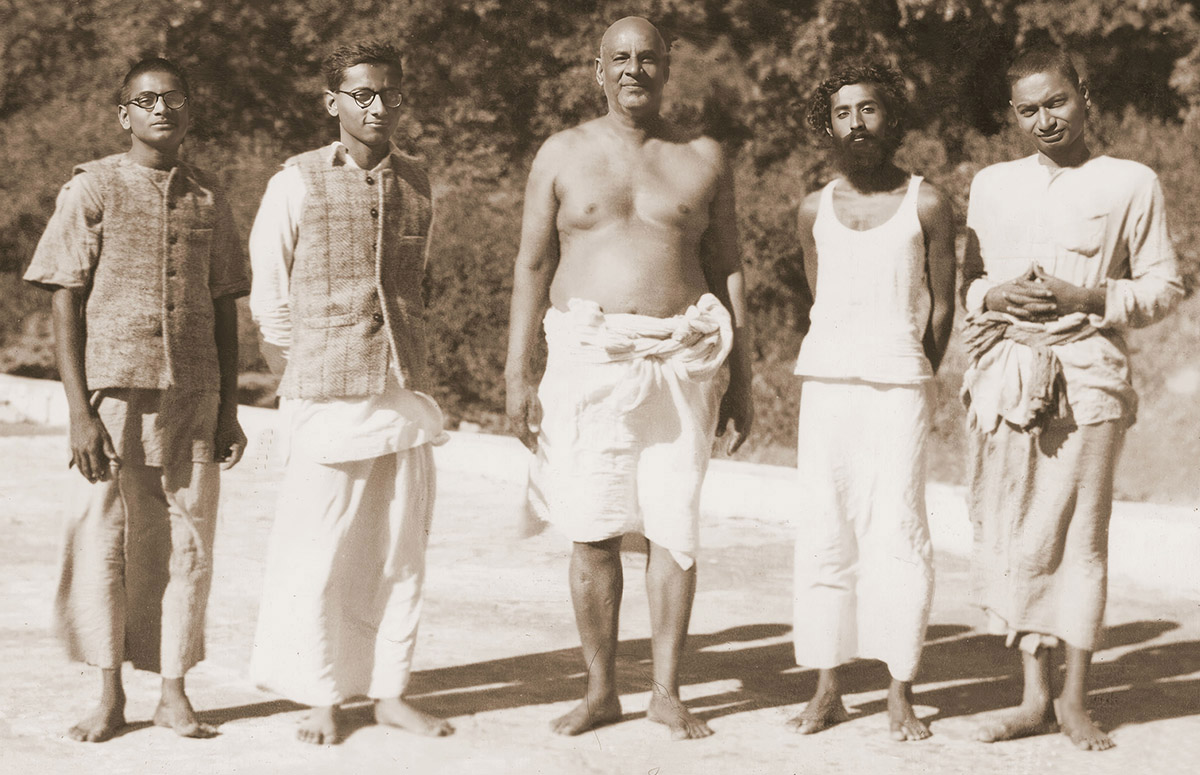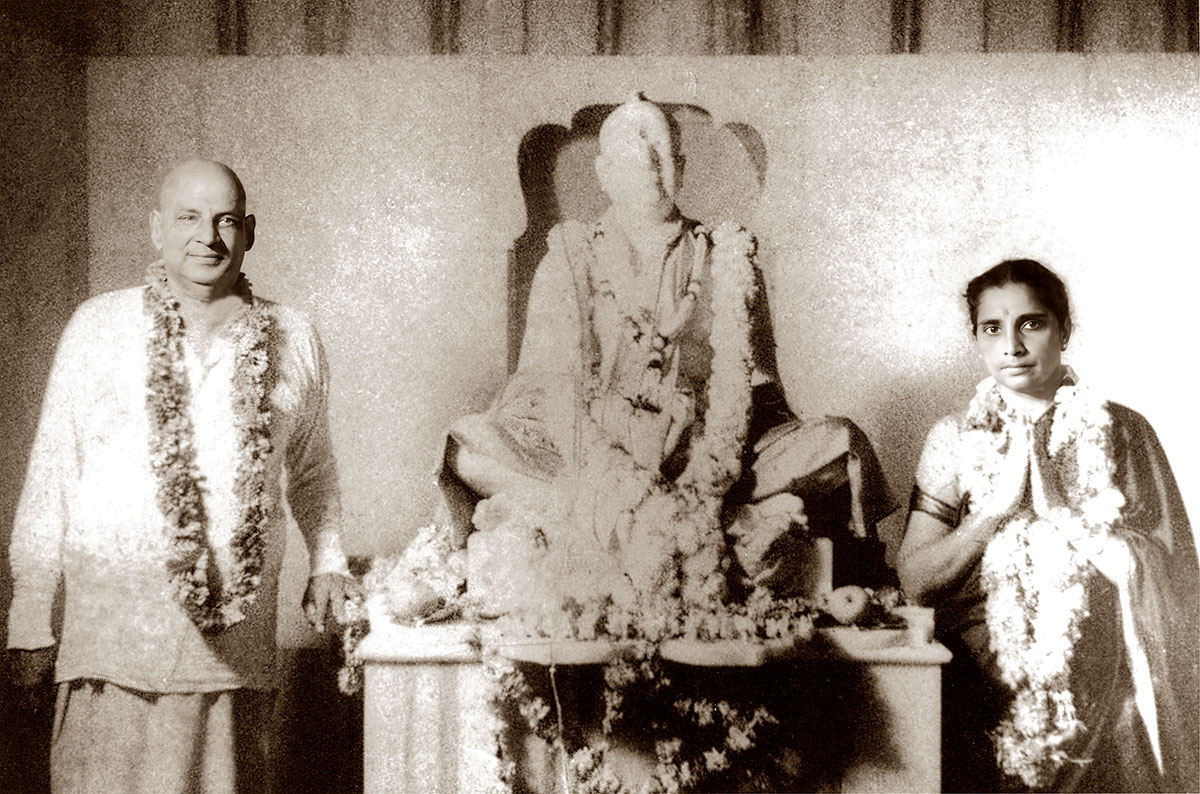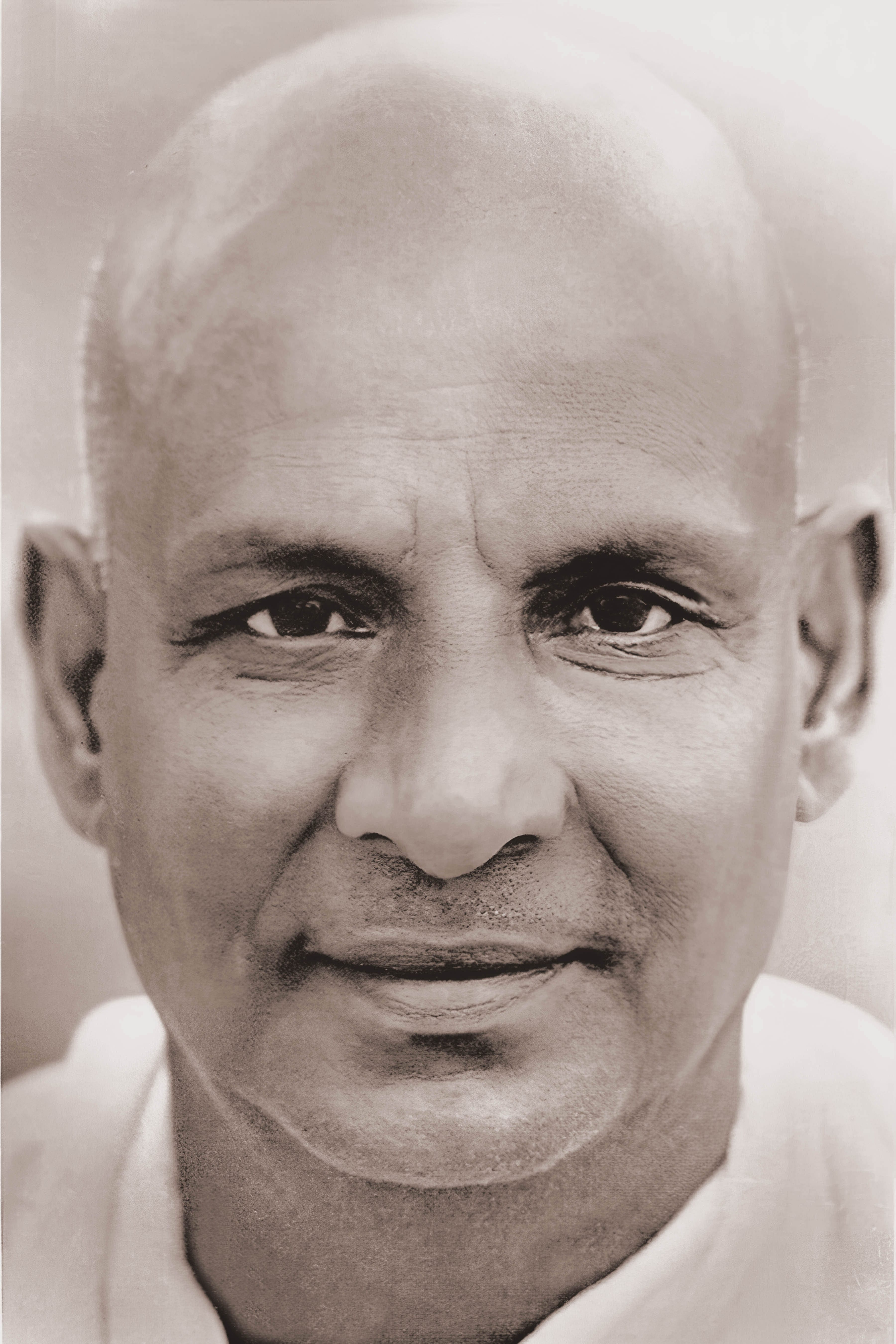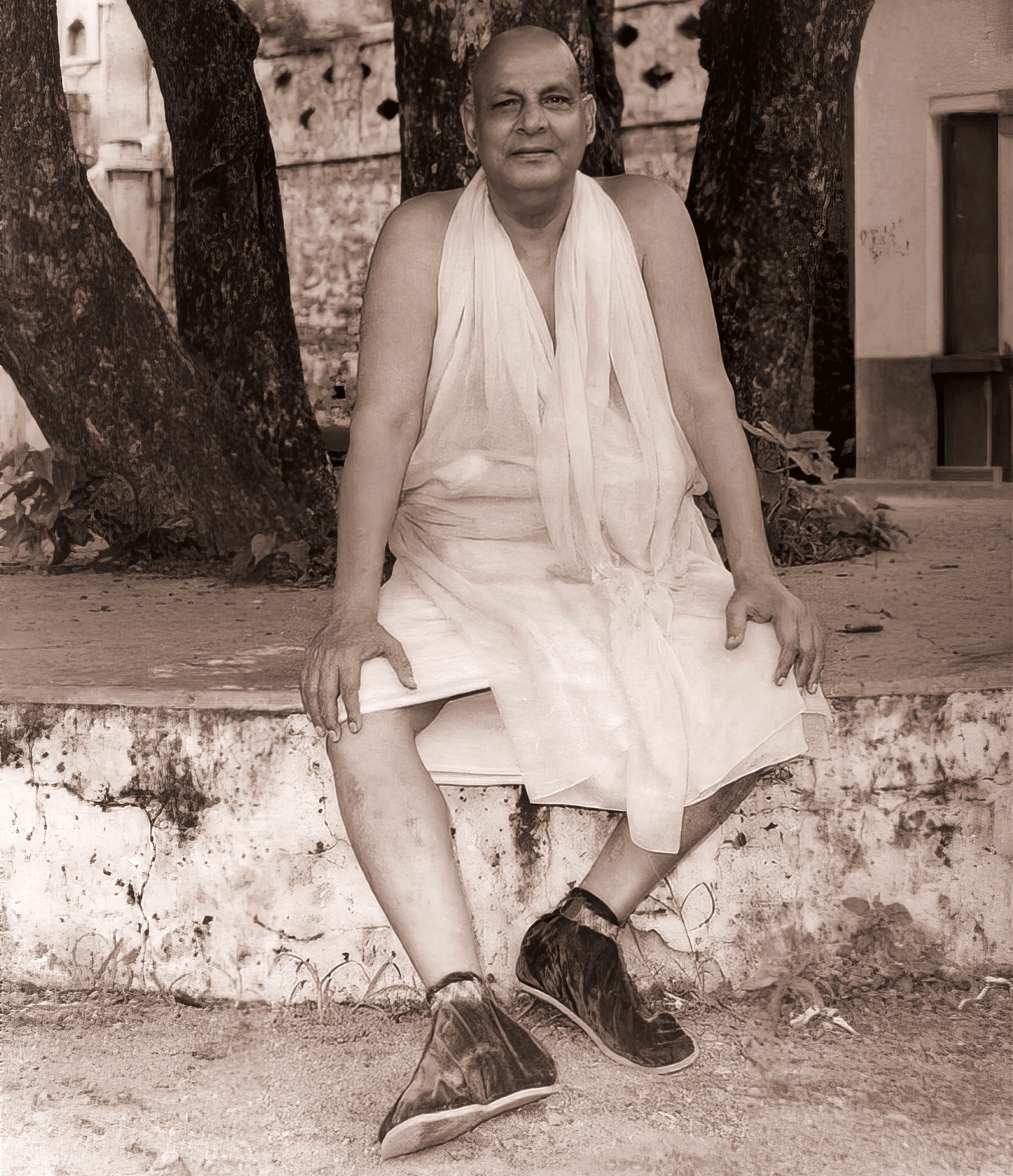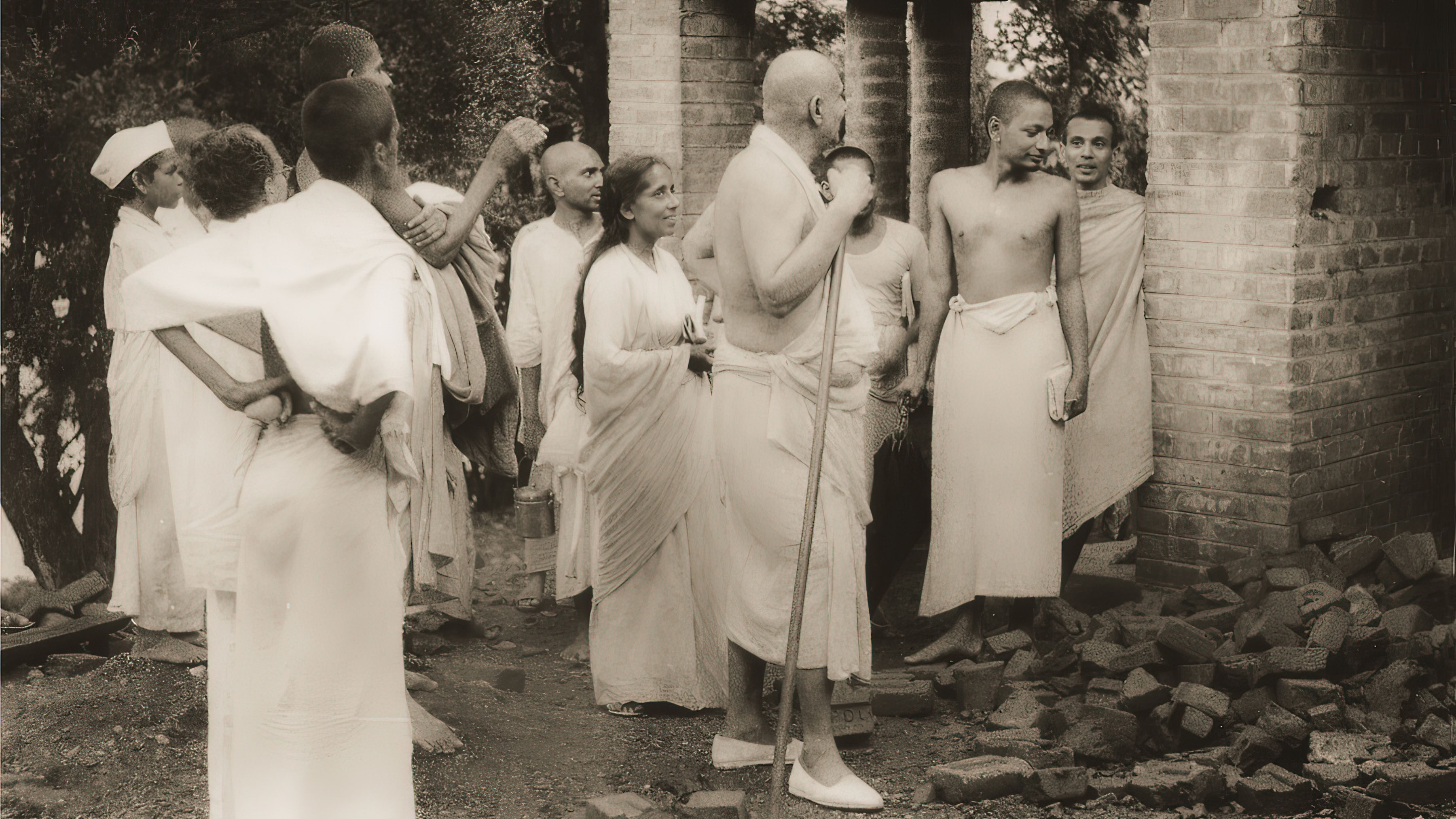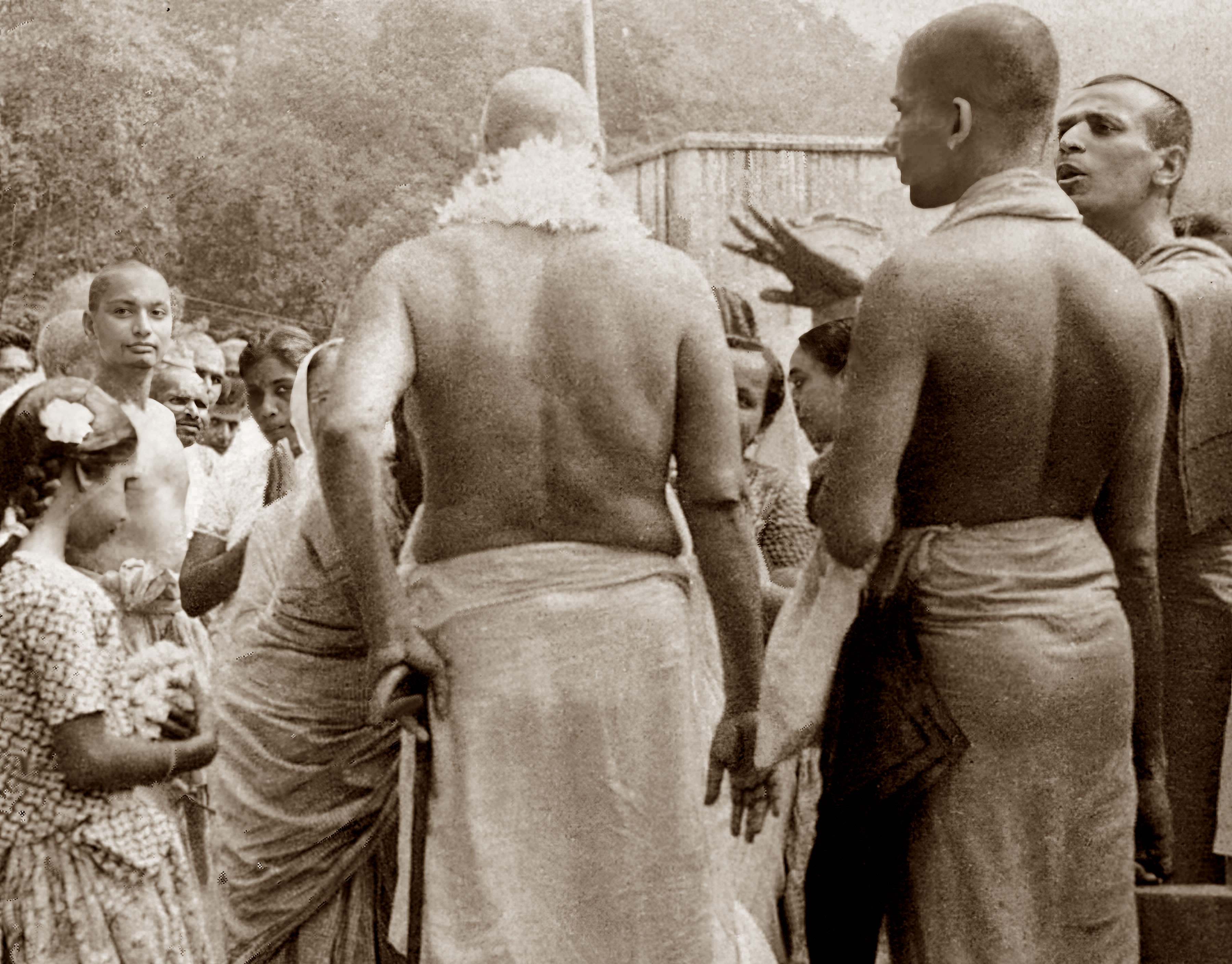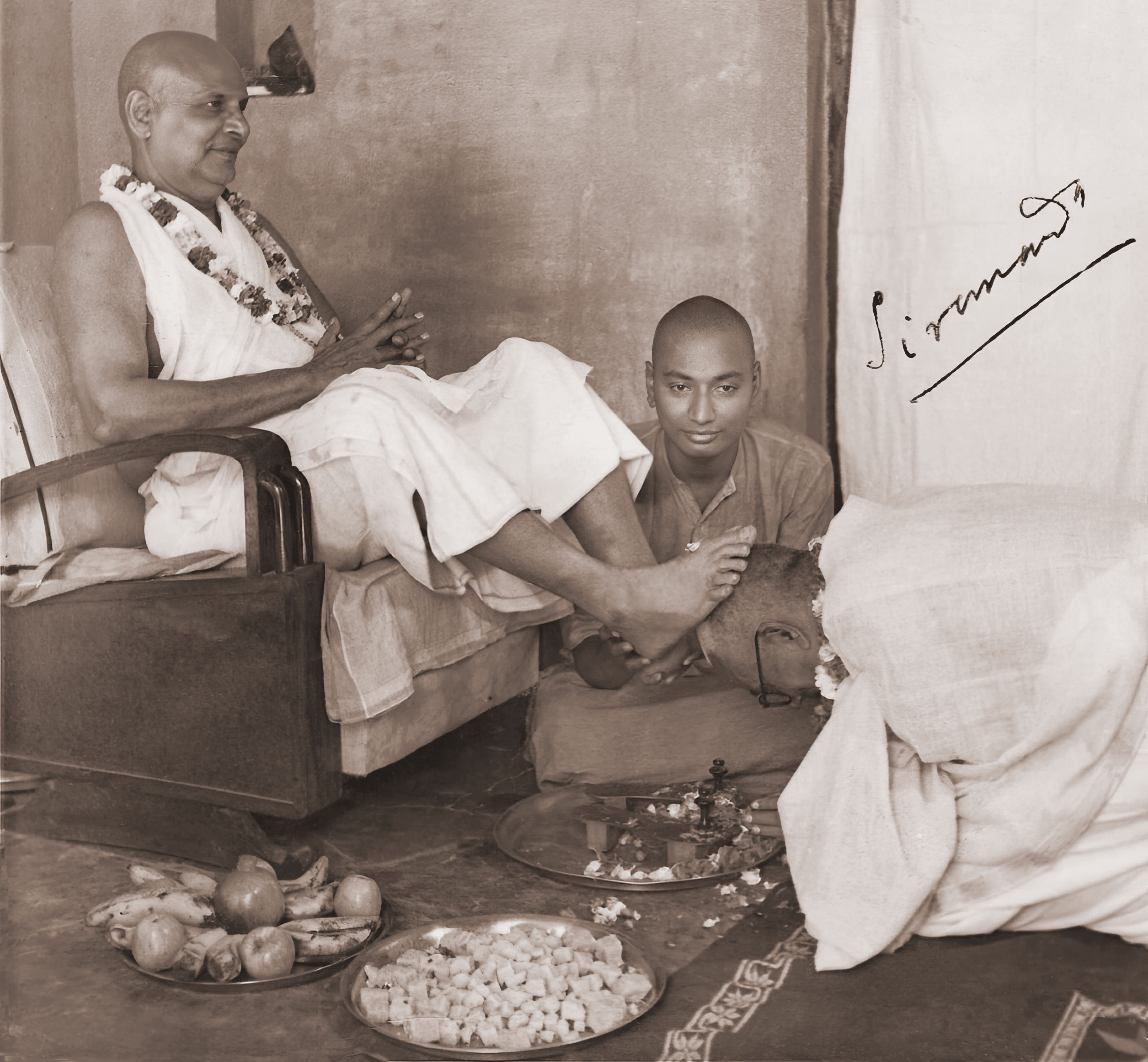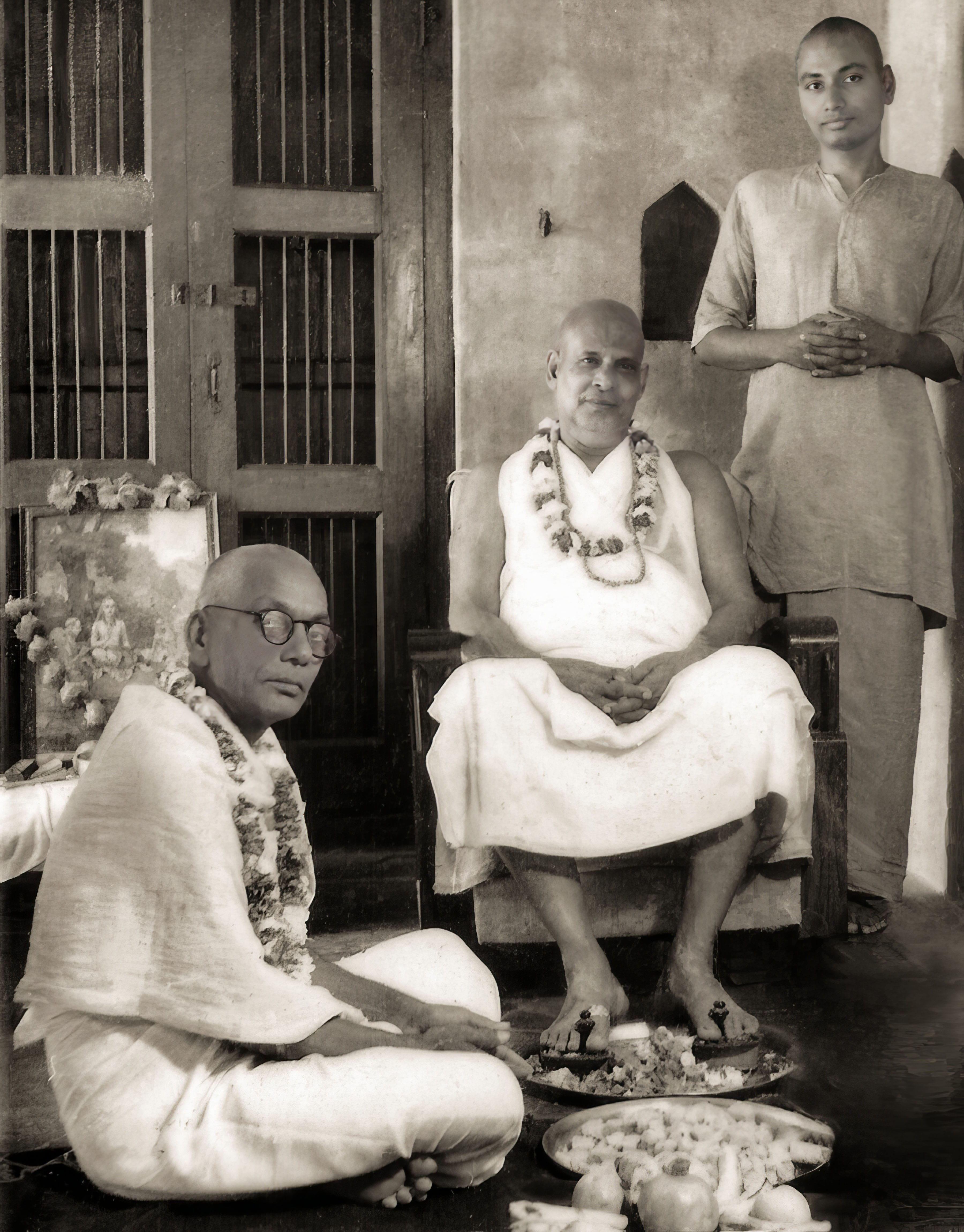
Living With The Master
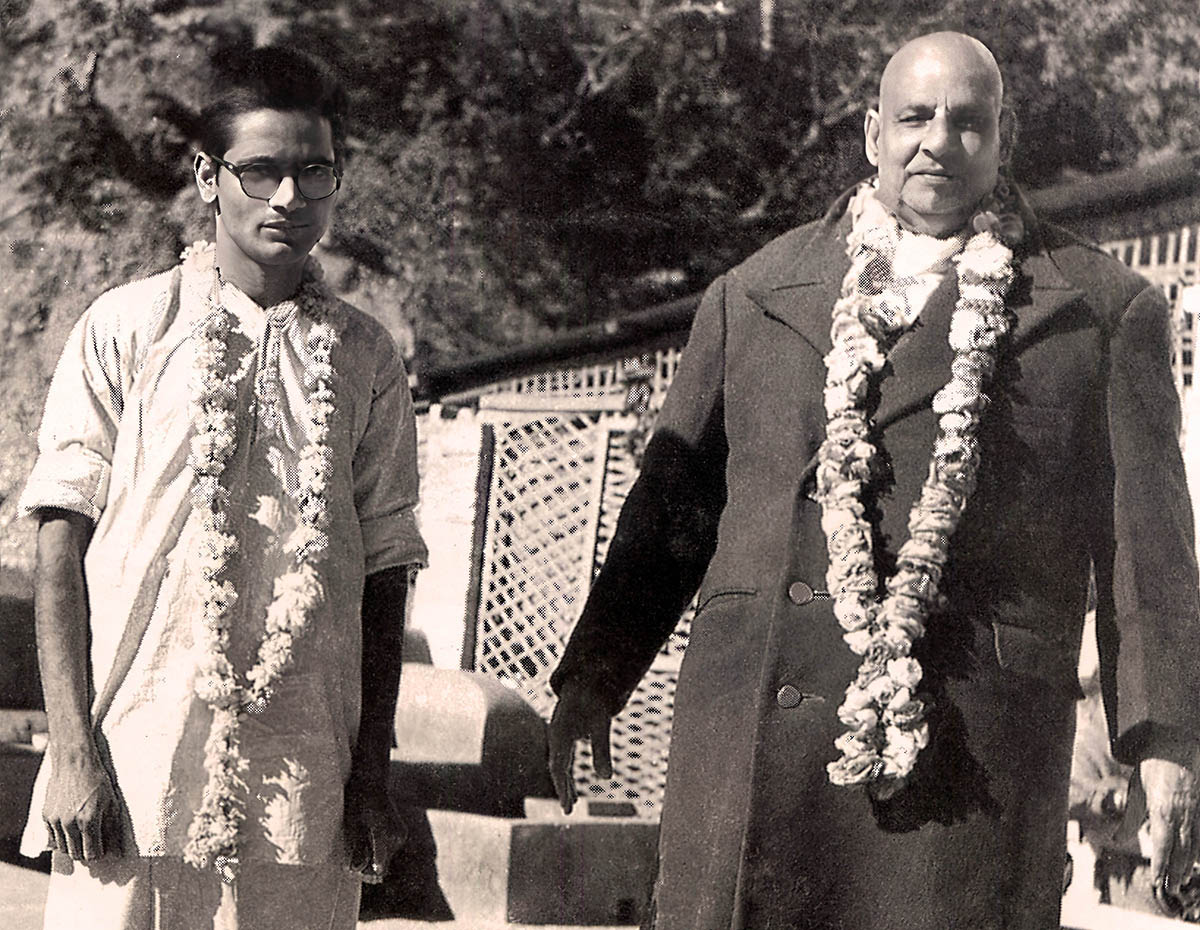
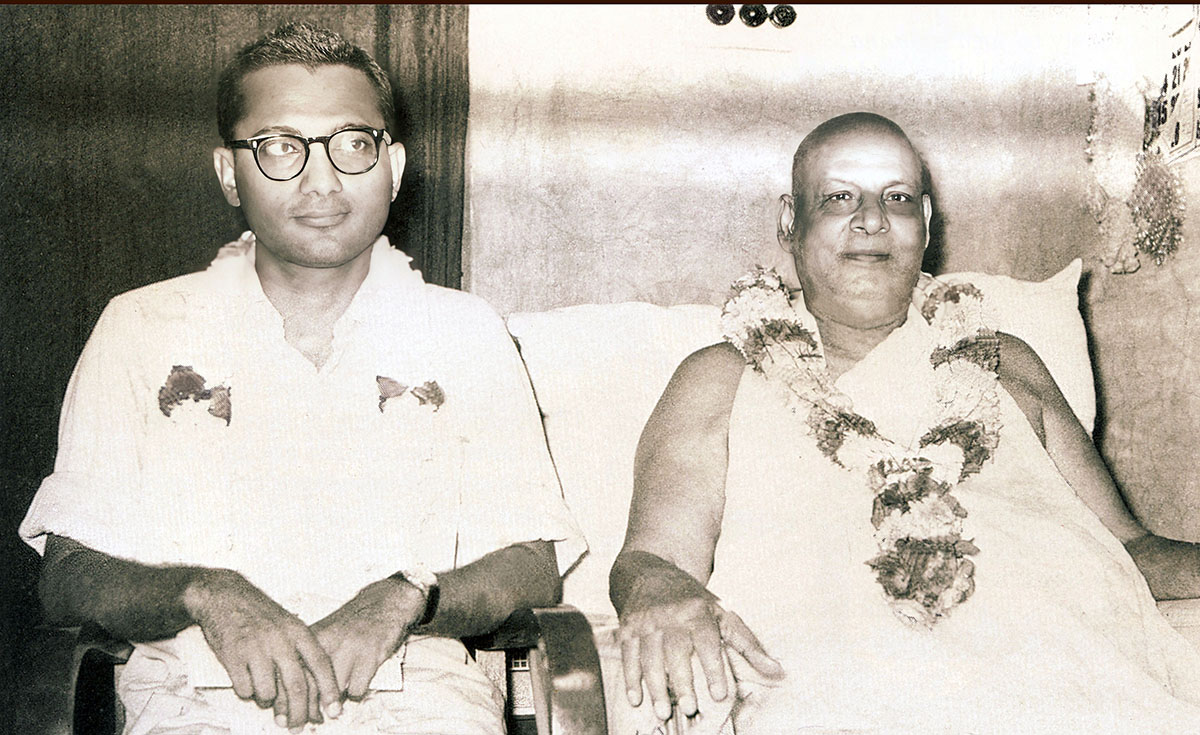
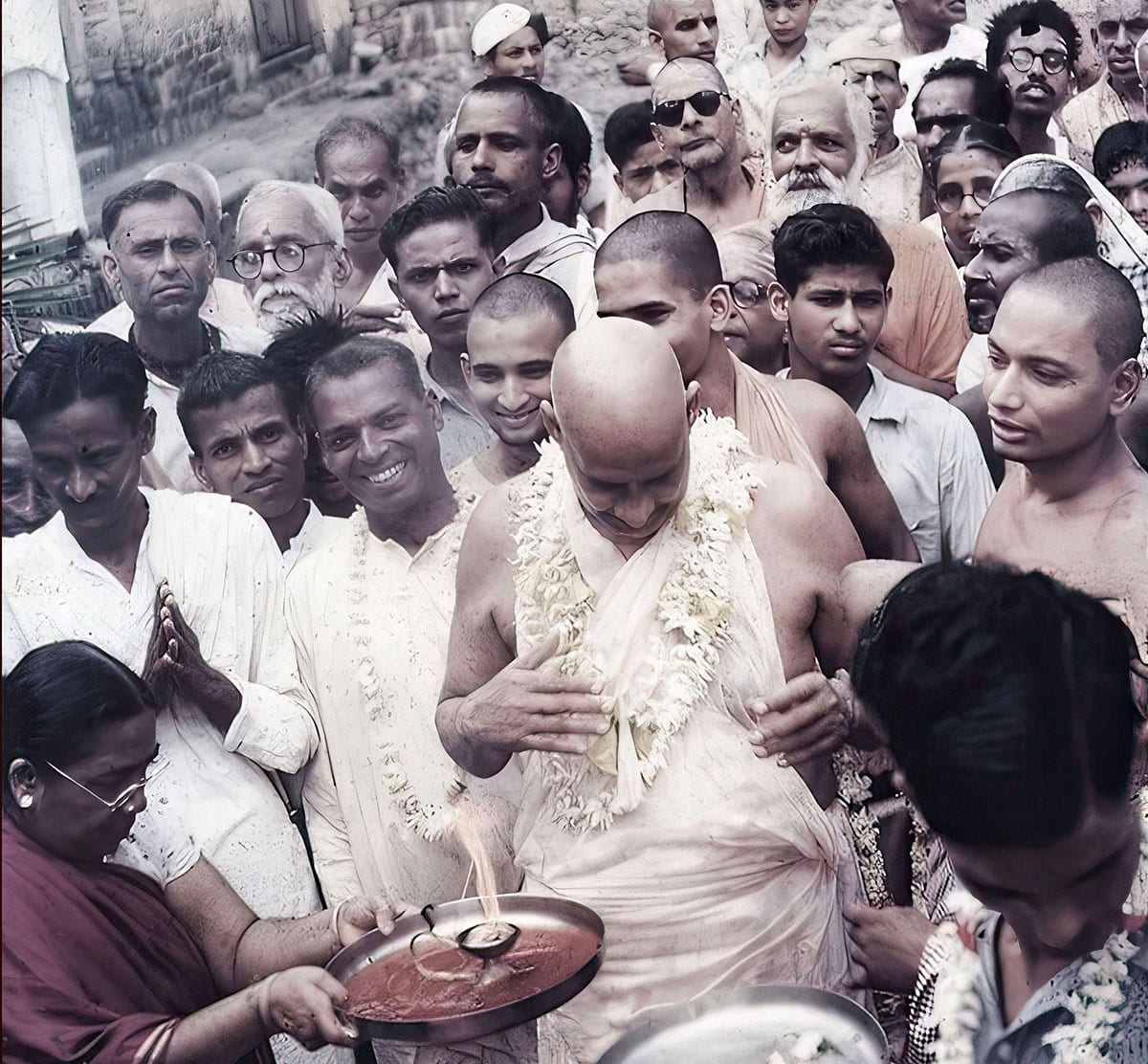
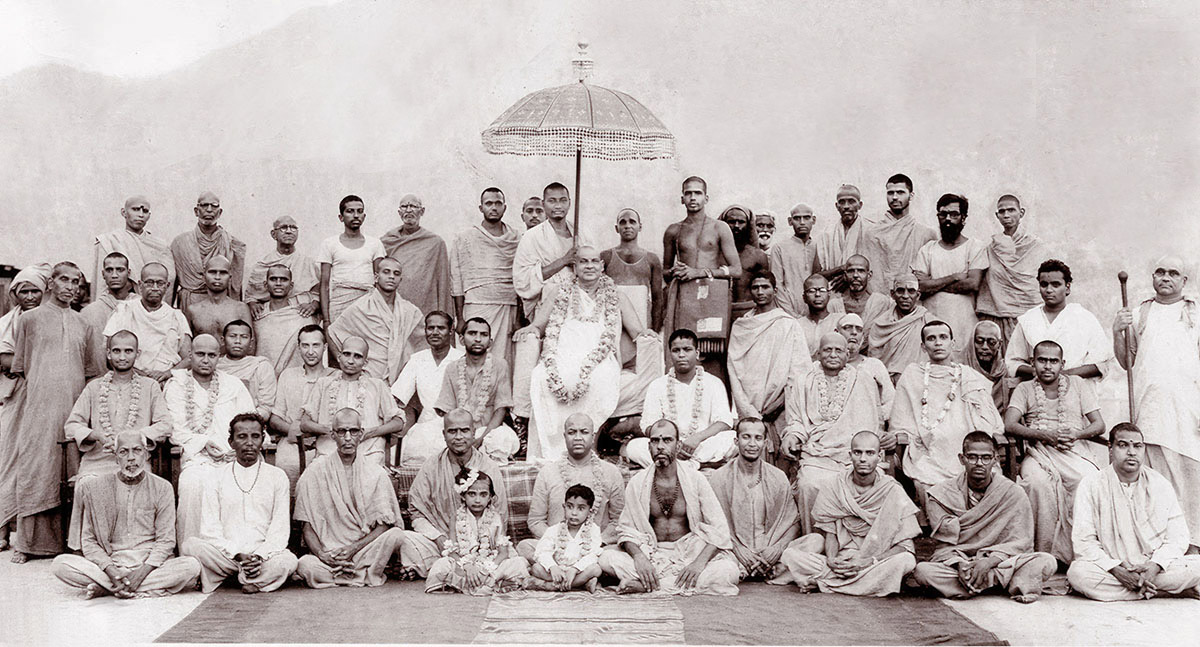
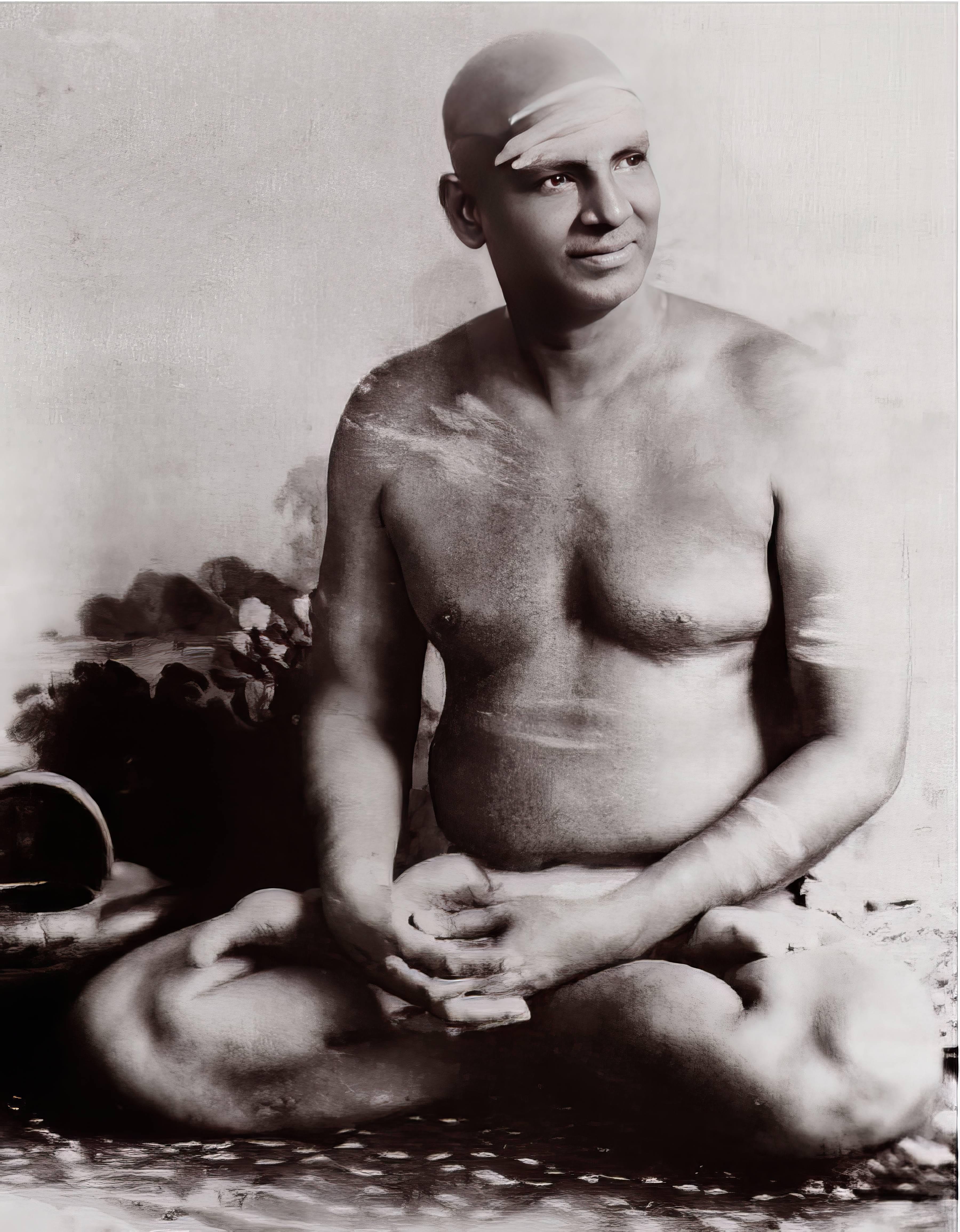
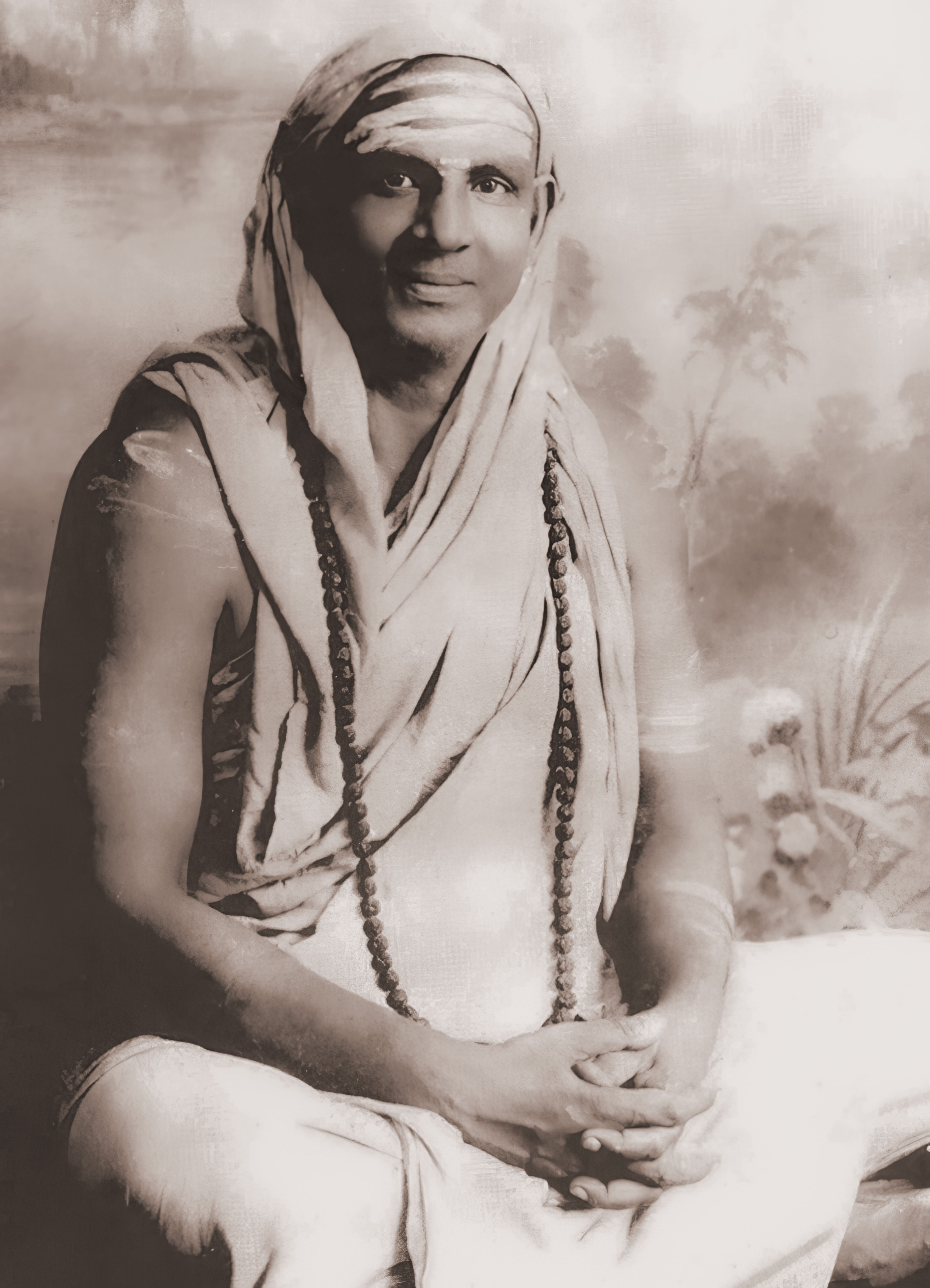
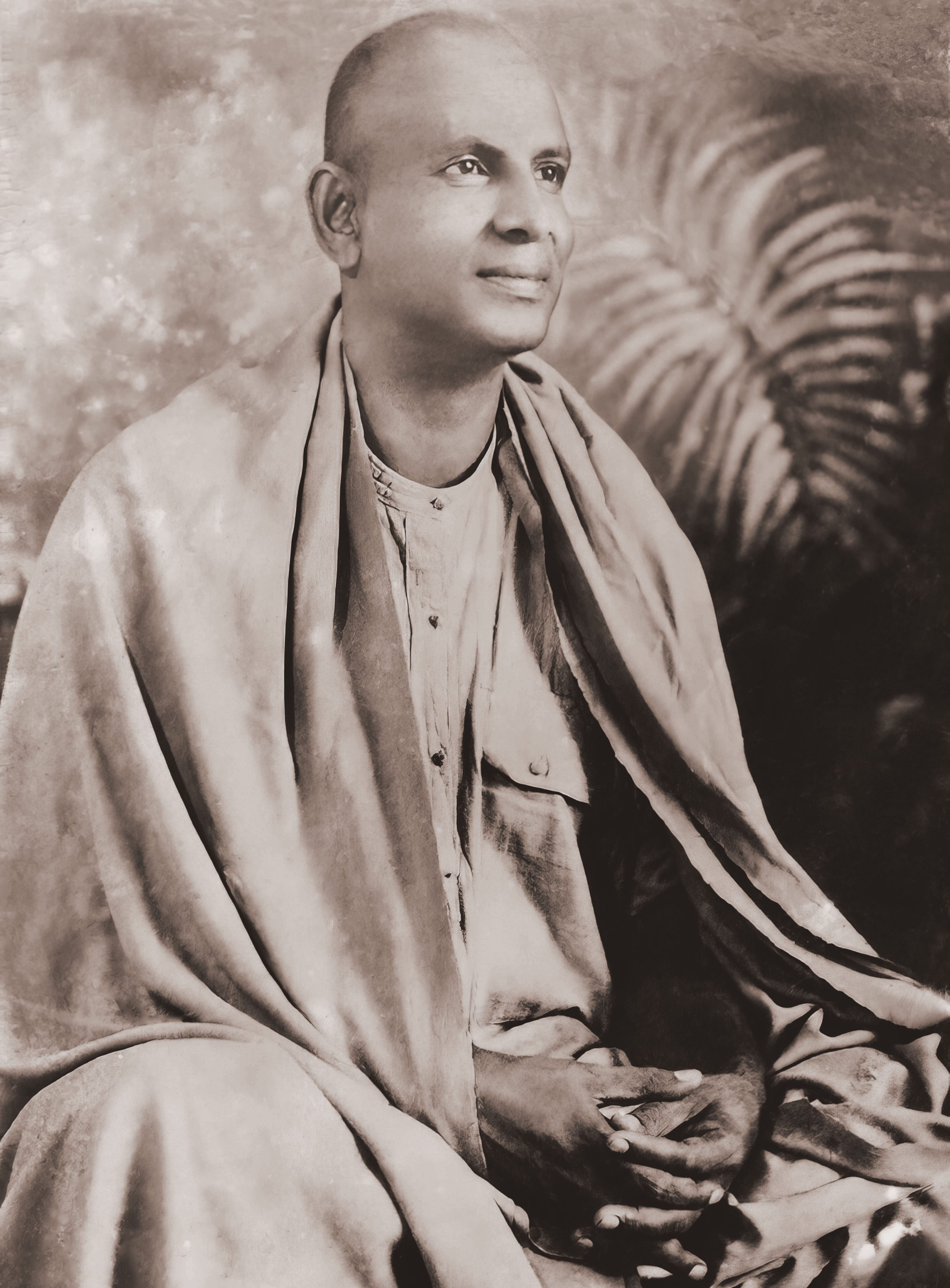
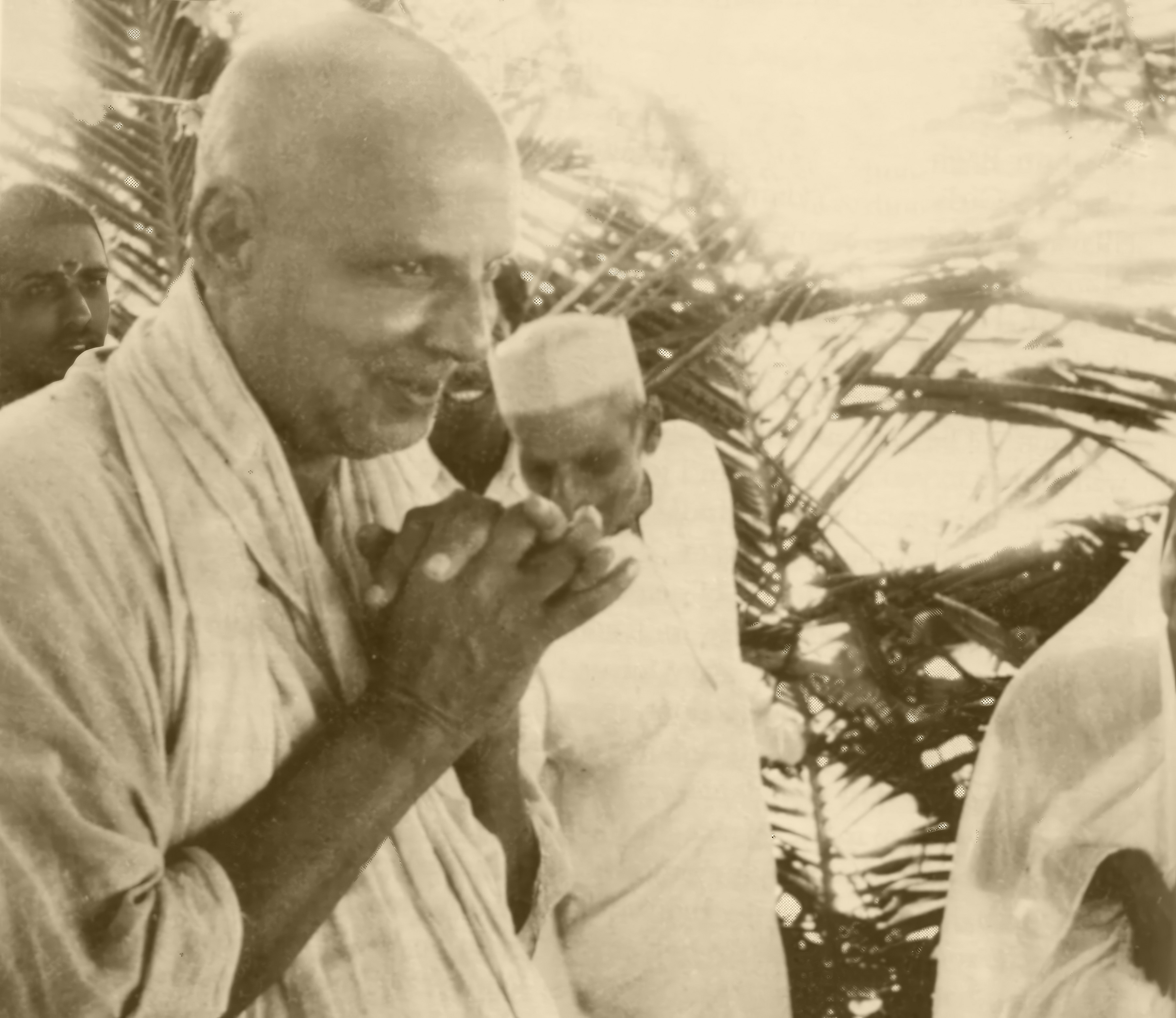
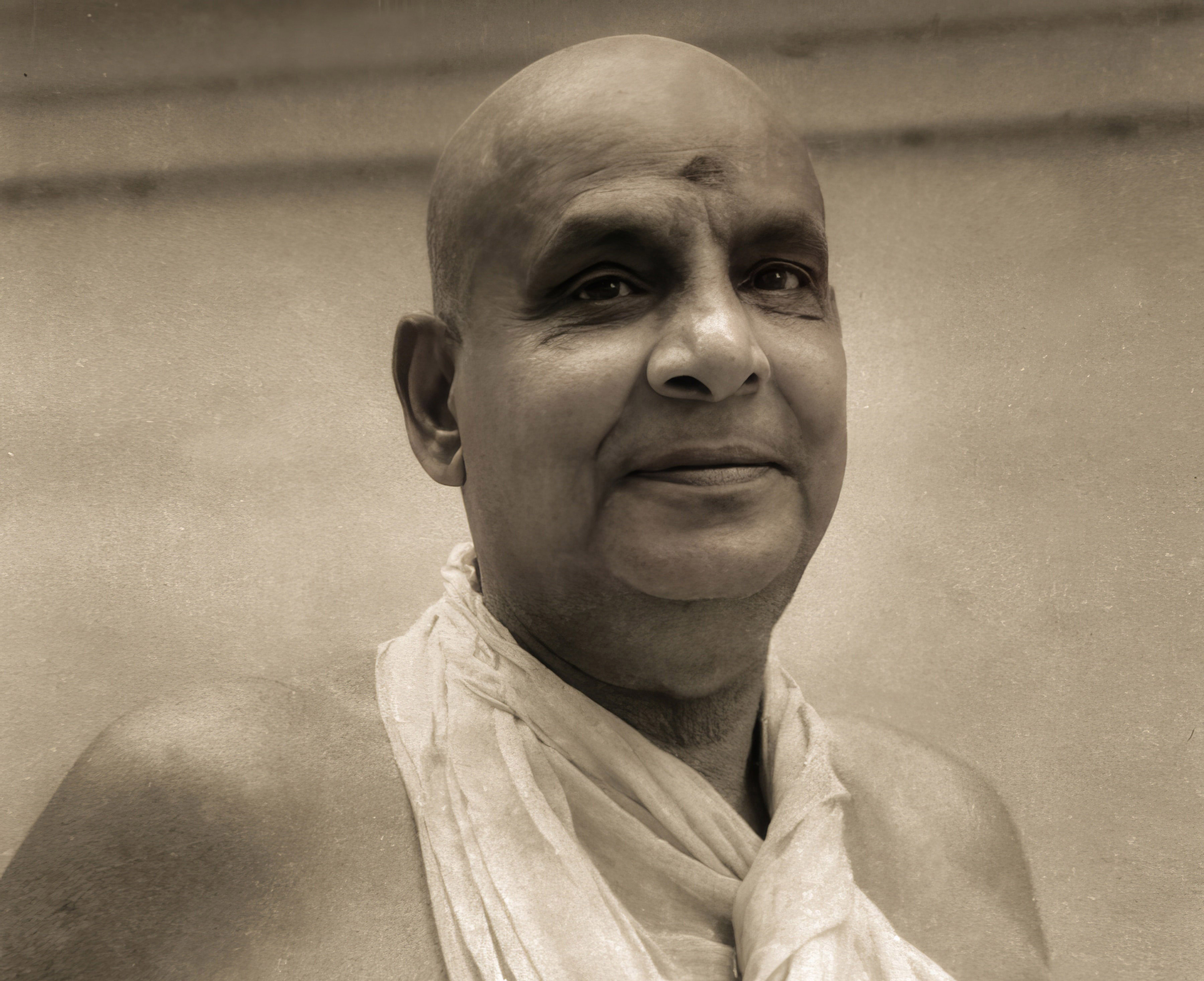
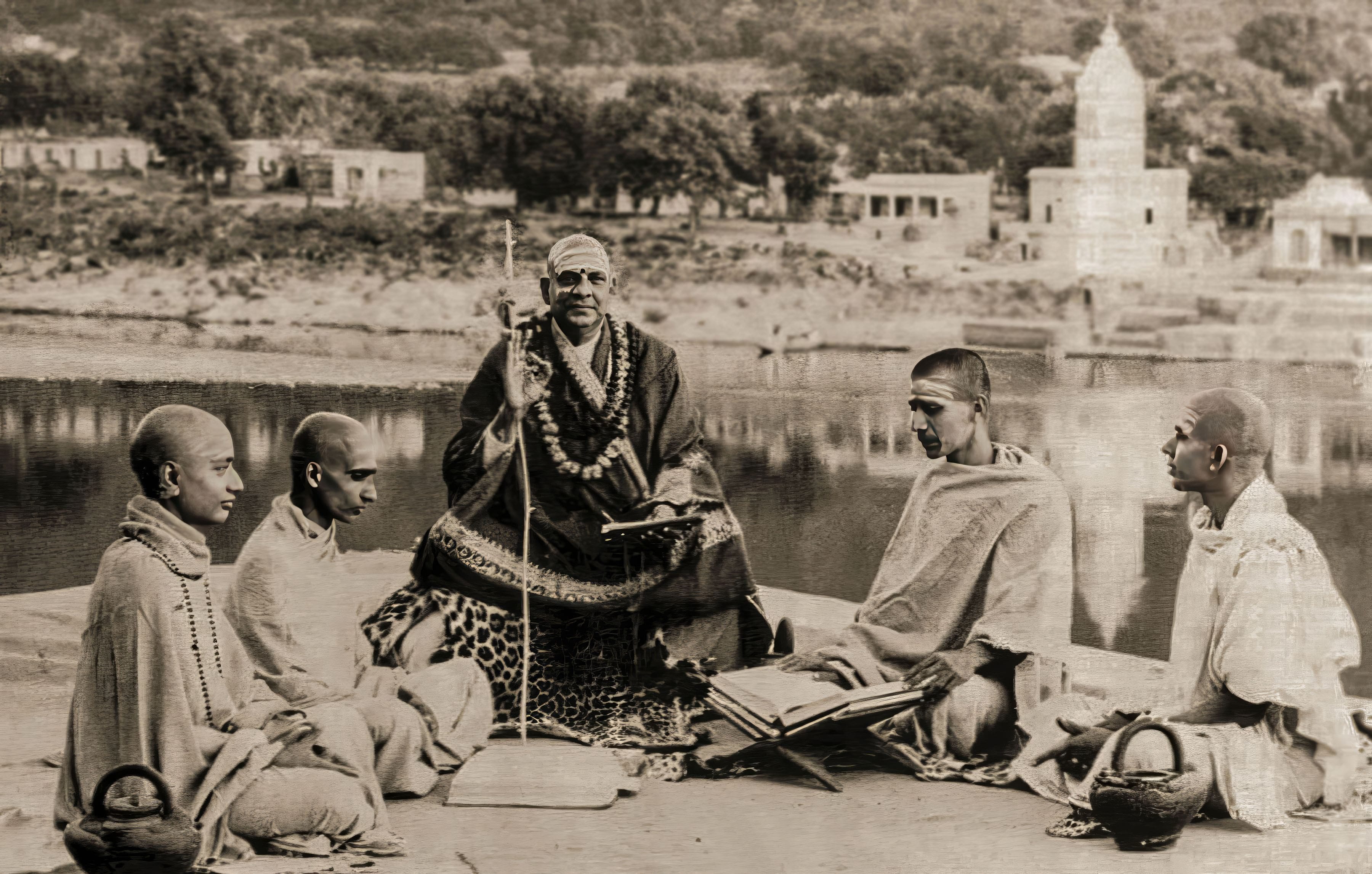
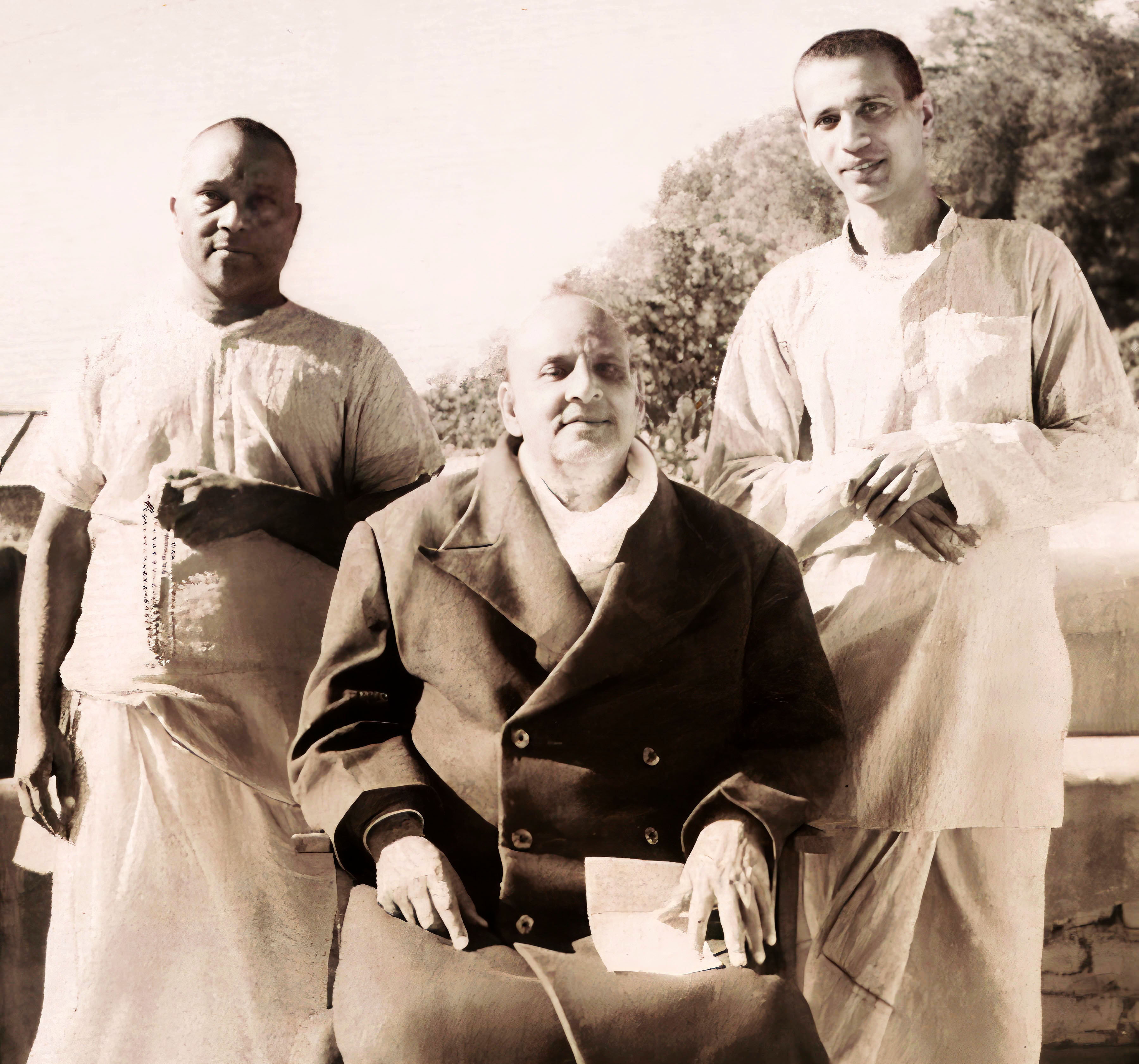
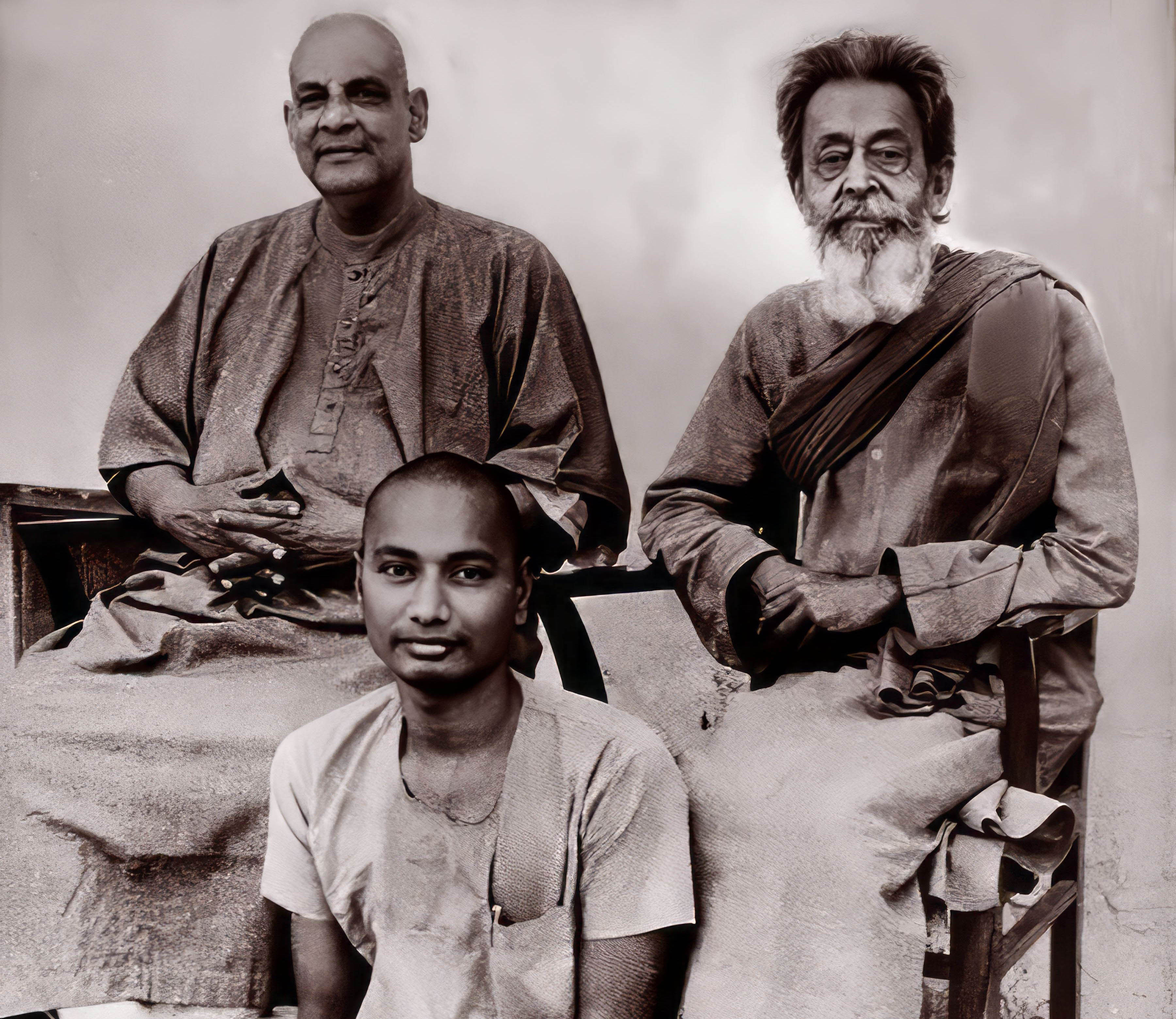
From the earliest photos of Swami Sivananda and Swamis Venkatesananda to scenes of ashram life at the Sivananda Ashram from the early days when Swami Venkatesananda joined Sivananda right up until his last days with the Master in 1961.

- Living With The Master
- Show Galleries
-
 See full screen image
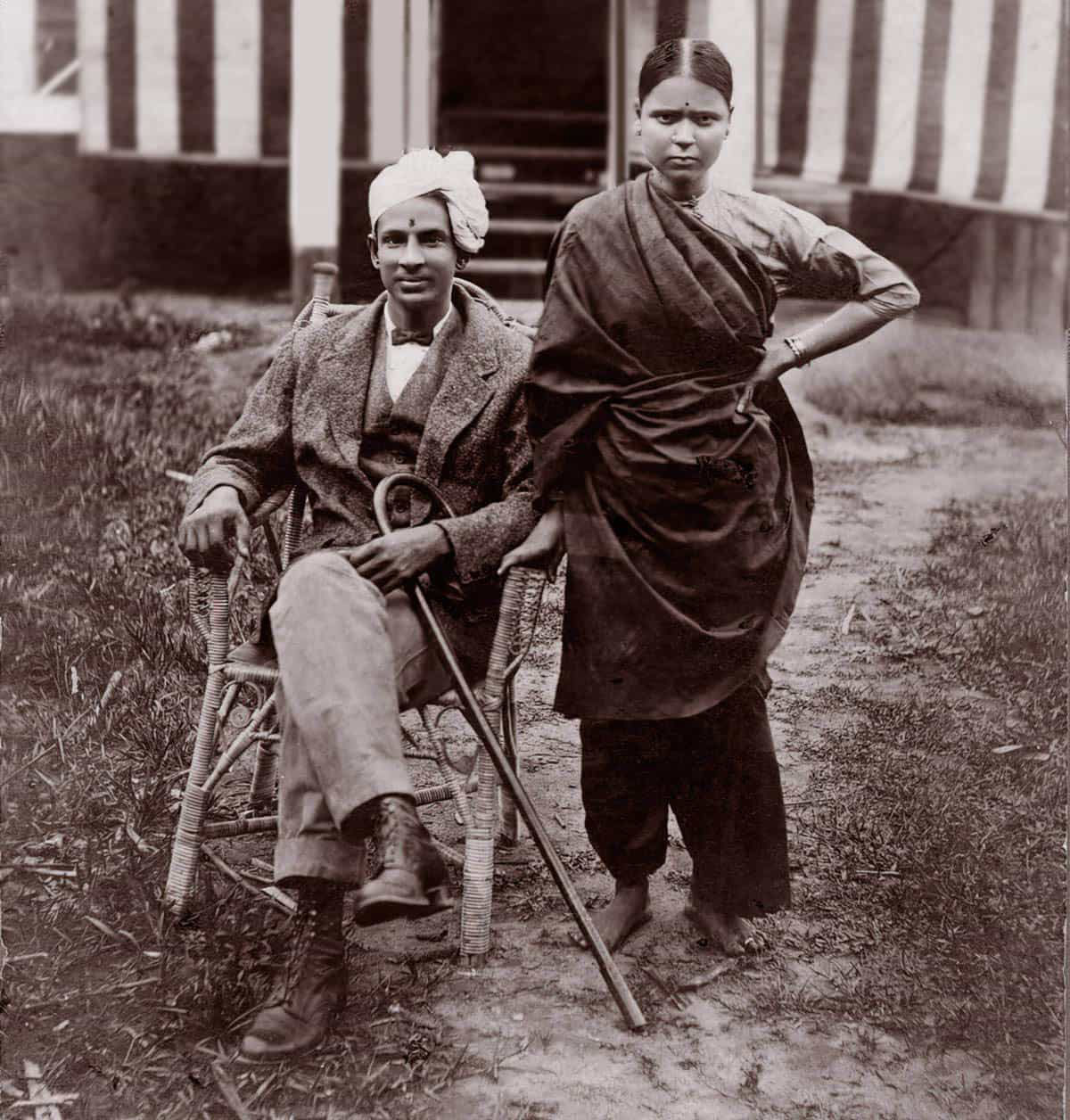
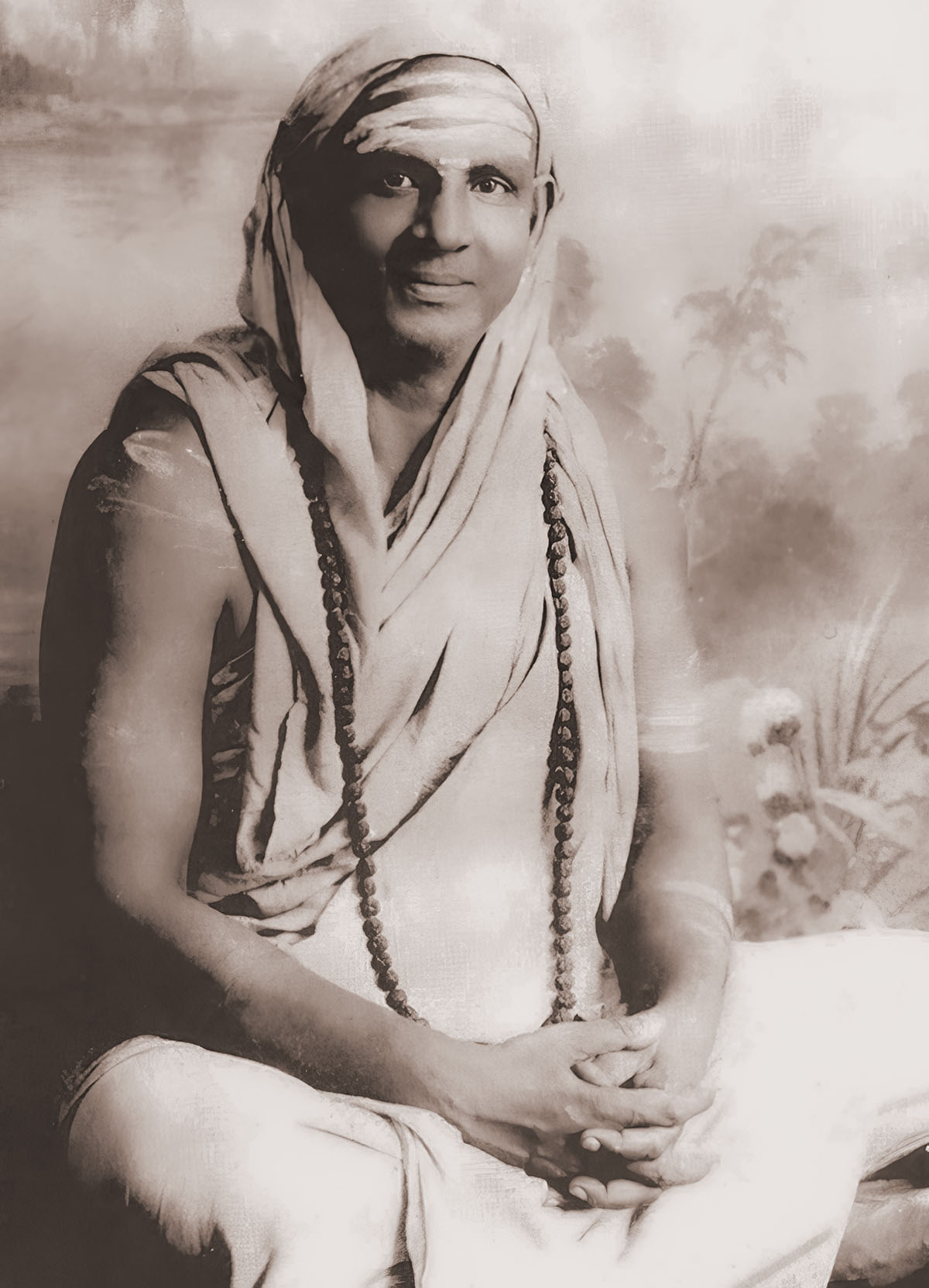
Born as Kuppuswami, the son of a brahmin family in 1887, the future yogi and saint of India later to be known as Swami Sivananda, was from a early age drawn to serve. In “Sivananda Biography of a Modern Sage”, we learn that “his attention, even as a boy, was disposed upon wandering monks”, noting he would always run to greet every monk who came to his door with love, bestowing an abundance of food and other treats upon them. His decision to become a physician was another manifestation of his desire to serve. Although his first job as a doctor was working for a pharmacy, he felt a strong urge to serve the poorest and neediest in society. That urge propelled him to leave Madras in 1913 and travel to Malaya where he was offered a position working at a very small hospital.
-
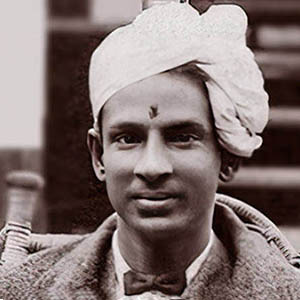 See full screen image
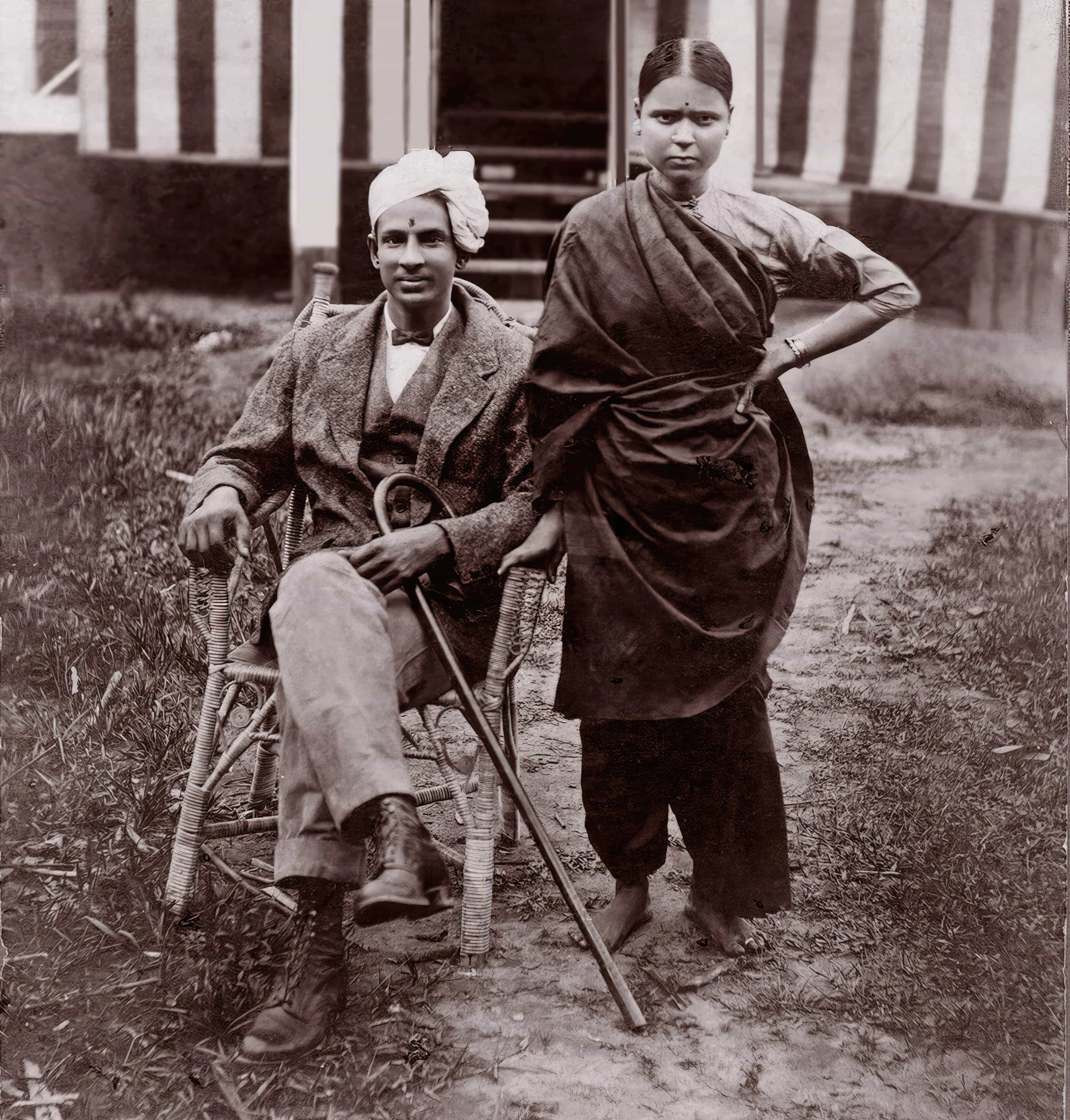
Dr. Kuppuswami in Malaya.
During these days of intense medical service, he effaced himself, he did not feel that his energy, talents and body belonged to himself but rather to any creature in distress and in need of him. He did not spare himself. He was constantly reminded that human suffering was everyone’s constant companion. As the days passed, he turned more and more inwards in search of that which was lasting and enduring and was often lost to the world in such reflections and meditations. Taking up the Gita, he read, “Having been born in this transient and misery-laden world, worship Me,” and he prayed, “O Lord, Thou hast most graciously solved my problem for me!” More and more he devoted himself to spiritual practice and began to learn yoga asanas. A passing swami introduced Dr. Kuppuswami to books that further ignited his spirituality. He began reading works of Swami Ram Tirtha, Vivekananda etc. His course in life was becoming clear and he mused: “True, there are good chances of performing charity with the money at my disposal, but, after all, the service that I can thus render unto humanity can at best be only physical service. I have heard it said the the only real service is spiritual service, by which I can help humanity to get rid of suffering once and for all. But I must first equip myself with the spiritual wealth if I am to distribute it to others. I must renounce. Yes,…I hear You prompting me from the innermost core of my heart that I must renounce. It is long past midnight; and there is no trace of sleep I shall pack up my things tomorrow and leave in search of my immortal abode. I must realise God now.” Later he wrote of this period: “I gave up the life of ease, comfort and luxury”… searching for “an ideal centre, for purposes of prayer and contemplation, study and a higher form of service to the whole world…In 1923, I renounced the life of ease and money-making and took to the life as a mendicant, a true seeker after Truth.” His transition from doctor to wandering mendicant and from mendicant to yogi is chronicled in both his autobiography and in the book Sivananda, Biography of a Modern Sage.
-
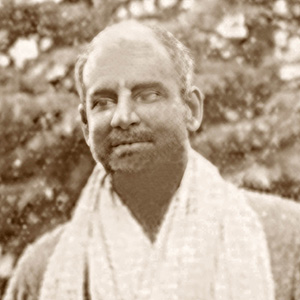 See full screen image
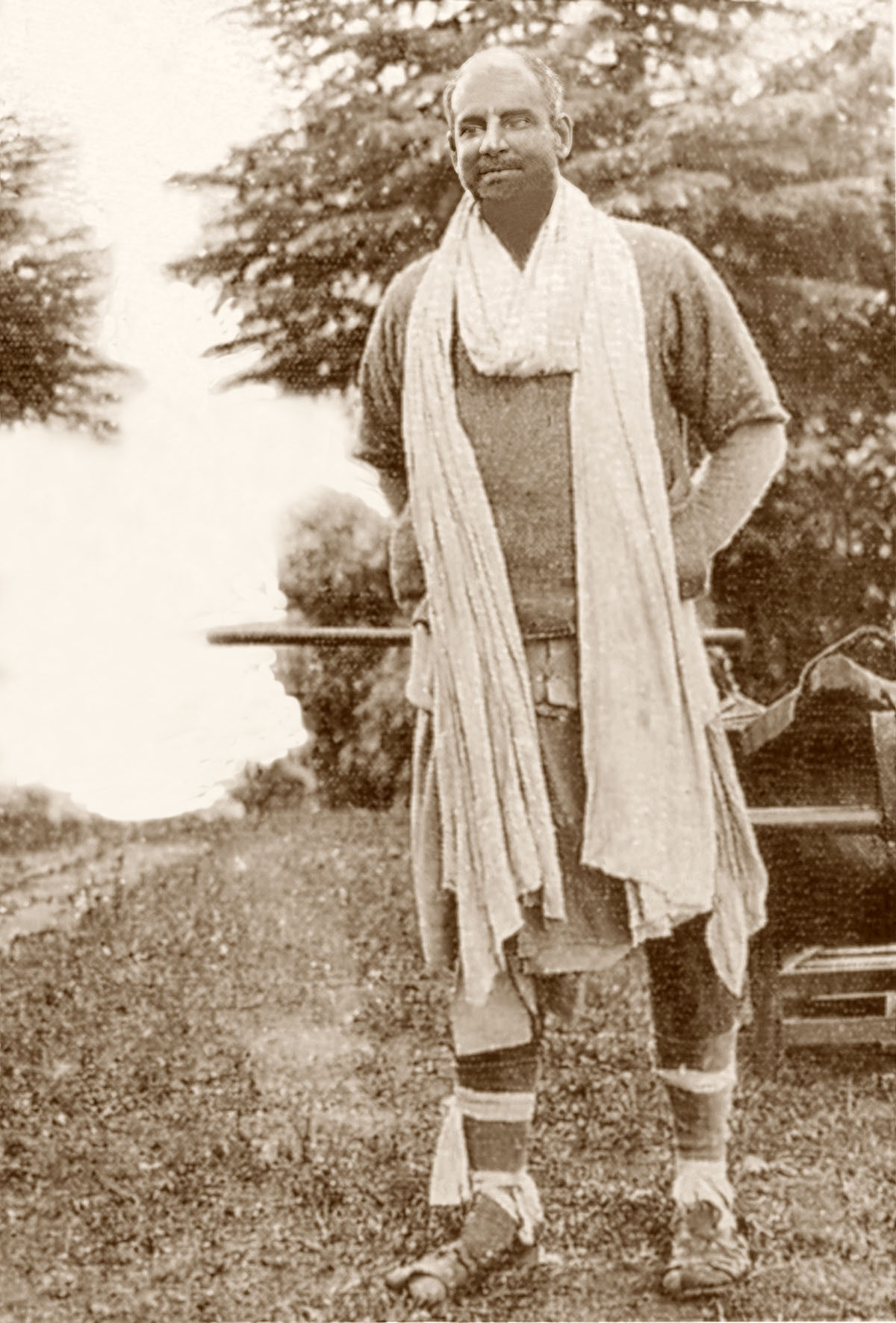
Swami Sivananda on a pilgrimage to Mount Kailas in Western Tibet in 1930. His face had become blackened by the fierce, cold wind and the burning sun and he lost 15 pounds; nevertheless, to him, the whole journey had been one of immense delight He said: “Reluctantly you return…and then, by the same route which took you to the regions of immortal joy, the holy Kailas, you re-enter the land of endless suffering, disharmony and misery.” (pg 68 Sivananda: Biography of a Modern Sage) Mount Kailas is called Mount Meru–the axis of the earth. Of all yatras (pilgrimages), the Kailas trip is the most difficult. Swamiji walked the whole distance to and from–460 miles in all.
-
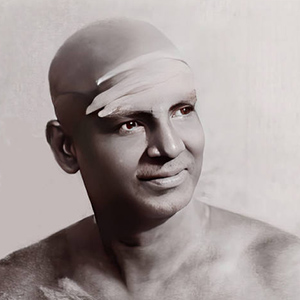 See full screen image
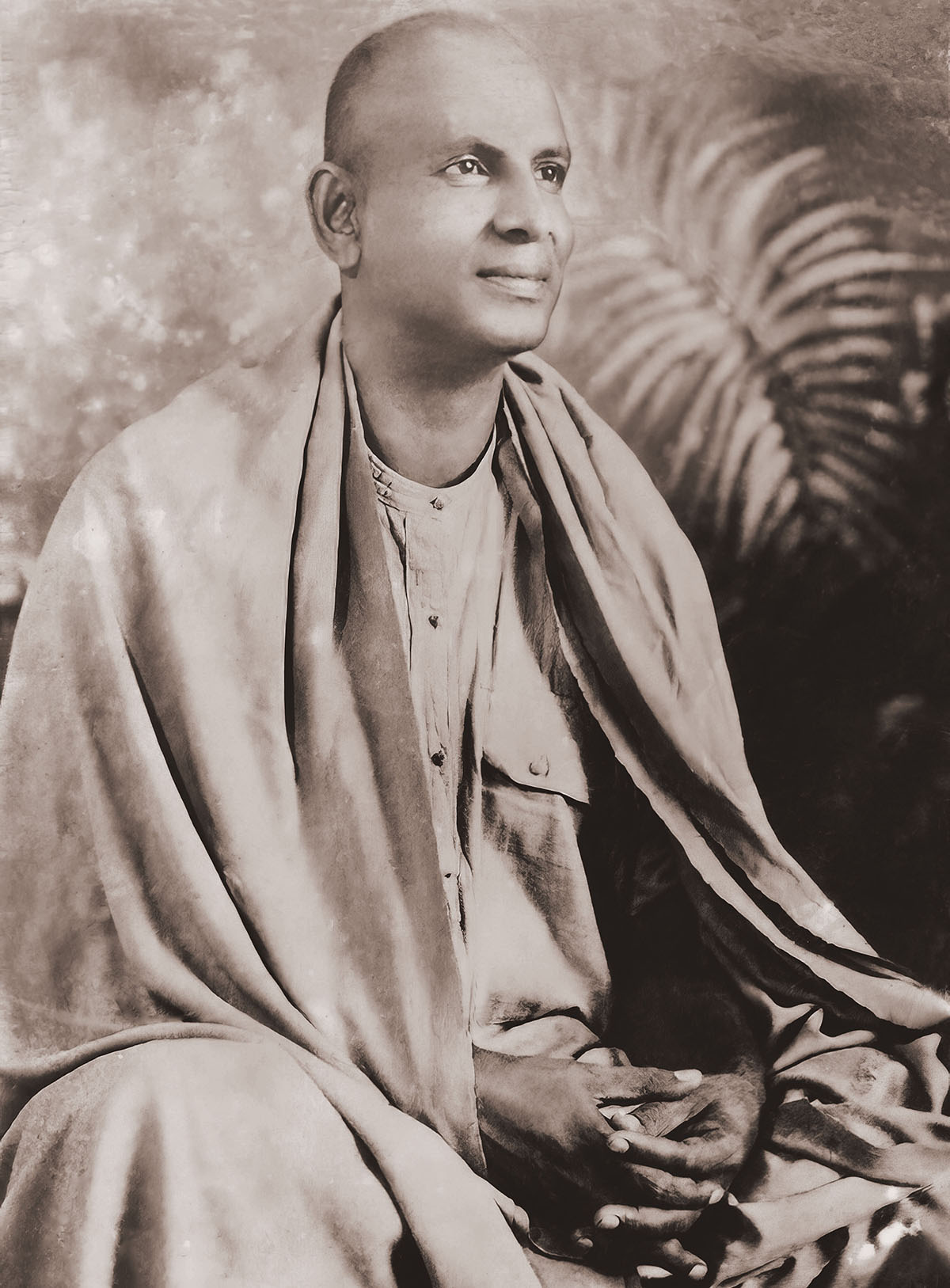
Swami Sivananda–Early photo from Rishikesh.
The details of Dr. Kuppuswami’s renunciation are shrouded in mystery. After arriving back at his family compound in South India, as his carts were being unloaded, suddenly he was missing! He had slipped away to the Madras railway station with Benares as his destination. He knew not a word of Hindi but made his way to the temple of Lord Vishwanath. He prayed, communing with his beloved: “I have come, my Lord, to be Yours…Thy will be done, my Lord.” Later in a letter to Maharishi Shuddhananda Bharati, he wrote: ” The darshan of Lord Vishwanath gave me a new light, a new life. The memories of the past life disintegrated. I felt that Lord Vishwanath Himself was my guru.” His aim was simple: “I wanted to sit under a tree and sing the Lord’s name and do japa and meditate on Him, living on alms and chance morsels of food that passers-by might give me. I hadn’t the least idea of starting an institution or conduction an ashram.”
Between Benares and Rishikesh, however, lay a labyrinthine path. He wanted seclusion but he found that Benares was almost a modern city. He wandered here and there among strangers who did not understand his language nor the ways of this education young mendicant, eventually arriving in Hardwar at the foot of the Himalayas and then walking on to Rishikesh. He was thrilled by the Ganges and majestic hills that greeted him. Here he met Swami Viswananda Saraswati who initiated him into Sannyas, imparting the secrets of liberation. Dr. Kuppuswami became Swami Sivananda Saraswati.
-
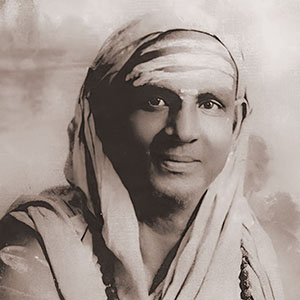 See full screen image
Seeking seclusion for meditation, Swamiji moved into an empty kutir between Swarg Ashram and Lakshman Jhula–it didn’t even have 4 walls or a roof other than foliage. This satisfied him as a few minutes walk would take him to the Himalayan forest for deep and undisturbed meditation. But service was as much in his nature as contemplation and after some time he accepted the invitation to start a charitable dispensary at Lakshman Jhula, a jumping off point for pilgrims setting out for the sacred shrines of Badrinath and Kedarnath, high in the Himalayas.
-
 See full screen image
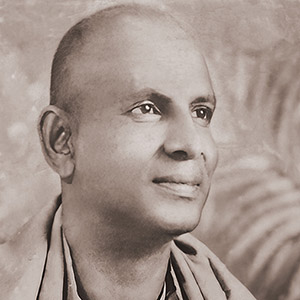
Though Swami Sivananda’s devout focus was secluded meditation deep in the forest, his destiny was shifting him into a more public role as his radiance began drawing seekers to him. In those years he occasionally broke his intense periods of meditation to undertake lightning tours, gathering devotees for sankirtan, giving short lectures, guiding budding disciples in their sadhana, and serving the sick.
Sometime in 1929 or 1930, Swamiji’s deepest aspiration was fulfilled: the Lord appeared to him in the form of Sri Krishna. Later he wrote: “I have met my Beloved. He is brilliant like millions of suns, He has enshrined himself in my heart. The lamp of love burns lustrously….My rapture wells forth. The mercy of my Lord has come upon me. How blessed am I who has seen my Beloved.”
Within a few years it became clear that Swamiji would need to relocate as Swarg Ashram was founded as a refuge for sannyasins living a life of individual sadhana and the growing number of seekers drawn to Swami Sivananda did not fit with that mission. He was asked to leave. On the other side of the Ganges he found a dilapidated and abandoned four room kutir. He cleaned it thoroughly and moved in on March 28, 1934. It looked more like a cow shed than an ashram, yet became the foundation of Sivananda Ashram.
-
 See full screen image
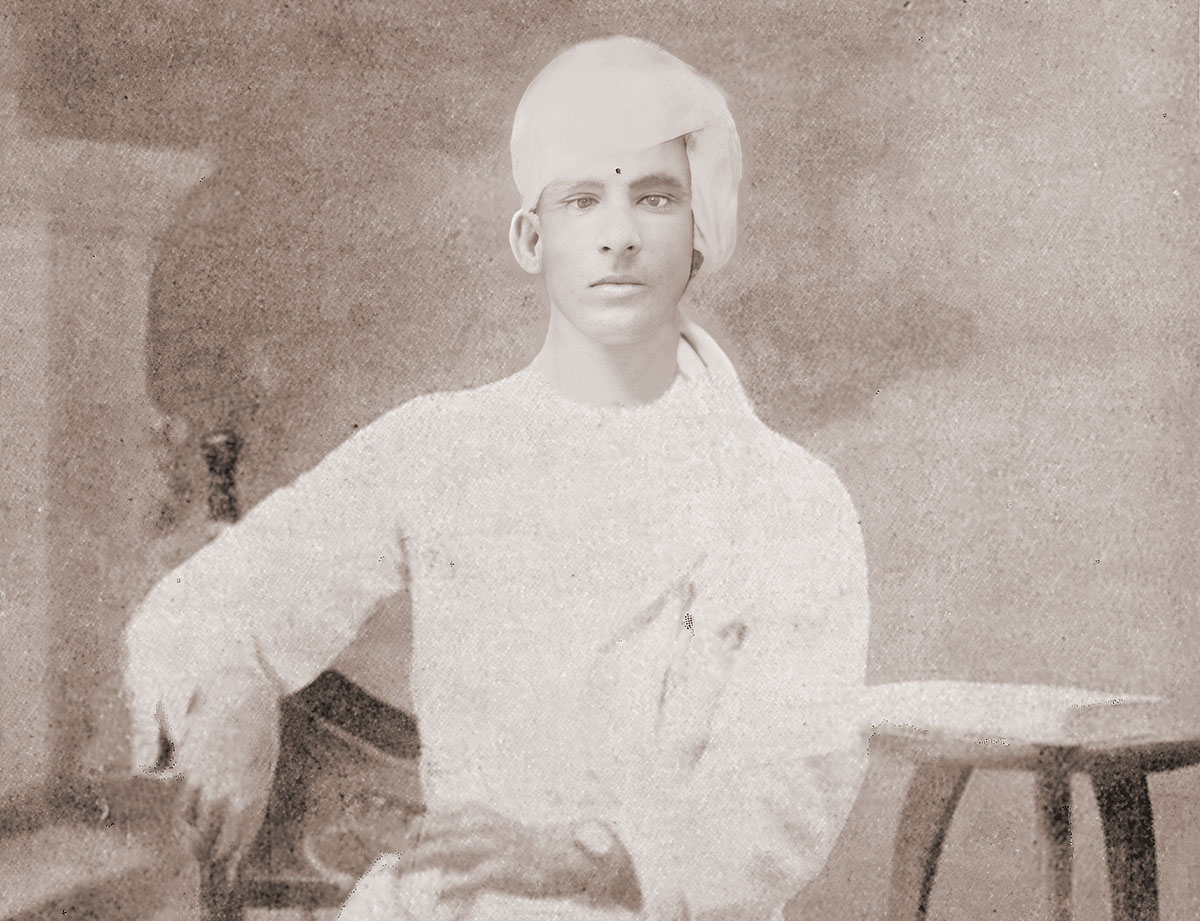
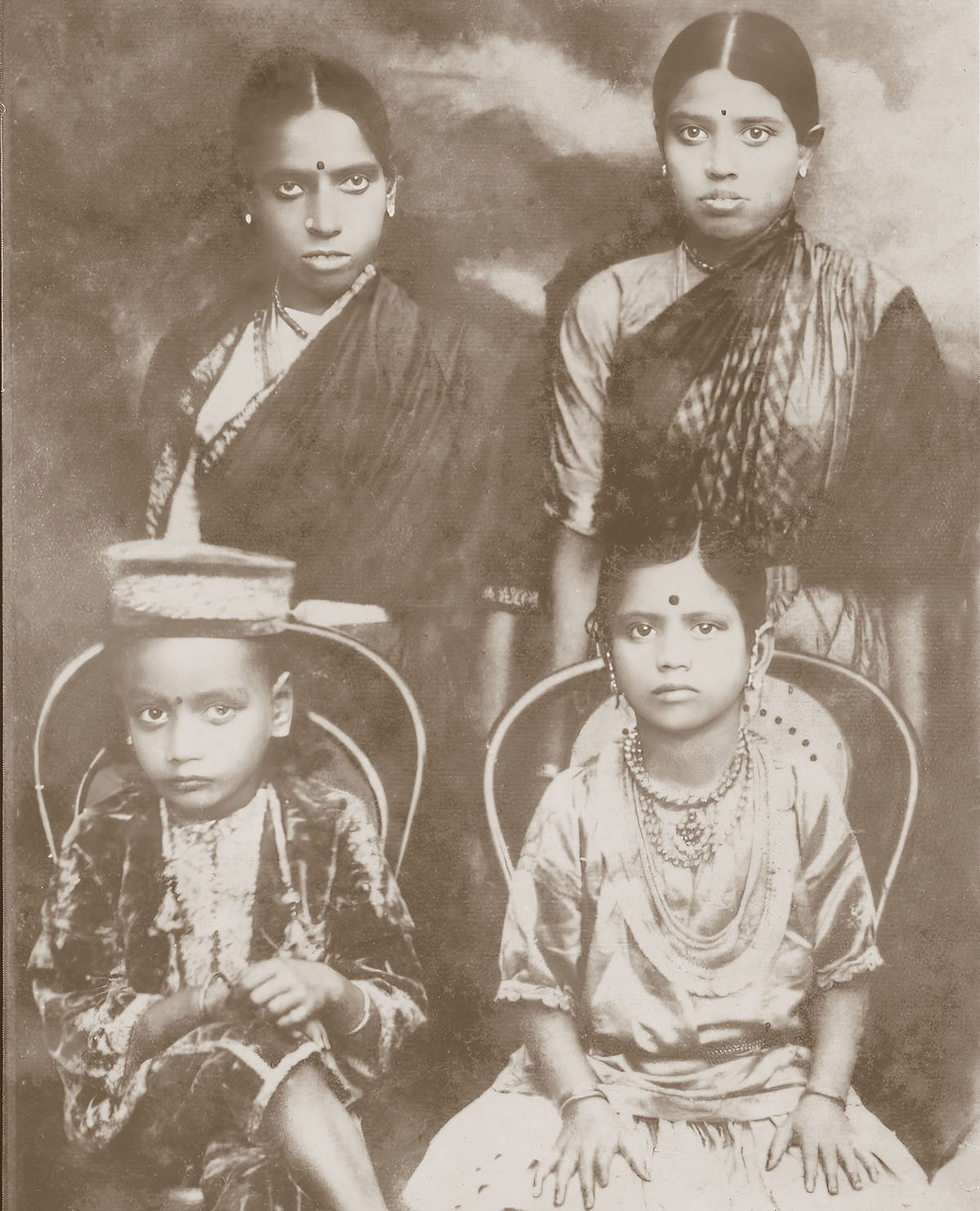
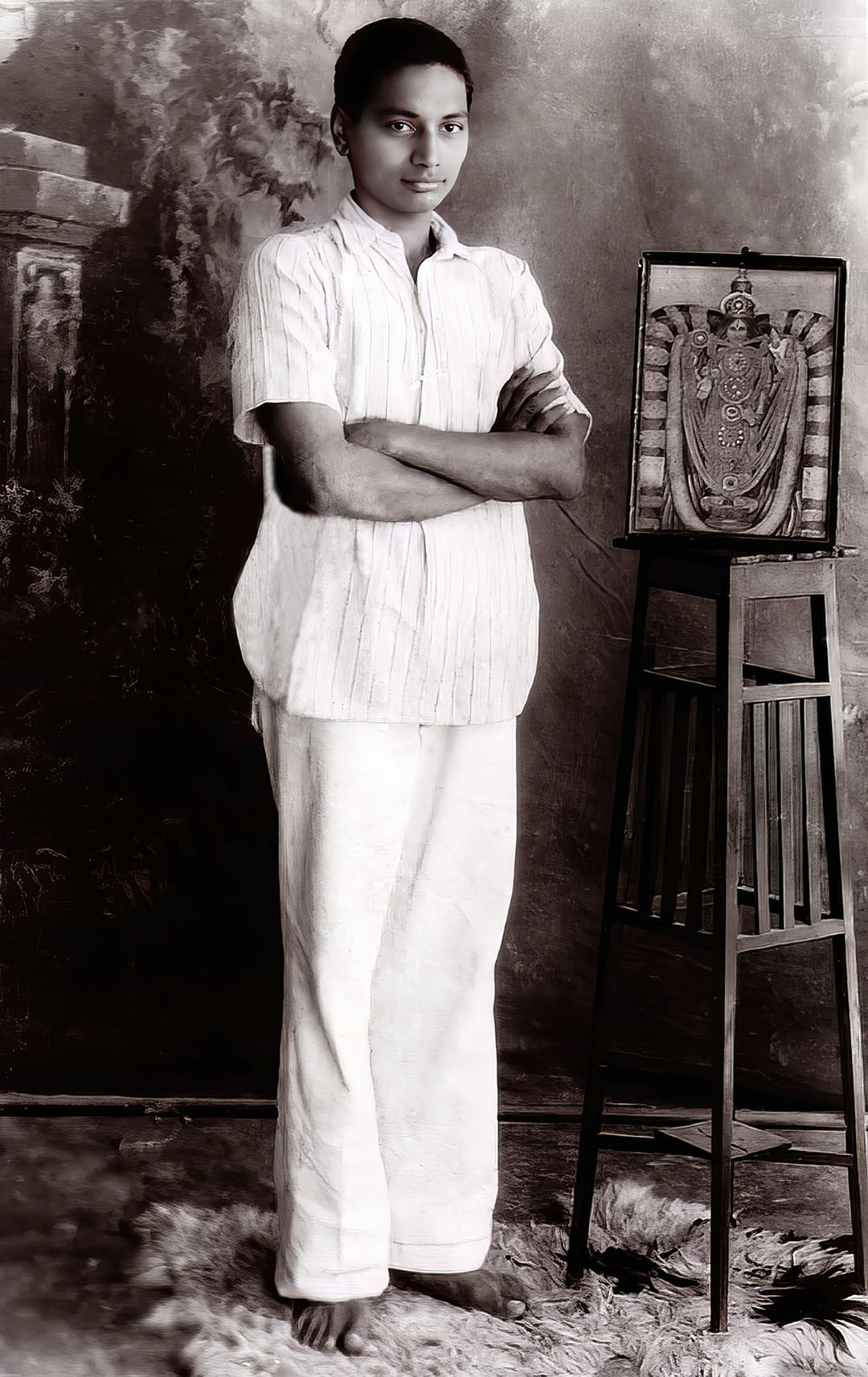
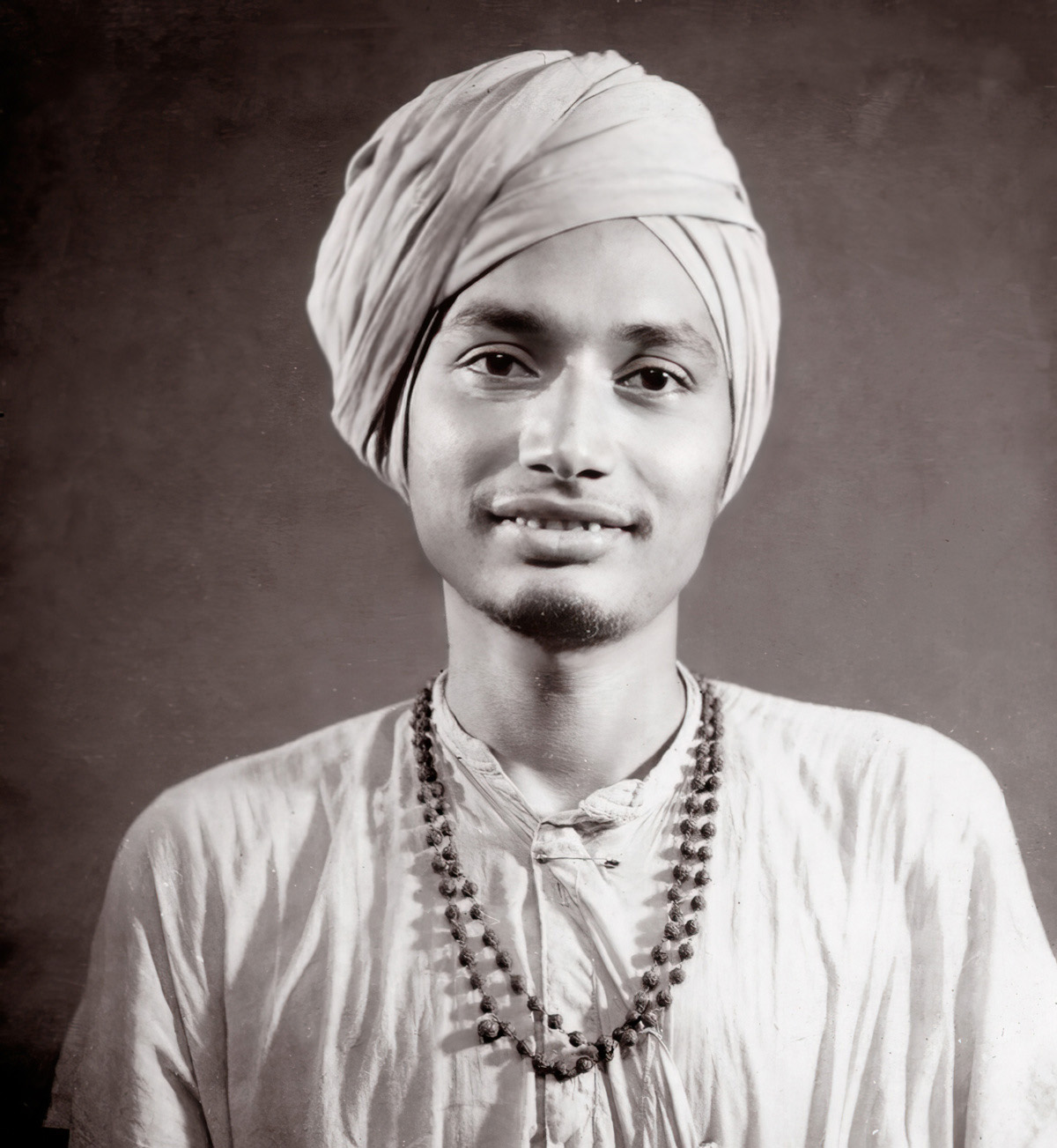
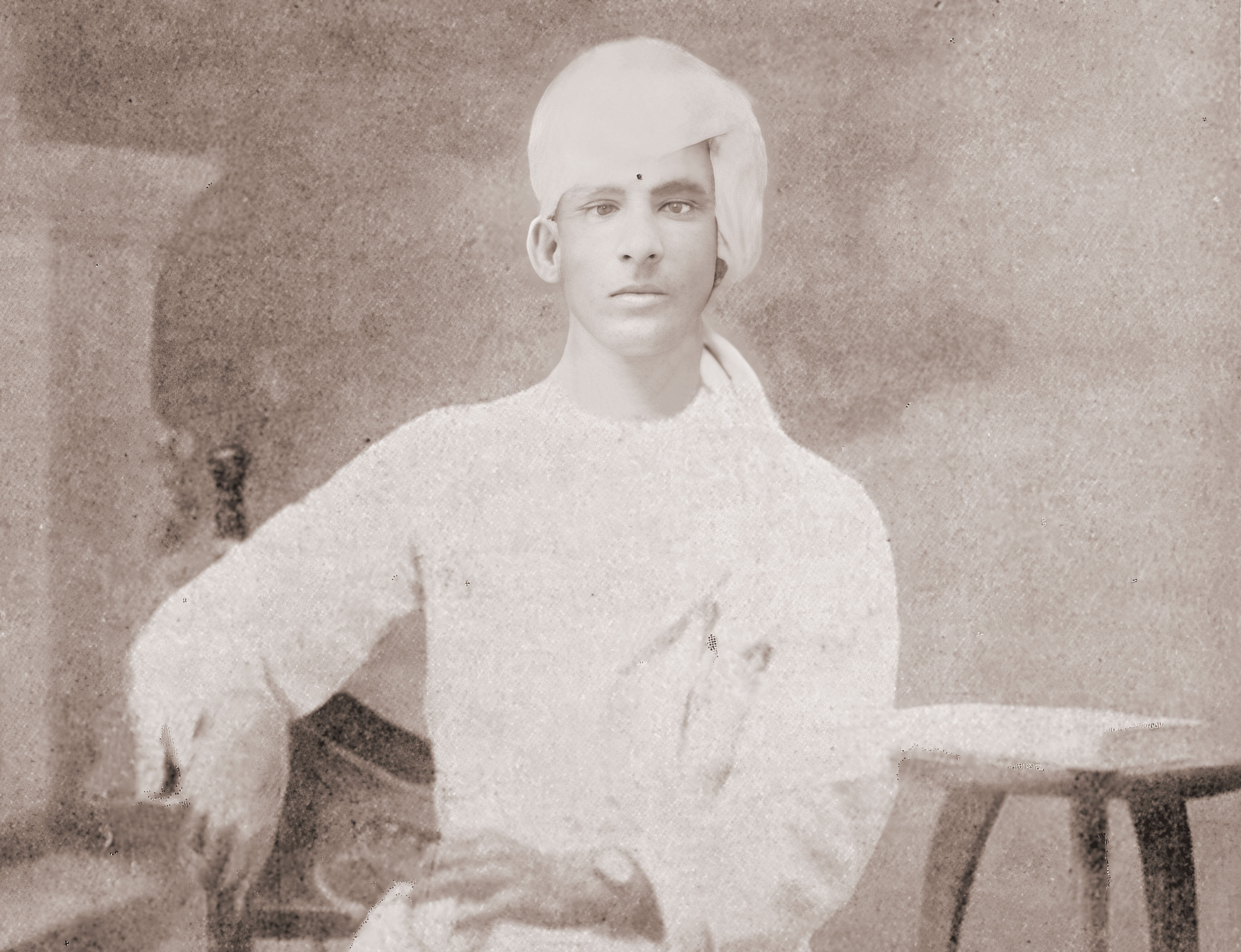
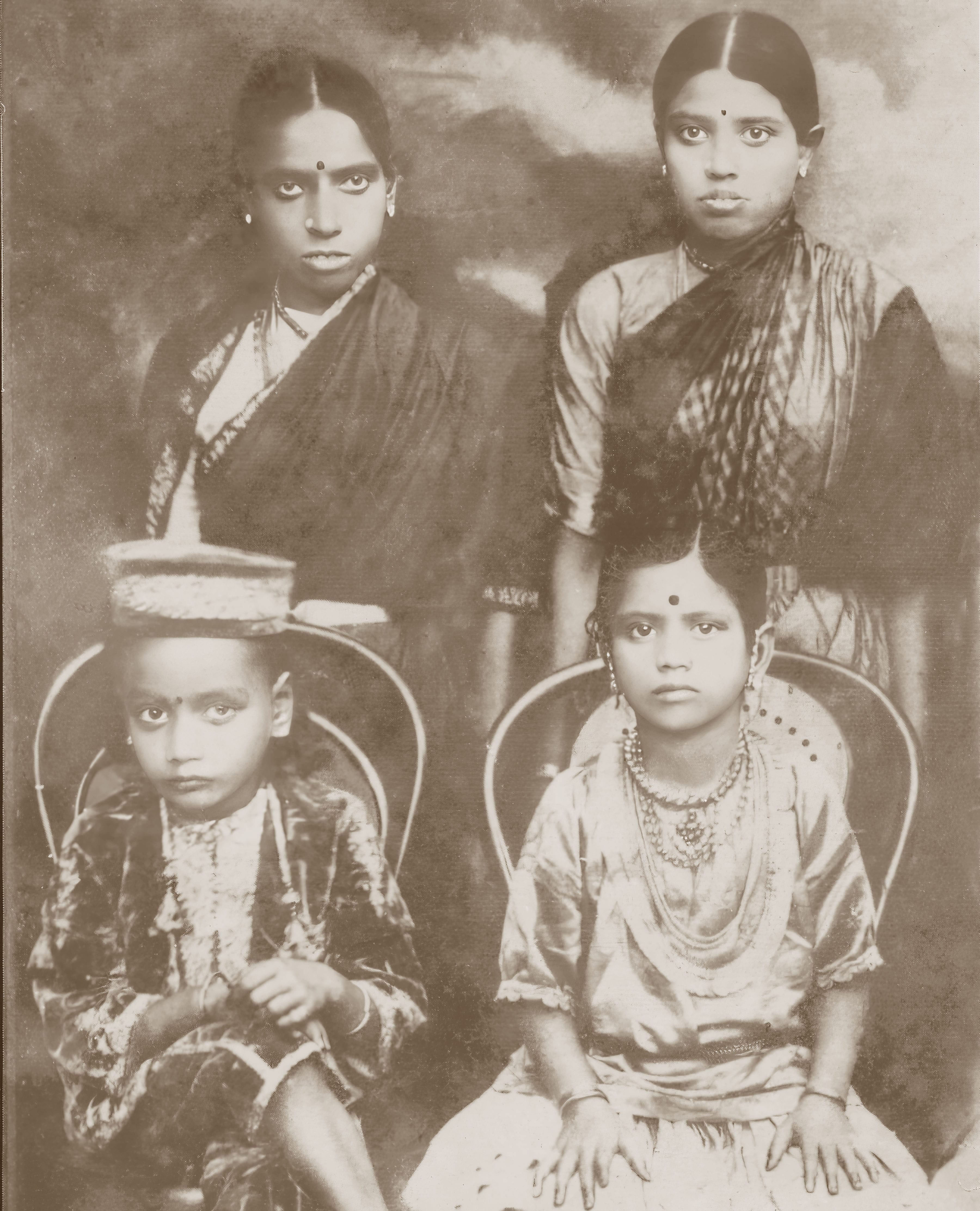
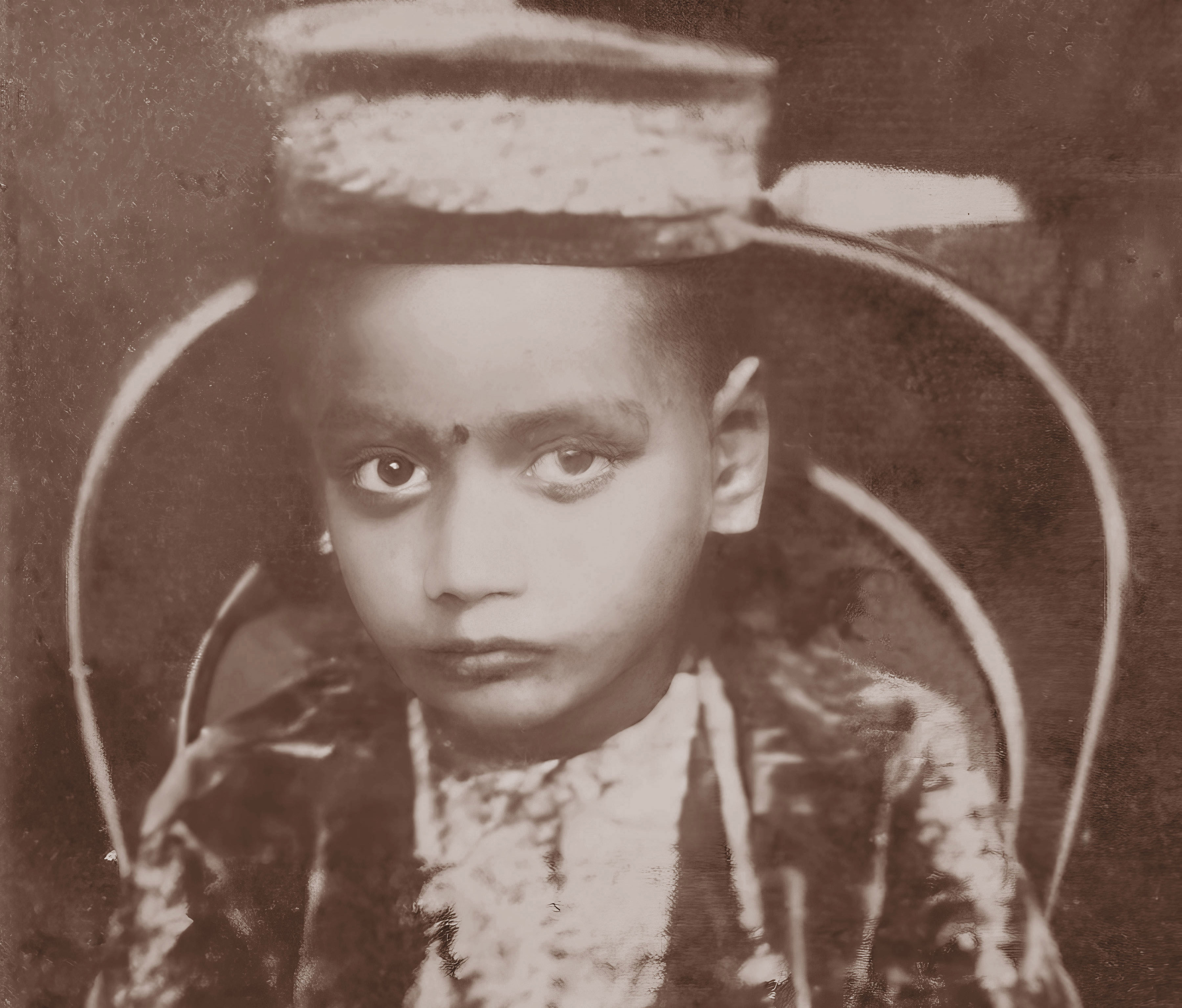
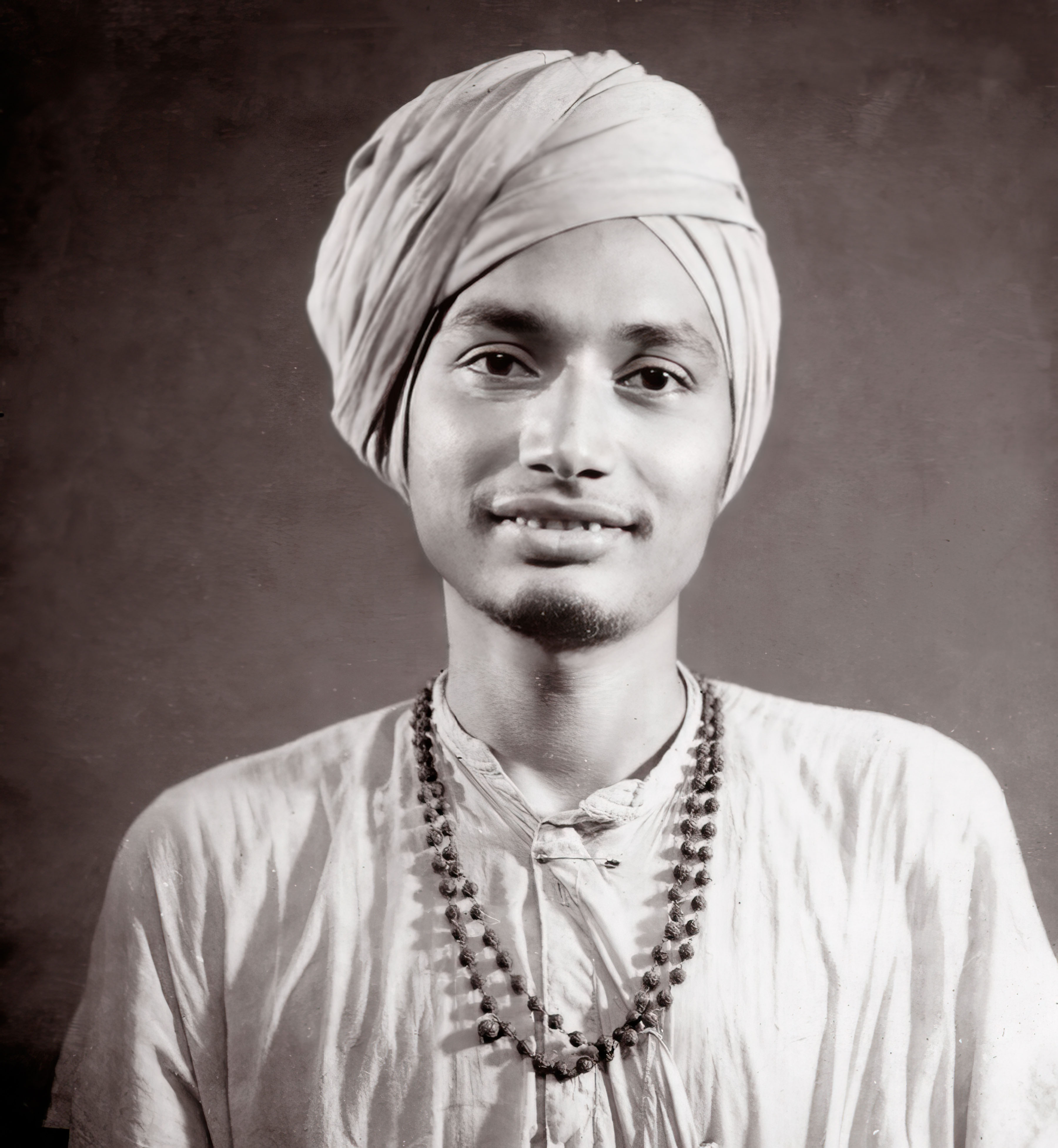
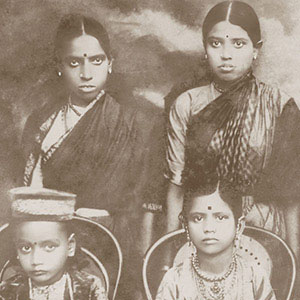
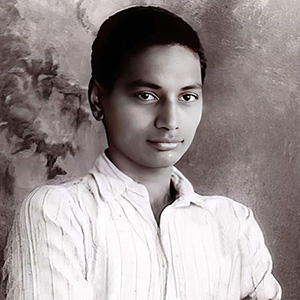
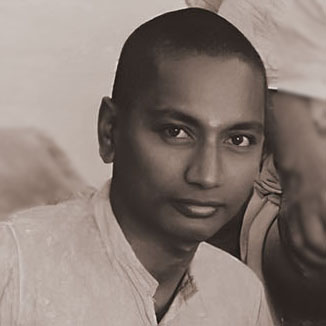
Parthasarathy ( (as Swami Venkatesananda was called before he became a swami) pictured on lower left.
This young Brahmin boy, born into an orthodox family, would grow up to be Swami Venkatesananda. Here he is pictured with his mother (directly behind him) and other family members. As the only child of Lakshmi Ammal, who was the only child of Tuppil Krishnamachari, he bore a family legacy of the sacred traditions of South Indian Vaishnavite Brahmins. His maternal grandfather, Krishnamachari, taught him Scripture and Sanskrit from an early age and he took to it with such ease that it seemed that he was “remembering” rather than learning afresh. When he was but three, his grandfather took him to the local temple. Upon returning home, his astounded neighbors found that he had climbed a hay stack and was calling repeatedly, “O Lord, come to me!”
The bond between grandfather and grandson was very close, yet at the tender age of seven he bore the responsibility, as the only male heir, of performing the last rituals when his beloved grandfather died.
-
 See full screen image
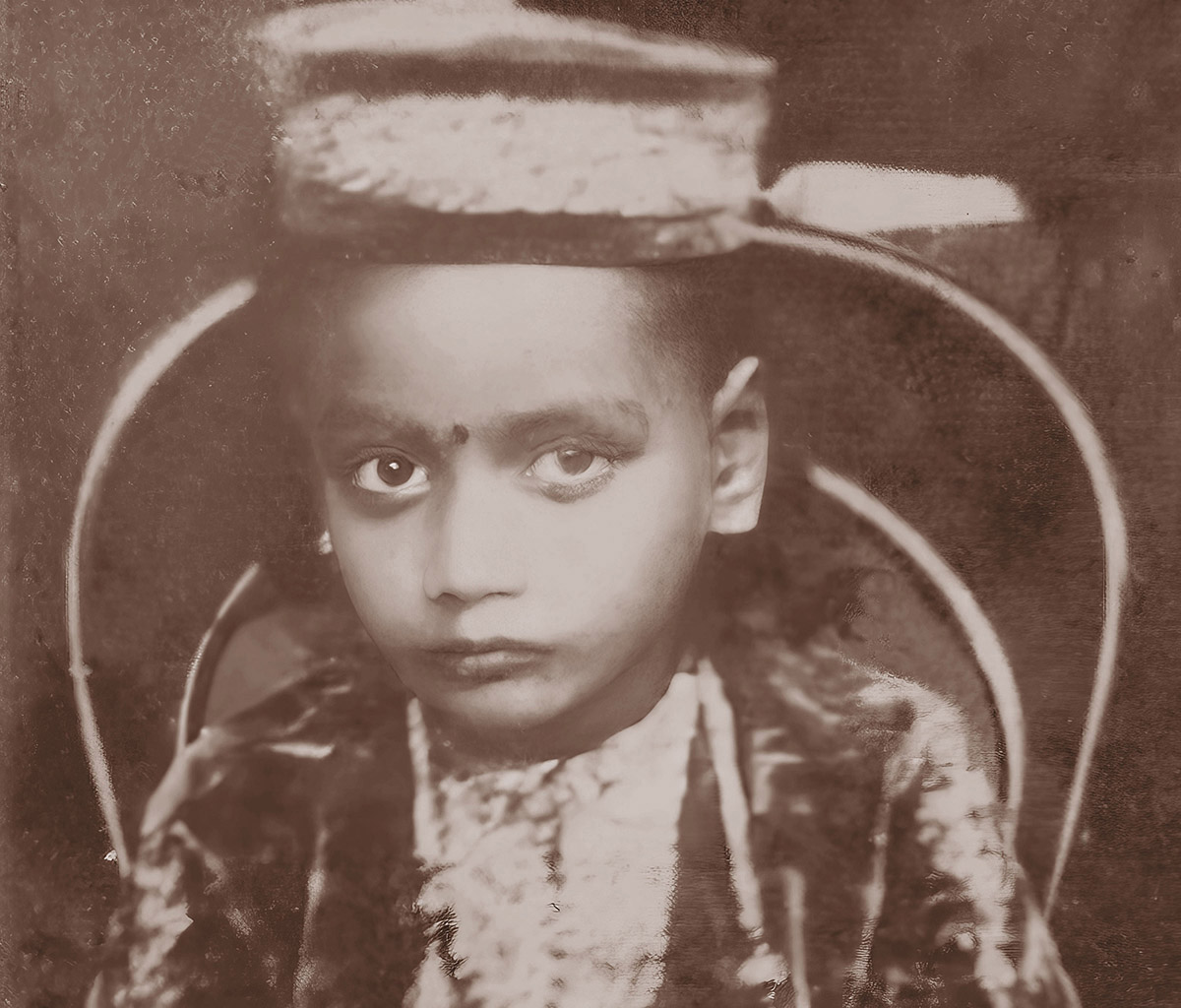
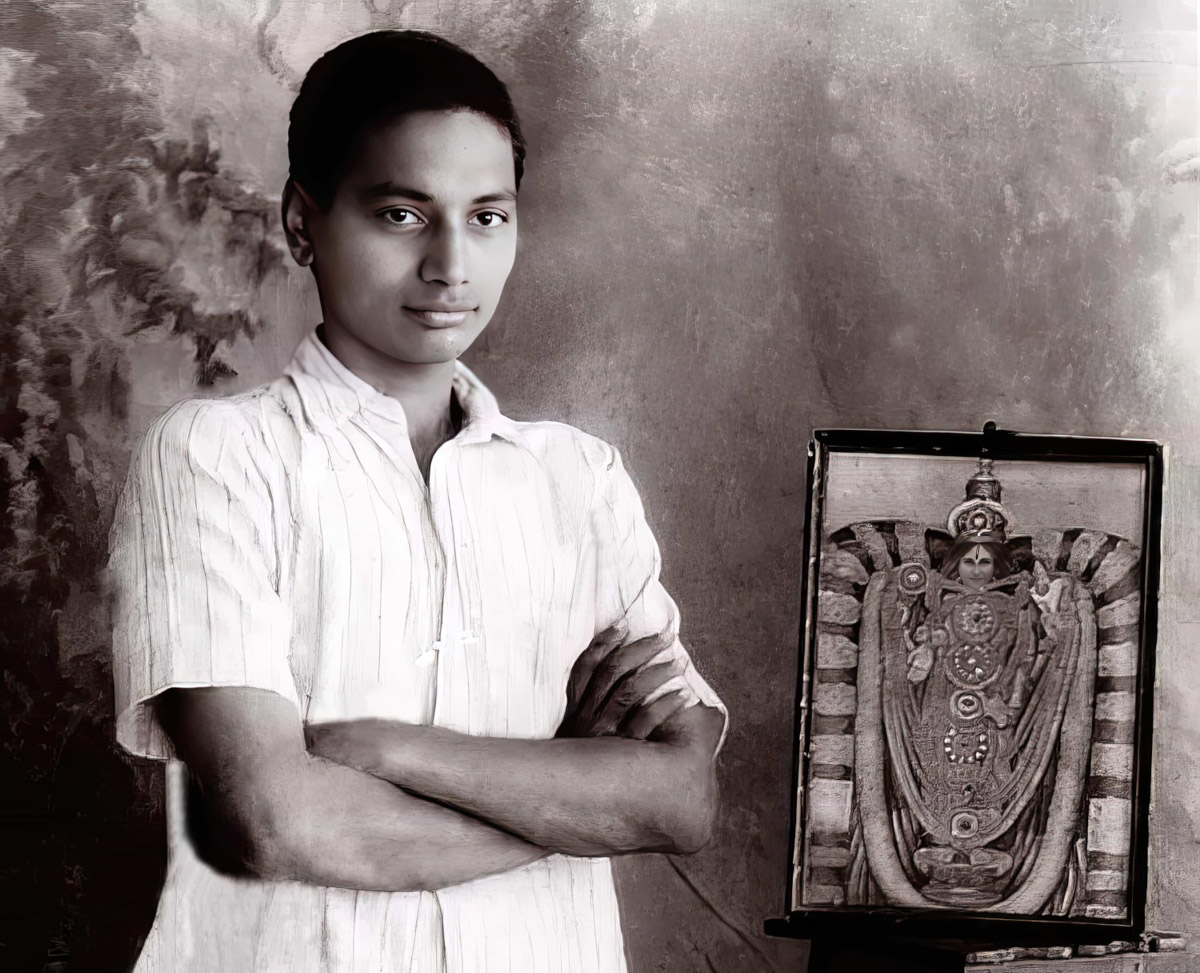
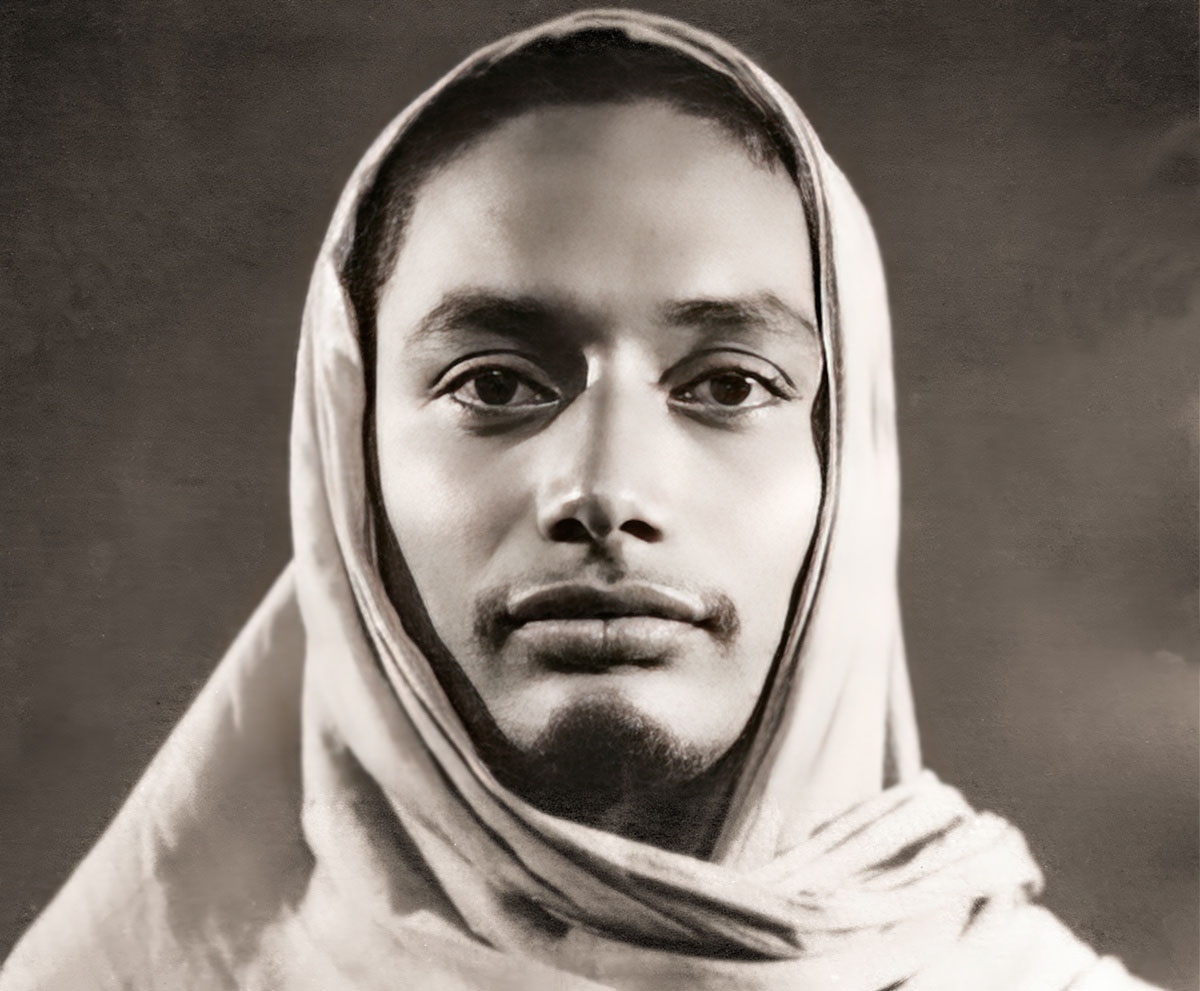
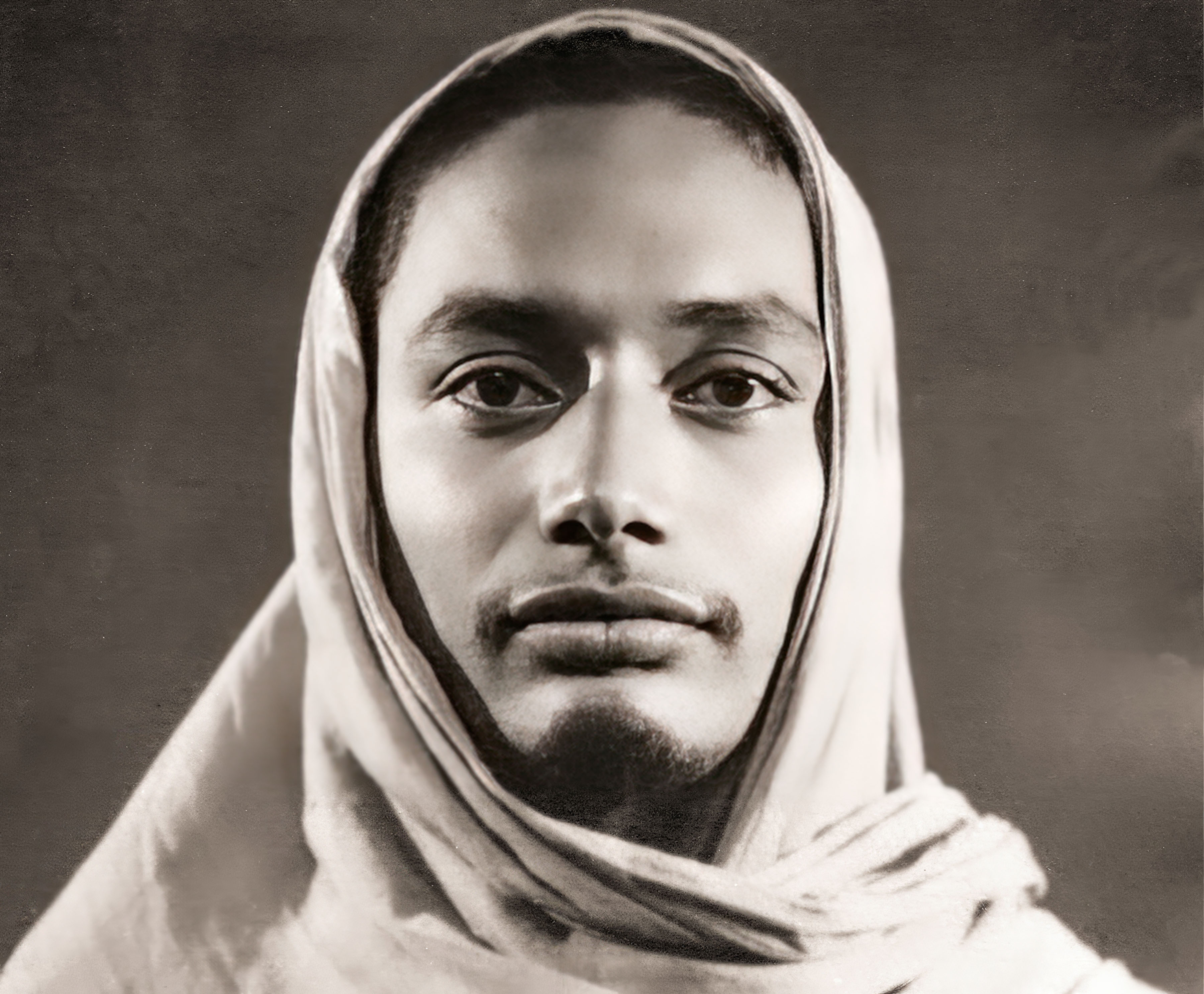
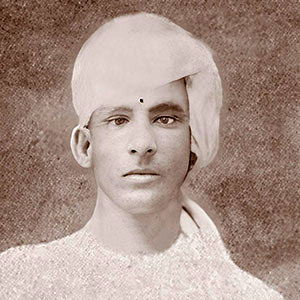
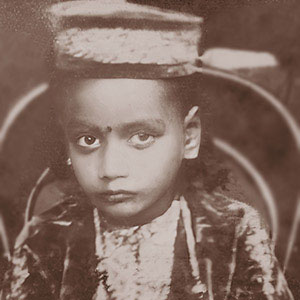
Closeup of of Parthasarathy.
-
 See full screen image
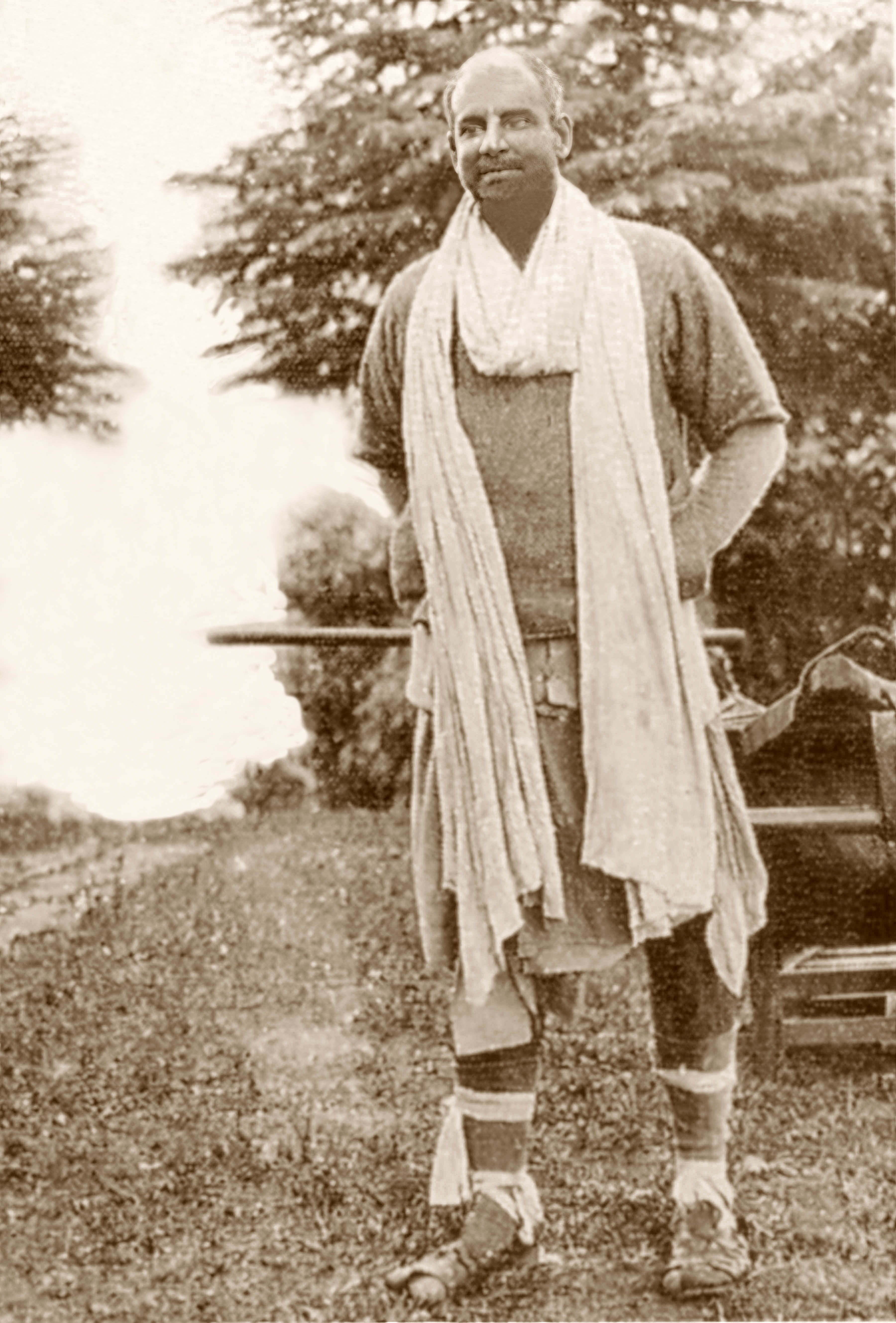
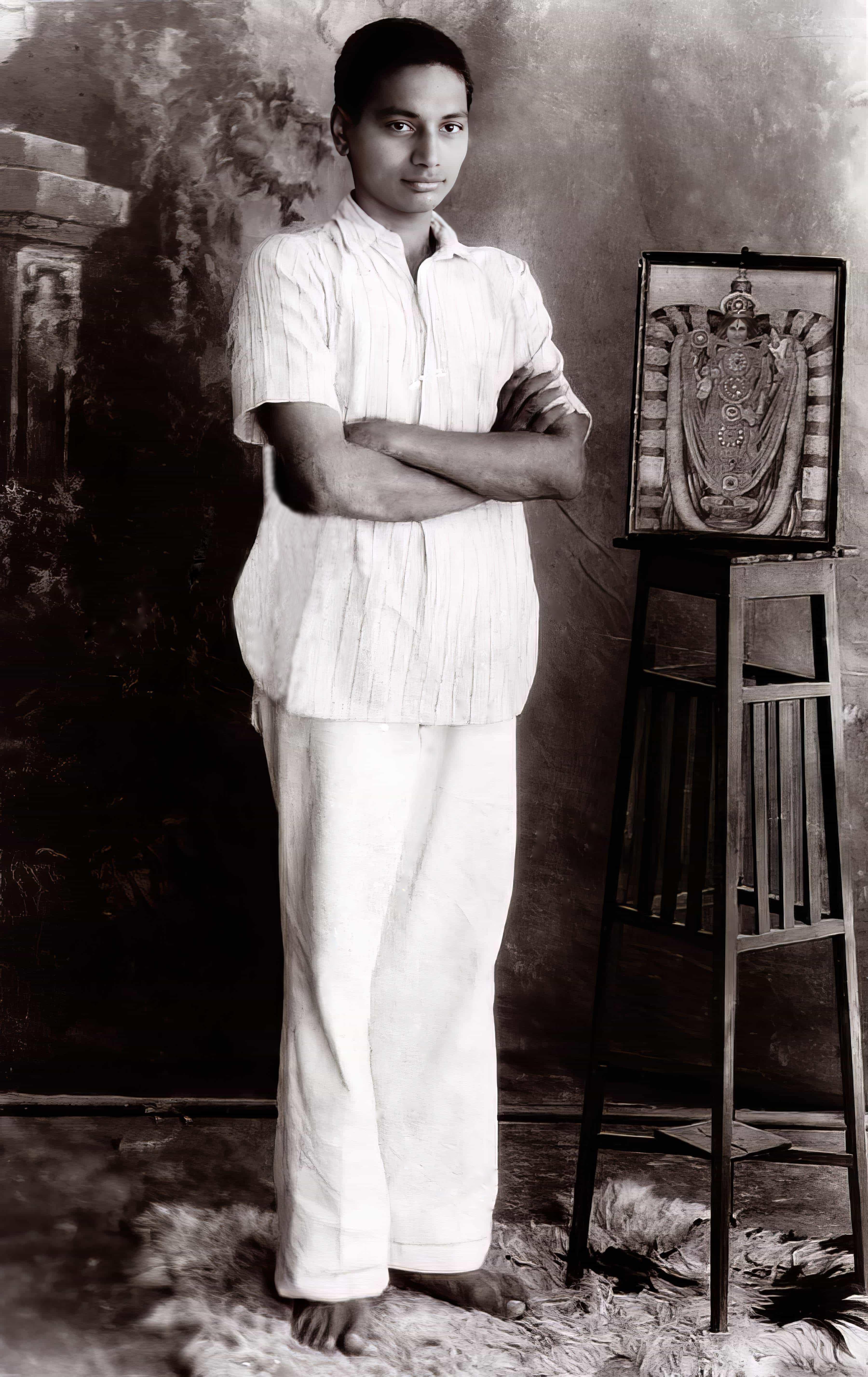
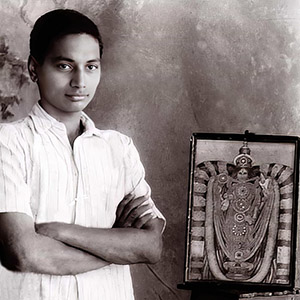
Parthasarathy: pictured here during his years of government service
Parthasarathy had a difficult life after the death of his beloved grandfather. His father, Narasimhulu Srinivasan, left the family home in Koil Vanni taking up work with the Madras Corporation, and also taking a new wife. At about the age of twelve, Parthasarathy was sent to live with his paternal uncle in Mannargudi, a town in what was then the Tanjore district of Tamil Nadu. Amidst the pain of separation from his family, he had to good fortune to meet Sri Ratnachalam Ayyar, a schoolmaster who became a beloved mentor, introducing him to the world through his precious library and personal wisdom. He also introduced him to the writings of Ramakrishna, Swami Vivekananda and Swami Sivananda. Parthasarthy was immediately drawn to Swami Sivananda and at about the age thirteen, wrote to him asking to join him in Rishikesh. Swami Sivananda replied, “I have no Ashram; I myself life on Kshetra Bhiksha.” He included a packet of his books and asked him to complete his studies. He also wrote: “In future, please include return postage.”
Many years intervened before that dream was realized, years spent living with his father, stepmother and half brothers and sisters while working for the government, first in Madras, then in Calcutta and finally in New Delhi.
-
 See full screen image
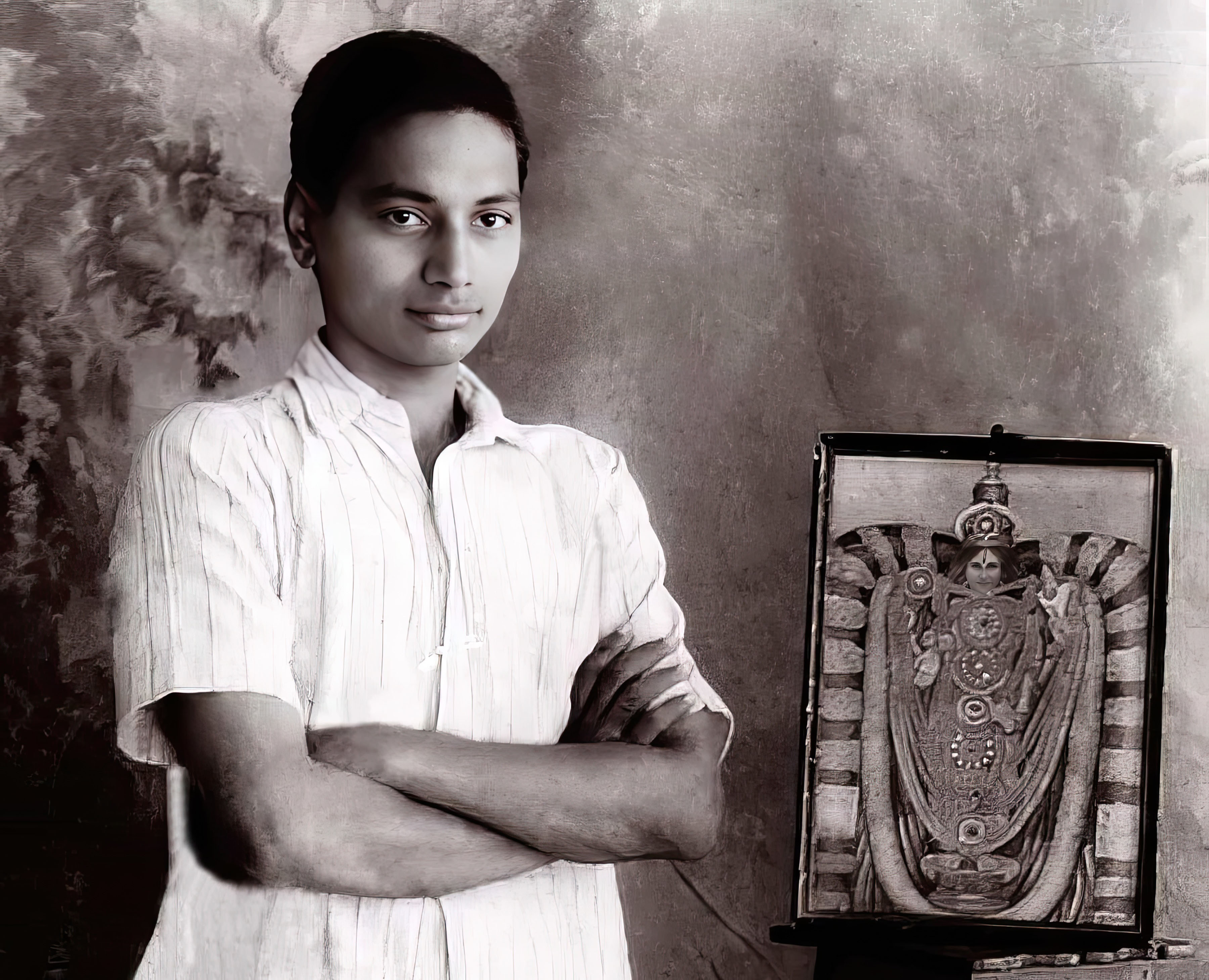
Closeup.
Add info on his success as a young man in public service (diplomatic core) and writing Sivananda asking if he could join, along with Sivananda’s response. -
 See full screen image
With his eyes ever open to the future, Swami Sivananda began to cobble together more rooms to accommodate his growing number of devotees and their work of disseminating knowledge running a medical dispensary. Of course he was the engine fueling these missions so very close to his heart.
He had begun with a few rooms that resembled a cowshed but now he incorporated an actual cowshed along with other abandoned and dilapidated structures scattered in this jungle area. But perhaps more importantly, he successfully petitioned the Maharajah of Tehri Garhwal for a land grant to construct an ashram following up on January 13, 1936 with drawing up a trust deed establishing The Divine Life Trust Society to disseminate spiritual knowledge and to establish and run medical dispensaries.
He had yearned for a solitary life in the jungle but now he was transforming a jungle into the beginnings of a thriving ashram whose mission would touch every country in the world.
-
 See full screen image
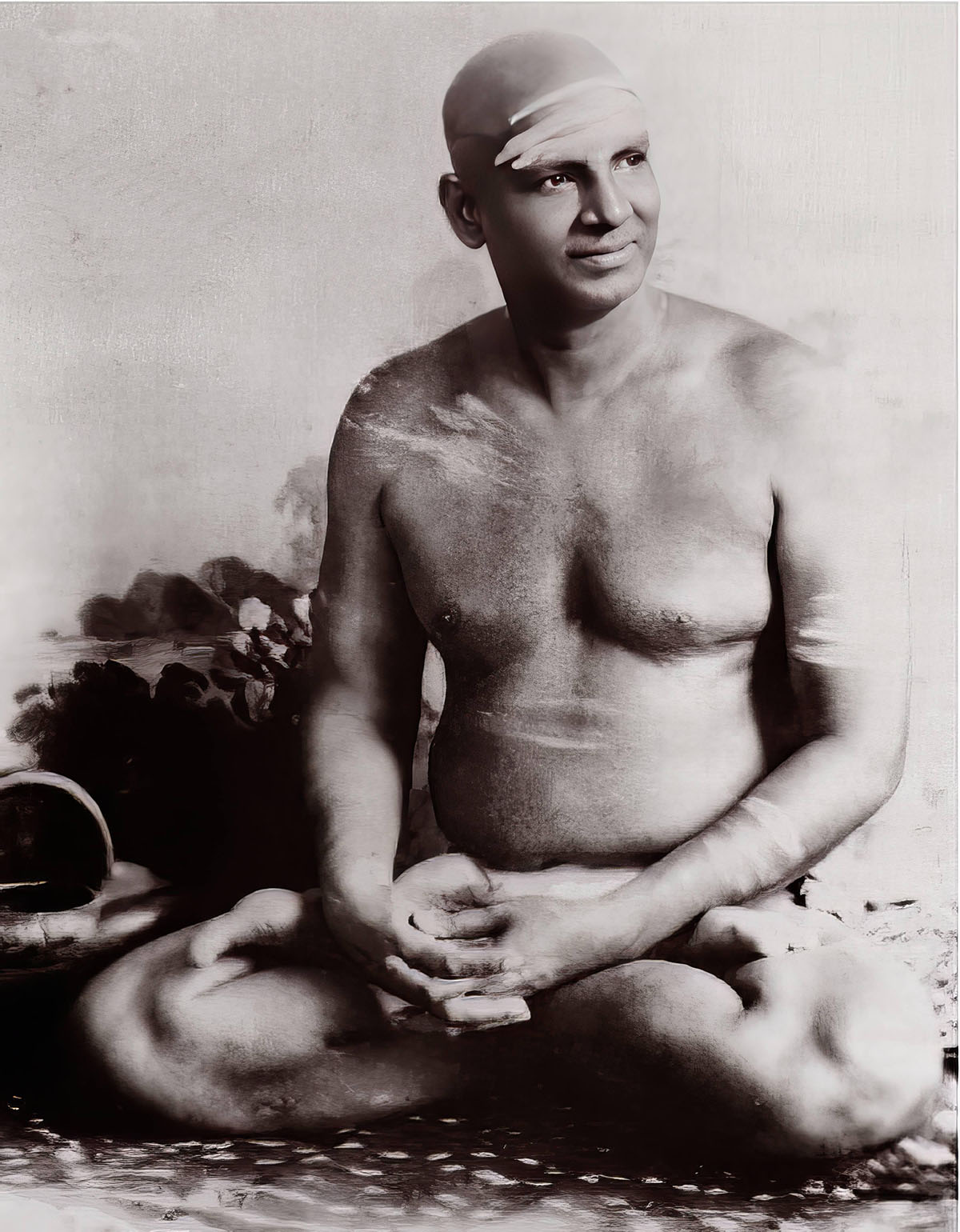
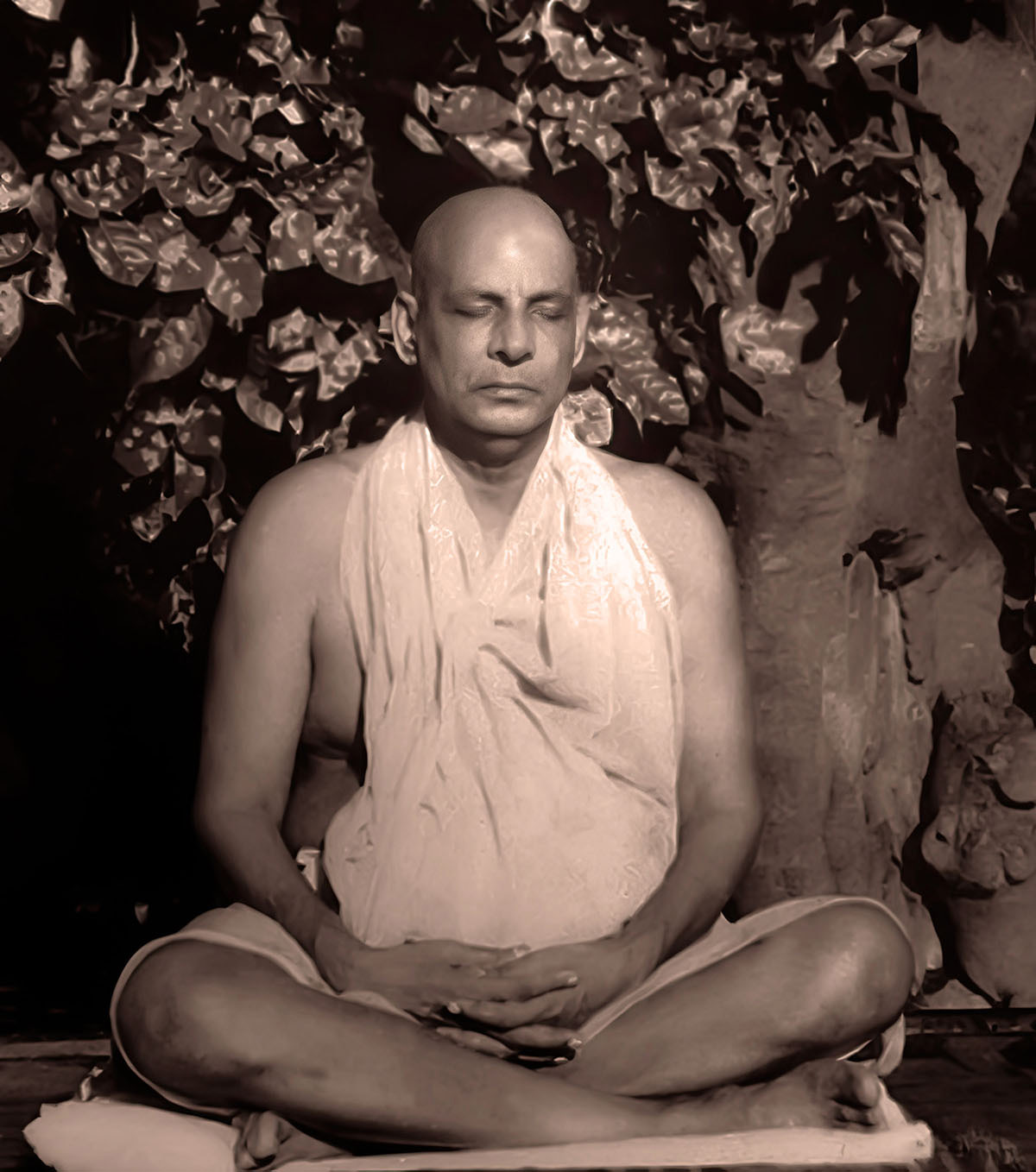
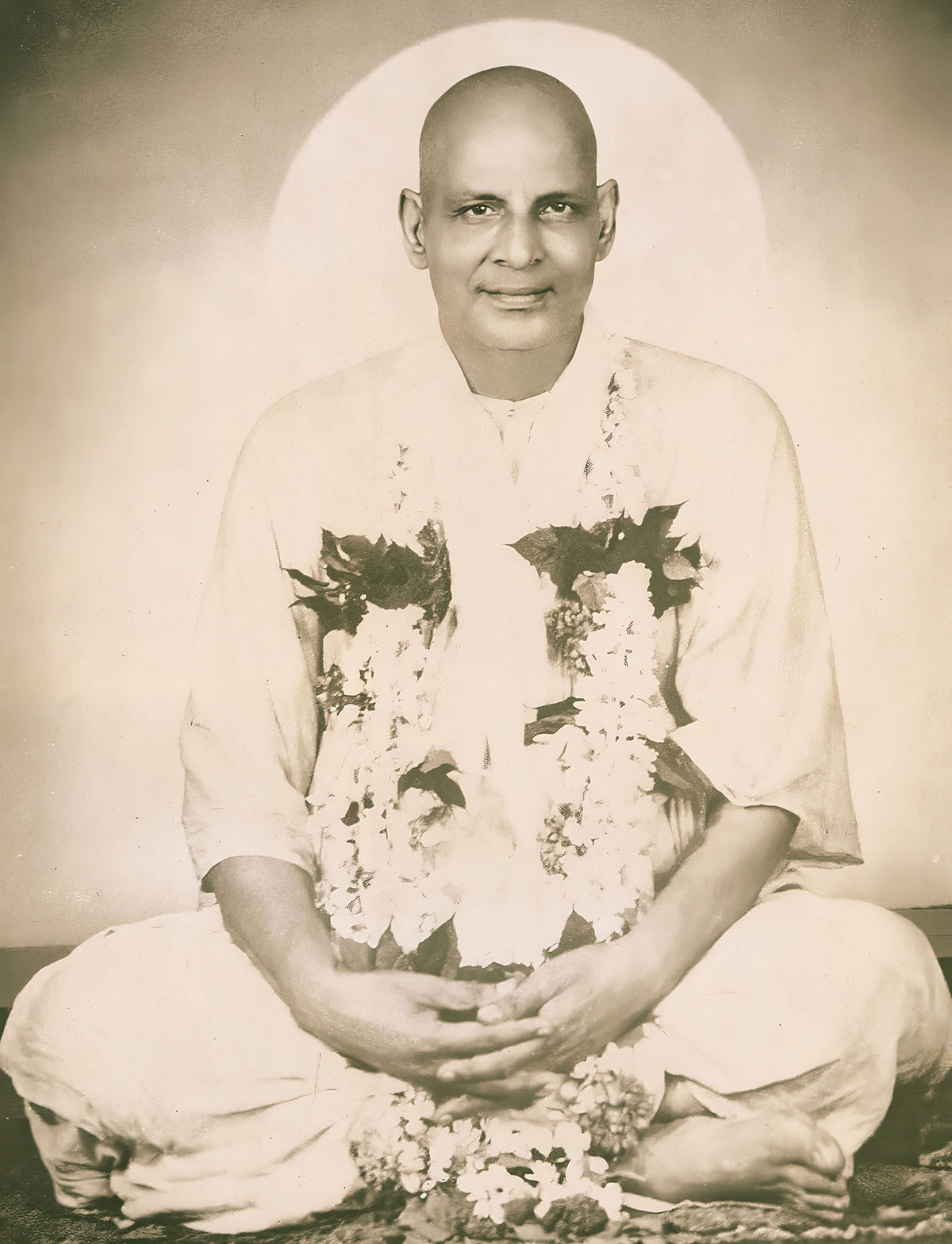
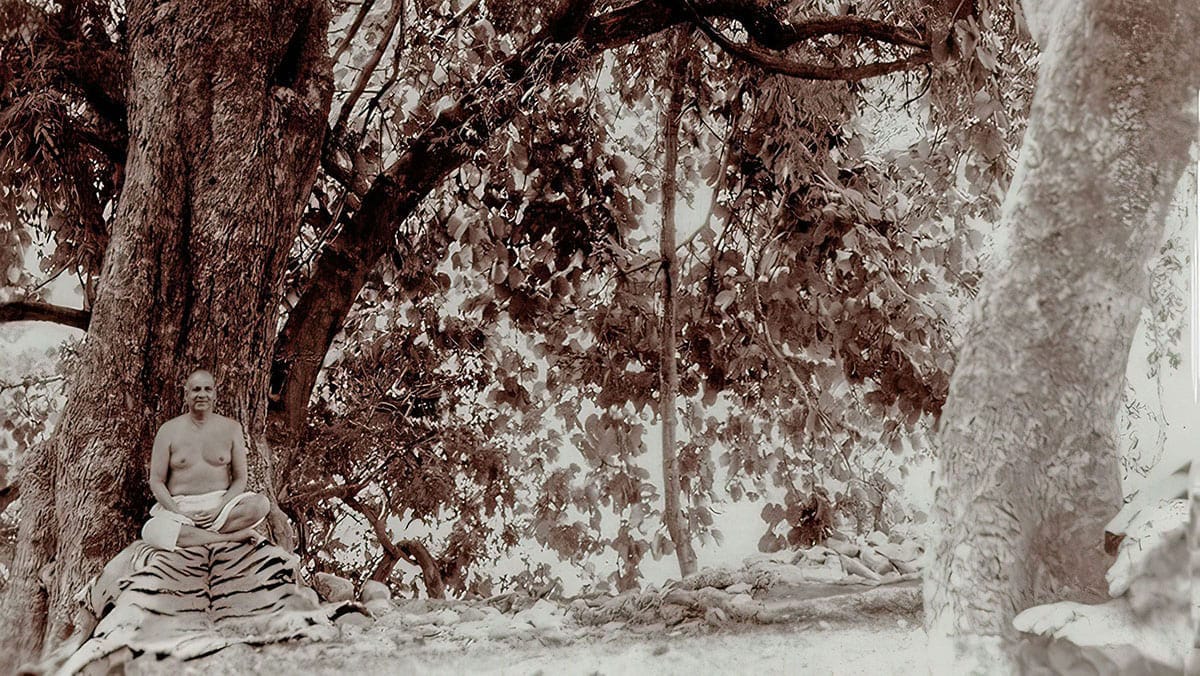
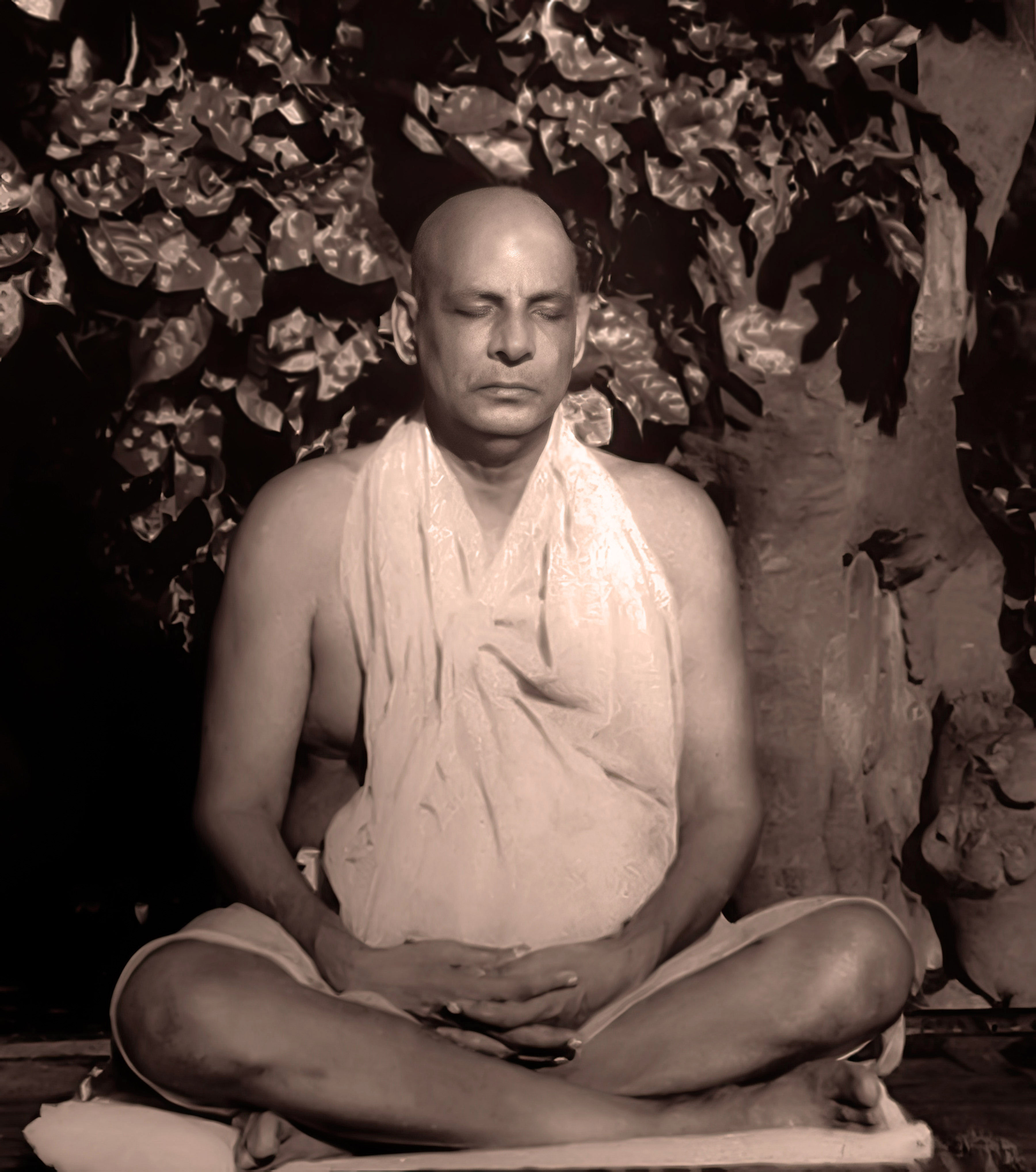
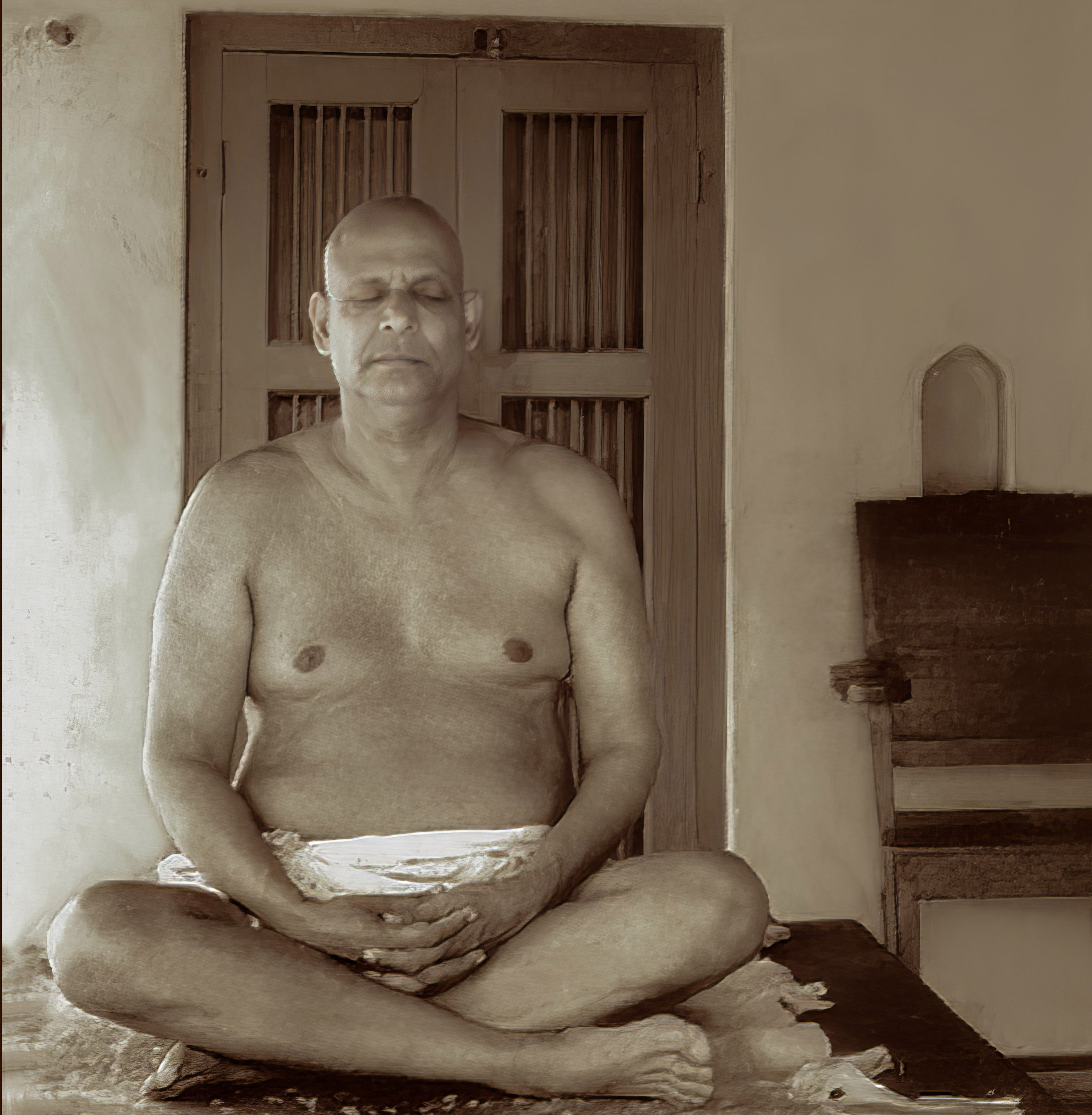
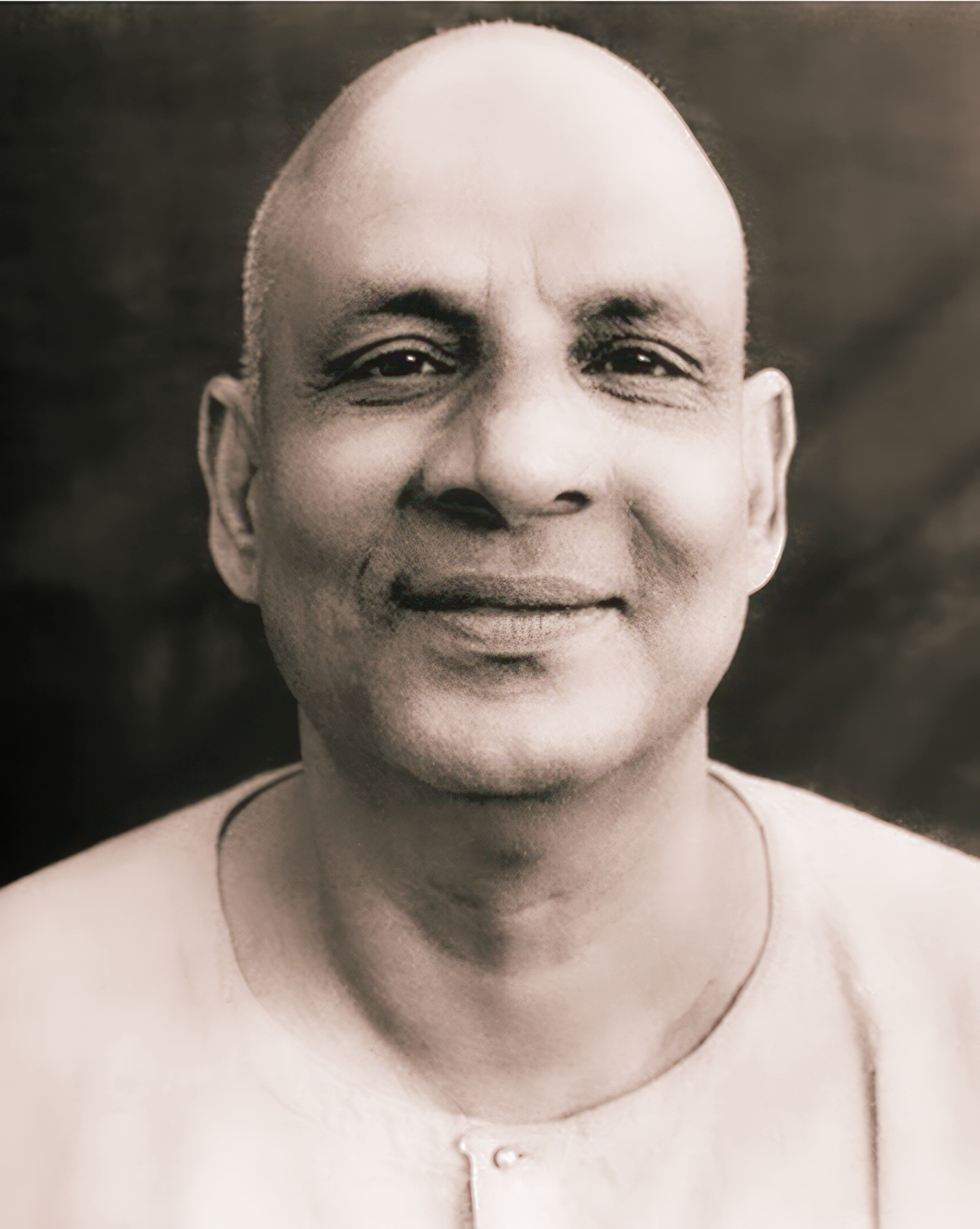
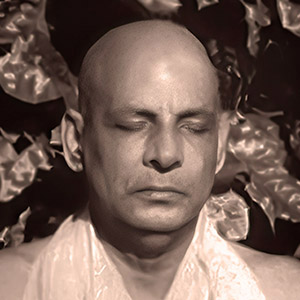
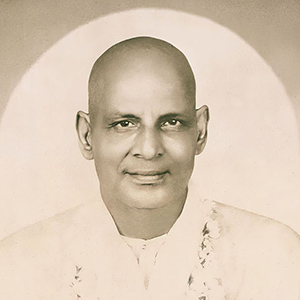
Sivananda is pictured here with eyes open yet in the previous photo with eyes closed–a perfect illustration of his teaching “Close your eyes and see God; Open your eyes and see God!” For him both ways of seeing God propelled him through his destiny. In the early years, with eyes closed in solitary meditation, the inner world opened to him in full radiance, culminating in his scintillating vision of Lord Krishna. In later years, with eyes open to the world as it poured into Sivananda Ashram, his vision directed him to teach and write in English which was becoming the Lingua Franca. His use of English was “scandalous” to more orthodox sannyasins, yet here we are a century later memorializing him in English.
-
 See full screen image
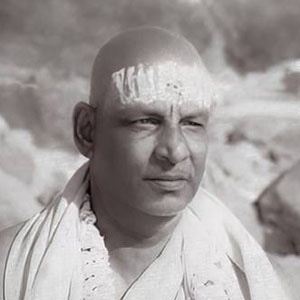
Swami Sivananda on the banks of the Ganges, anchoring the growing ashram
The Divine Life Trust Society was the legal springboard for the Divine Life Society, open to seekers world-wide wishing to align with the precepts of the Divine Life being taught by Swami Sivananda. As his reputation grew through his publications and tours of India, more and more seekers sought him out in Rishikesh and the ashram grew to accommodate them. These disciples yearned to spend time with their master and were given permission to construct kutirs on the land grant given by the Maharajah of Tehri Garwahl. Though they were built for their own accommodation during their visits with to the ashram, the understanding was that when they were not in residence, these kutirs would be available to other visitors. This model has continued to the present day.
-
 See full screen image
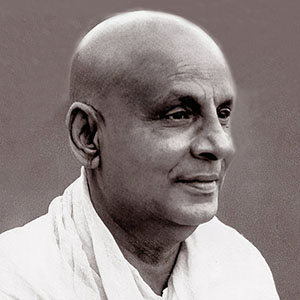
Here’s yet another image of Sivananda in meditation with Eyes Open.
In 1942 a Bhajan Hall was completed housing all public gatherings in the ashram. Next came Vishwanath Mandir, the temple and heart of the ashram. Years earlier Swami Sivananda had noticed the abundance of bael trees (sacred to the worship of Lord Siva) high on the hill above the Ganges and felt that this would be the ideal place for a temple. Mentally offered bael leaves to the Lord planting the seed for the Vishwanath Mandir to be built in 1943.
In 1942 a Bhajan Hall was completed housing all public gatherings in the ashram. Next came Vishwanath Mandir, the temple and heart of the ashram. Years earlier Swami Sivananda had noticed the abundance of bael trees (sacred to the worship of Lord Siva) high on the hill above the Ganges and felt that this would be the ideal place for a temple. Mentally offered bael leaves to the Lord planting the seed for the Vishwanath Mandir to be built in 1943.
-
 See full screen image
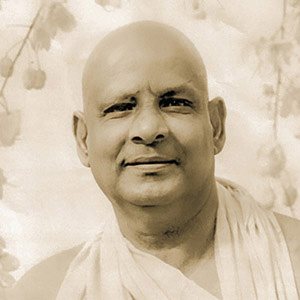
Swami Sivananda in repose
1947 marked Swami Sivananda’s 60th birthday and was thus known as the Diamond Jubilee Year. It was also a year of intense activity and expansion in the ashram with the construction of the Diamond Jubilee Hall to house the office, Vishwanath Ghat on the bank of the Ganges and a block of three more kutirs. The work of the Ashram was expanding in tandem with Swami Sivananda’s growing fame and influence, all of which was leading up to the All India Tour in 1950.
-
 See full screen image
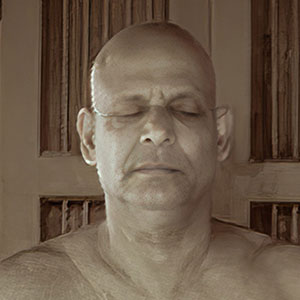
Swami Sivananda resting in meditation in his kutir
In the last years of the 1940’s and in the early 50’s the Ashram continued its phenomenal growth, the government having approved the inclusion of another hill to the property. Swamiji’s dynamic spirit was behind every new brick and he in fact helped carry them! Every new brick was infused with his spirit of service as well. His instruction to the disciples who had joined him in the Ashram could have been uttered today: “One has to follow the policy of ‘short and sweet’ in the world today. The traditional piety is conspicuous by its absence and the people have very little time to spare nowadays….So when people are with me, I quickly give them whatever I have to give, according to their need and particular temperament.” Sometimes what he had to give was some fruit, sometimes a book, or most preciously a few words of wisdom aimed like an arrow at the heart of that person’s personal concerns.
-
 See full screen image
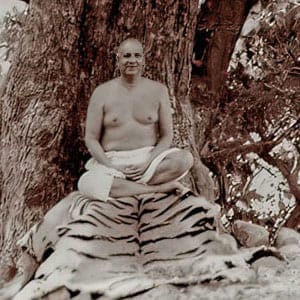
Swami Sivananda meditating in the forest.
The flowering of the Ashram did not come without cost to Swami Sivananda. When he had found refuge on the banks of the Ganges all those years ago, his one dream had been to settle into deep and secluded meditation under the protection of the sacred Ganges and Himalayas. A public mission had never even entered his mind. But destiny had caught hold of him and carried him into sacred service of humanity.
On February 18, 1941 though, he slipped out of the Ashram without anyone’s knowledge leaving a note saying: “I have nominated Swami Paramananda, my senior disciple, as the president of the Divine Life Society….I have to retire immediately for reason of my poor health.” His disciples searched everywhere for their Master but were unable to locate him. Swami Paramananda wrote in an announcement dated February 21st, …“Sri Swamiji has a heart full of unlimited mercy and love. In order to serve humanity on a large scale in a systematic and organized manner, he established the Divine Life Society in 1936. He remained in a small hut on the banks of the Ganges, and for the benefit of the whole world he turned out tremendous work in various directions….Thousands have been given a new life, derived fresh energy and hope, inexpressible joy and peace through the grace, mercy and blessing of Sri Swamiji.
On the unforgettable day of Tuesday, the 18th of February, 1941, Swamiji retired from the active field of the D.L.S. work. He has again taken to seclusion, either in the deep forests of the Himalayas, or in the plains on the banks of the hold Ganges. He left Ananda Kutir with a single cloth, without any money and without taking leave of anyone, at about 2 pm. If anyone is fortunate to meet this magnetic personality, we request him not to disturb Swamiji in any way. But if people happen to meet him they may have his darshan and take care of his body when the opportunity arises….Sri Swamiji’s love for us in unbounded. He will always dwell with all of us. He cannot desert us and deprive us of his darshan…but we must carry out his instructions to the very letter…”
Meanwhile, a villager was attracted to this radiant sadhu and offered him food and refreshment at his sugarcane farm. It was here that one of Swamiji’s disciples found him and implored him to return to the Ashram on February, 28th. Swamiji assented but wrote in a letter, “You will have to manage everything. I will be in name only. Mysterious are the ways of Lord Siva. May his blessings be upon you and all….Be cheerful and bold.”
-
 See full screen image
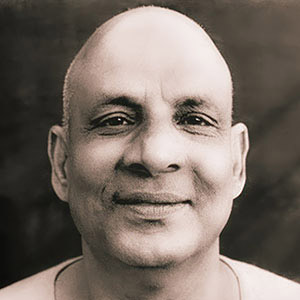
“A Love That Was Fire, A Fire That Was Love”
Swami Venkatesananda described his Master, Swami Sivananda, as “A Love that was Fire; A Fire that was Love,” and this was the Swami Sivananda who emerged from his “second renunciation” in 1941 when he had slipped away from the Ashram, again taking up the life of an anchorite wandering the banks of the Ganges. Though he had written upon returning, “You will have to manage everything. I will be in name only,” he had followed that with, “Mysterious are the ways of Lord Siva.” It also seemed, “Mysterious are the ways of Swami Sivananda,” as for more than the next twenty years he was the shimmering heart of a growing and even bustling Sivananda Ashram. Disciples were guided with loving fire, new buildings sprang up turning a jungle into Sivananda Nagar (village), books were written, guests welcomed from all over the world, and crowning it all was the All India Tour in 1950 which virtually set the country on fire with his love.
-
 See full screen image
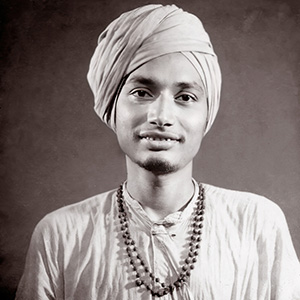
When he wrote to Swami Sivananda as a young student of 13, asking to join him in his ashram, Swami Sivananda replied, “I have no Ashram; I myself life on Kshetra Bhiksha (alms)” and encouraged him to finish his studies. That he did, going on to a very successful career in the government, first in Madras, then Calcutta and finally serving as an executive assistant to one of the most prominent officials in the Imperial Secretariat Service, the Civil Service under the British Colonial government. Through all these years he had kept up his correspondence with Swami Sivananda though and had actually met him briefly in New Dehli in 1944. In December of that year, he traveled to Rishikesh to attend the Christmas Sadhana week. On the last day before he was to return to Delhi, he expressed to Swami Sivananda his admiration for the Ashram and its atmosphere of quiet spirituality. He was astounded when Swami Sivananda turned to him with words like a thunderbolt saying: “Stay here then! I have built it only for you all.”
Parathasarathy was no longer the 13 year-old boy and had developed the normal aspirations of a young man, hoping to get an apartment and thrive in his career, while still serving and supporting Swami Sivananda. It took many months to garner the courage to leave his charmed life in the capitol and board a bus to Rishikesh. His boss was more than dismayed and indeed never accepted his letter of resignation!
-
 See full screen image
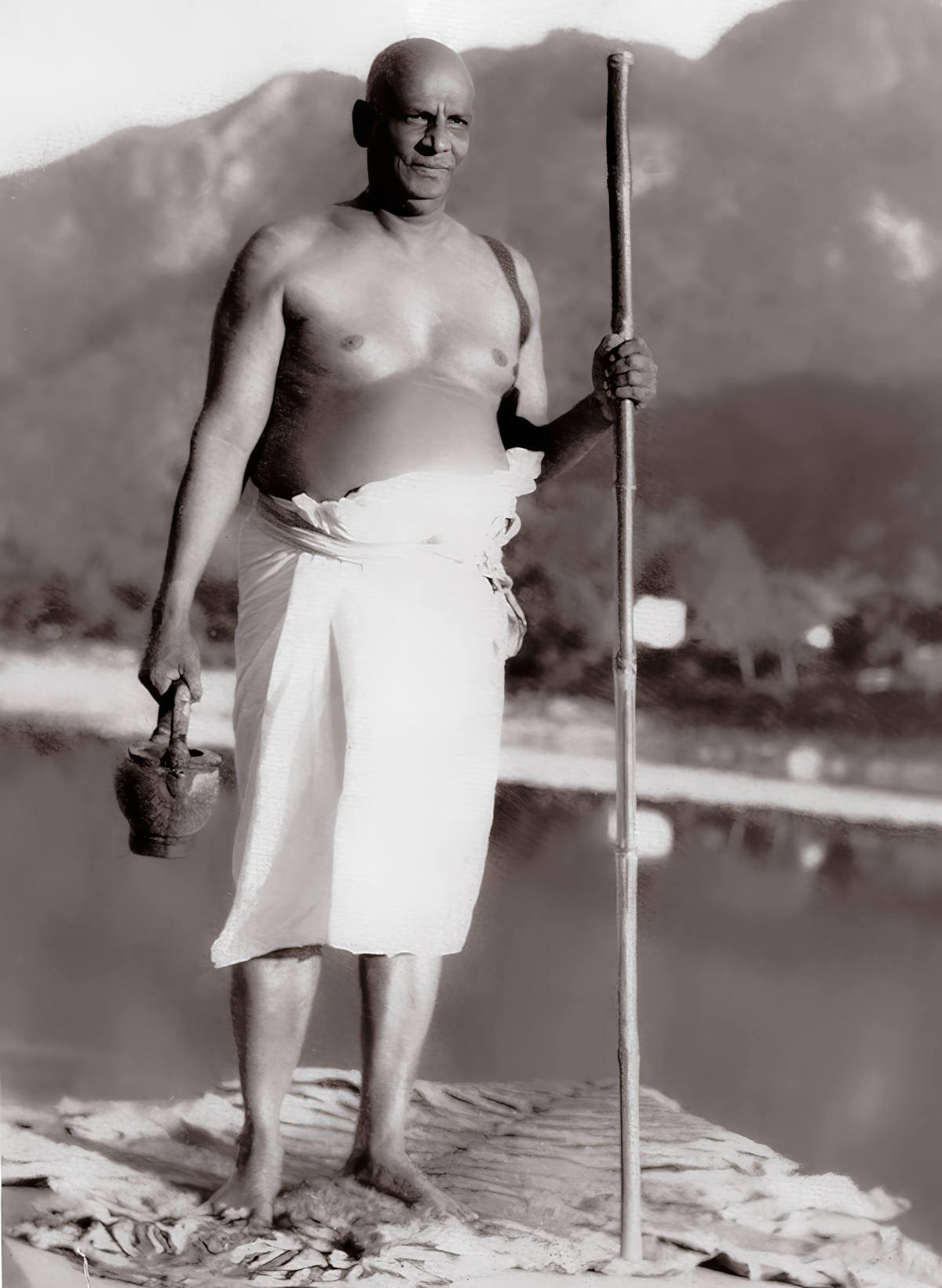
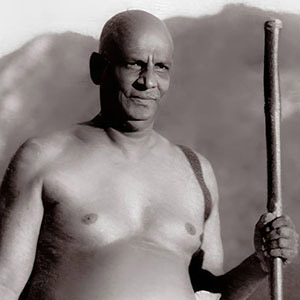
Swami Sivananda: the “Mighty Mountain” sannyasin with the Himalaya mountains behind him
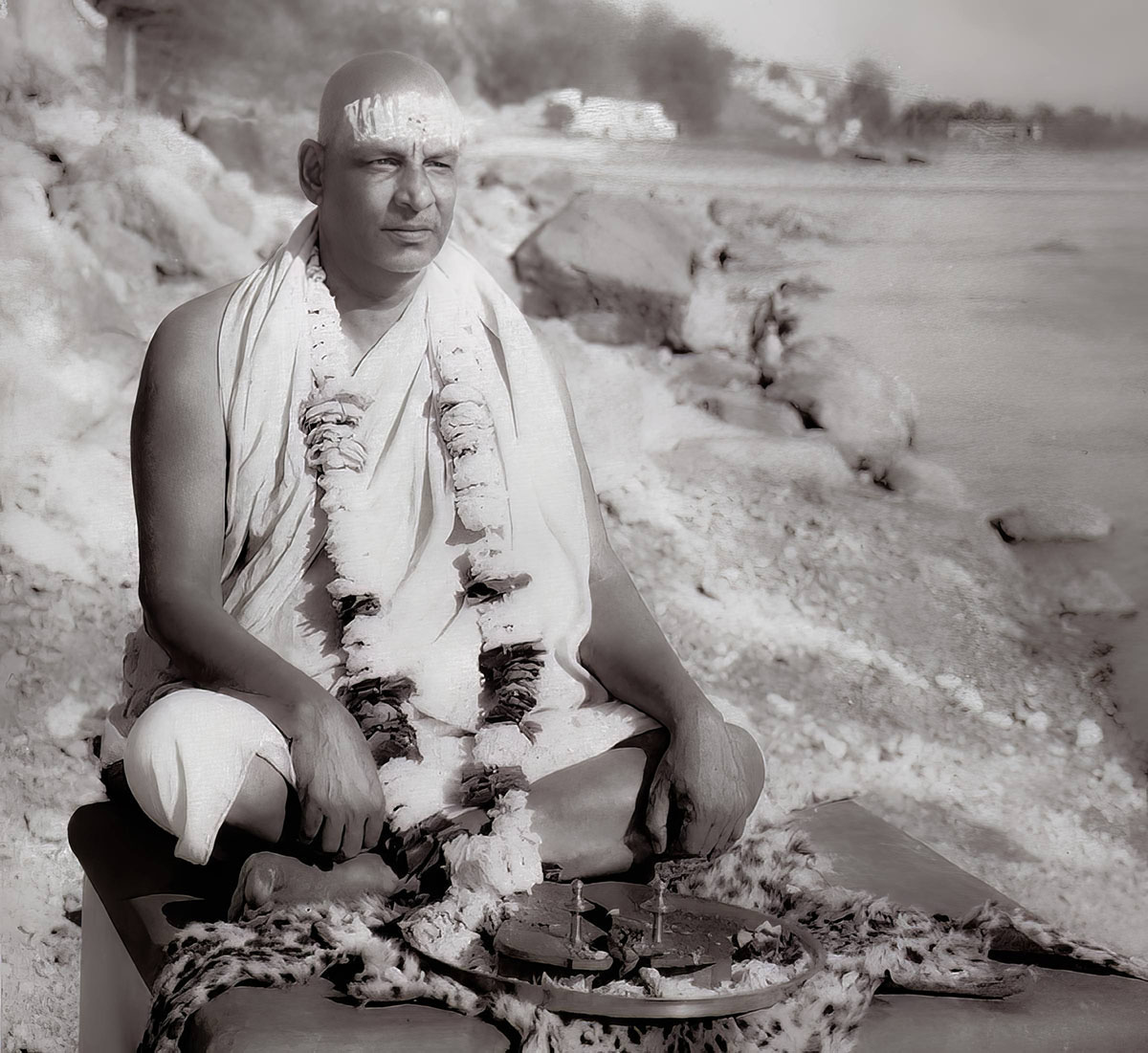
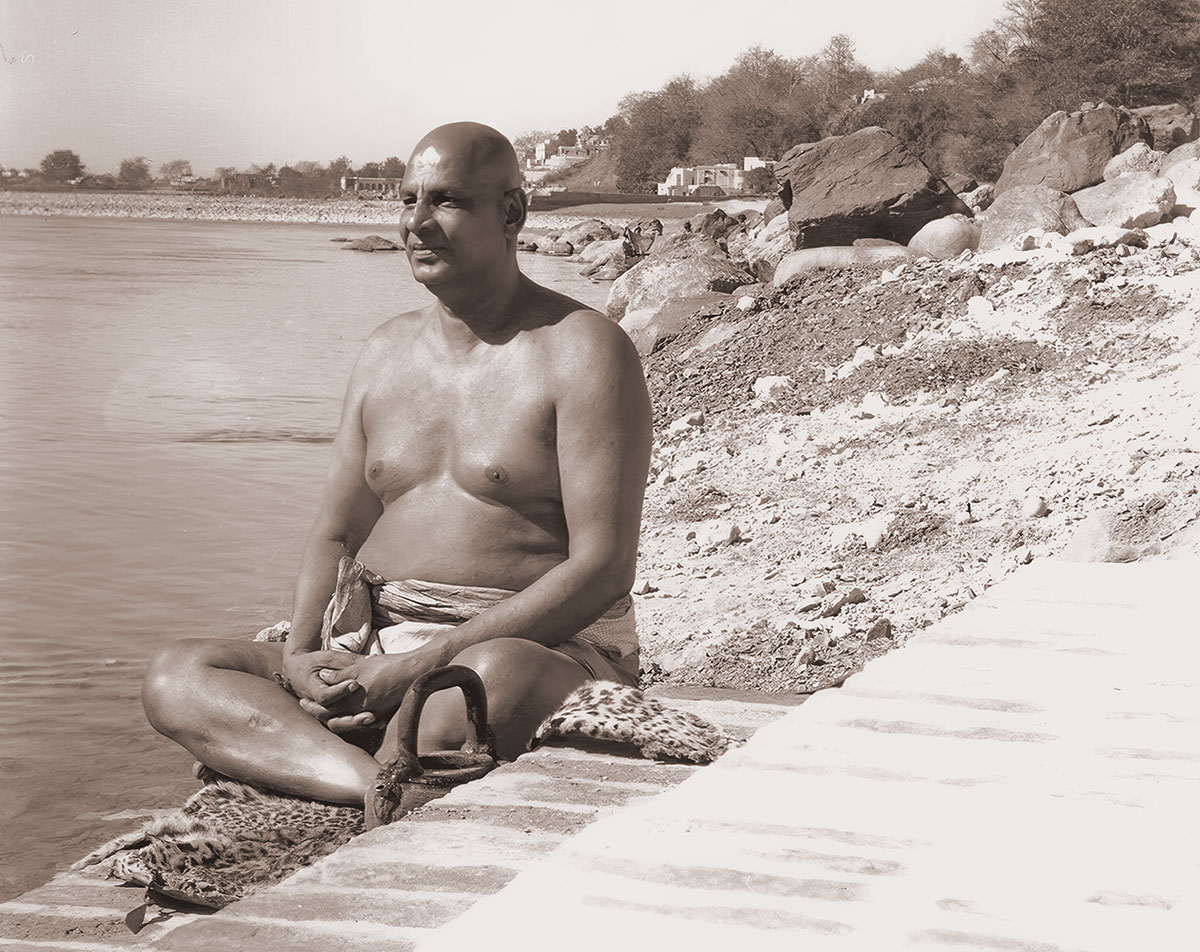
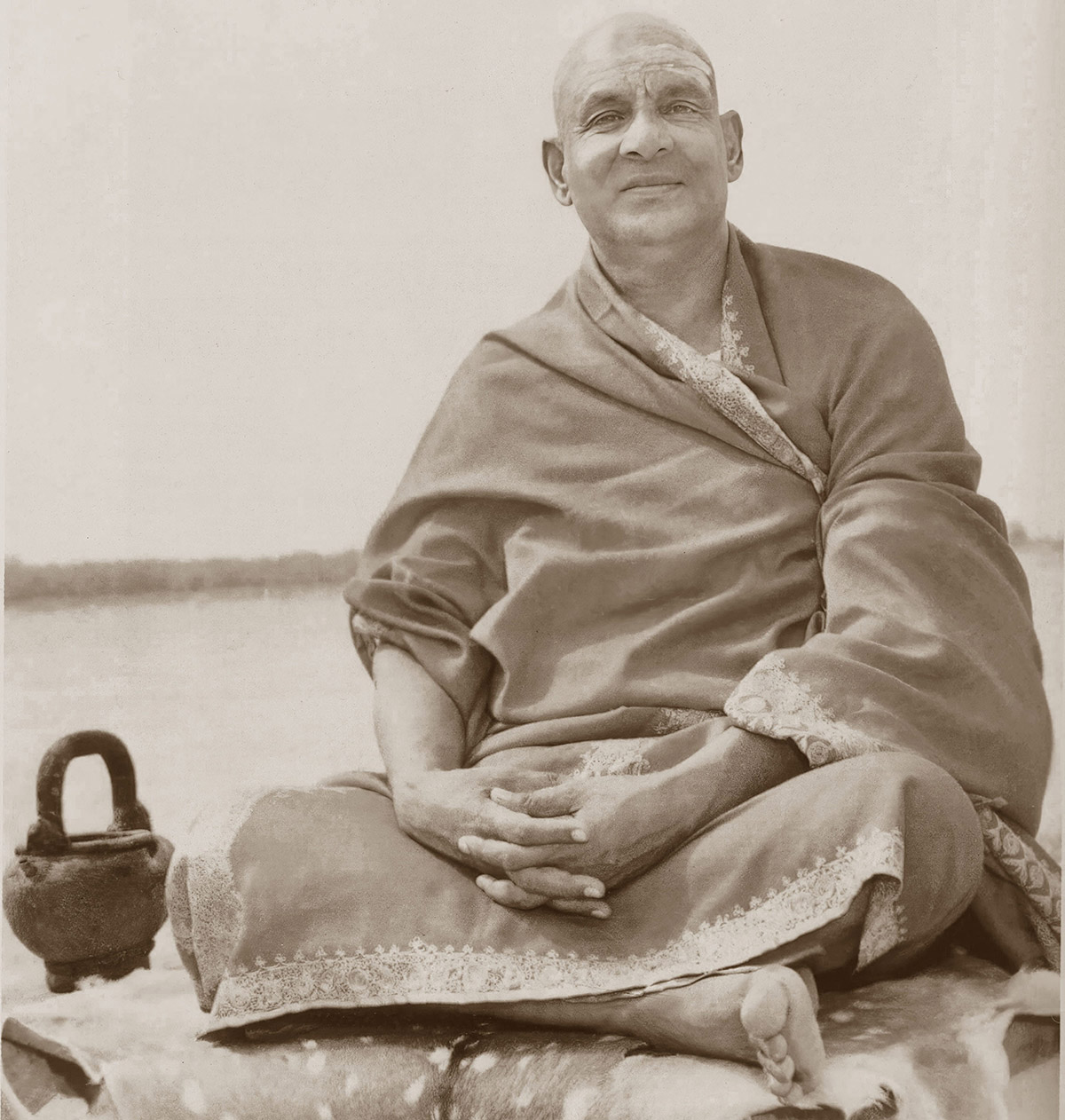
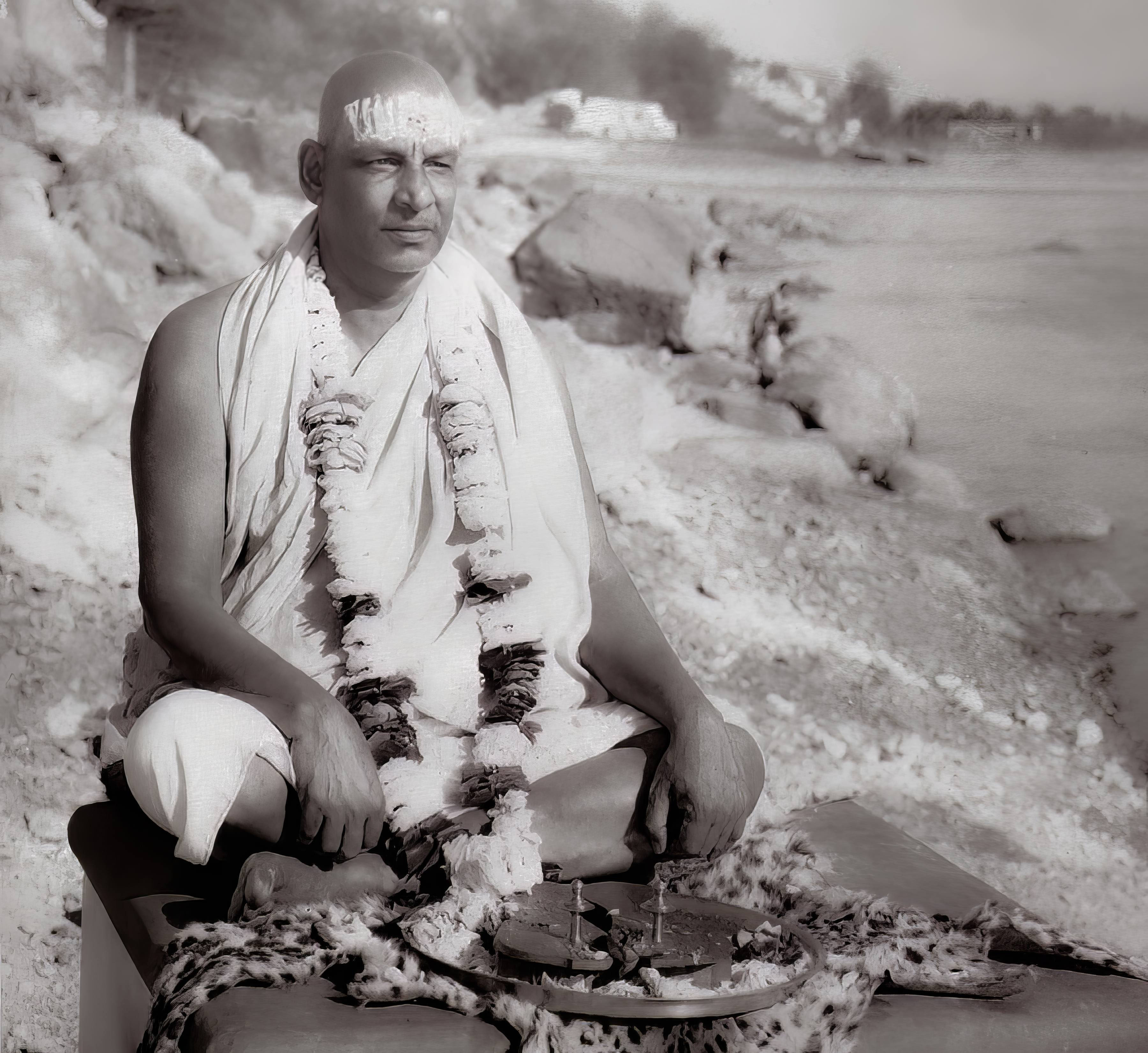
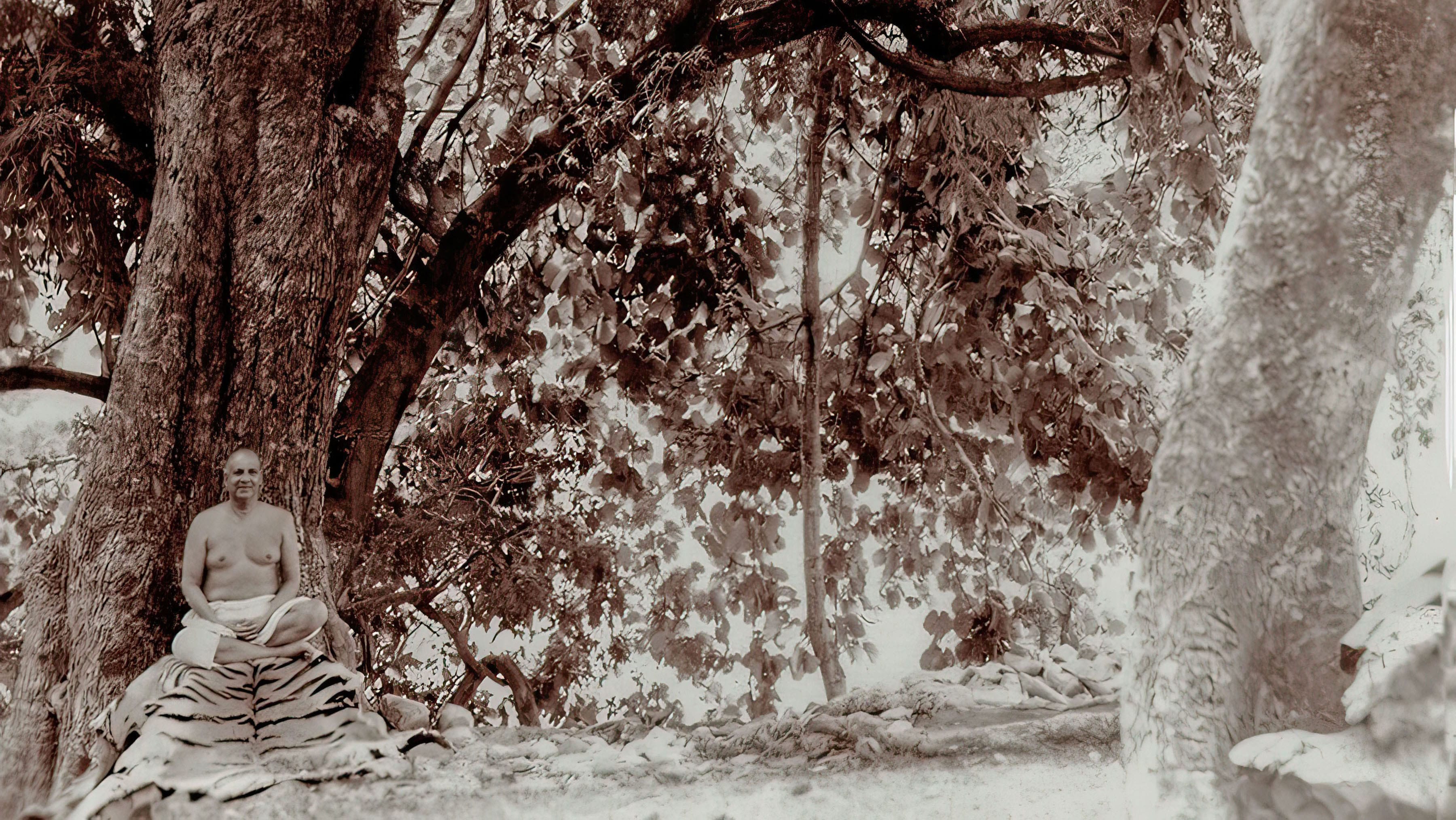
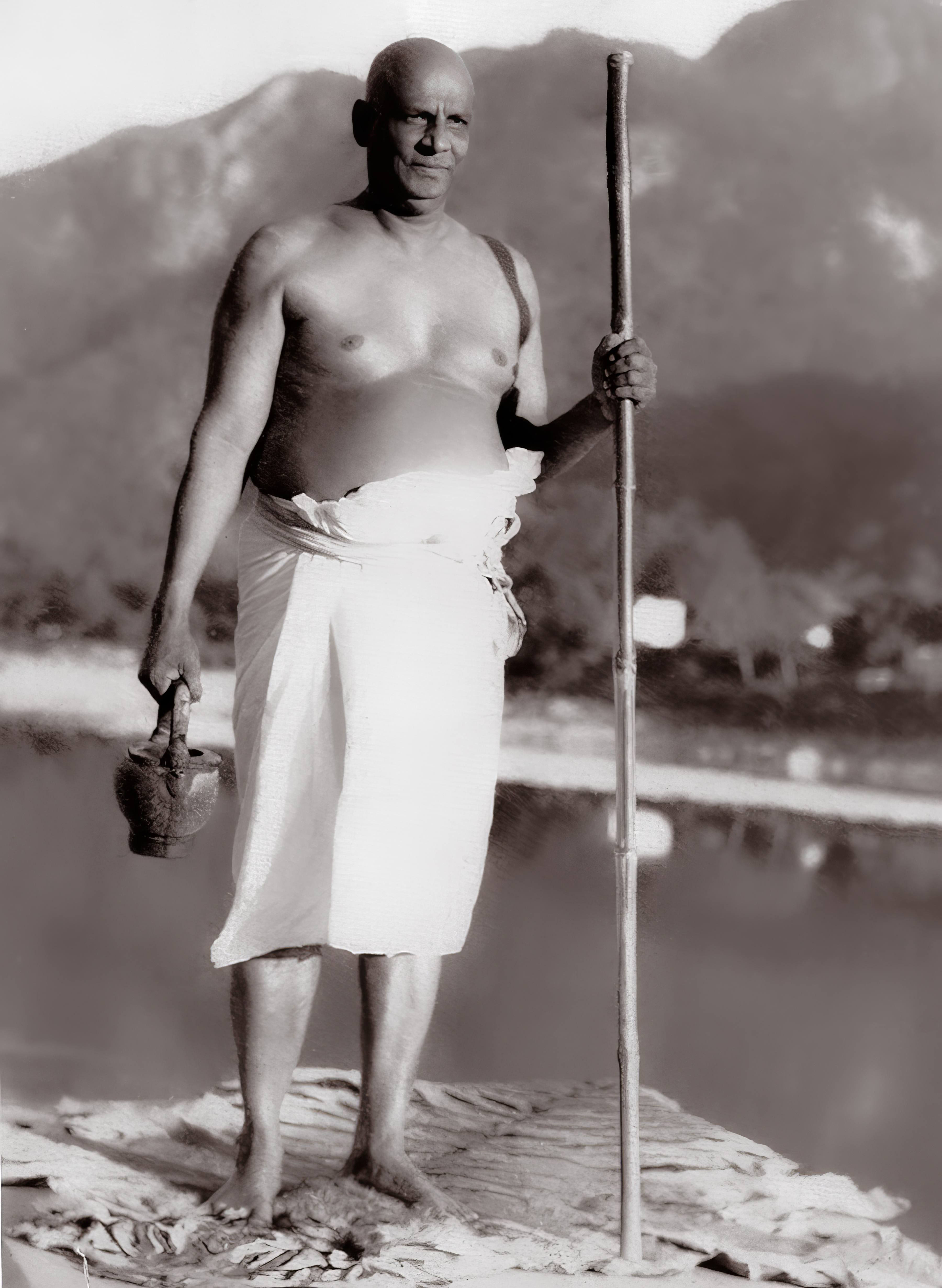
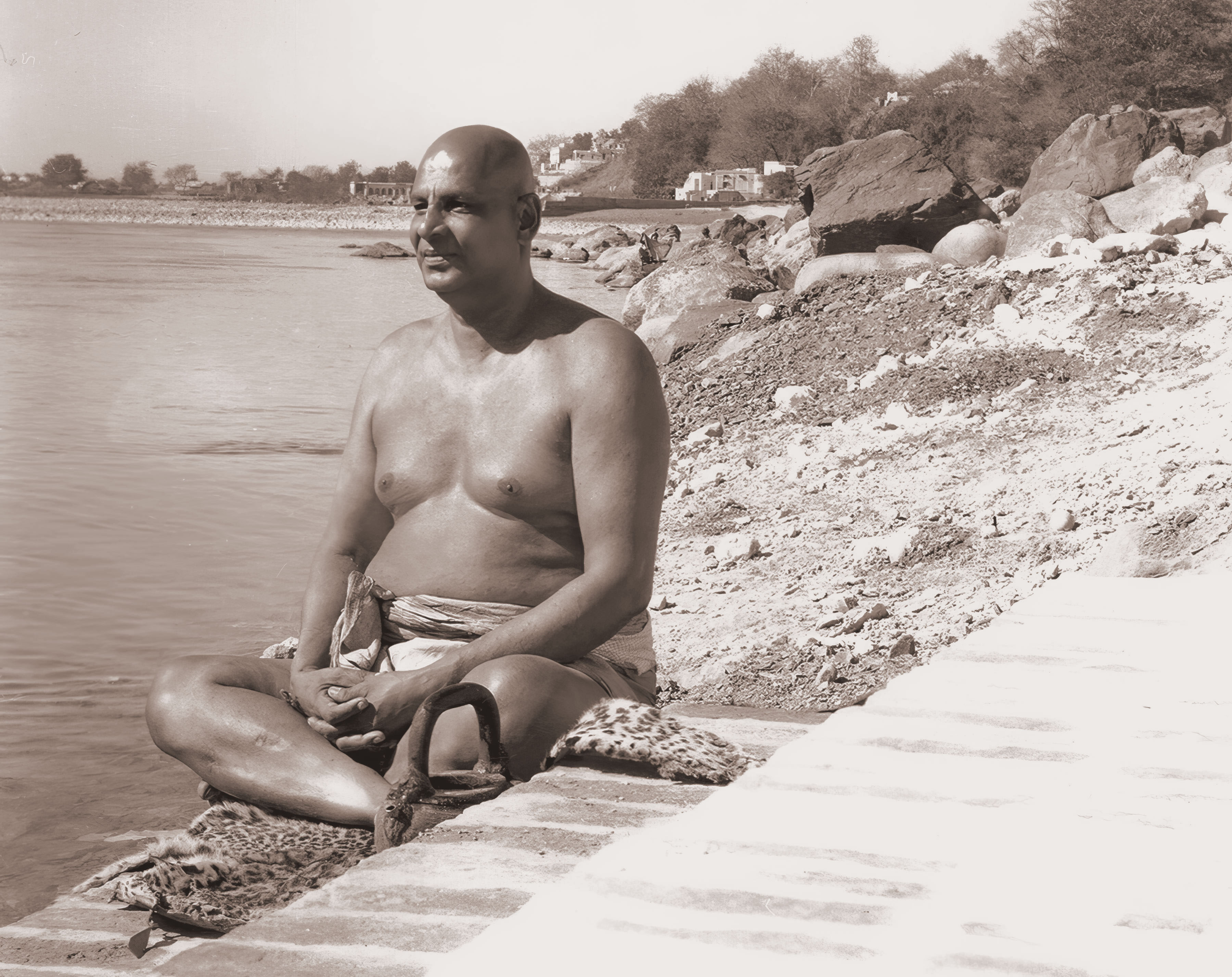
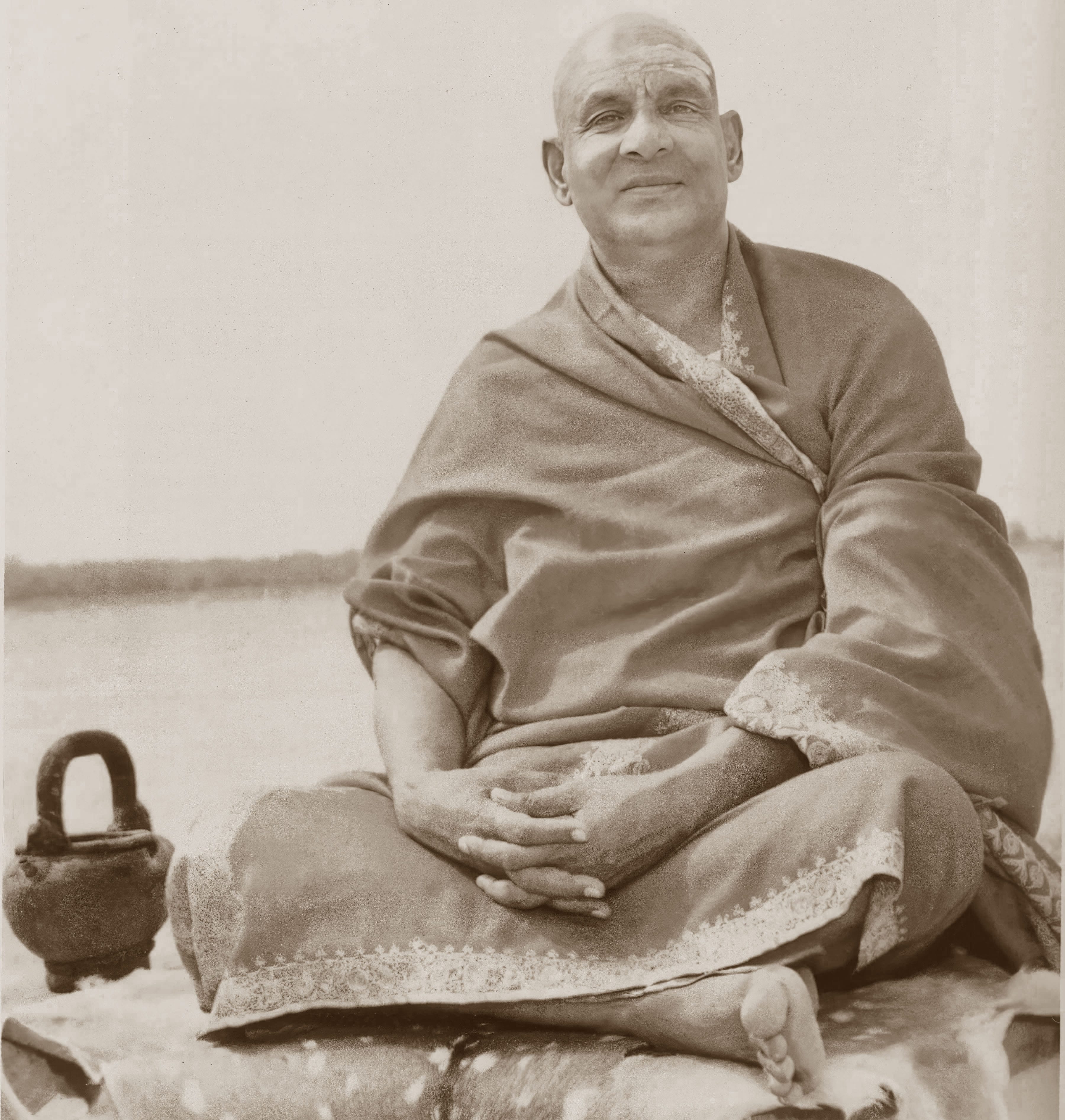
The Himalayas and Ganges were literally daily sustenance to Swami Sivananda. Once the sun had risen, he bathed in the morning sunlight and sipped from the Ganges while taking in the majesty of the mountains surrounding him. Indeed, the Sanskrit word Giri signifies mountain and is one of the 10 orders (Dashnami) of sannyasins designated by Sri Sankara in the 8th century. Here he is pictured with his Kamandalu (sacred water pot of the sannyasin, made from a gourd), his walking staff, and the tiger skin used for meditation—all symbols of the life of a renunciate.
-
 See full screen image
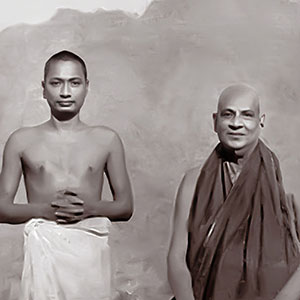
In his early years in the Ashram, the young Parthasarathy (later Swami Venkatesananda), thrilled to have joined his Master, threw himself completely into service of Swami Sivananda, utilizing all the skills he had learned as an executive assistant to a prominent government official. He was expert as at taking dictation and typing, though his amazing skills went further: he could listen to Swami Sivananda speaking for over an hour and return to his room (which at that time was a cave that he shared harmoniously with thousands of scorpions!) and reproduce his talk virtually word for word.
One day he was disturbed in his work by an unholy ruckus. Alarmed, he went to investigate only to find two venerable swamis engaged in a physical fight! He was deeply shocked and returned to his room. He assessed his life, realizing that he could serve his Master very well from Delhi, where he would be earning money that he could send in support of the Ashram. Was this not better? He had joined the Ashram not only to serve Swami Sivananda but to enter a different type of life, one protected from the random chaos of city life. This assumption was evidently not true.
He was sitting there deeply conflicted when Swami Sivananda himself entered his room with the strong admonition: “Do not think that just because you have come to Rishikesh it means that you have gone above Maya. The realm of Maya does not end with the other bank of Chandrabhaga.” (stream between Rishikesh town and the Ashram). Then he continued: “Here I have created for you the best field for quick evolution. Do Japa on the Ganges bank. Go to the Mandir and attend the Pujas. Go the Bhajan Hall and do Kirtan. Work, work, work. Serve the sick. Study books in the Library. Do not join with the tall-talkers and gossip-mongers. If you are to evolve you will have to guard yourself against all these. If you do not, then even here you will continue to be the same man.” (pp 205-206) ” The stunning appearance of his Master at this critical moment and his pointed words, convinced him that he had come to the very place he was meant to be.
-
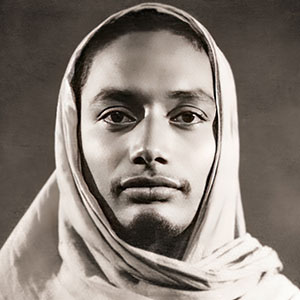 See full screen image
Parthasarathy arrived in Rishikesh in 1945
It was Ekadasi Day, the 2nd of September, 1945. Parthasarthy and his friend Sri S. Swaminathan, described crossing the small river between Rishikesh and the ashram as crossing the threshold from one life to another. They shaved their heads as a symbolic gesture and removed their shoes, arriving at the ashram barefoot and with blisters!
Parthasarathy threw himself into ashram work with more than gusto, causing Swami Sivananda to say to him: “What will you gain if you go on typing like this all day and night? It is not for that you have come here. You must do Japa, meditation and Swadhyaya (study); you must get up at 4 a.m. and conduct Sadhana classes. Then will you evolve nicely.” When Parthasarathy asked Swami Sivananda to “protect me with the robes of a monk!” Gurudev replied, “When I hear that Parthasarathy was nicely beaten with shoes and he laughed, and then [and then] alone will I give you Sannyas.” That time was not far off—a mere two years as, traditionally when you took Sannyas, you gave up caste and, for the orthodox, this placed you outside society—almost an outcaste. Having crossed this bridge, they were often no longer accepted by their families.
In Parthasarathy’s case, his family did not approve of him living in the Ashram. He was expected to assume the role of the eldest son and become the head of the family in time, a role that he could never accept. This was a factor when Swami Sivananda initiated him into the Saraswati branch of the Sannyas order on September 12th, 1947, the Diamond Jubilee Celebration of Swami Sivananda. He and 11 others were the first to be initiated as part of Swami Sivananda’s annual birthday celebrations. Swamiji was 25 years old, and when his Master asked him to choose his name, he chose Swami Venkatesananda, his lifelong chosen deity.
-
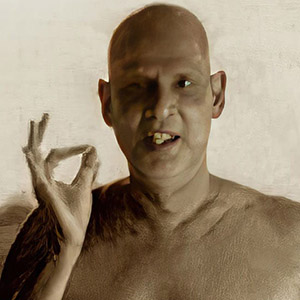 See full screen image
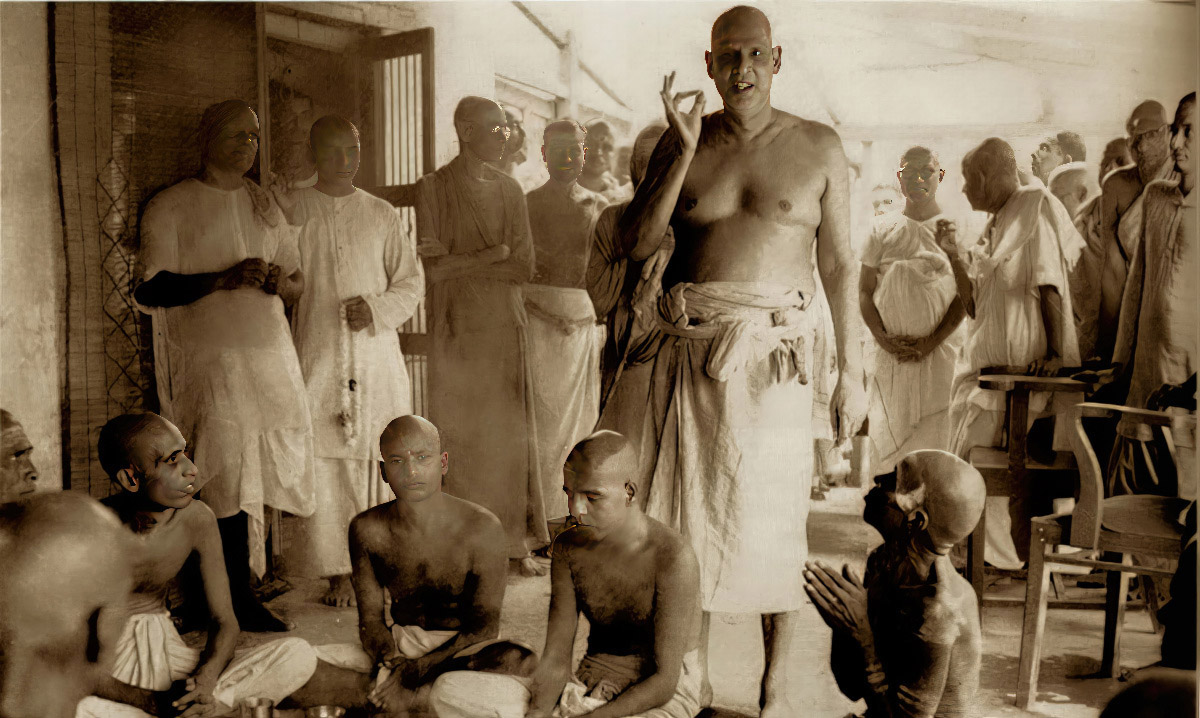
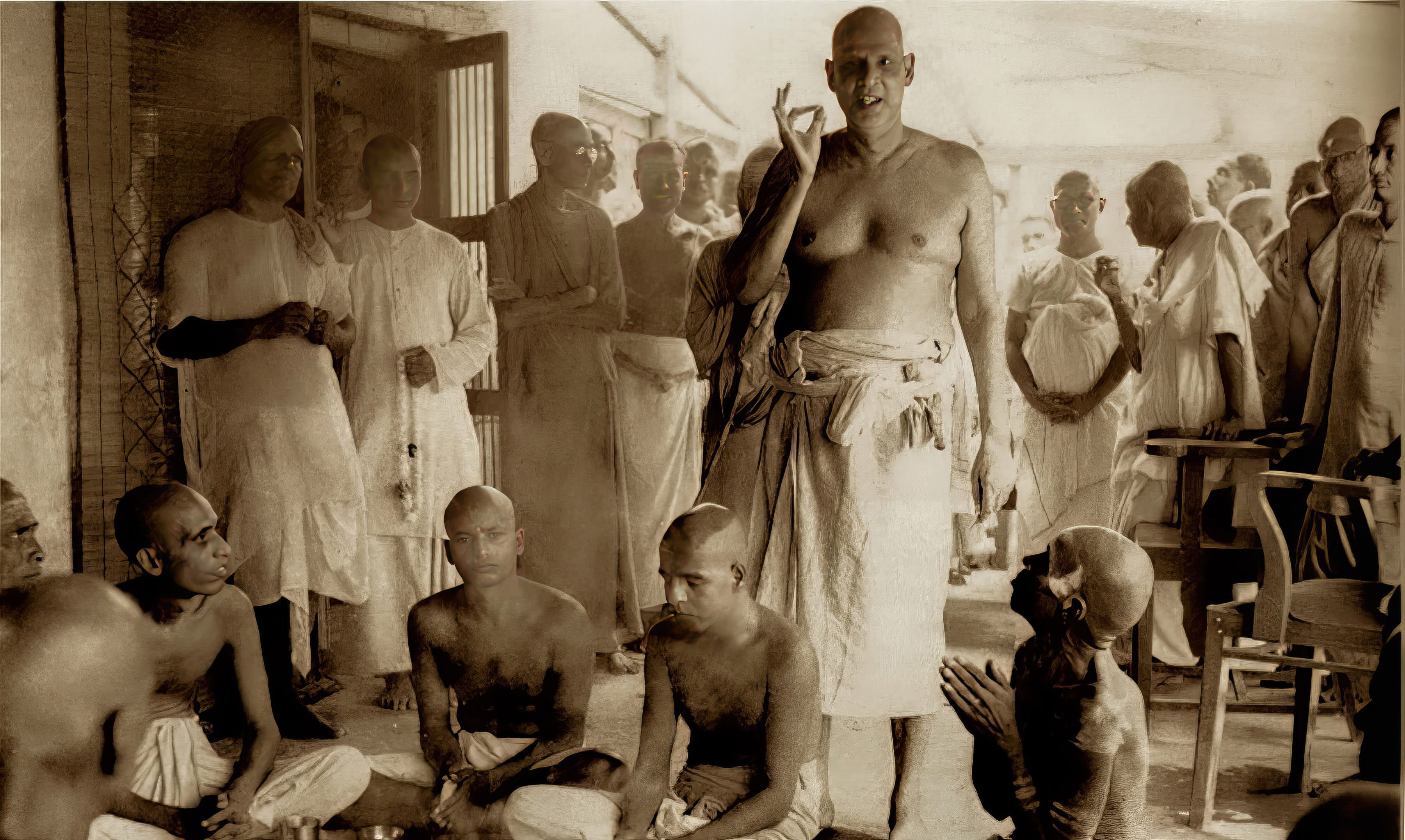
Swami Sivananda holding Chin (Gyan) mudra as he speaks with ashramites and guests on the verandah. Swami Venkatesananda is partially visible standing at the far right and gazing at his Master.
-
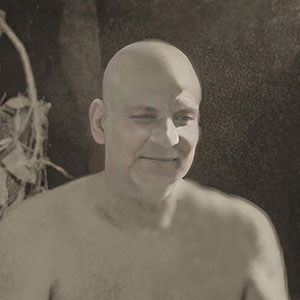 See full screen image
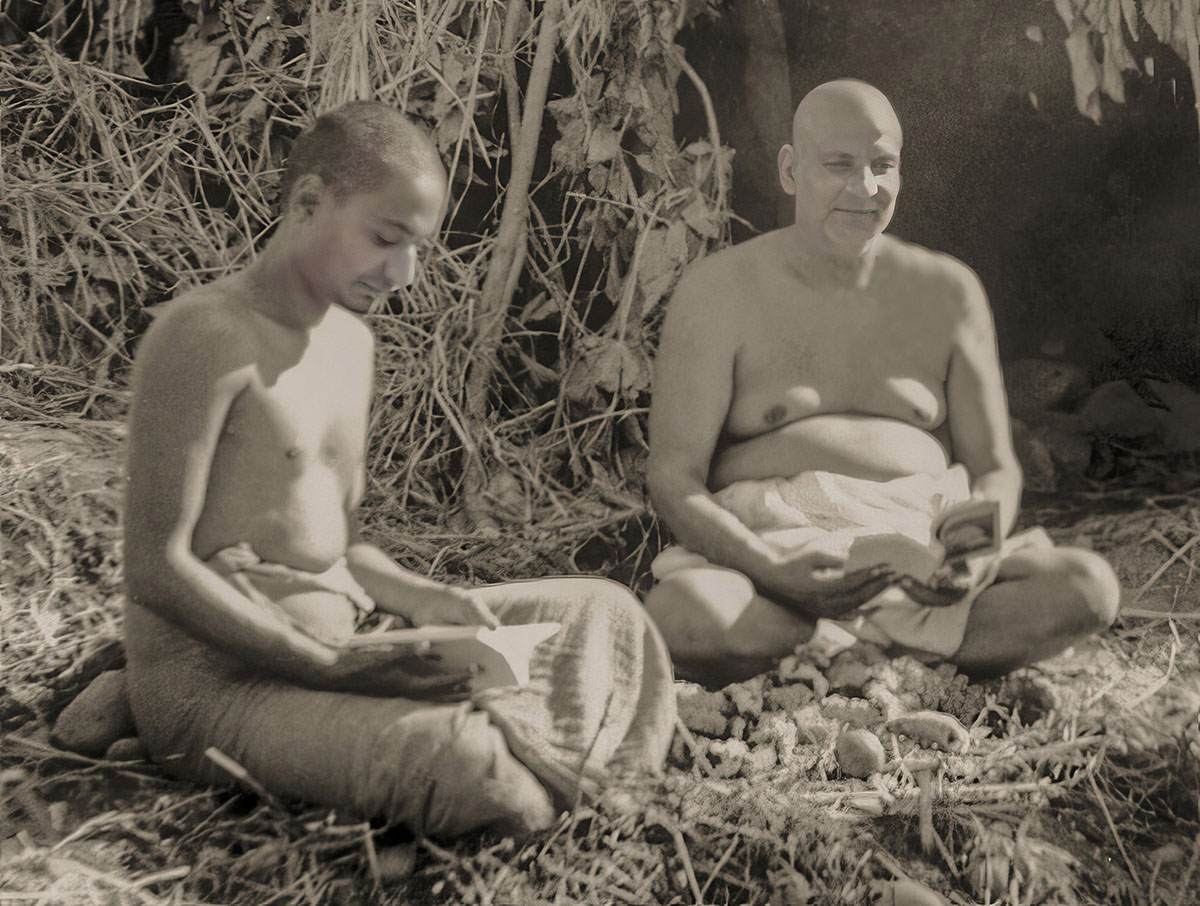
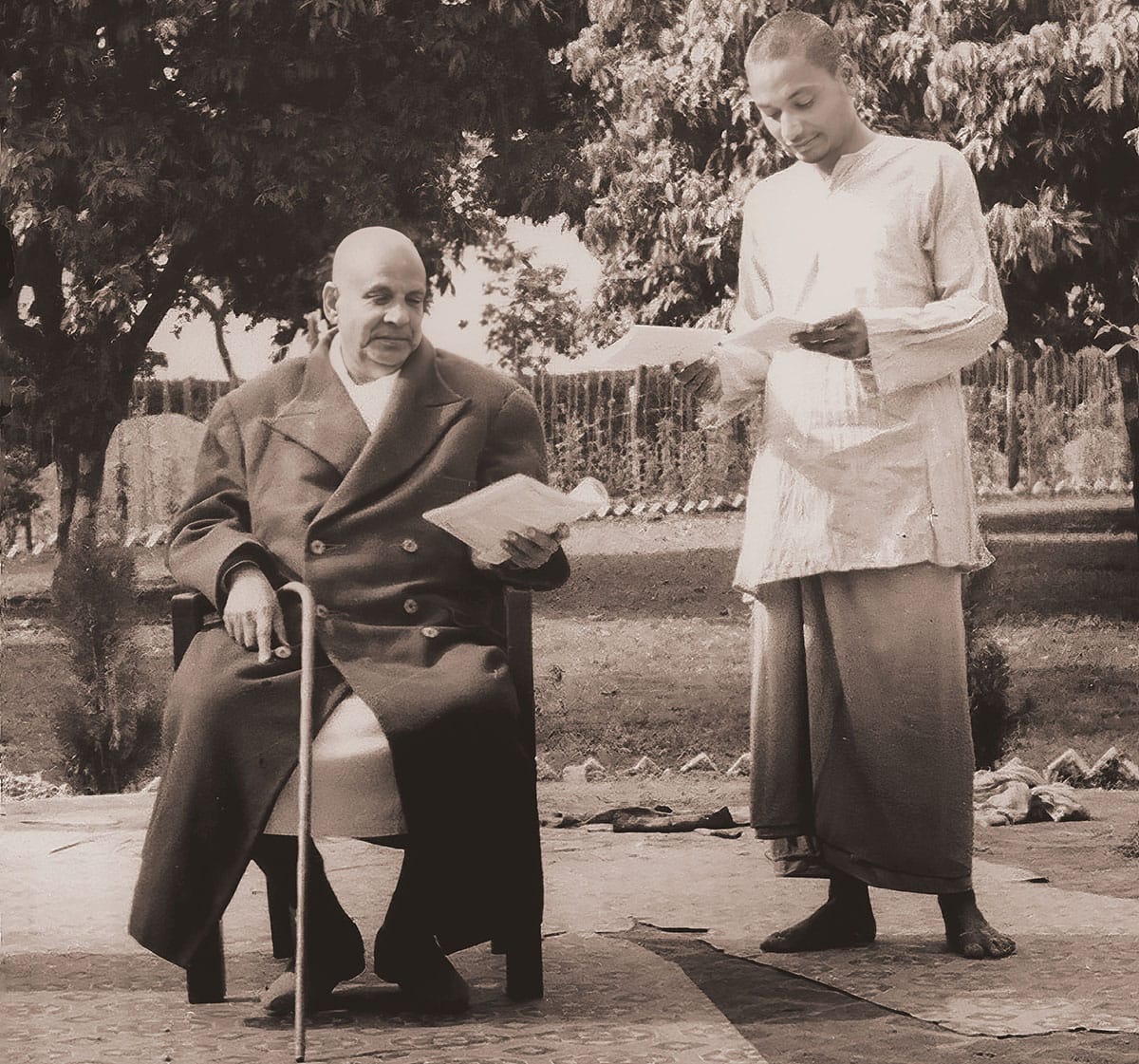
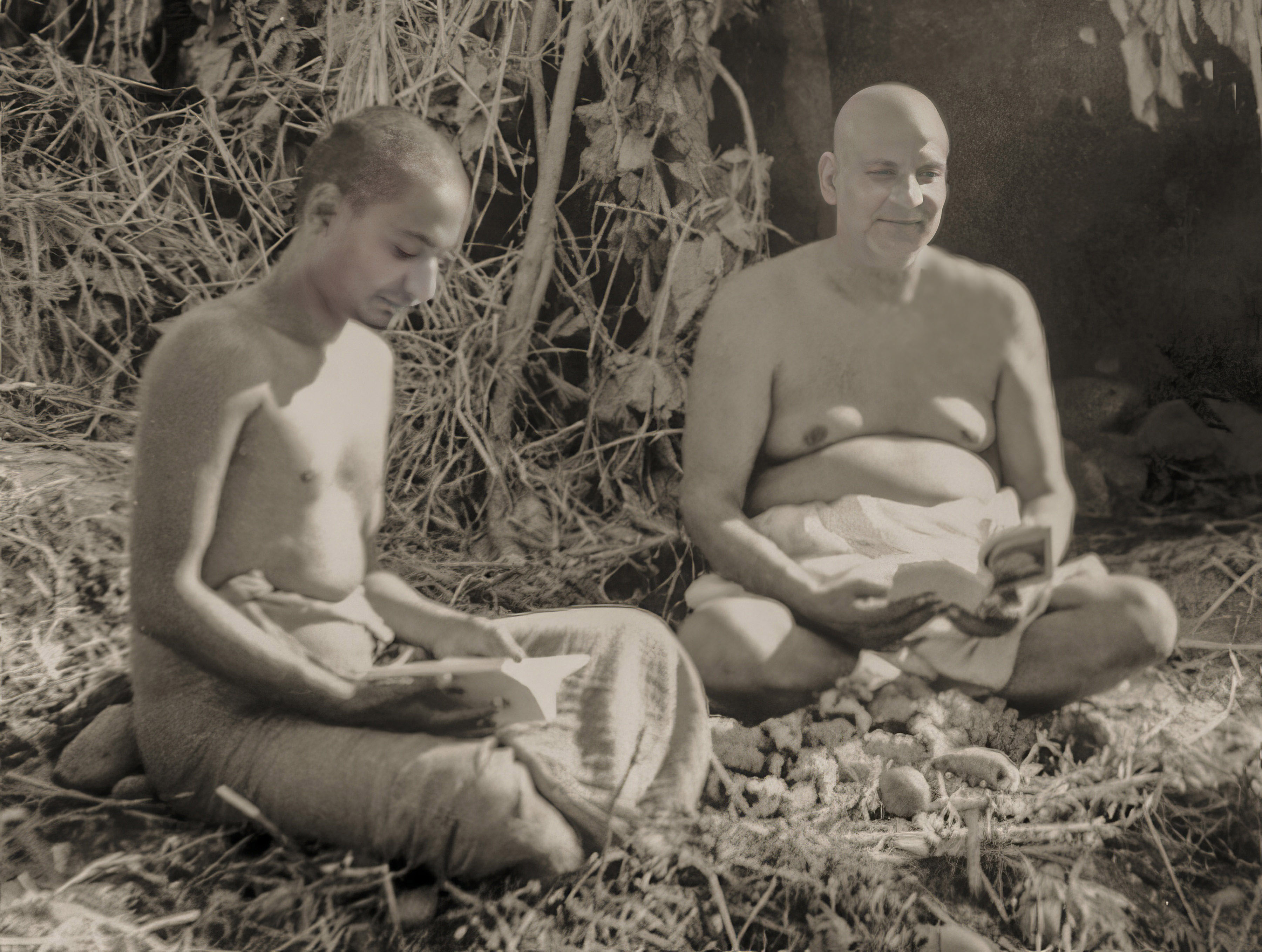
Young Swami Venkatesananda — A Study Session With the Master.
Swami Sivananda sitting together with the young Swami Venkatesananda in the forest going through a text together.
-
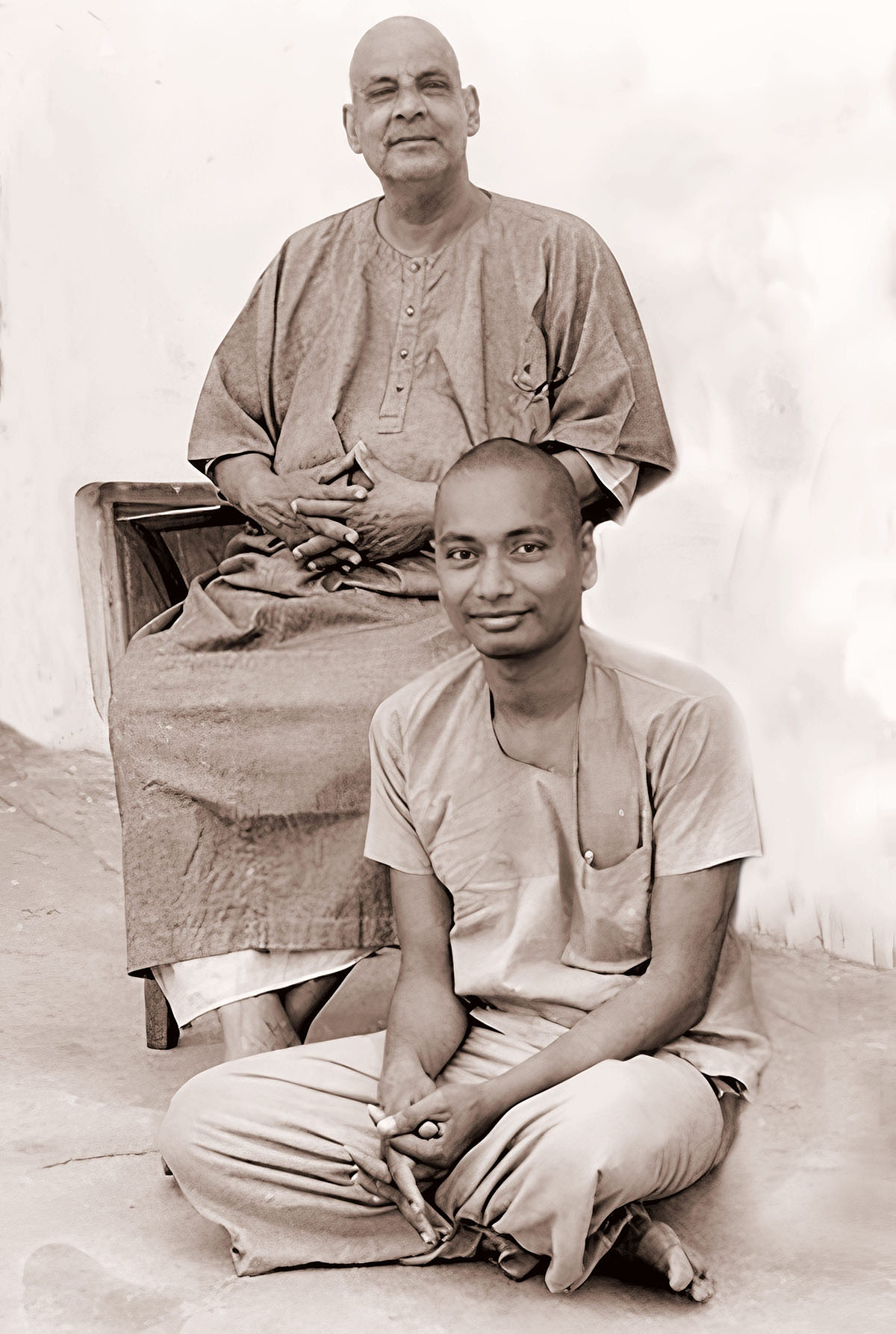
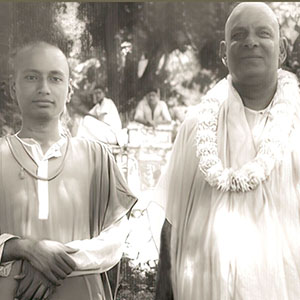 See full screen image
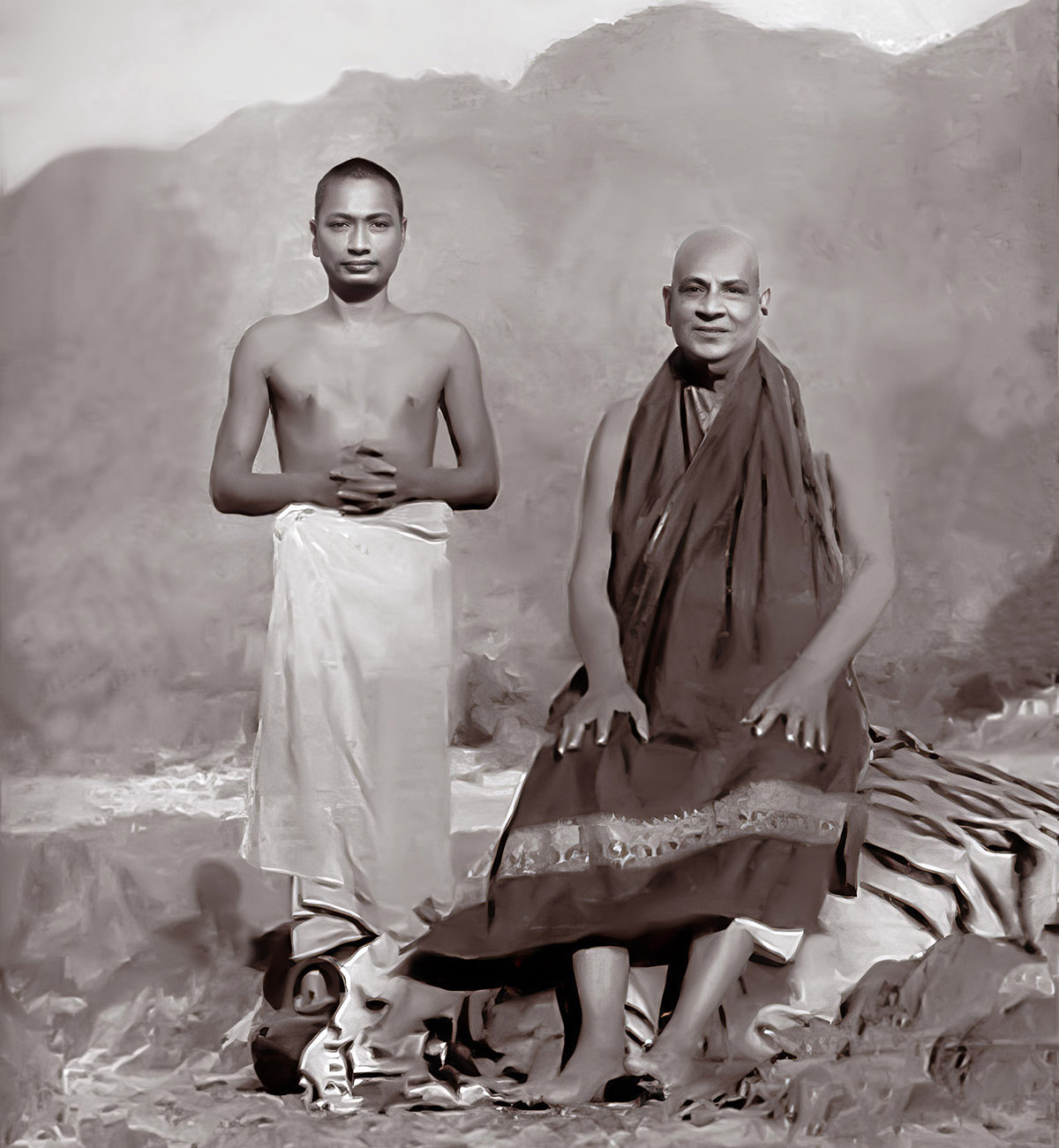
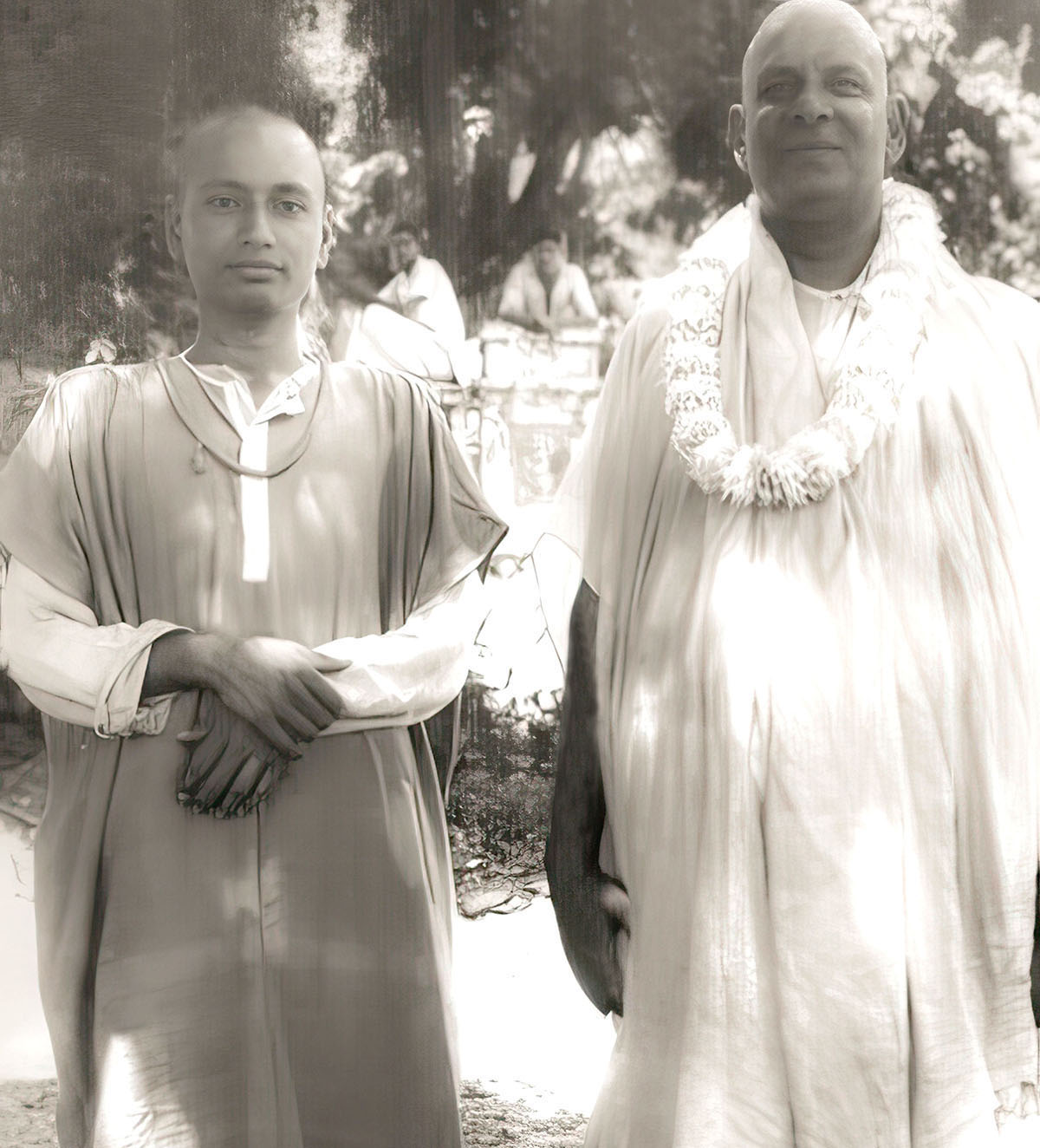
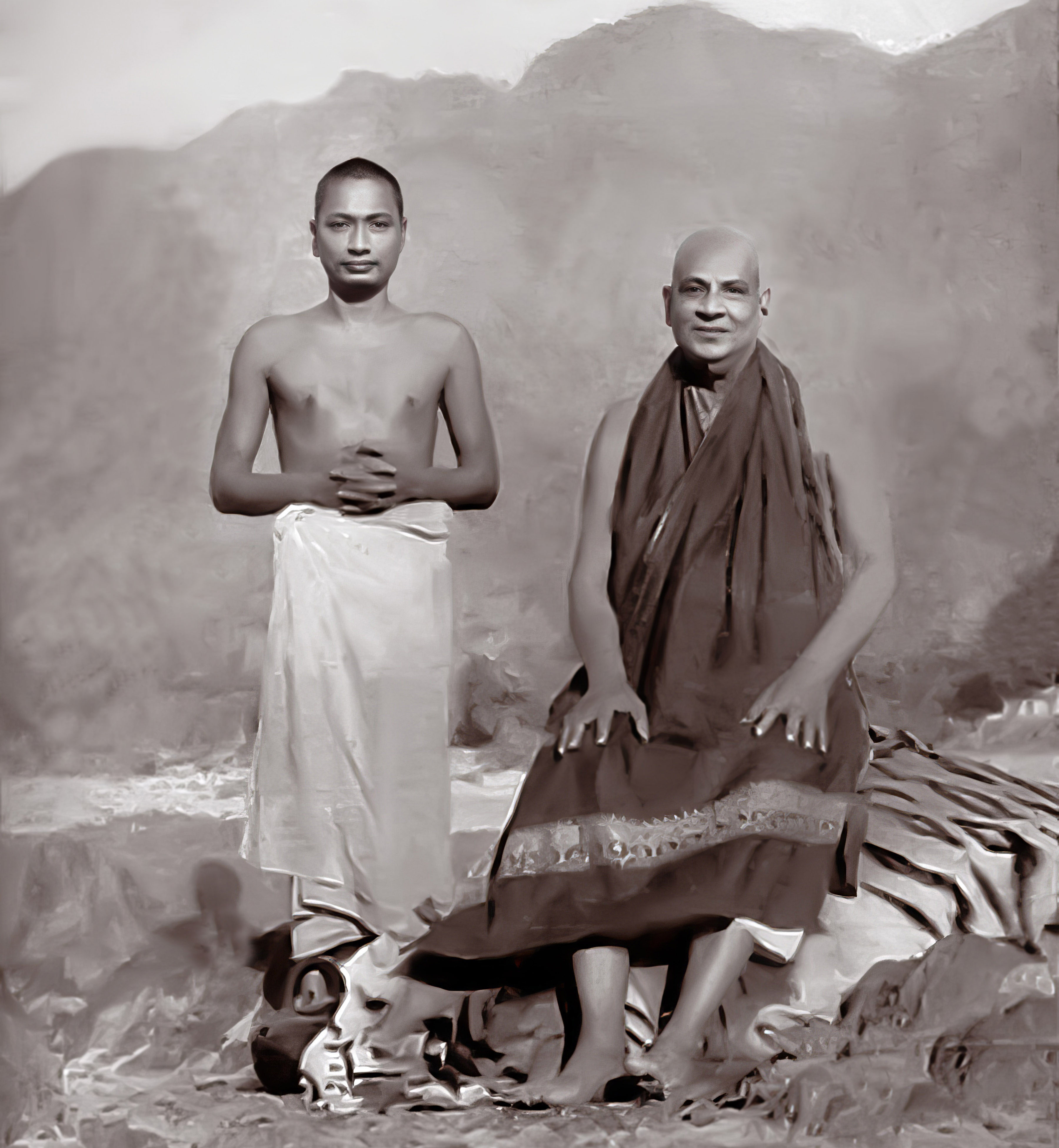
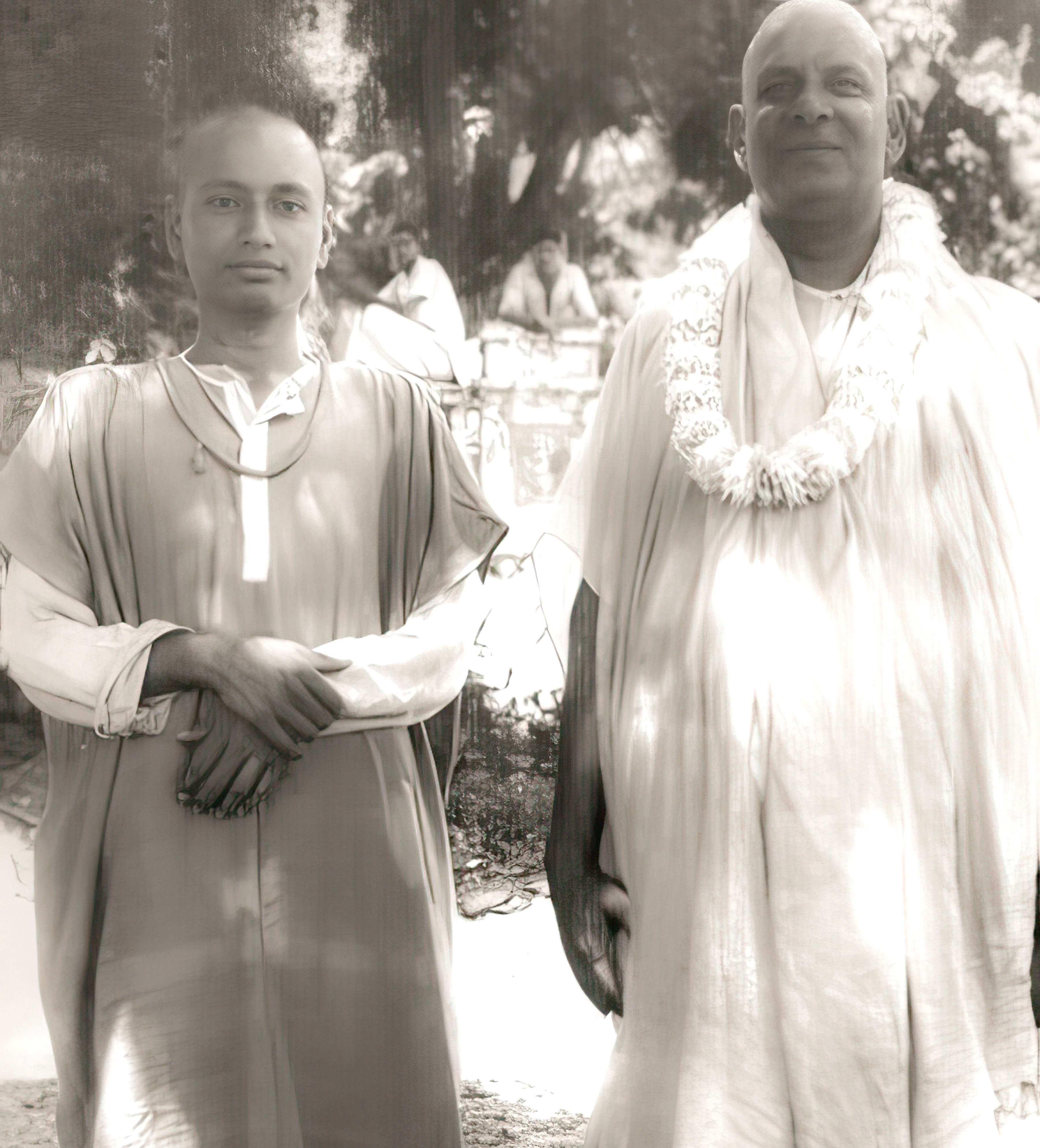
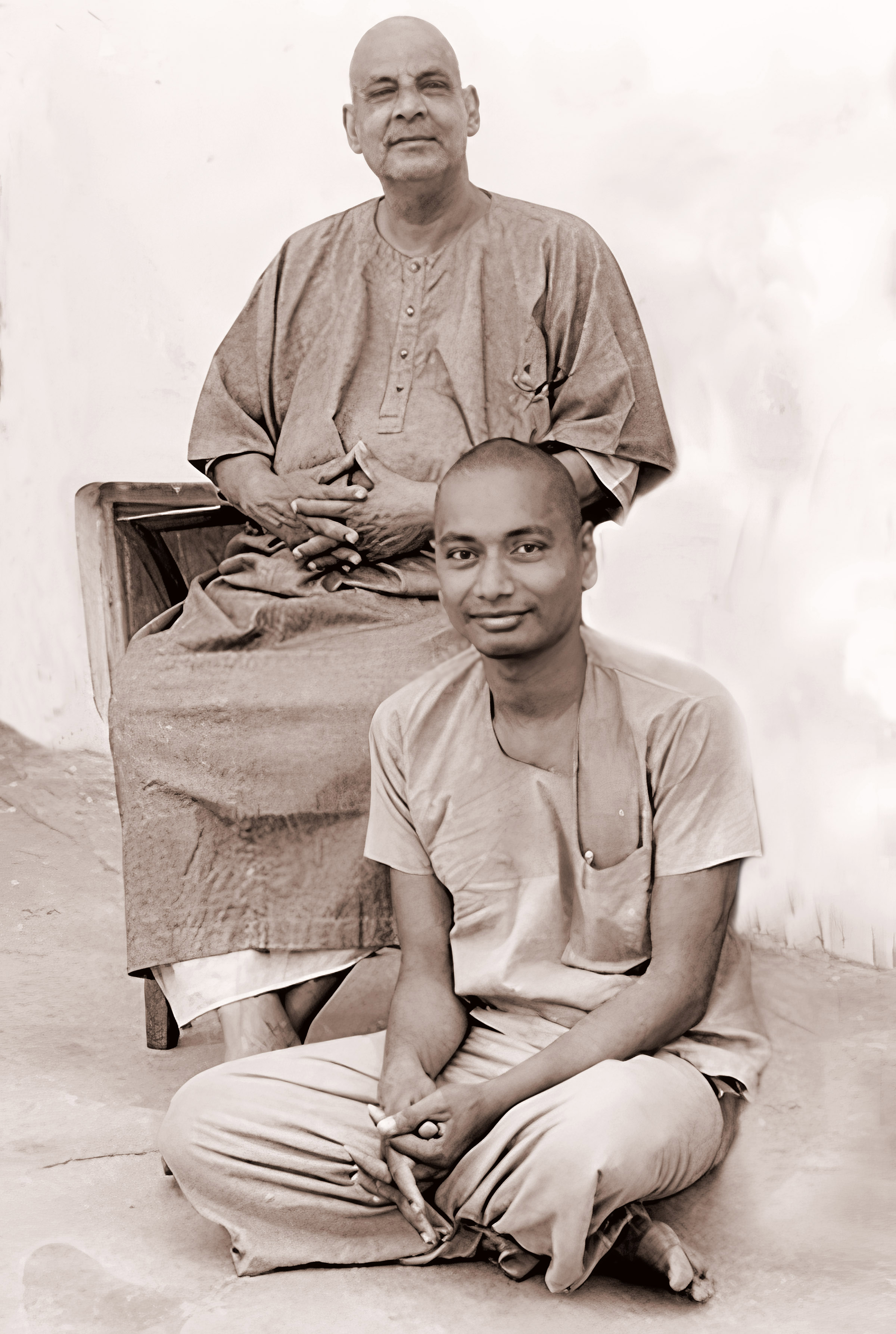
Master & Disciple
Swami Sivananda takes a moment out to pose for a portrait with Swami Venkatesananda. The Master appears well-pleased with his young sannyasi disciple.
-
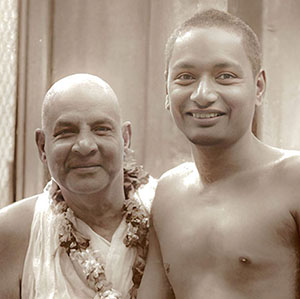 See full screen image
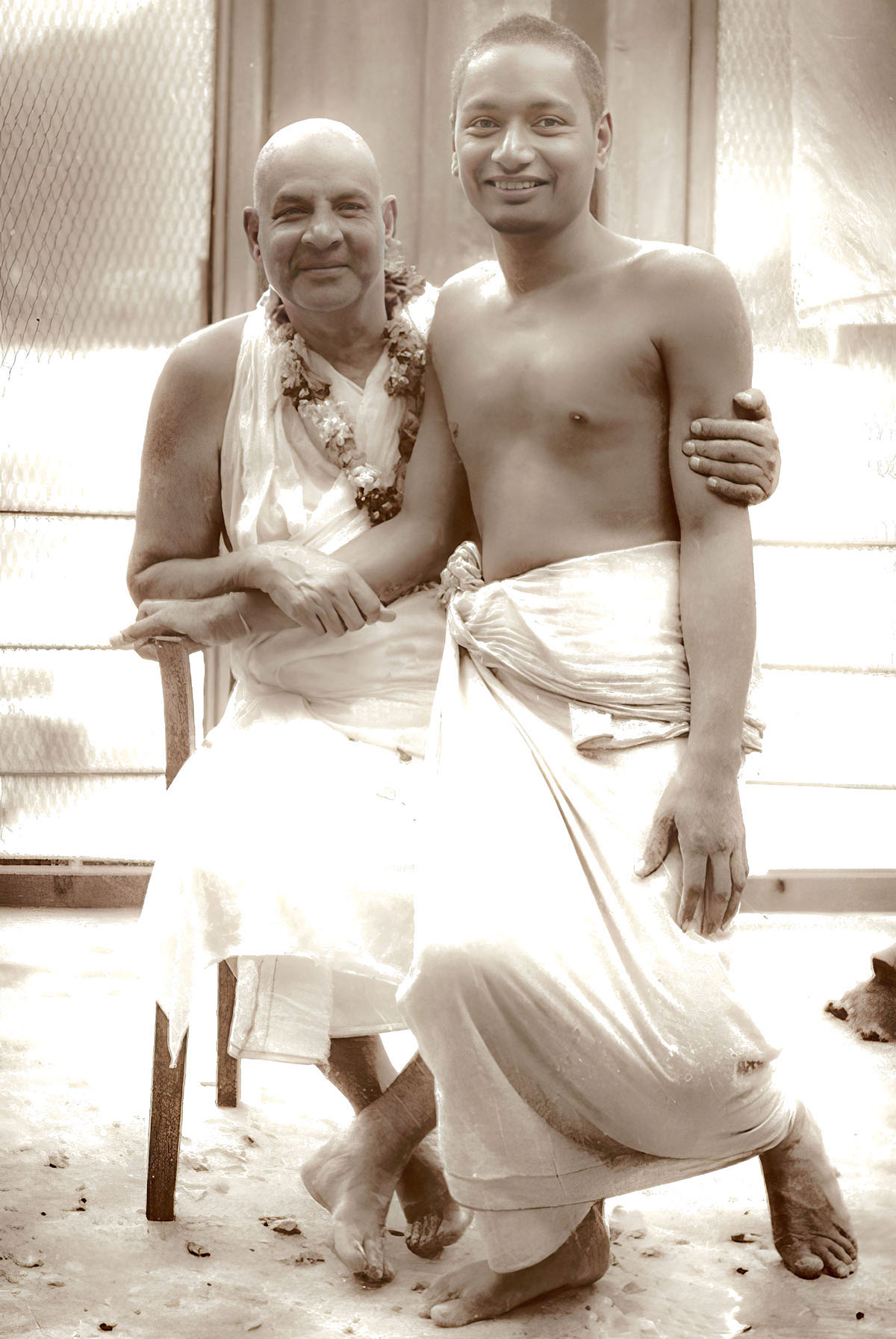
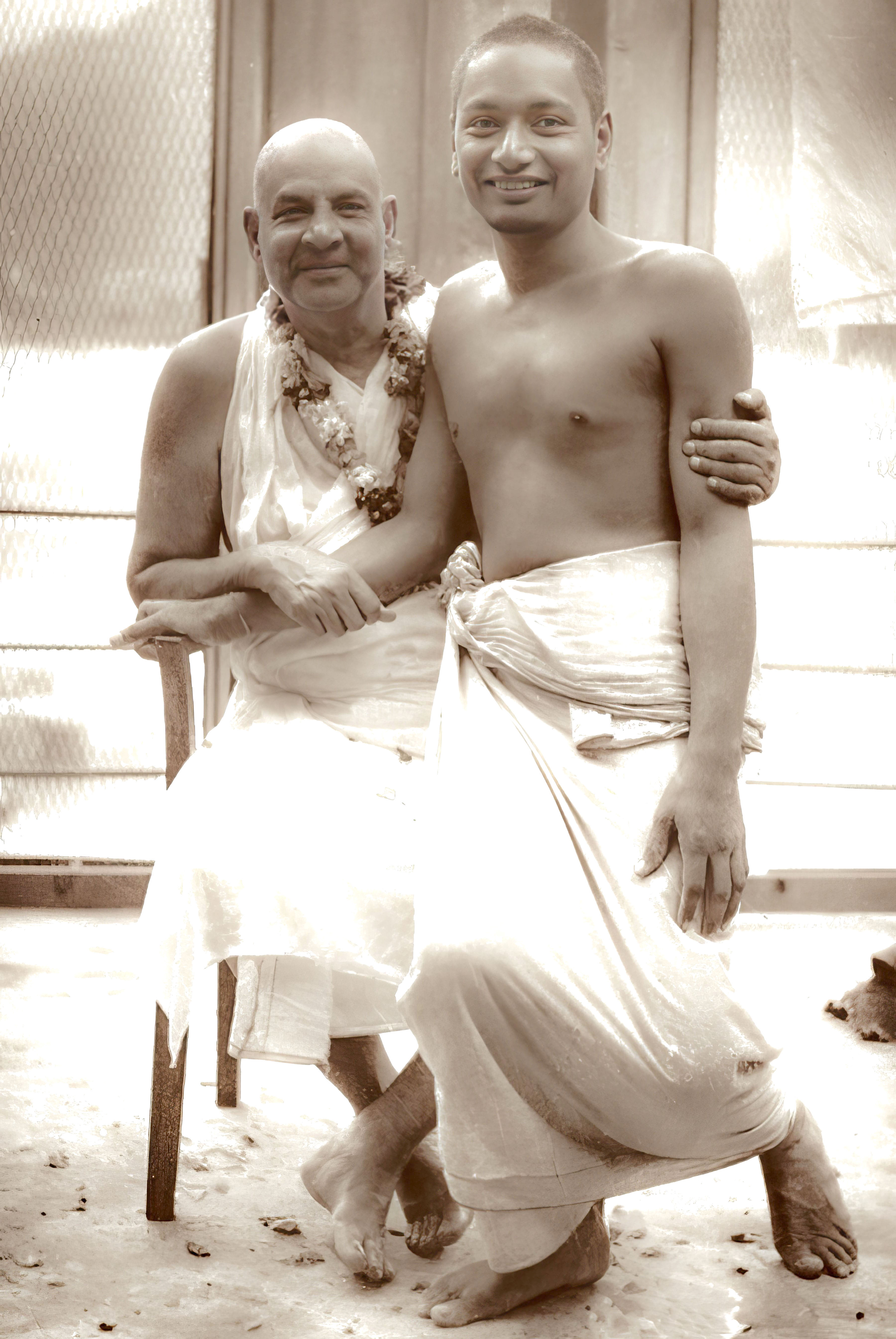
Holding The Disciple Close
Both beaming with joy, Swami Sivananda pulls Swami Venkatesananda into an embrace on his lap. Many have attempted to characterize the extraordinary bond between the two, but this photo captures it wordlessly: like father and son; nothing else need be said.
-
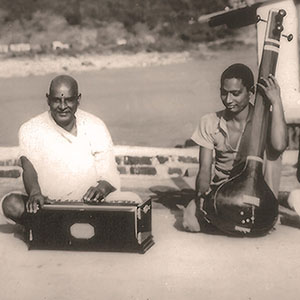 See full screen image
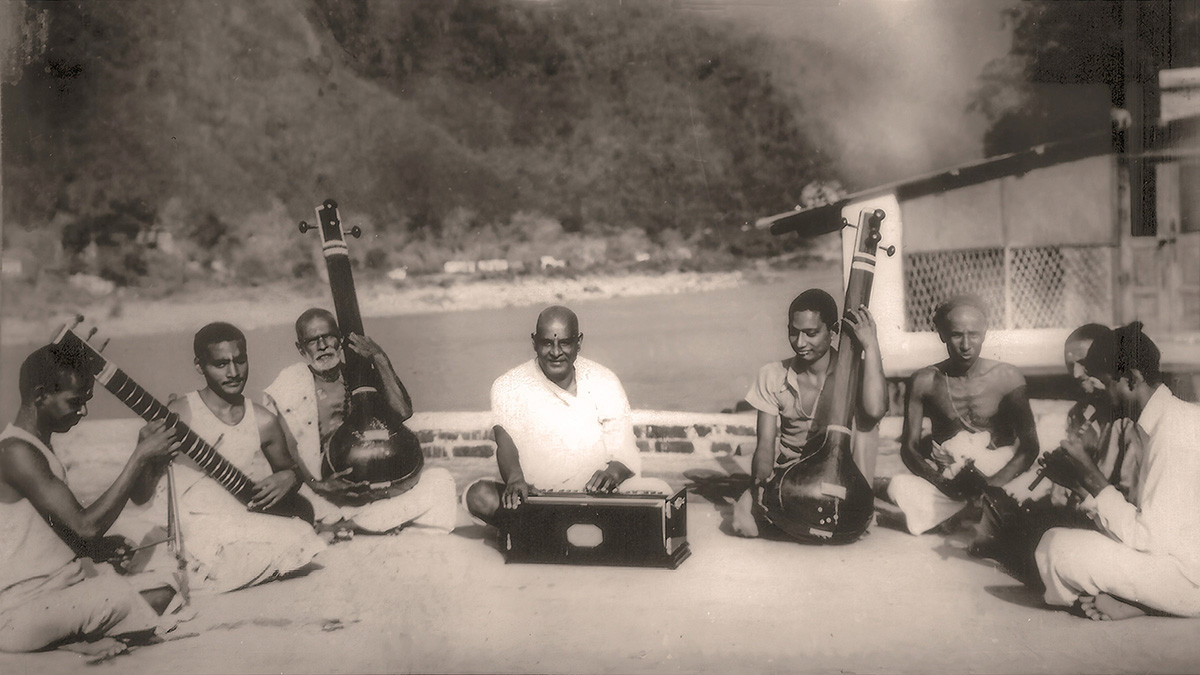
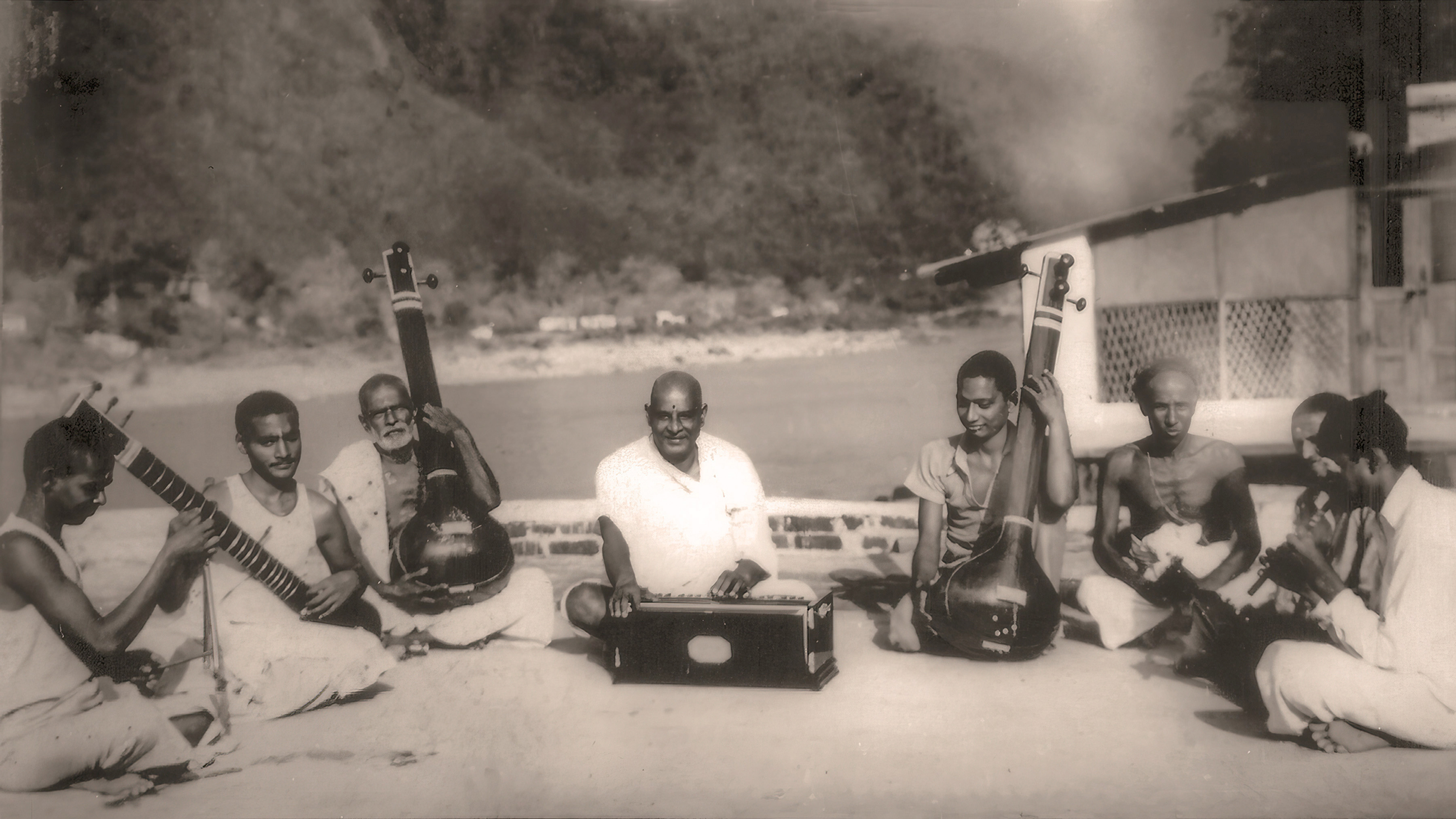
Bhajans by the Ganges
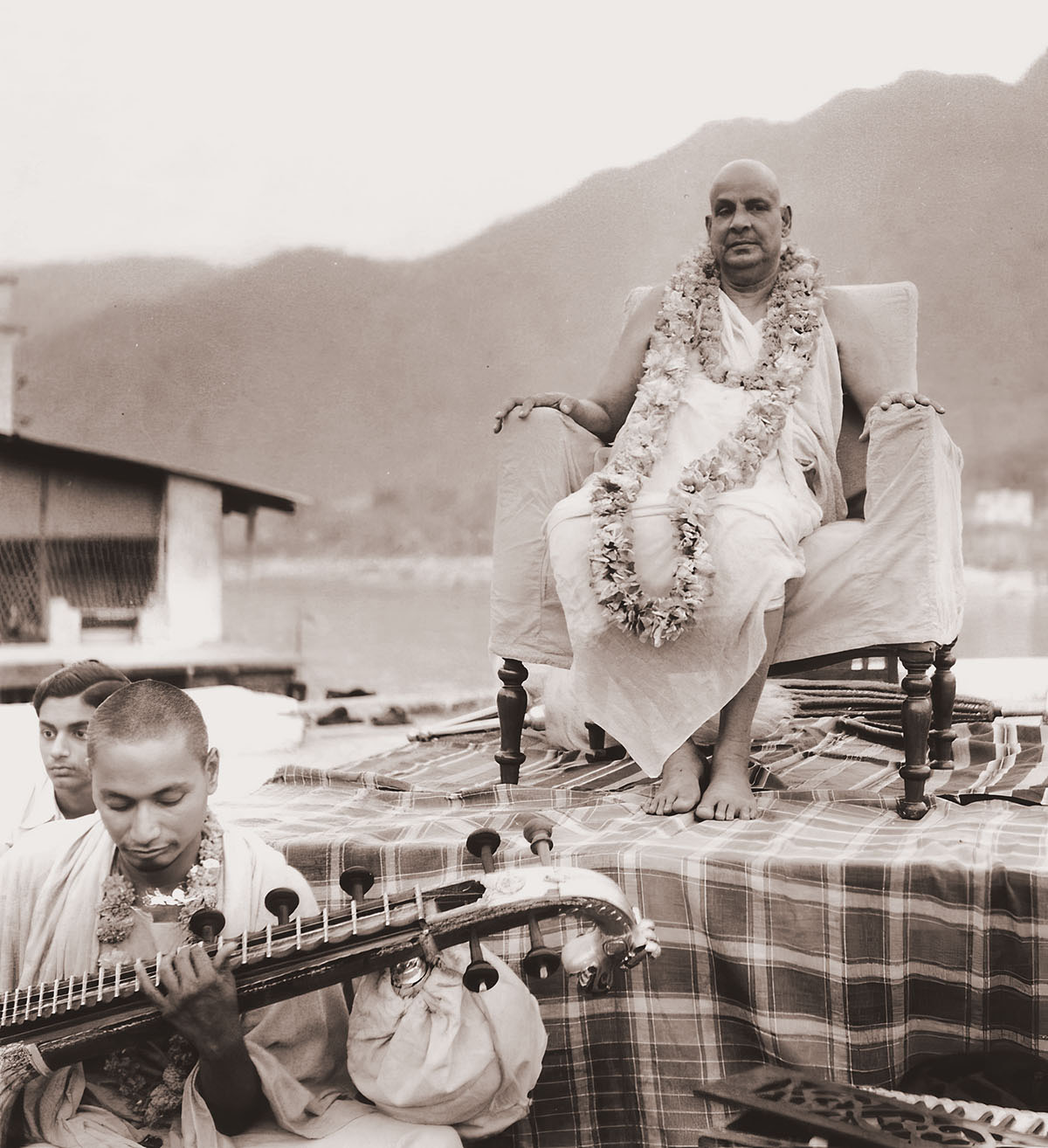
In the early years, satsangs in the Ashram did not include musical instruments but gradually the harmonium and other instruments were introduced in support of the group kirtan. Here Swami Sivananda is pictured playing the harmonium, a skill he had learned as a young man. He is surrounded by ashram musicians playing the tambura, flute, chimes and other instruments in an informal gathering on a verandah with the Ganges in the background. Swami Venkatesananda is shown to the right of Swami Sivananda playing the tambura.
-
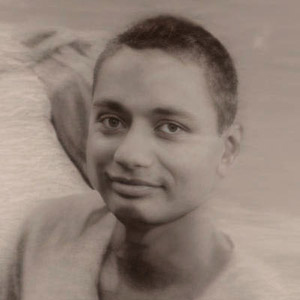 See full screen image
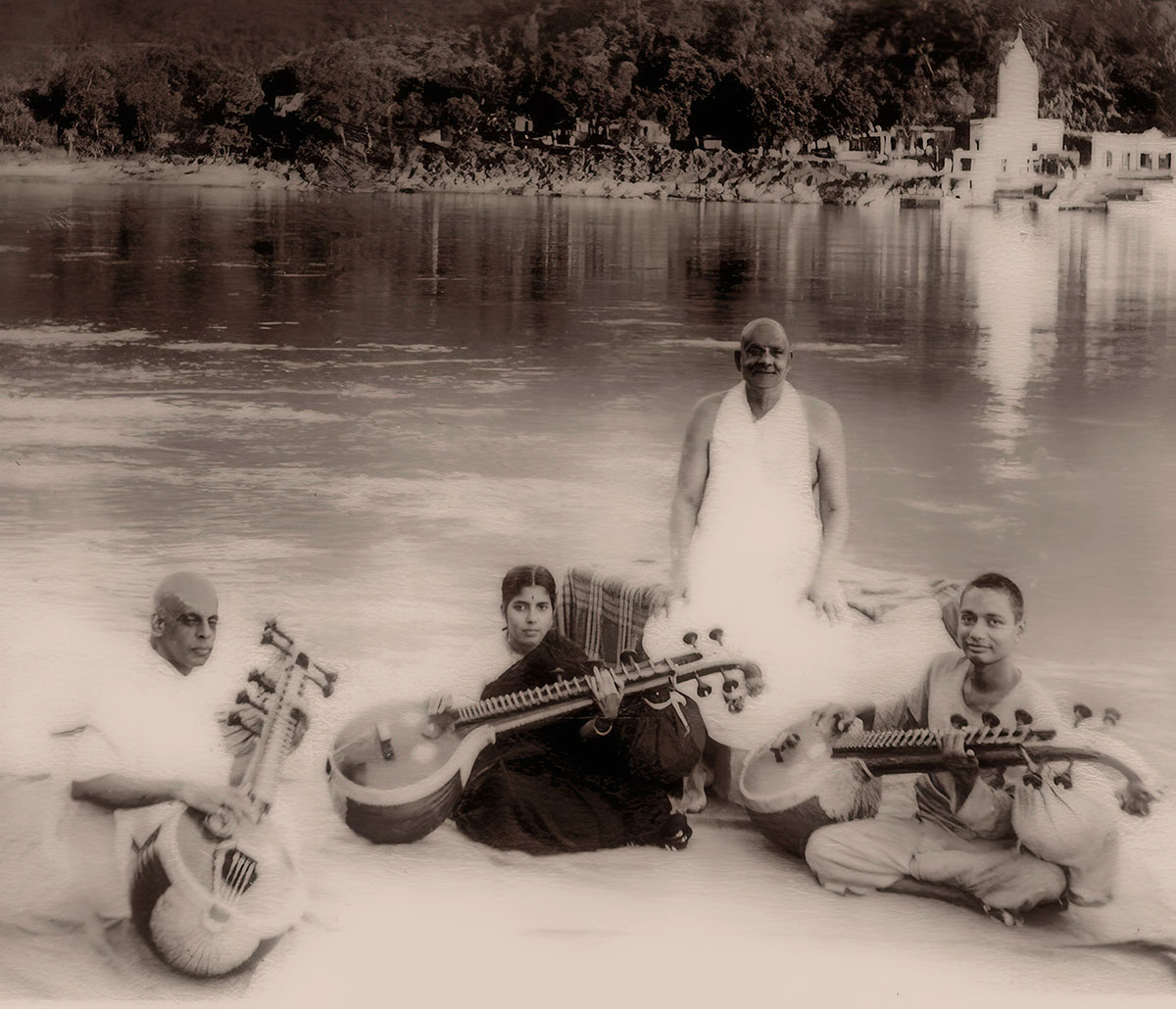
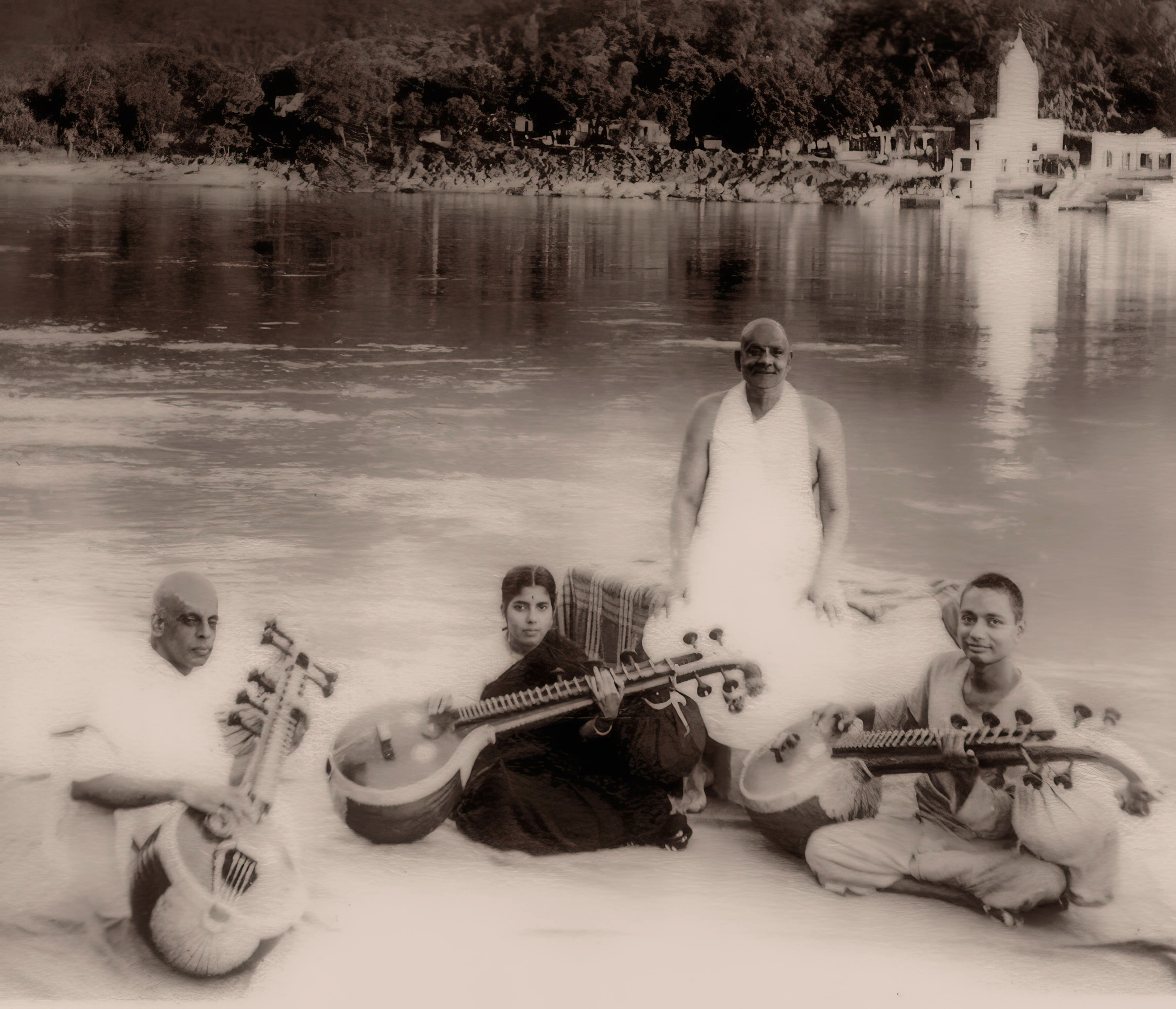
Swami Venkatesananda’s Veena Teacher
The Saraswati Veena is beloved in South India and Parthasarathy’s family heritage always included its music. When Sri Rangaramanuja Ayyangar, a musician, musicologist and master of the Veena, came to the Ashram for Swami Sivananda’s darshan, Swami Sivananda encouraged Swami Venkatesananda to study with him. Sri Rangaramanuja Ayyangar became a regular visitor along with his daughter Padma. Here he is pictured right to left with his daughter, Swami Sivananda and Swami Venkatesananda as they played for their Master in front of his kutir with the Ganges reflecting the moment.
-
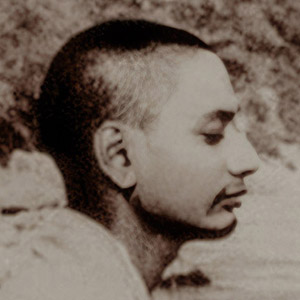 See full screen image
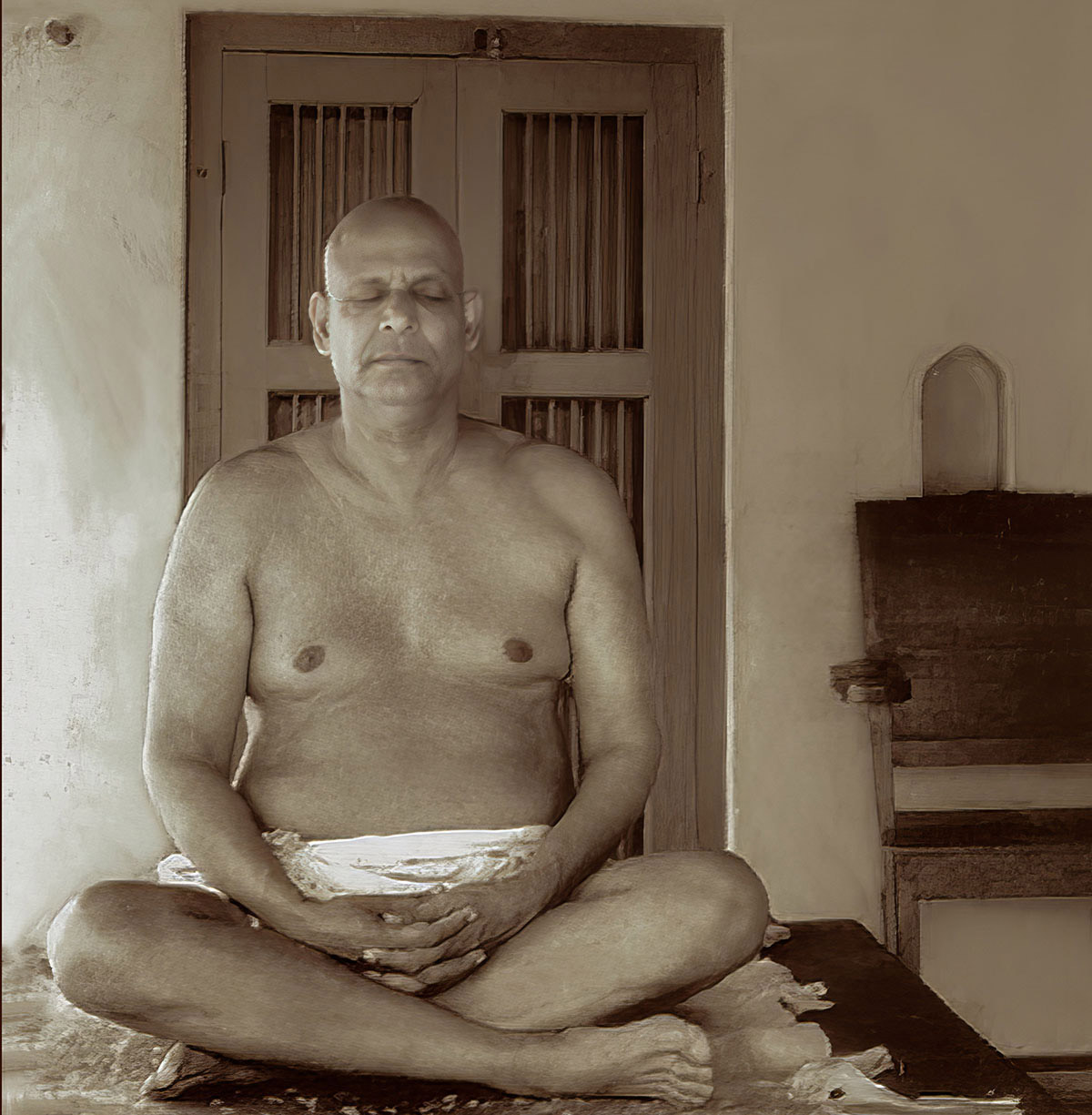
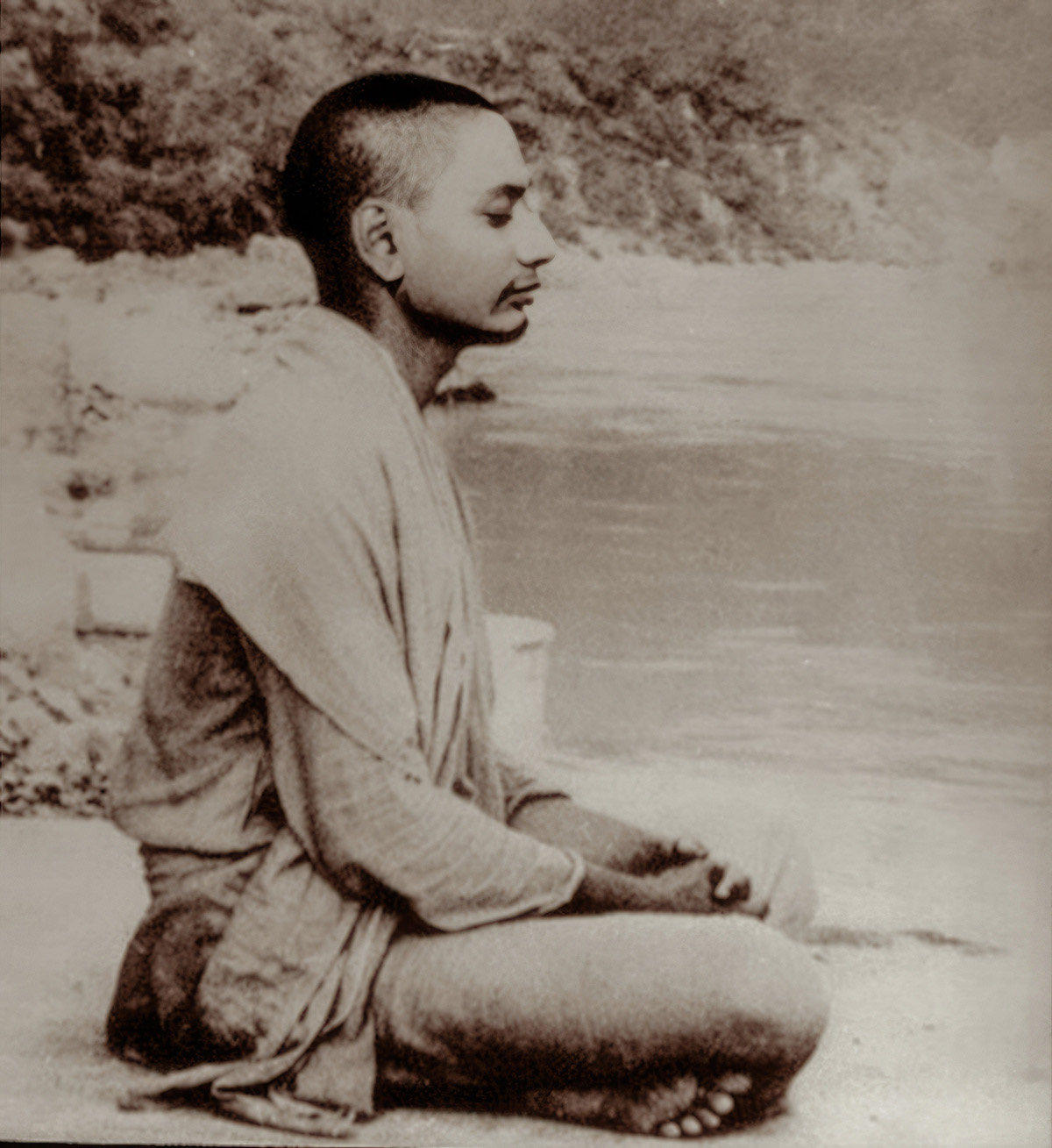
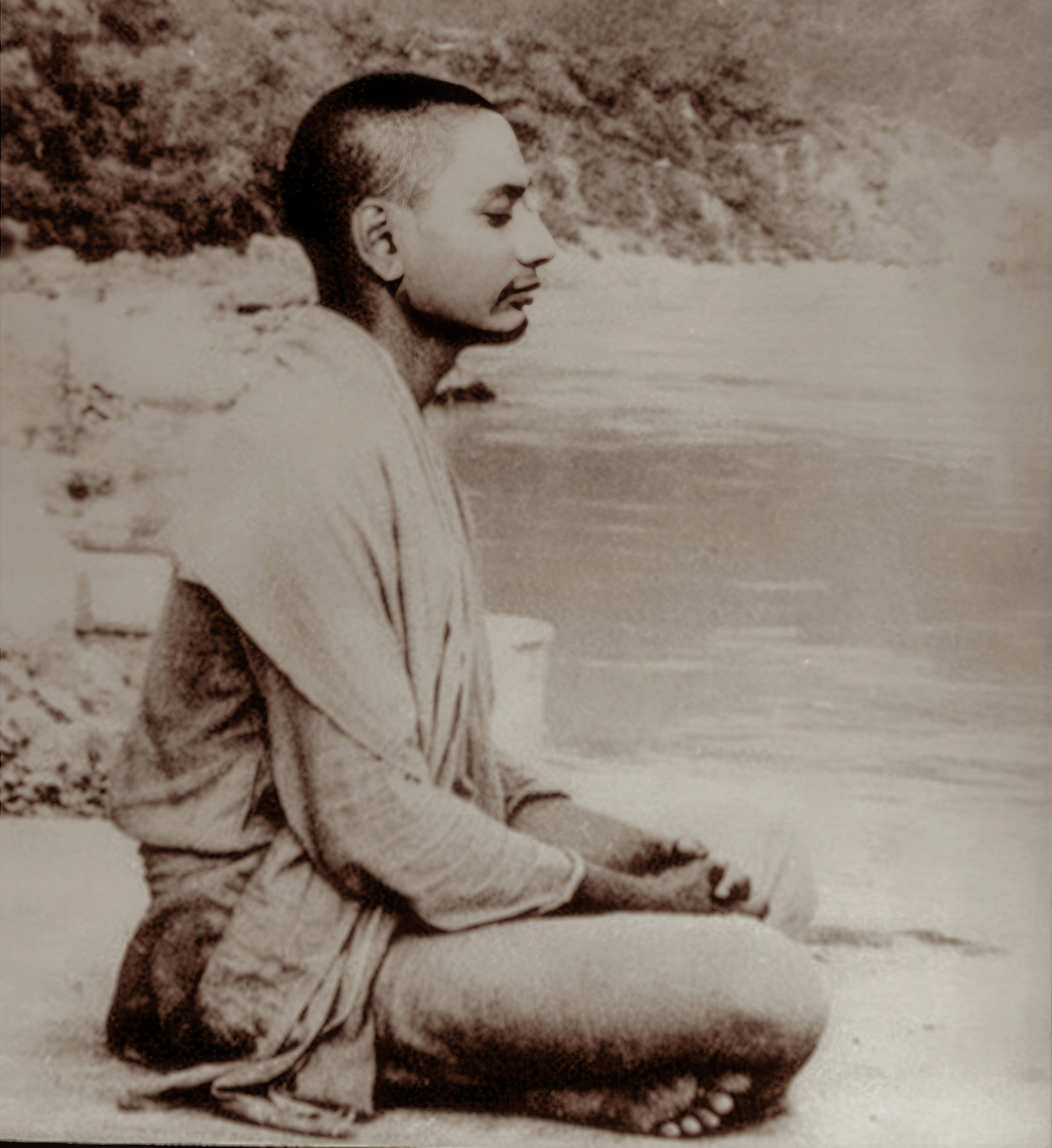
Young monk in Sitting Mediation
When he arrived in the Ashram he threw himself so completely into service of Swami Sivananda that the Master became alarmed at the effect on his health and threatened to throw his typewriter in the Ganges! He told him to immerse himself in the sacred atmosphere, to study and meditate, though to quote his contemporary Swami Omkarananda,“Neither in fiction nor in real life have we ever seen a being so recklessly disinterested in itself.” But here he is heeding the Master’s admonition.
-
 See full screen image
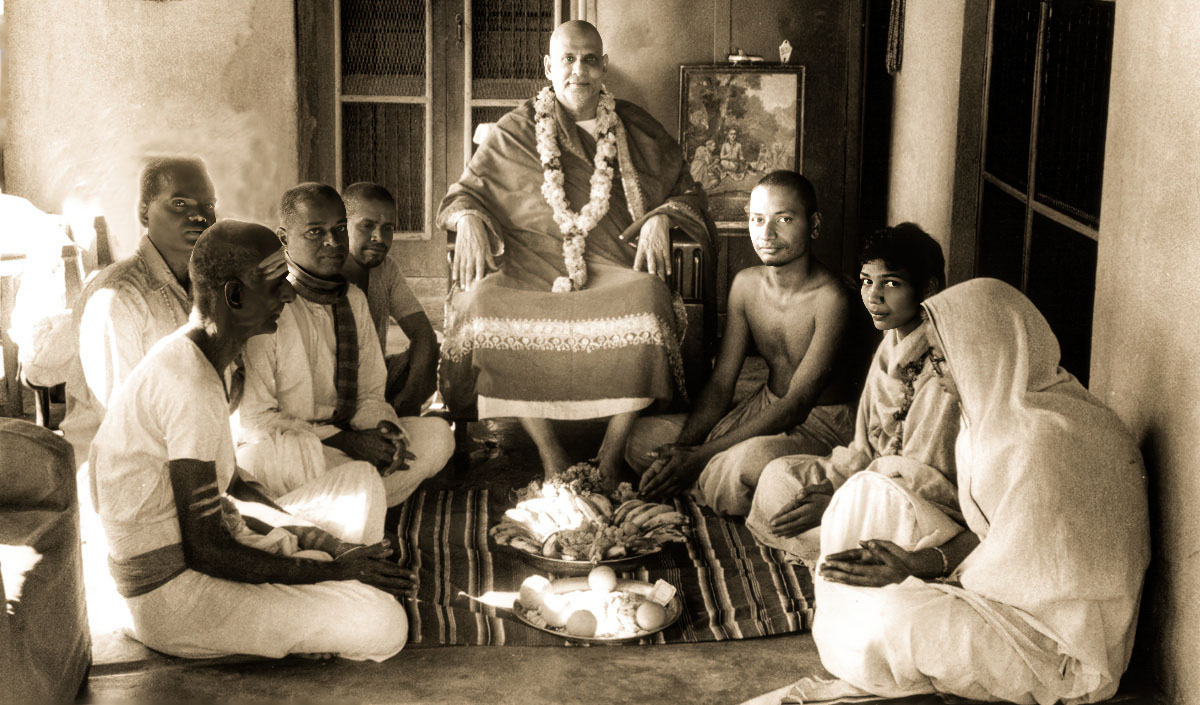
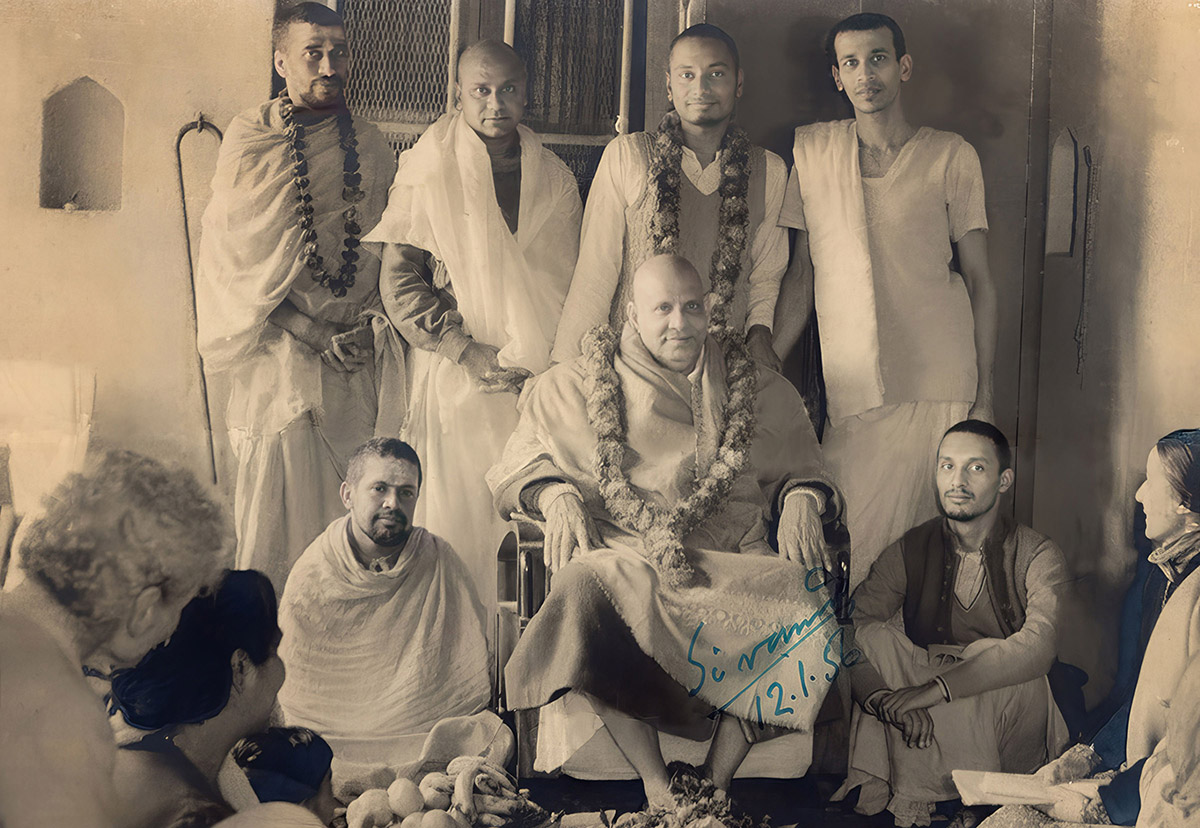
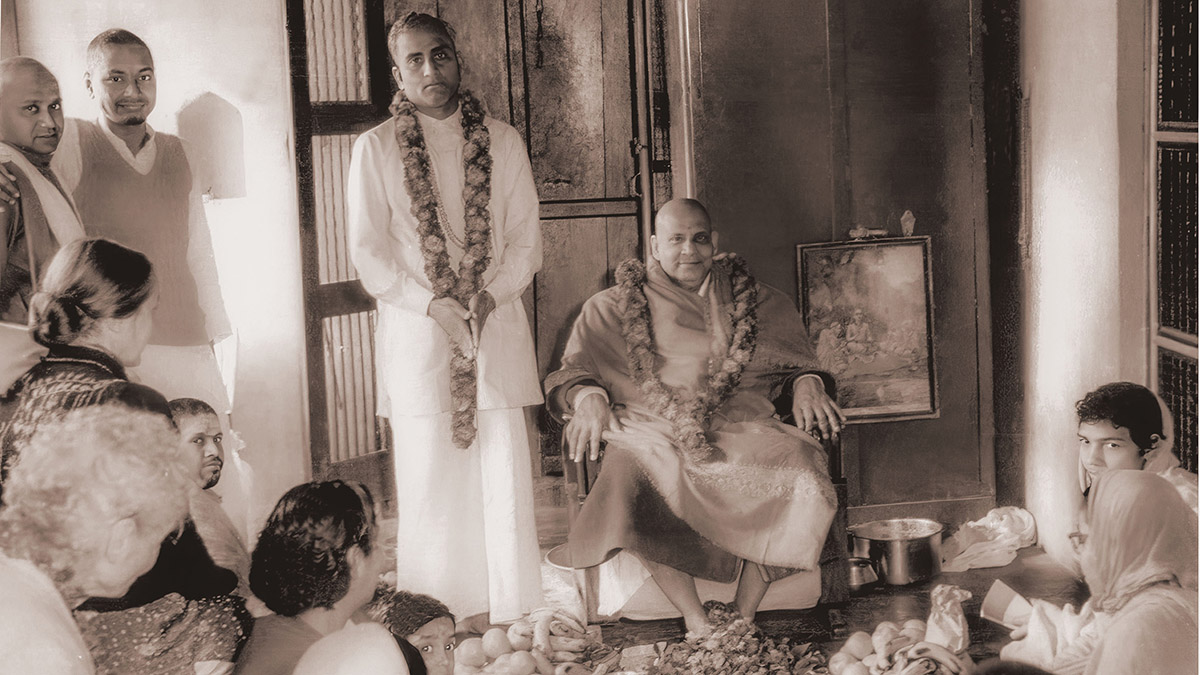
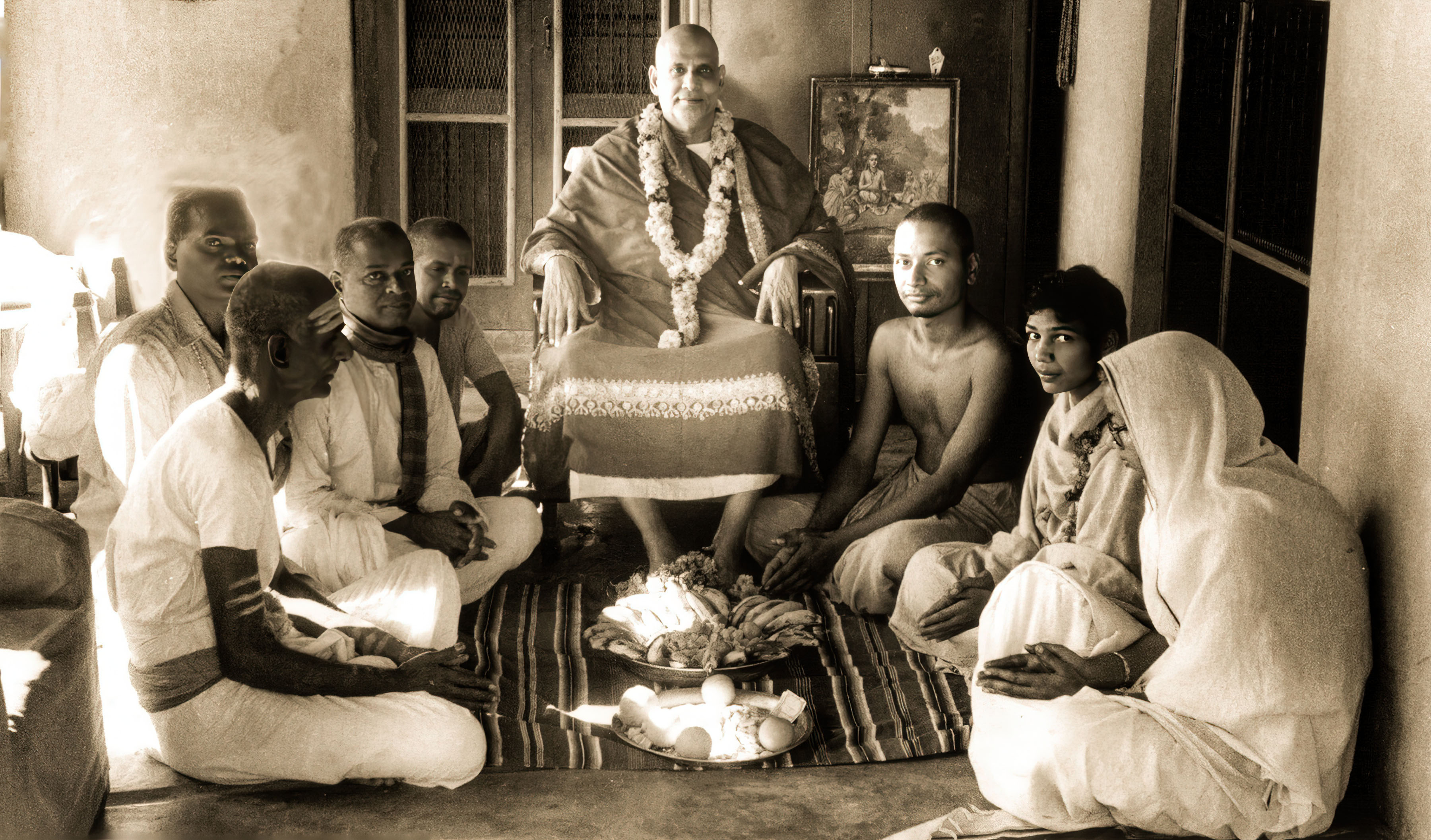
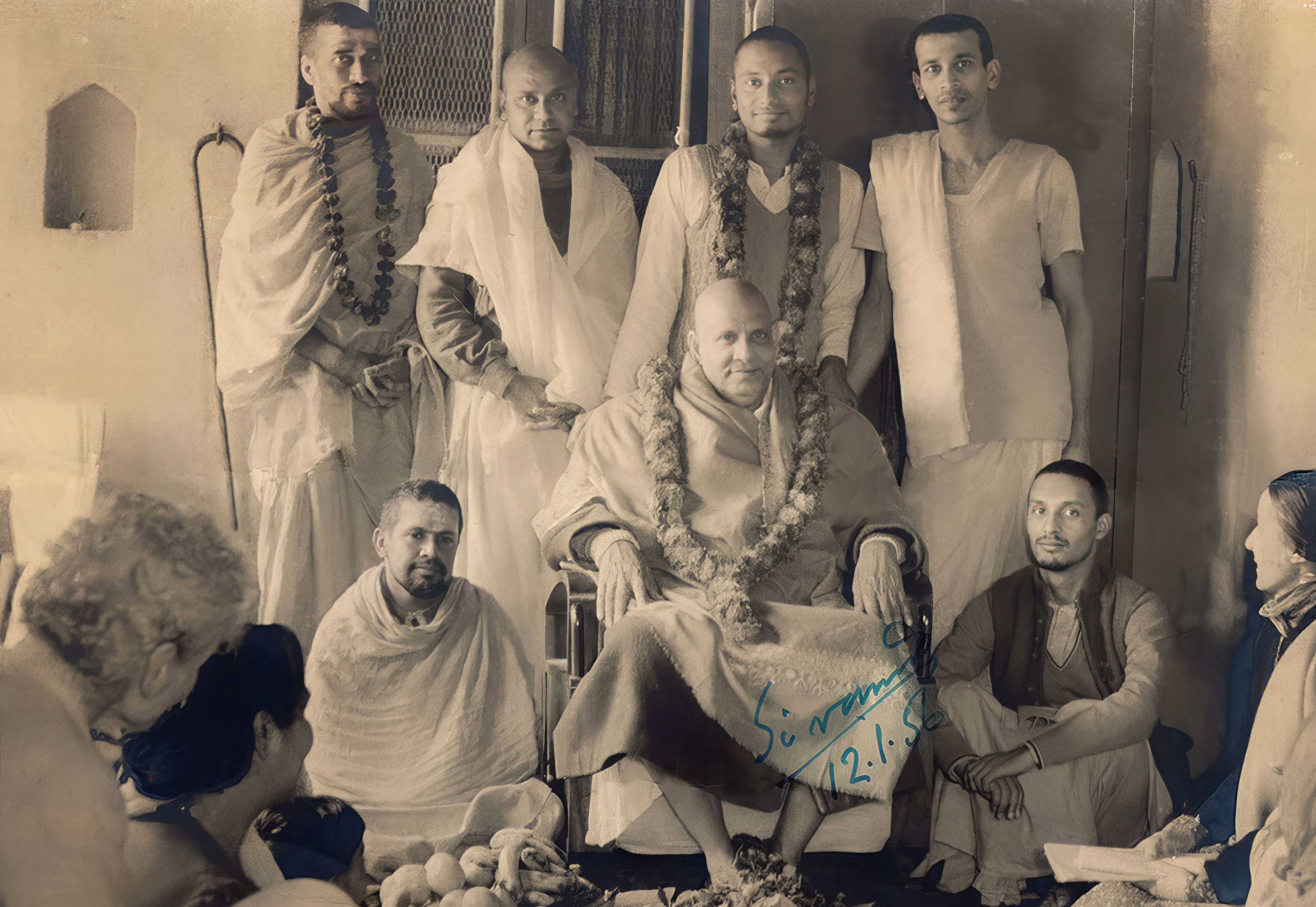
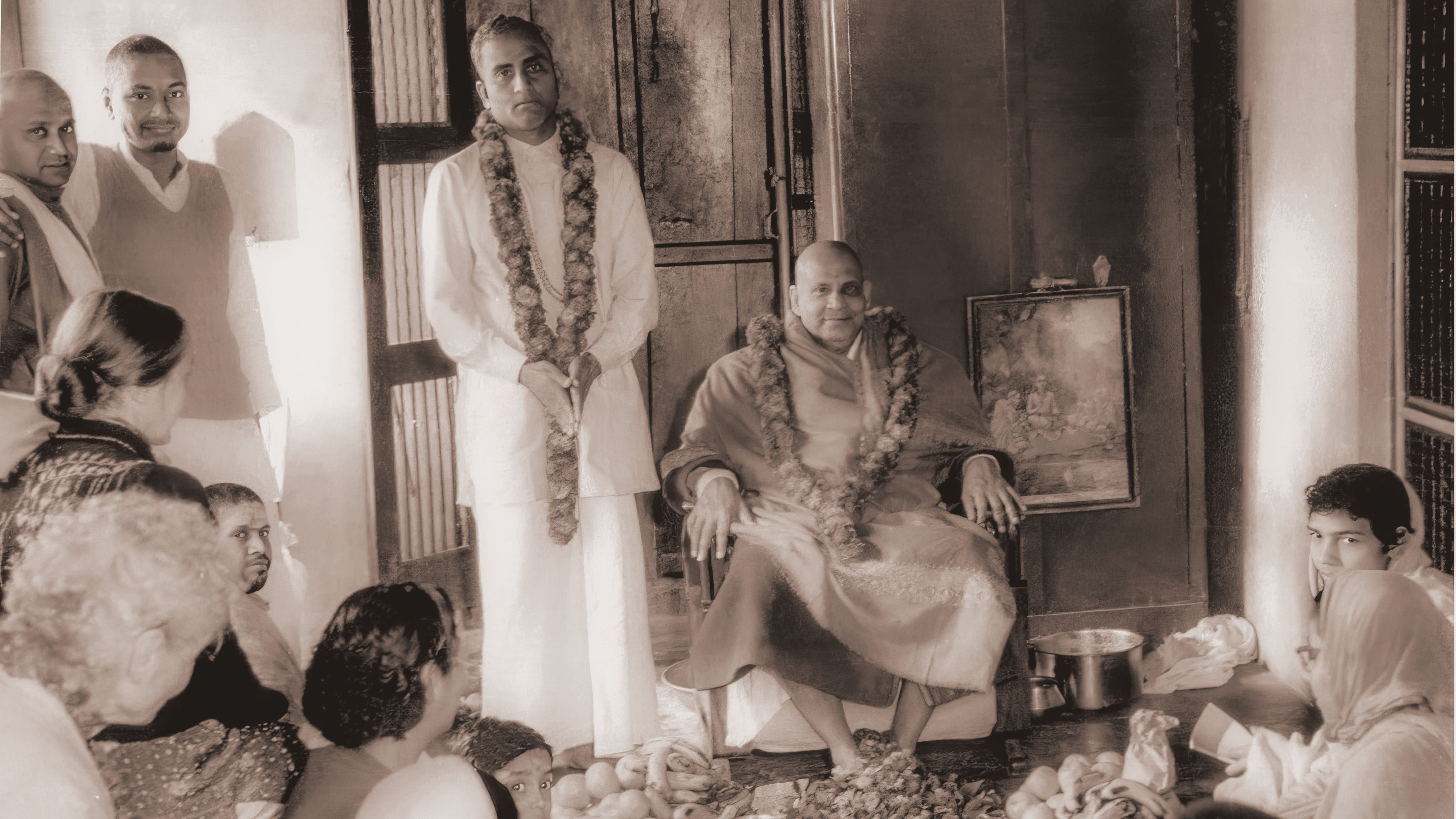
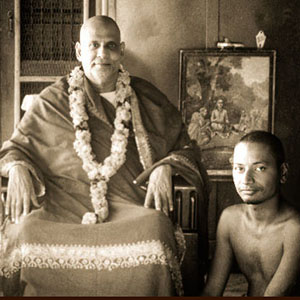
Devotees came to the Ashram from all over the world seeking Swami Sivananda’s darshan and yearning to participate in a Pada Puja ceremony, worship of the Master’s feet with symbolic offerings of fruit and flowers. Invariably it was Swami Venkatesananda who performed this sacred ritual. Here a group of devotees are pictured with Swami Sivananda memorializing this once-in-a-lifetime gift of the Master’s grace.
-
 See full screen image
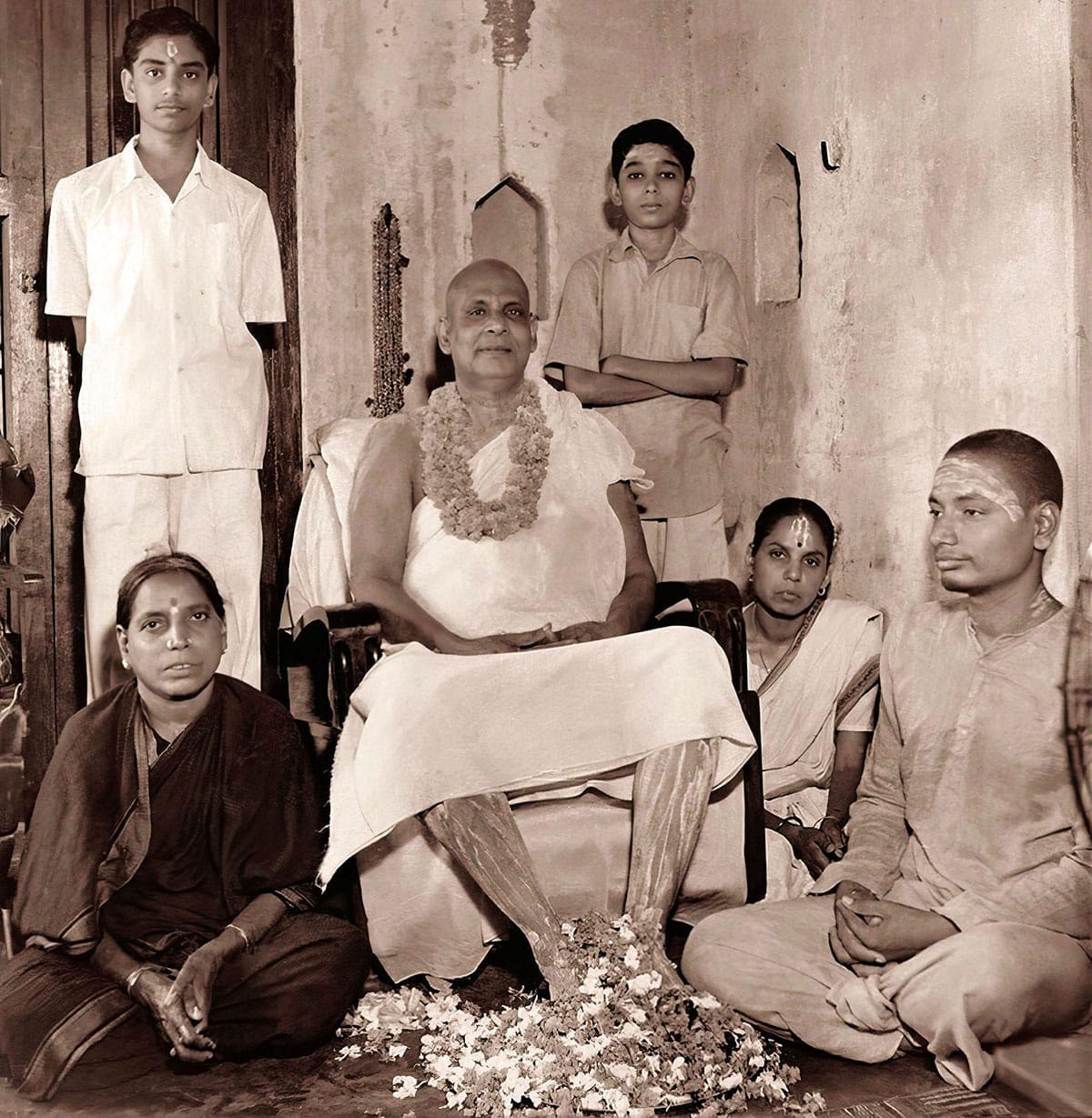
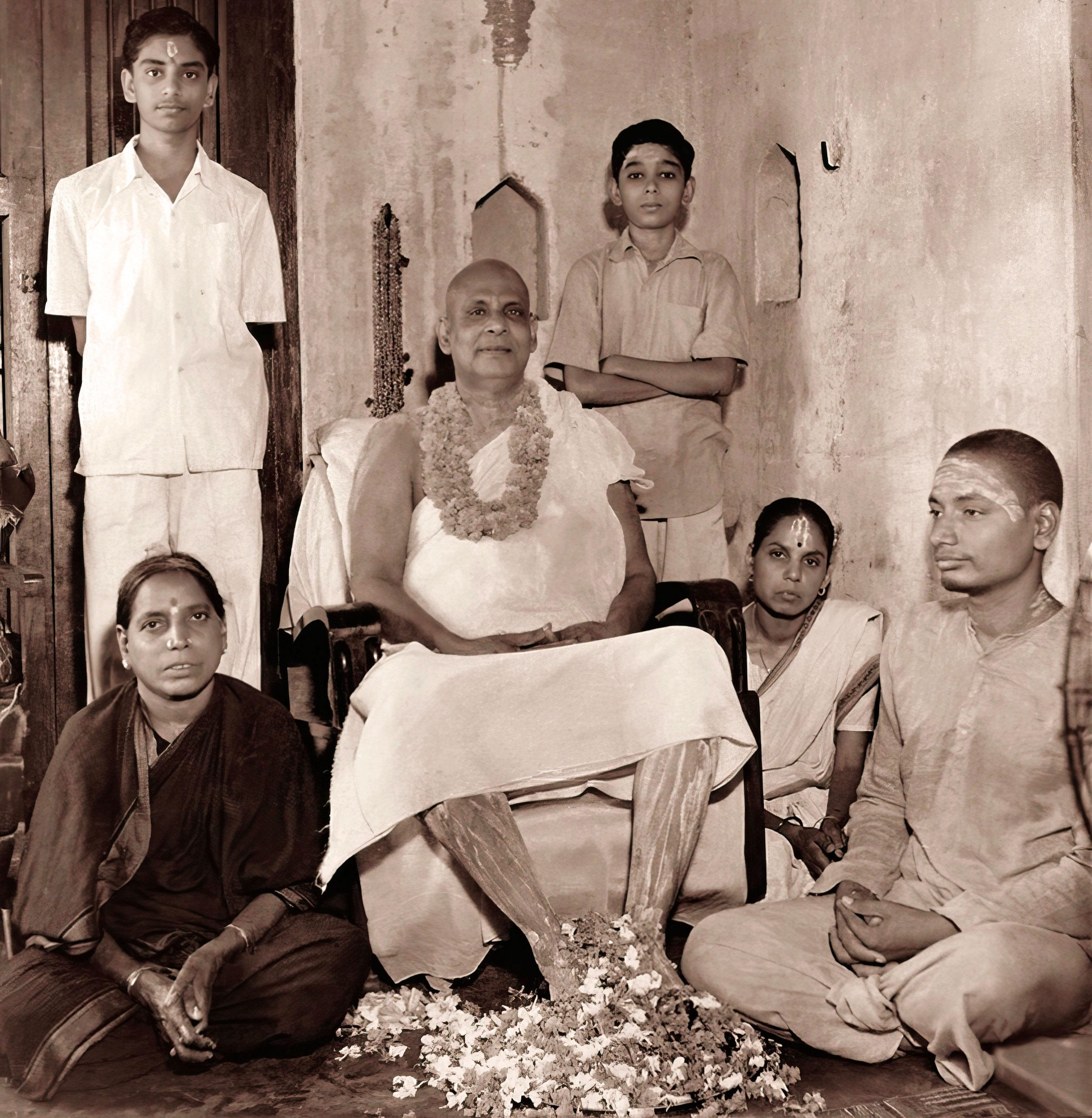
A Family Visit
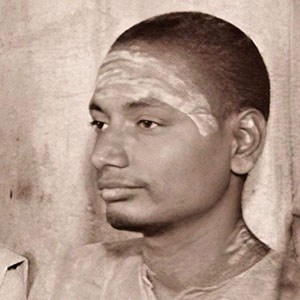
When Parthasarathy took refuge at the feet of Swami Sivananda as a young man, some members of his family were dismayed, for traditionally, as the eldest son, he would be expected to take his place as the head of the family and support his parents in their later years. However, Parthasarathy gave them a more precious gift by introducing them to the Master, a gift that was more truly life-sustaining. Here some of his family are pictured following the sacred Pada Puja to Swami Sivananda’s feet. Sitting (from the left) Sri Lakshmi (Swamiji’s mother), Swami Sivananda, Sri Rukmini (his stepmother), Swami Venkatesananda. Standing: Sri Ramakrishna and Sri Rajagopal (his half-brothers).
-
 See full screen image
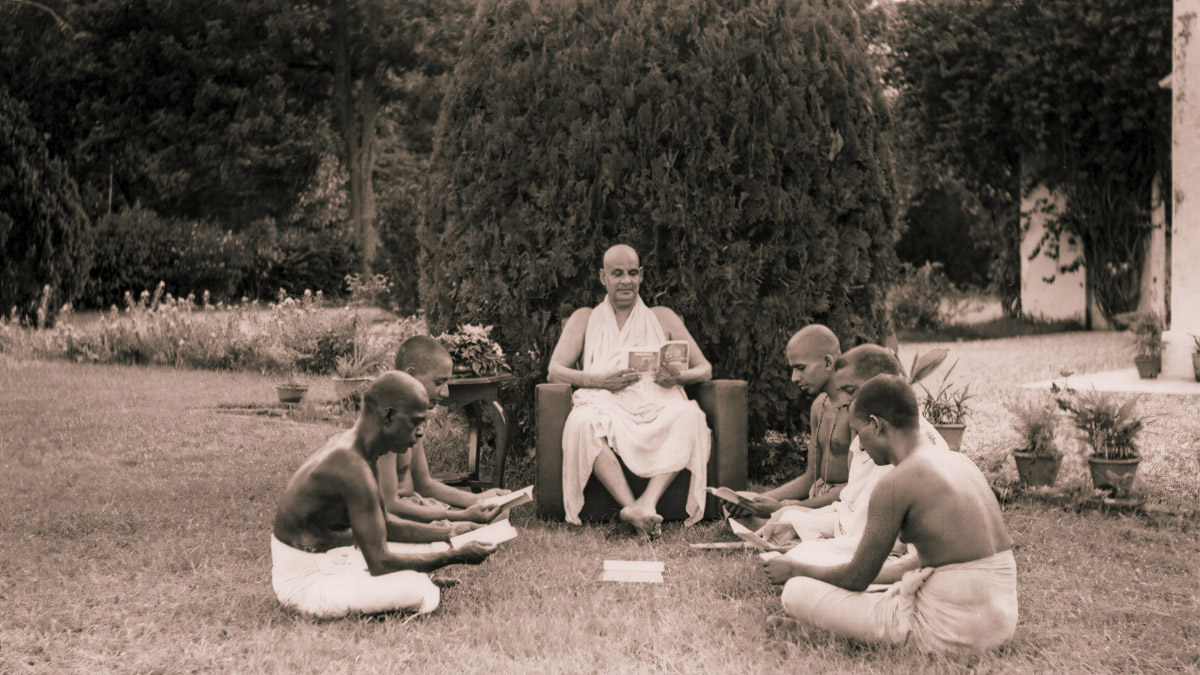
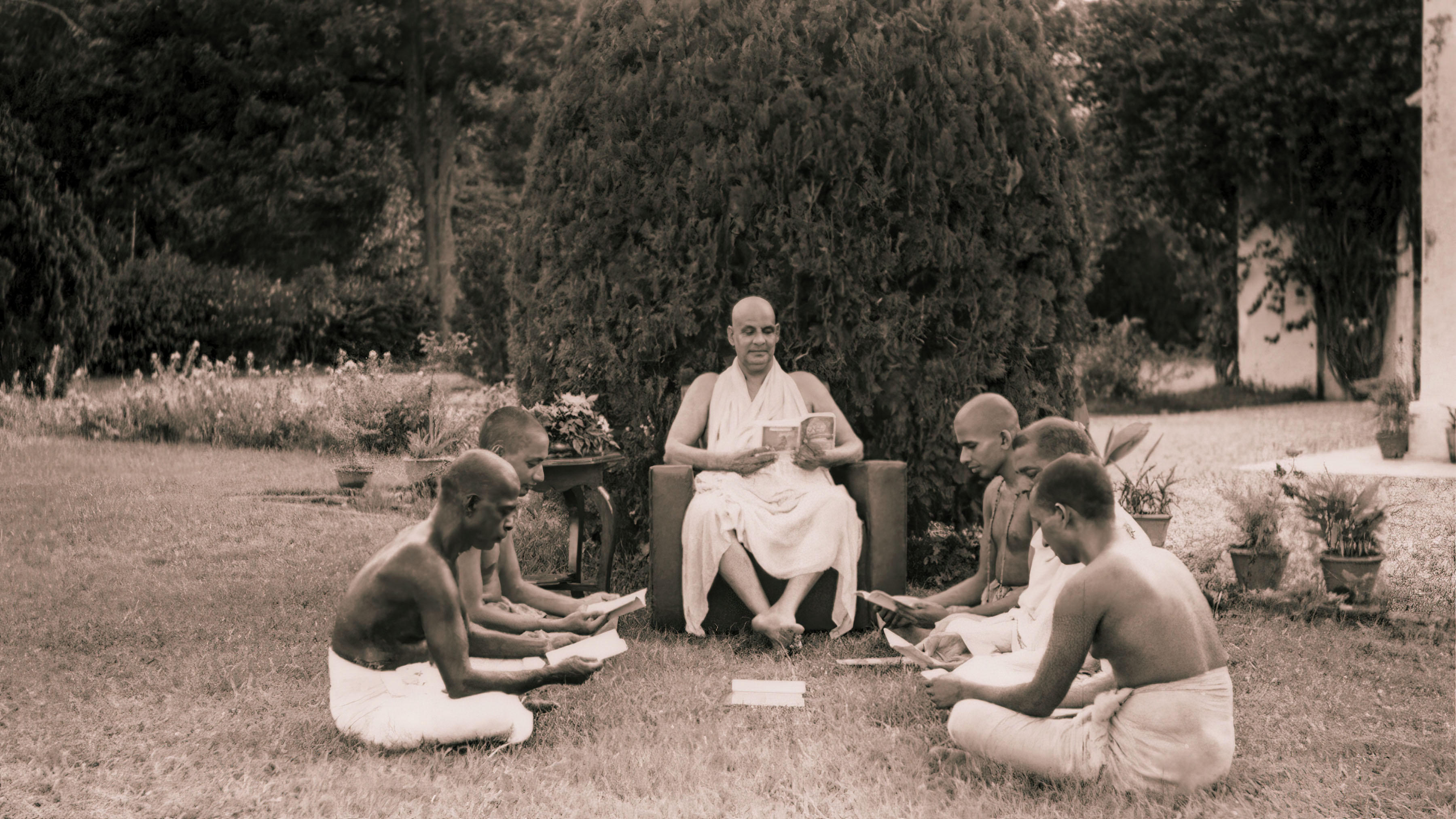
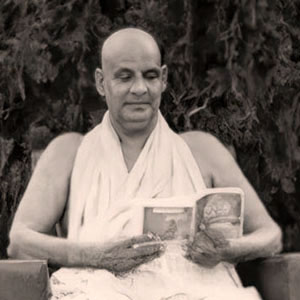
Study Session with the Master
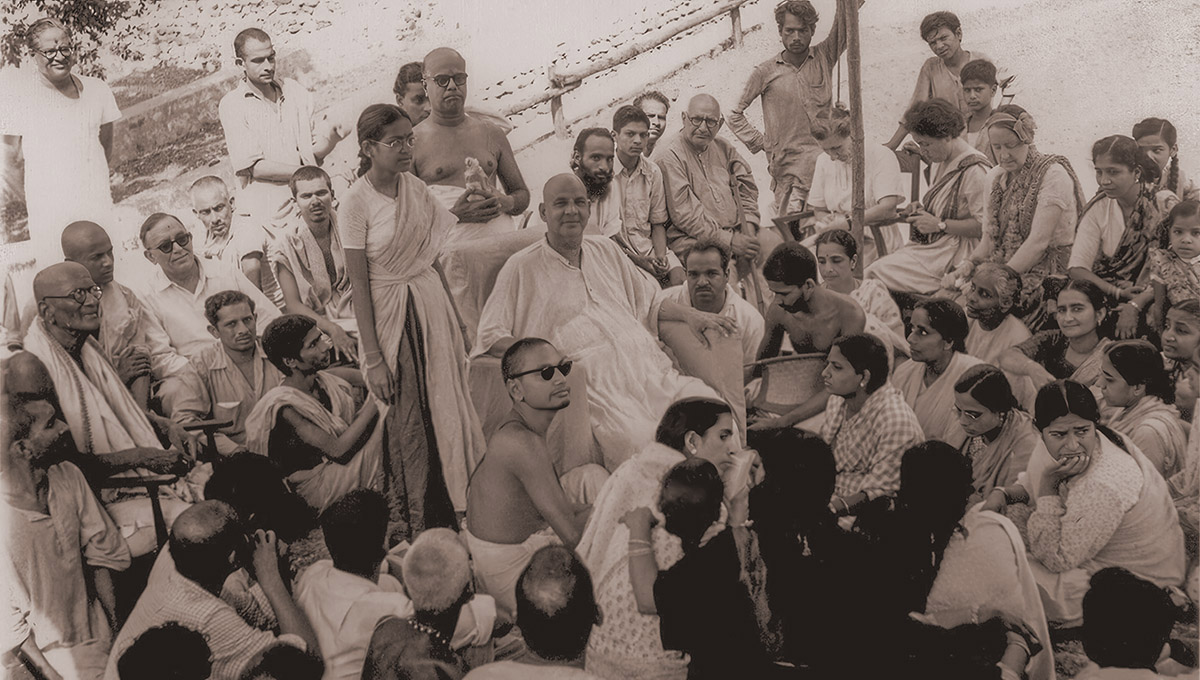
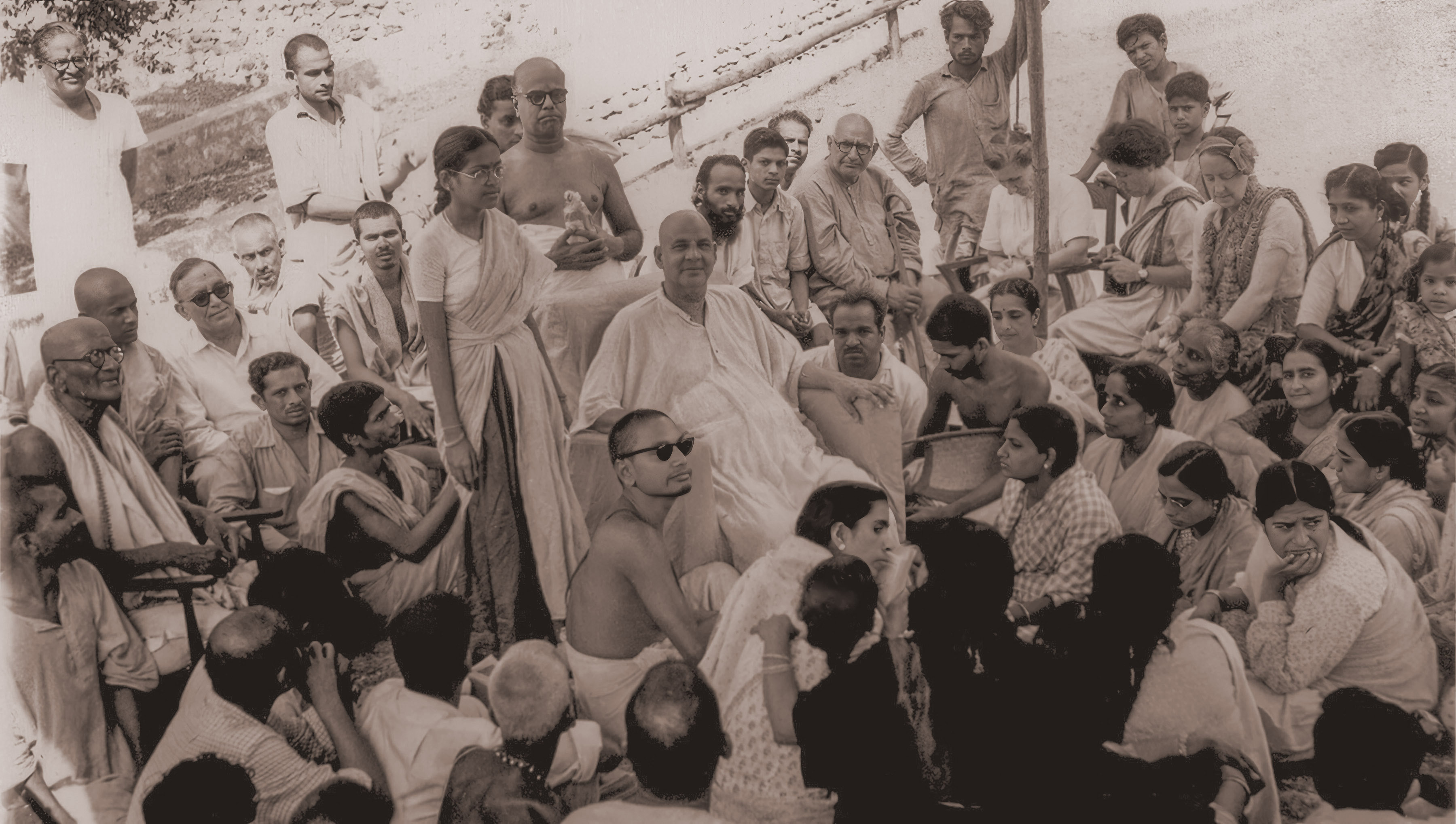
Swami Sivananda paid very close attention to his sannyasi disciples, balancing their lives between service, study, spiritual practice and rest. Here he is seen in an idyllic outdoor study session with several devotees. Swami Venkatesananda is pictured to the left of Swami Sivananda.
-
 See full screen image
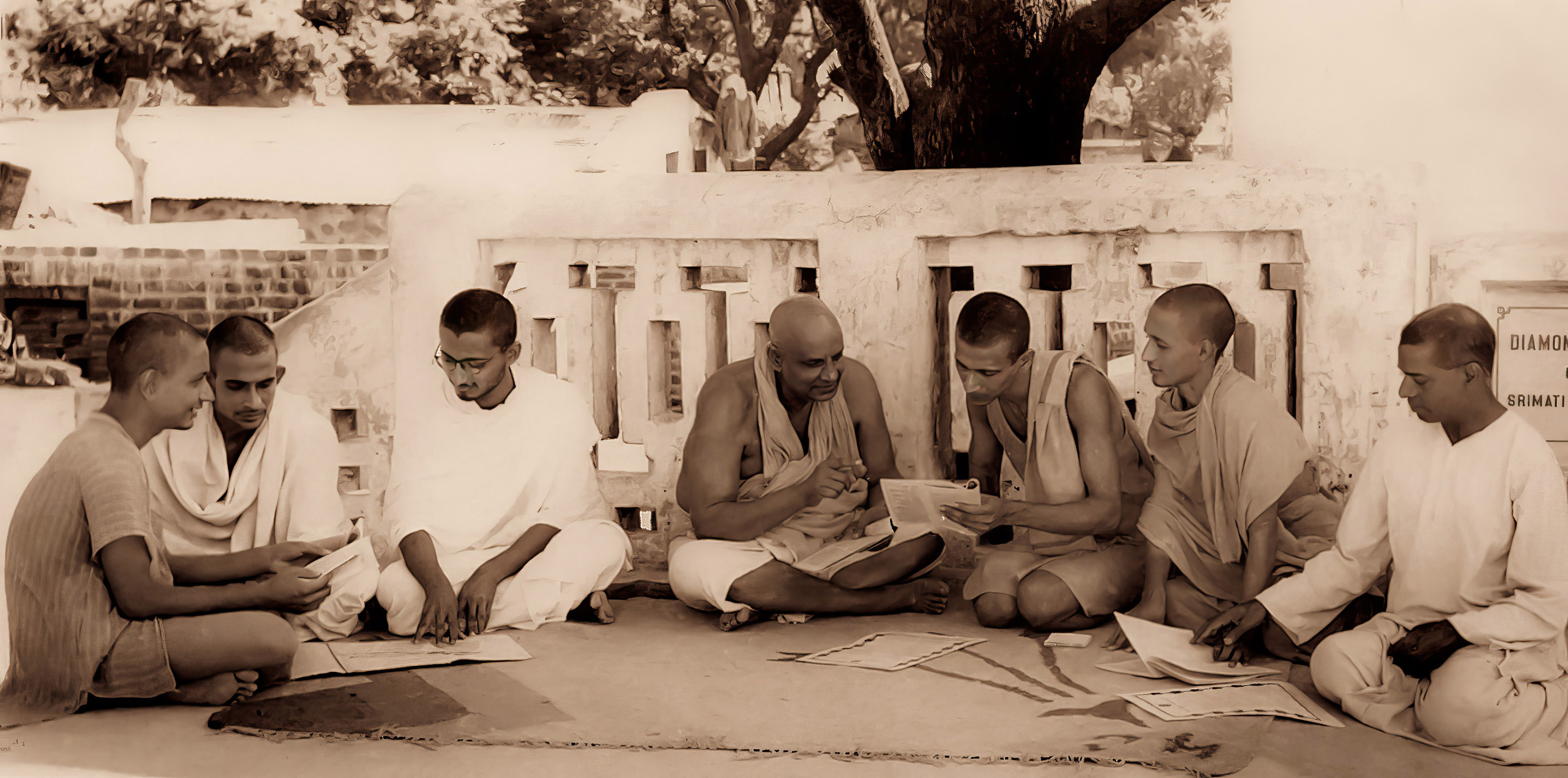
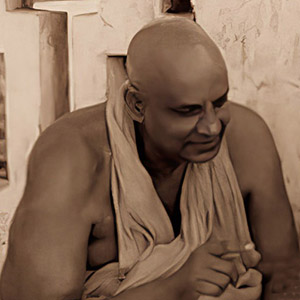
Young disciples Proofing Manuscripts
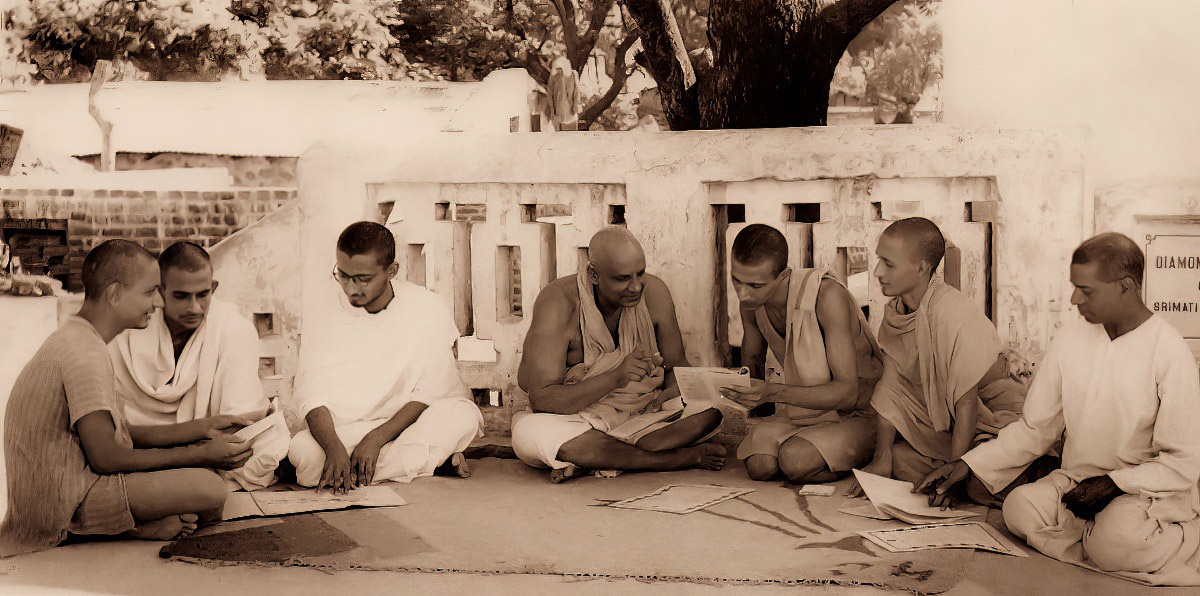
Swami Sivananda in an editorial session with (from left to right) Swami Venkatesananda, Swami Turiyananda, Swami Shivapremananda, Swami Chidananda, Swami Satyananda, and Swami Saswathananda.
-
 See full screen image
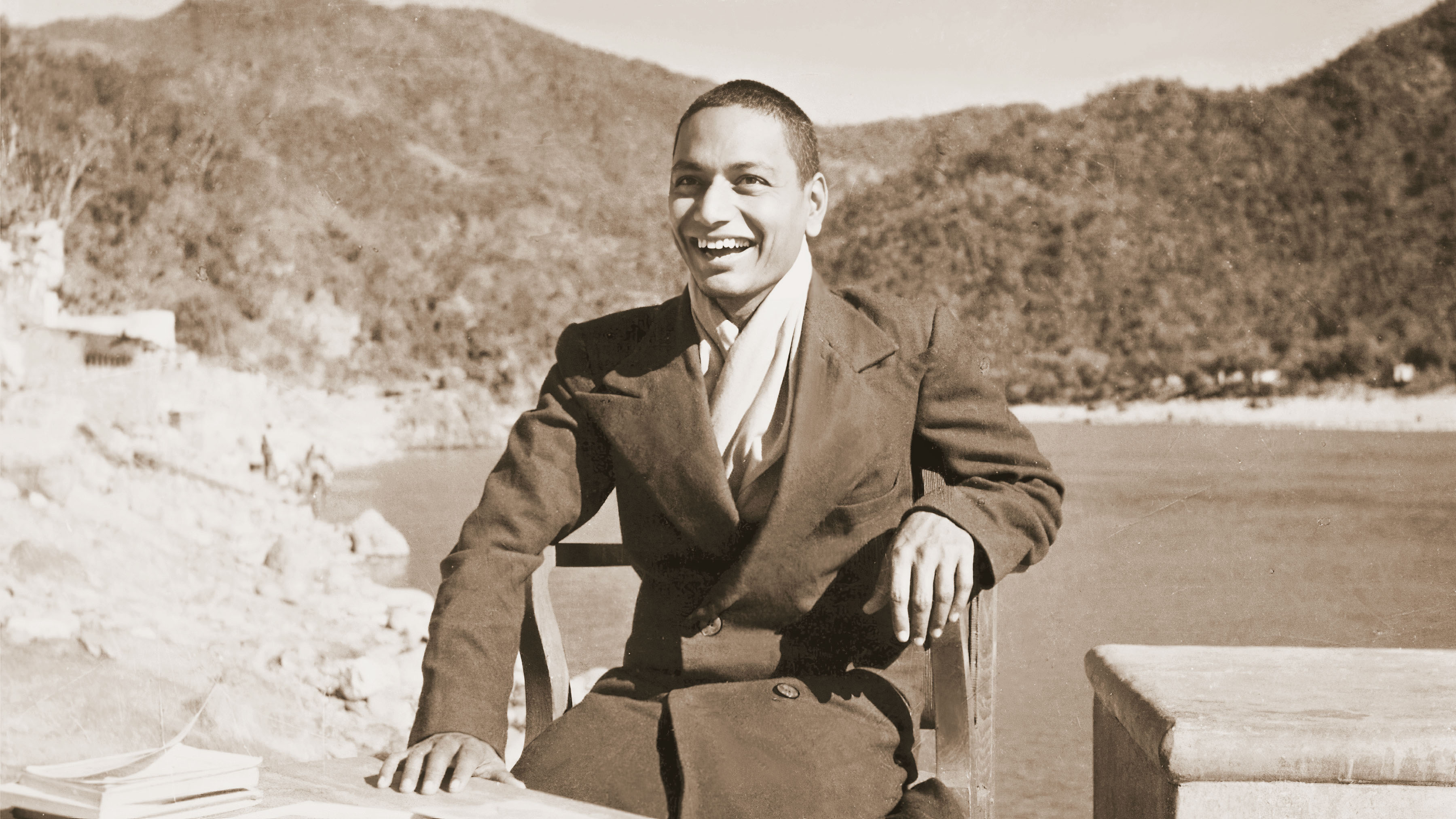
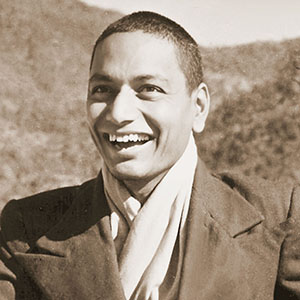
Young Swami Venkatesananda Enjoying the Moment
The Master and Swami Venkatesananda were in close contact each day. In fact Swami Sivananda began his workday with a visit to Swamiji’s kutir which was adjacent to his own on the bank of the Ganges. Observers thought that this was a sign of favor for his beloved disciple, and though Swami Venkatesananda was indeed beloved to Swami Sivananda, this was strictly a daily work conference. Swami Venkatesananda’s small kutir was a hive of activity with every surface covered with projects for his Master: books being edited; correspondence in progress, articles being written. Late each night before lying down for just a few hours of sleep, Swami Venkatesananda would spread a cloth over his “desk” and lie down with his typewriter as his pillow. It was so as not to disturb this organized chaos that the Master made this morning visit.
-
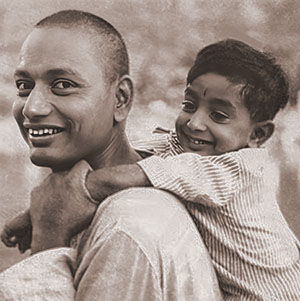 See full screen image
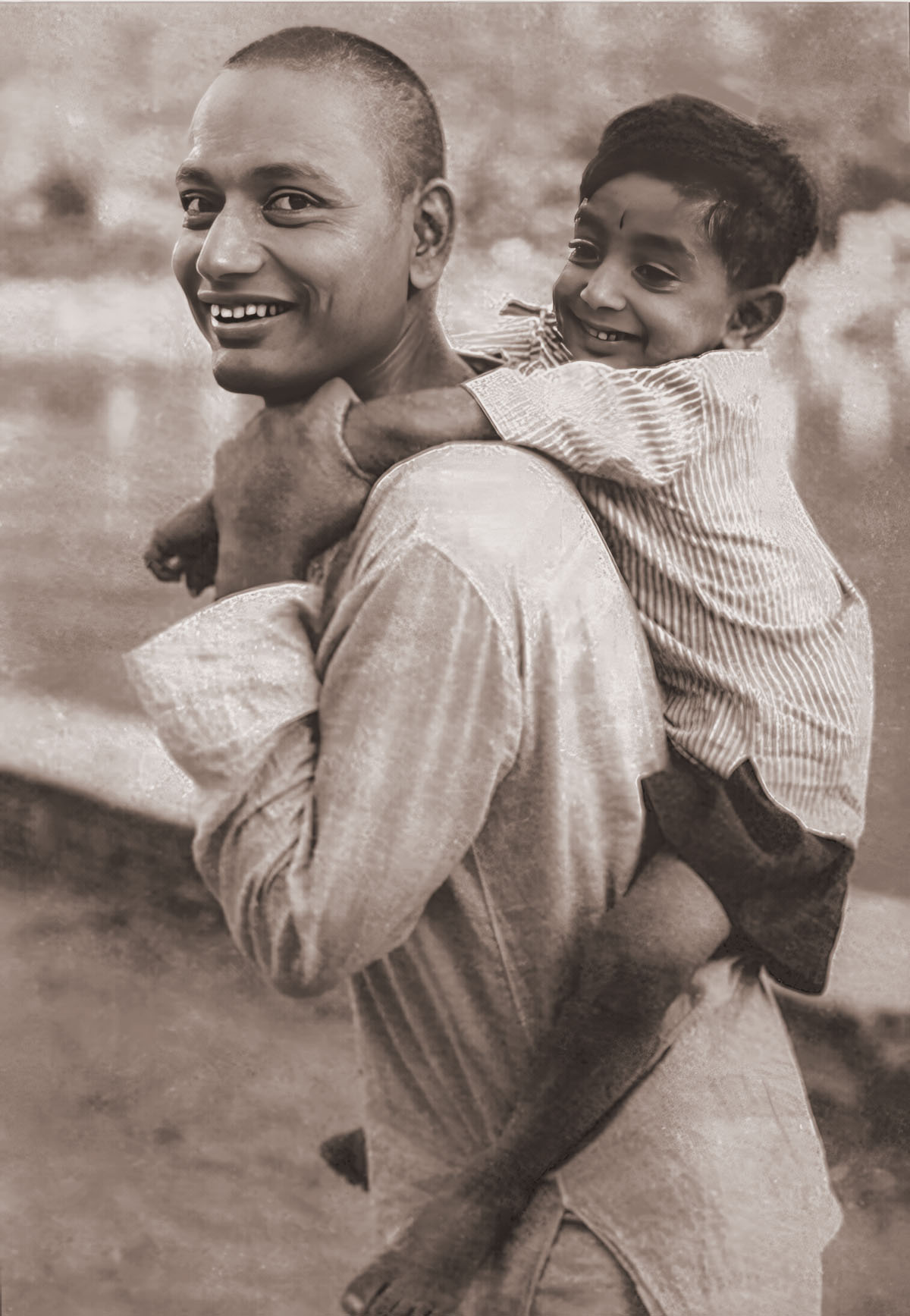
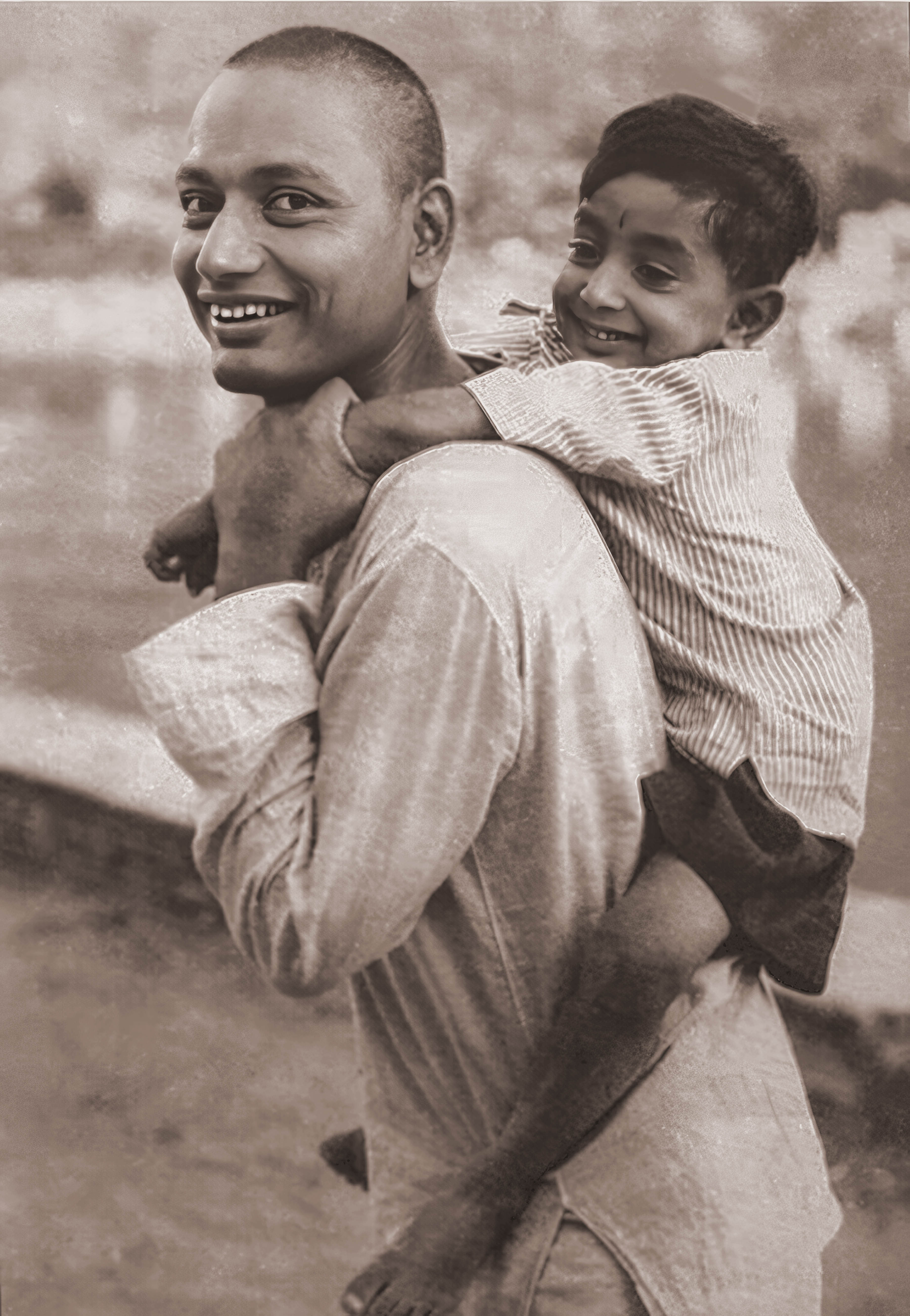
Swami Venkatesananda loved children! He could not resist playing with them even though he was often criticized for it as “unbecoming a swami.” Many thought that swamis should remain aloof in their interactions, but Swamiji’s sense of fun was irrepressible–children delighted him–and he in turn was their favorite playmate. As a young man in Madras he helped raise his much younger half-brothers and sisters and so was a natural “uncle figure” for children visiting the Ashram with their parents. Here he is giving a piggy-back ride to a young visitor, and it isn’t clear which one is having more fun!
-
 See full screen image
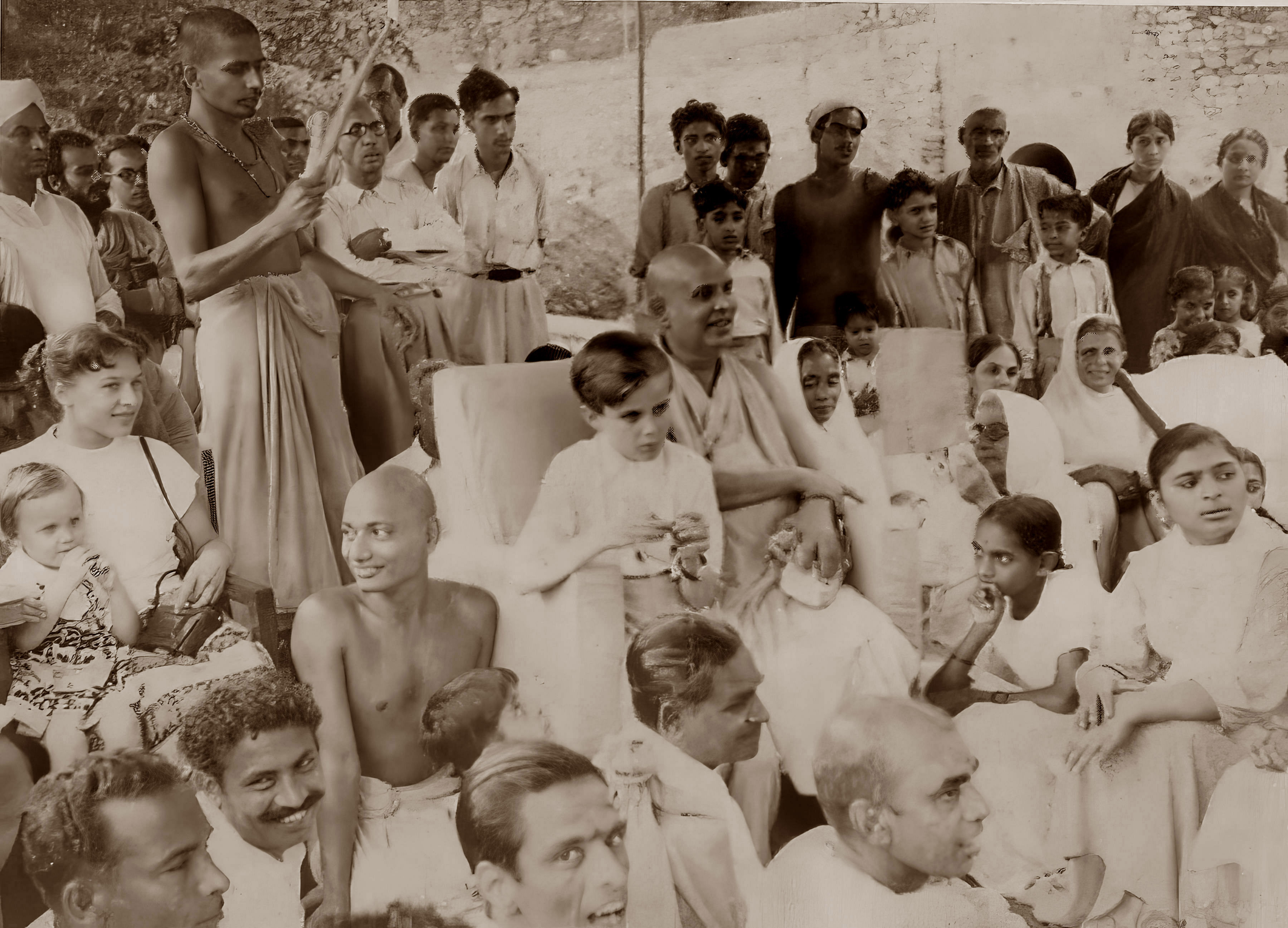
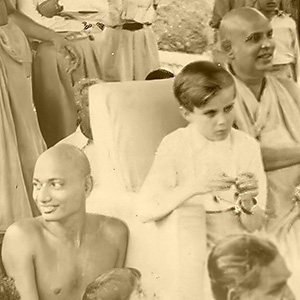
Swami Sivananda Birthday Celebration Gathering
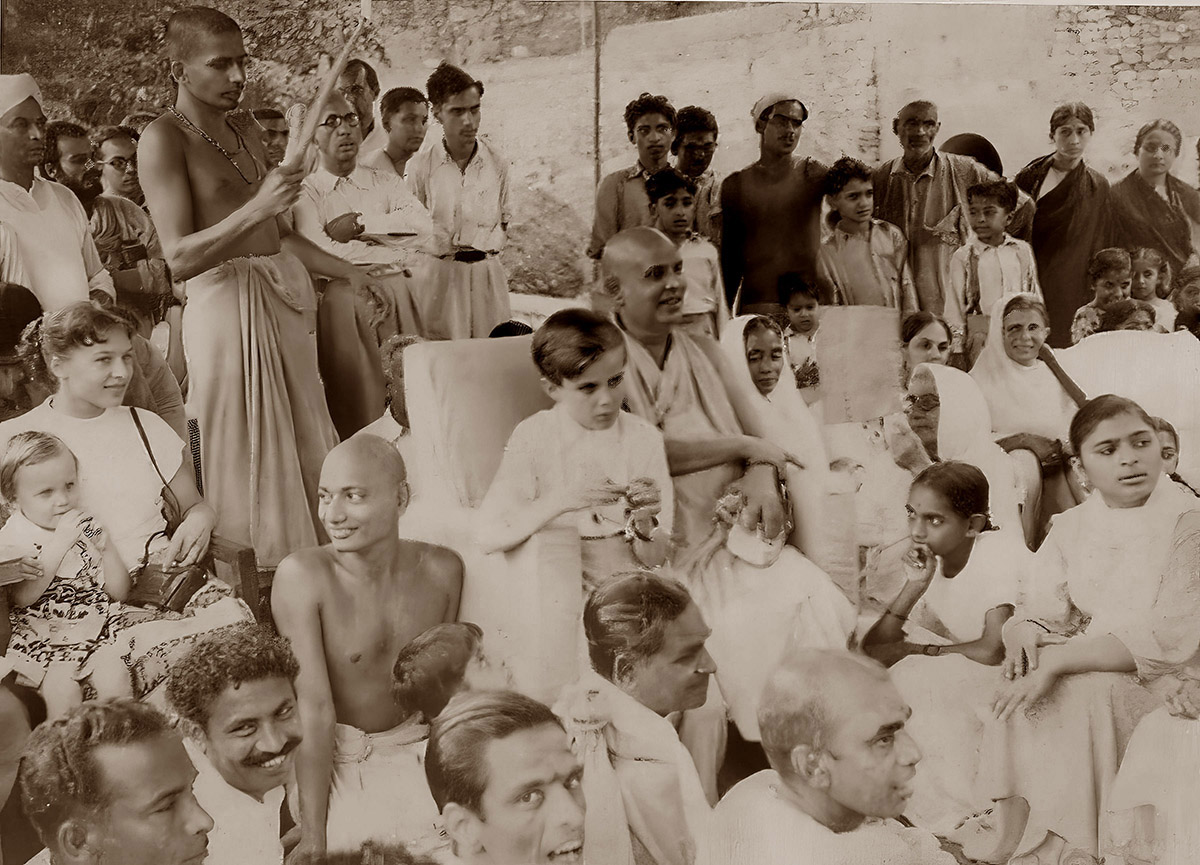
Swami Sivananda during his birthday celebration, with Swami Venkatesananda pictured to the left.
Swami Sivananda celebrated his birthday each year on September 8th, drawing hundreds of devotees to the Ashram. But rather than a commemoration of the birth of Kuppuswami, the Brahmin child born in 1887, the celebration was an opportunity for Swami Sivananda to share teachings, practices and joy that might bring about spiritual rebirth in the lives of seekers. It was a full festival with many days of inspiring talks and spiritual practices. From 1947 it was also a day when he gave Sannyas initiation. Swami Venkatesananda was in the first group to enter to Ganges on that auspicious date of September 8th and to emerge into the the unborn and undying state of Sannyas.
-
 See full screen image
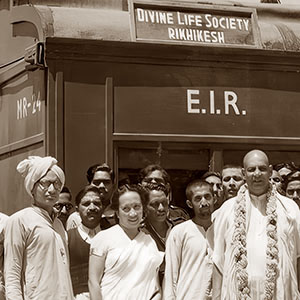
Swami Sivananda: The All India Tour
“I heard a voice within: “Siva wake up, and fill the cup of your life with this nectar; share it with all. I shall give you strength, energy, power and wisdom.” I obeyed his command. He did fill the cup, and I shared it with all.
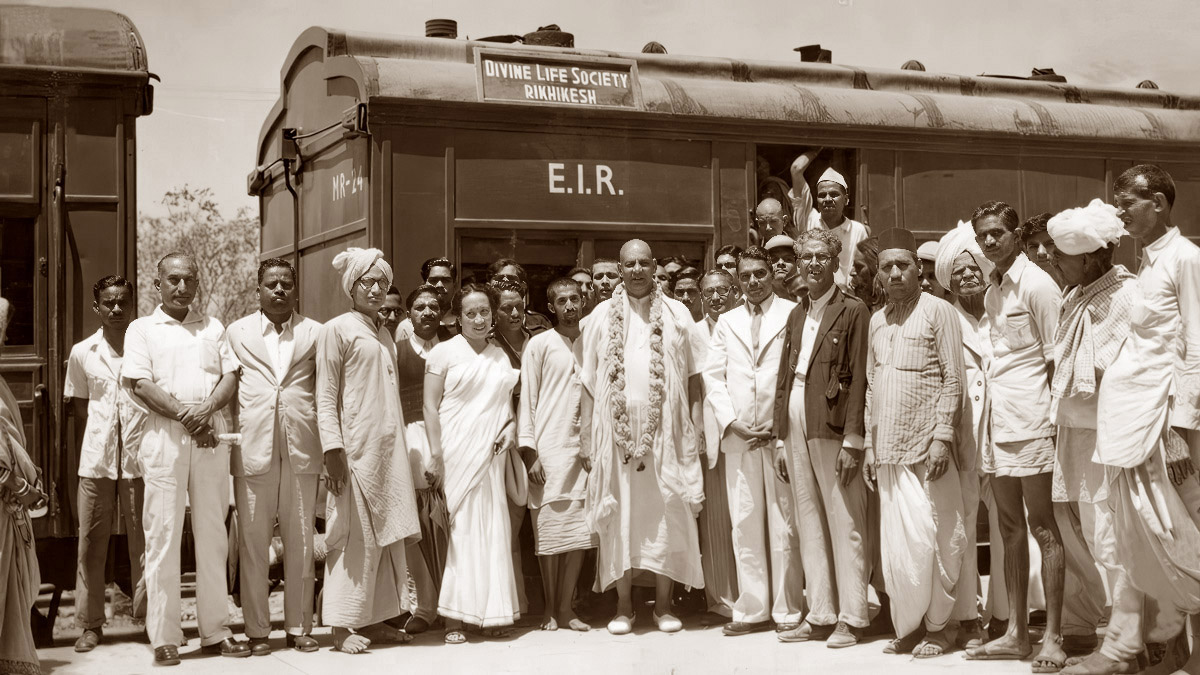
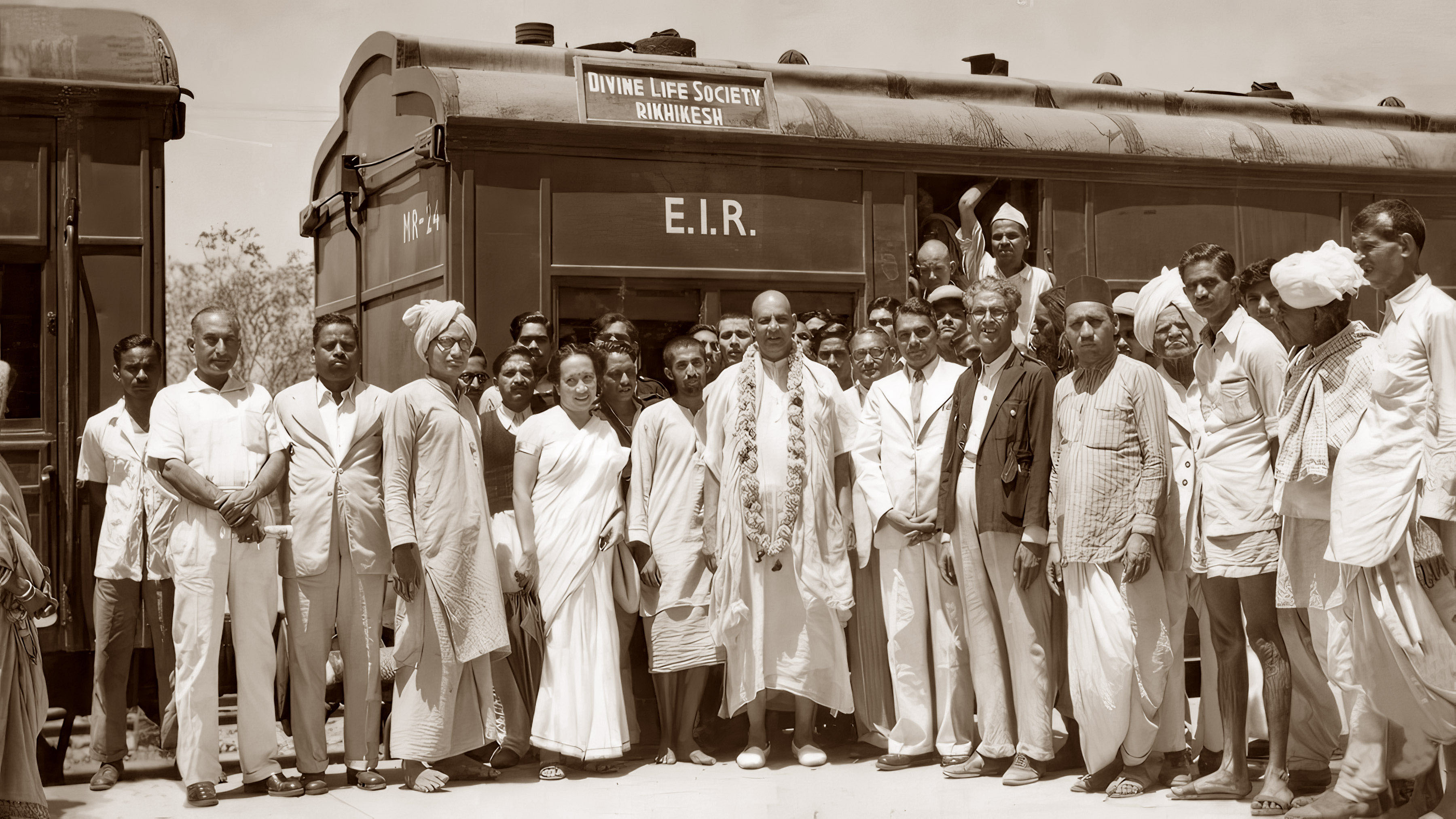
Ironically, it was an attempt on Swami Sivananda’s life (a deranged “devotee” had attempted to hit him on the head with an ax during Satsang) that precipitated the All India Tour: Swami Paramananda, the organizer, realized that Swami Sivananda’s presence among them was a precious gift that needed to be widely shared. With a background as a manager for a traveling circus, he had unique skills for organizing such a complex tour. A first-class railroad car was hired, and Swami Sivananda and thirteen disciples set out on September 9, 1950 (right after the Birthday Celebration), for this two-month tour that covered the length and breadth of India.
Swami Venkatesananda was the chronicler, moving closely with Swami Sivananda and committing his talks to memory at every event. The result was the book Sivananda Lectures All-India Tour. It was a demanding two months for Swami Sivananda and also for Swami Venkatesananda whose “office” was the toilet, where he sat on the floor with his typewriter late into the night.
-
 See full screen image
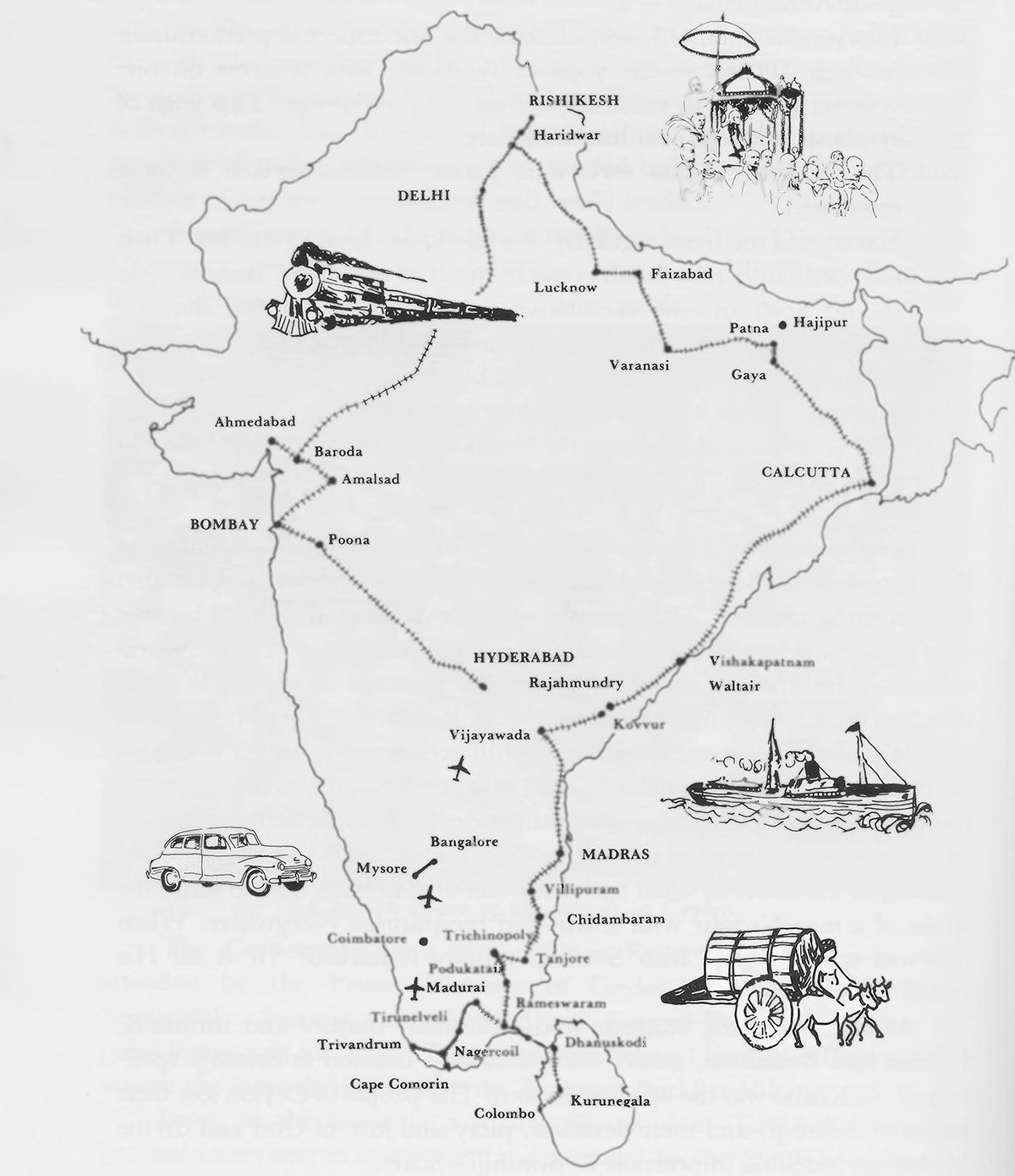
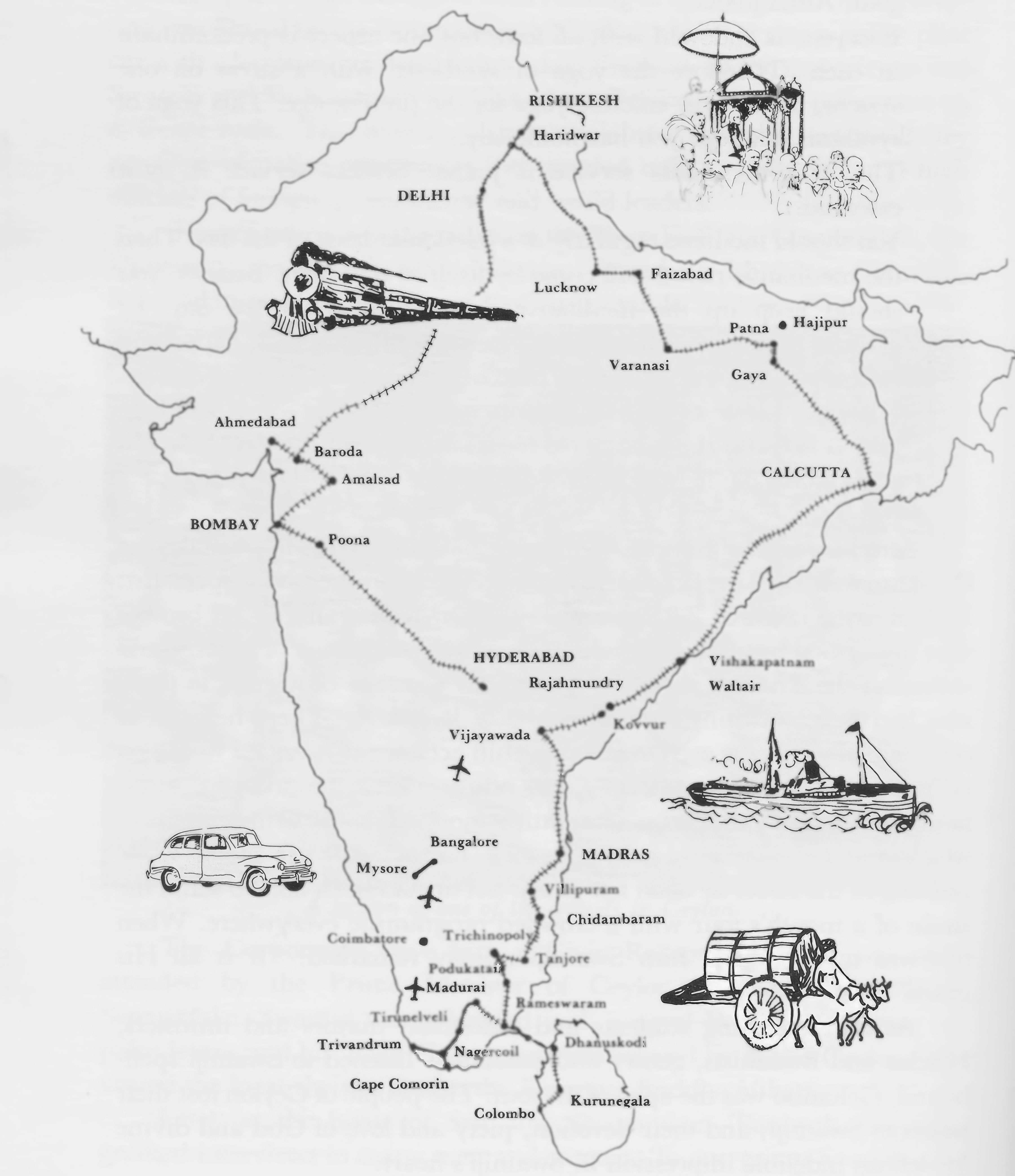
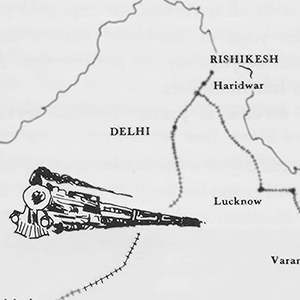
Map detailing the route of the All-India Tour
Swami Sivananda and party traveled by train, plane, boat, automobile and oxcart to reach their destinations in India and Ceylon (now Sri Lanka). Before leaving the Ashram Swami Sivananda summarized his vision for the tour: “At every railway station we should do kirtan. Millions should know the true significance and meaning of divine Life. Wherever we go we should penetrate into the heart of the masses. Leaflets and pamphlets should be distributed in hundreds and thousands. We should disseminate the name of the Lord everywhere so the millions will know the glory of kirtan and Ram nam.”
He was also concerned that everyone who wanted his darshan should have the opportunity, knowing that this personal contact made all the difference. When Swami Paramananda told him that they would allow devotees into his railway car during the day, but that they would need to close it from 10 pm to 4 am for him to be able to get some rest, Swami Sivananda admonished them: “Don’t they sacrifice their rest and come all the way to the station to meet me? Why should I deny them the pleasure?”
At almost every railway station en route, hundreds of people came to have his darshan, and wherever they halted he conducted Kirtan on the railway station platform. Even as the train entered the station the loudspeakers fitted on the Tourist Car filled broadcast his recorded kirtans and songs and attracted a crowd. Leaflets and pamphlets were then distributed.
-
 See full screen image
Sivananda’s All India Tour
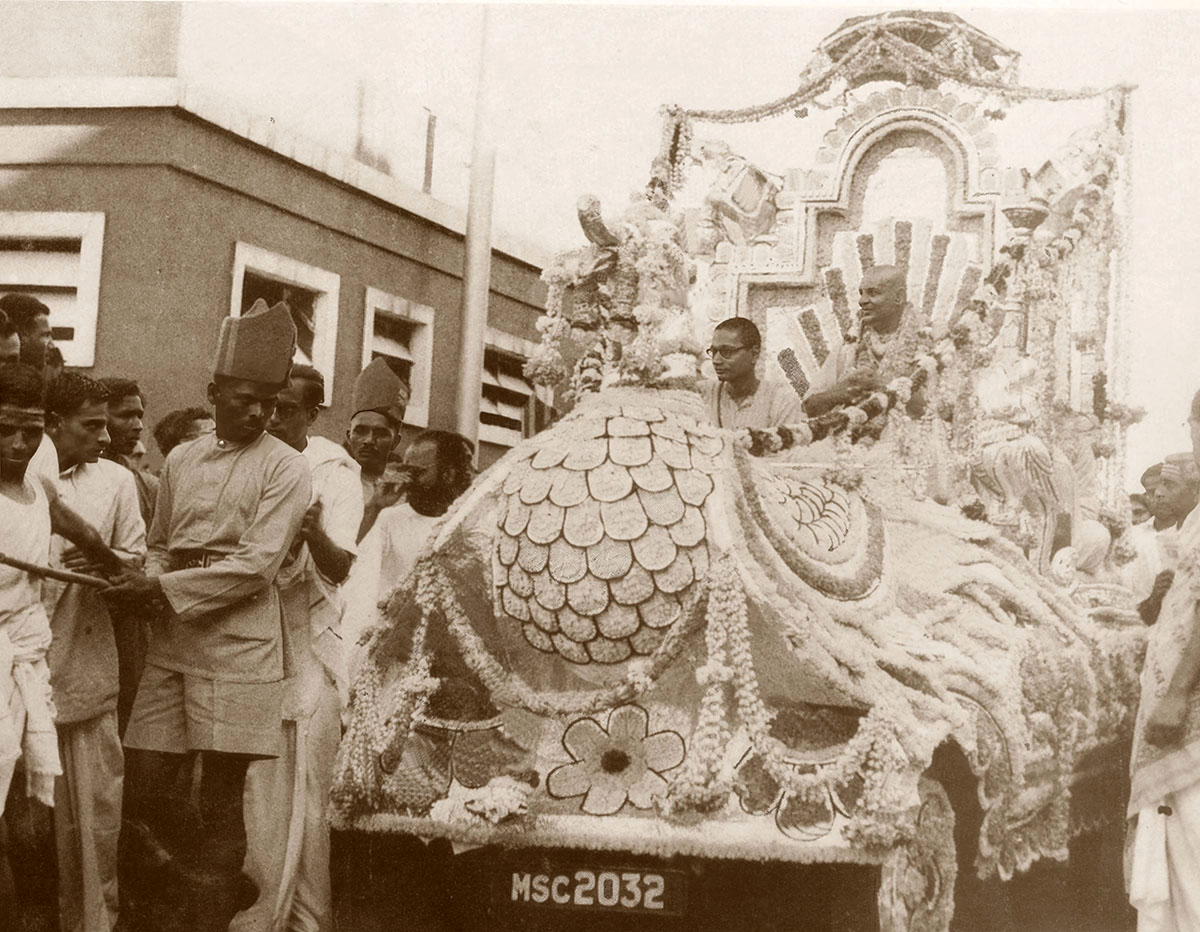
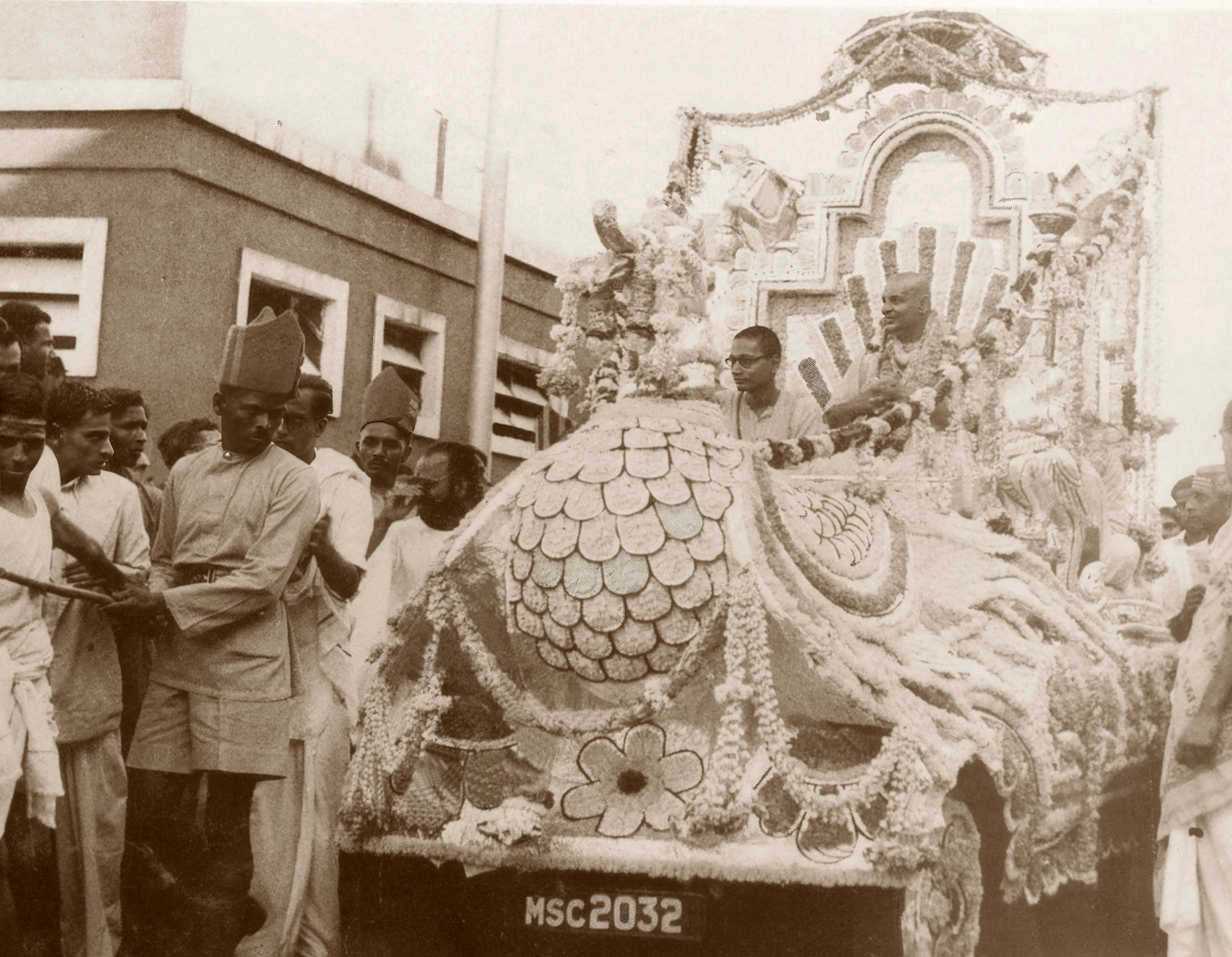
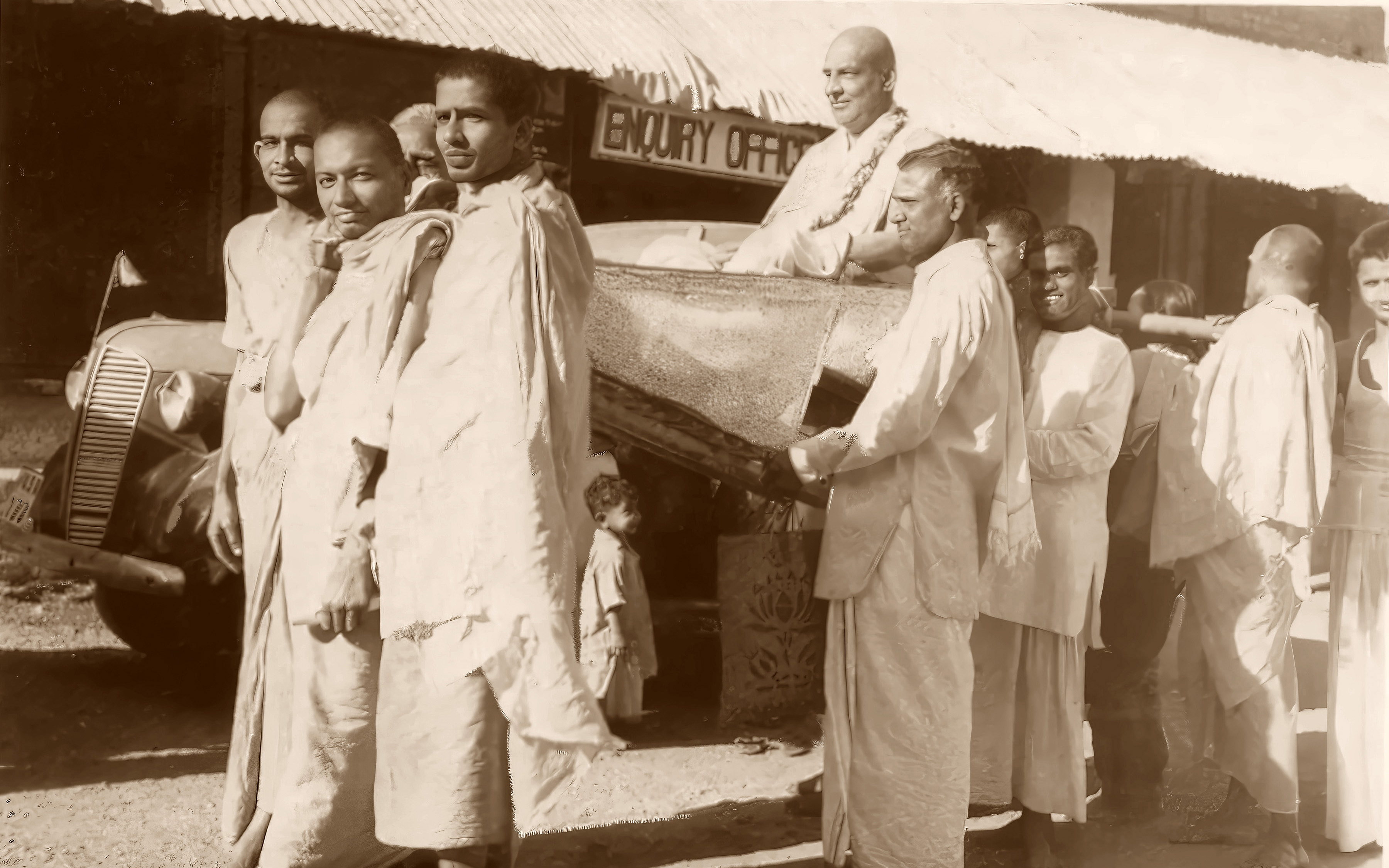
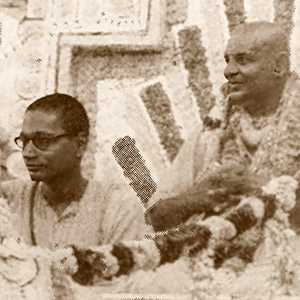
Greeted by the thunderous cheers on his arrival in Madras, Swami Sivananda is carried in a magnificently decorated car with Swami Venkatesananda at the helm.
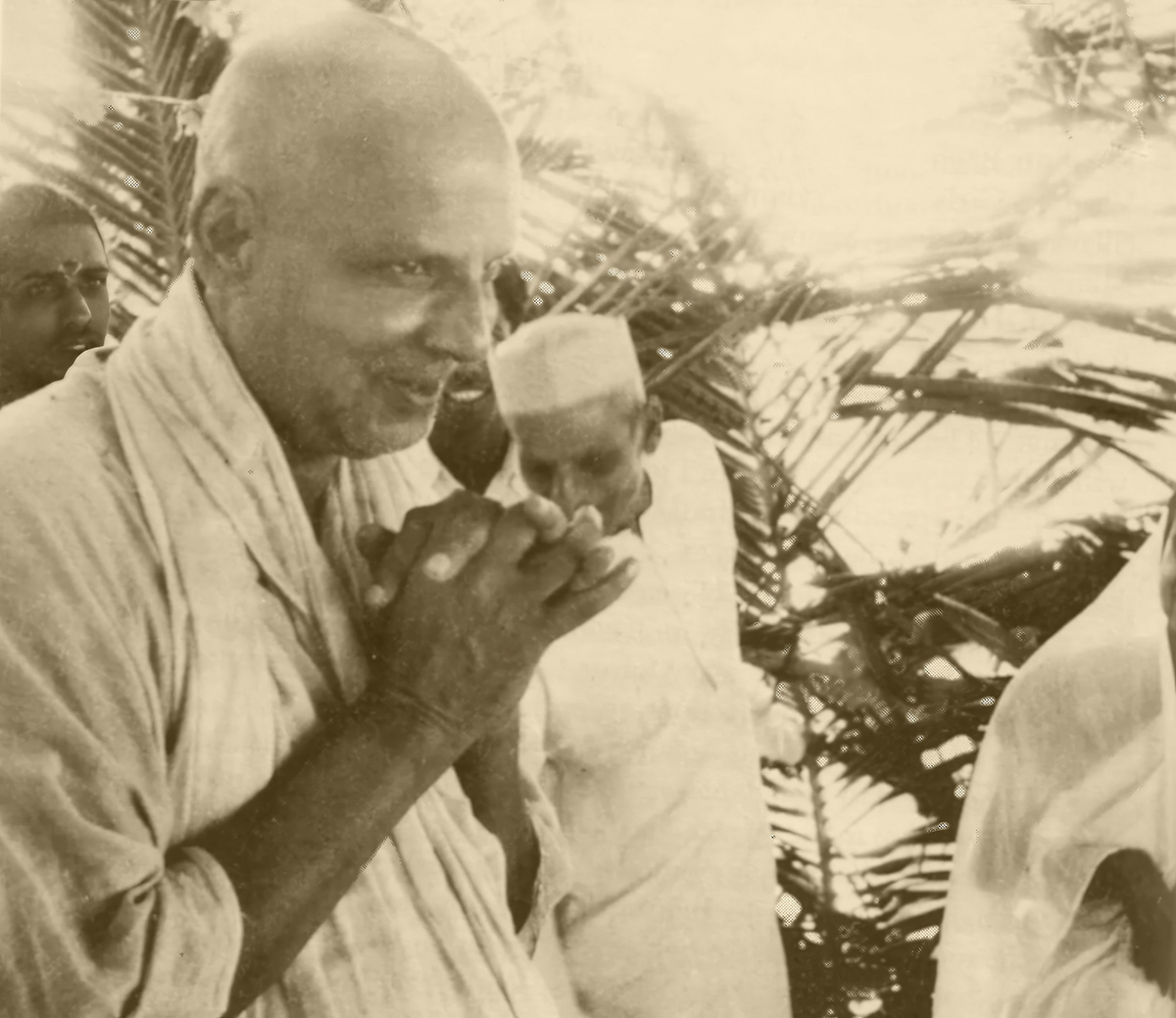
It was impossible to estimate the impact that Swami Sivananda’s memorable visit had on Madras, belying the popular fear that religion had disappeared from the cities of India. For the four days of his visit, the name “Sivananda” was on everyone’s lips and in everyone’s heart was the Divine Life message. Every child was singing the Sivananda’s catchy song “Eat a little,” nicknamed his “Yoga of Synthesis” with its simple daily instructions, beginning “Eat a little, drink a little…” and ending
“Serve, Love, Give, Purify, Meditate, Realize.
Be good, Do good; Be kind, Be compassionate.
Enquire ‘Who am I?’, Know the Self and be Free!”Swamiji’s thundering exhortation – that man should respect man and forget all distinctions…that equal vision should be restored to all eyes—had a miraculous effect on the attitude of the citizens of Madras. The poor and the downtrodden felt that they, too, had a friend and that they, too, were blessed!
-
 See full screen image
Sivananda’s All India Tour
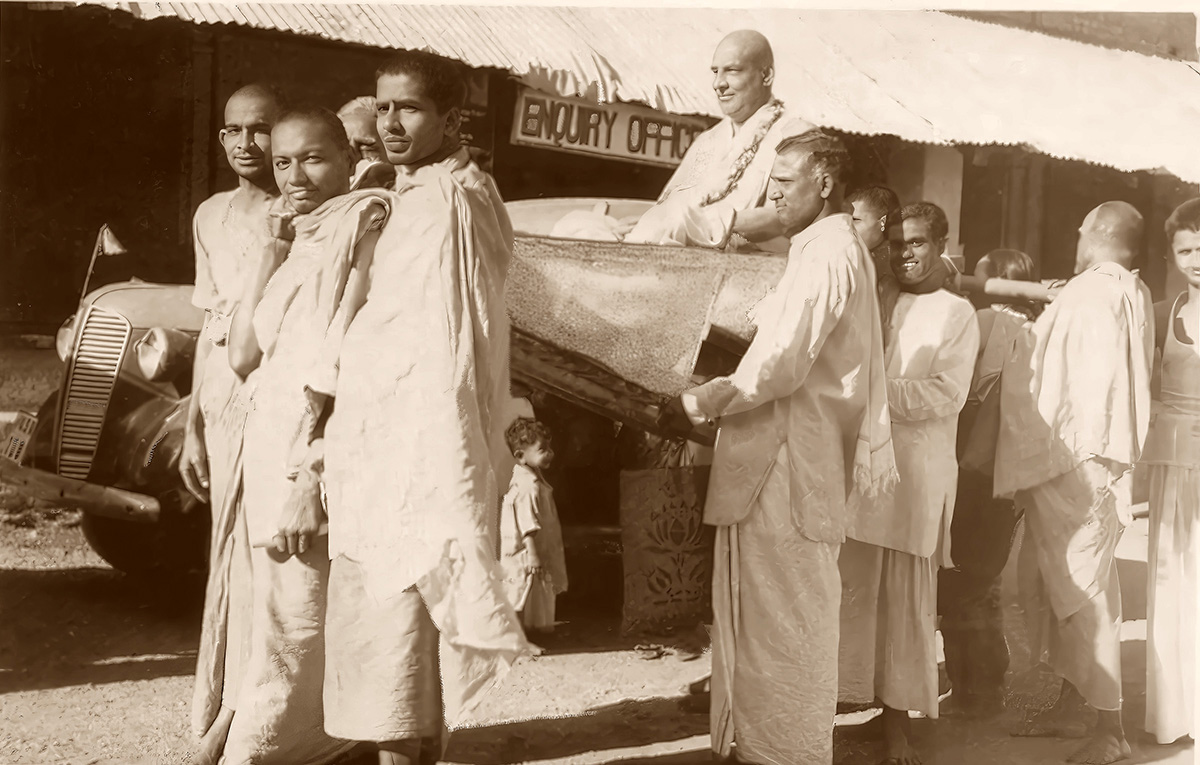
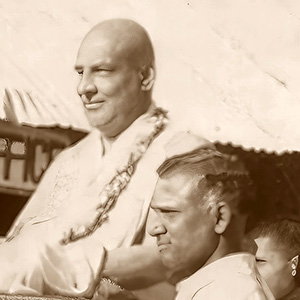
At one stop there was an interesting duel between Swami Sivananda’s humility and the devotion and adoration that the public wished to show. It had been arranged for a palanquin to take him to visit a temple, but the Master felt that it was too much of a burden to ride on the shoulders of other human beings. The organizers pleaded, so to satisfy their devotion he rode in the palanquin, similar to the one above, but for only a few yards, then insisting on switching to a simple bullock cart.
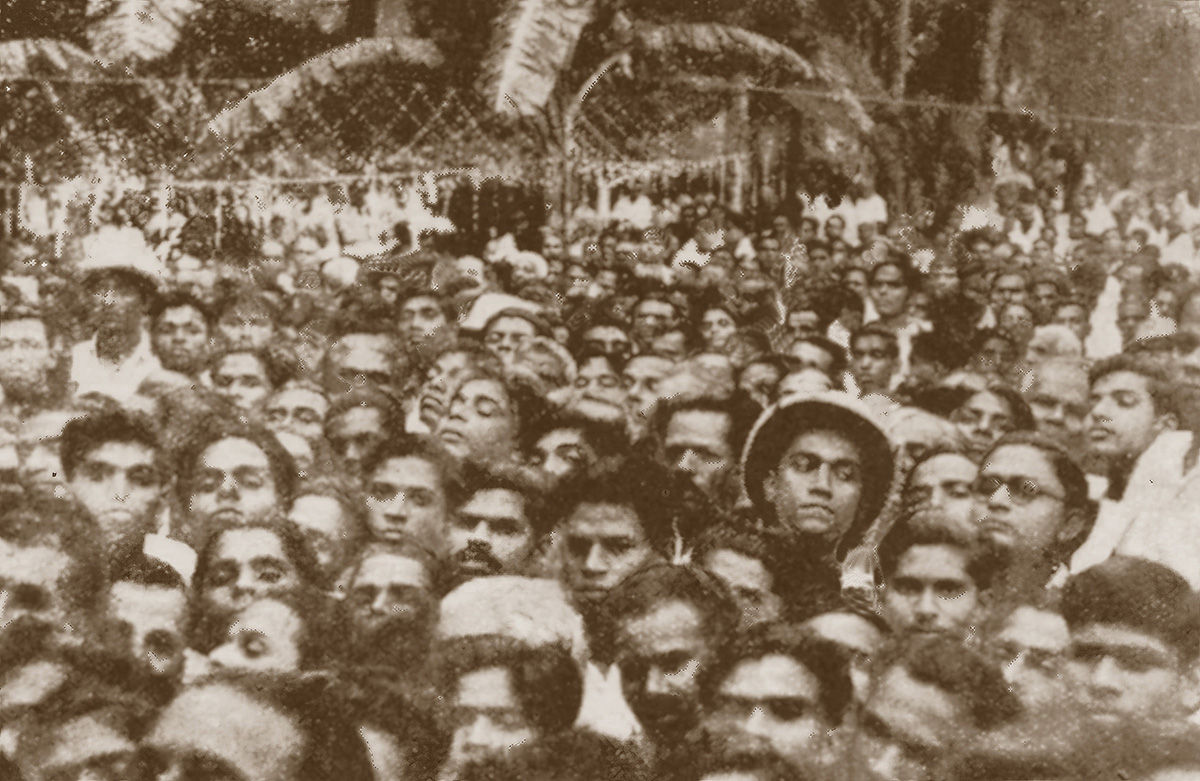
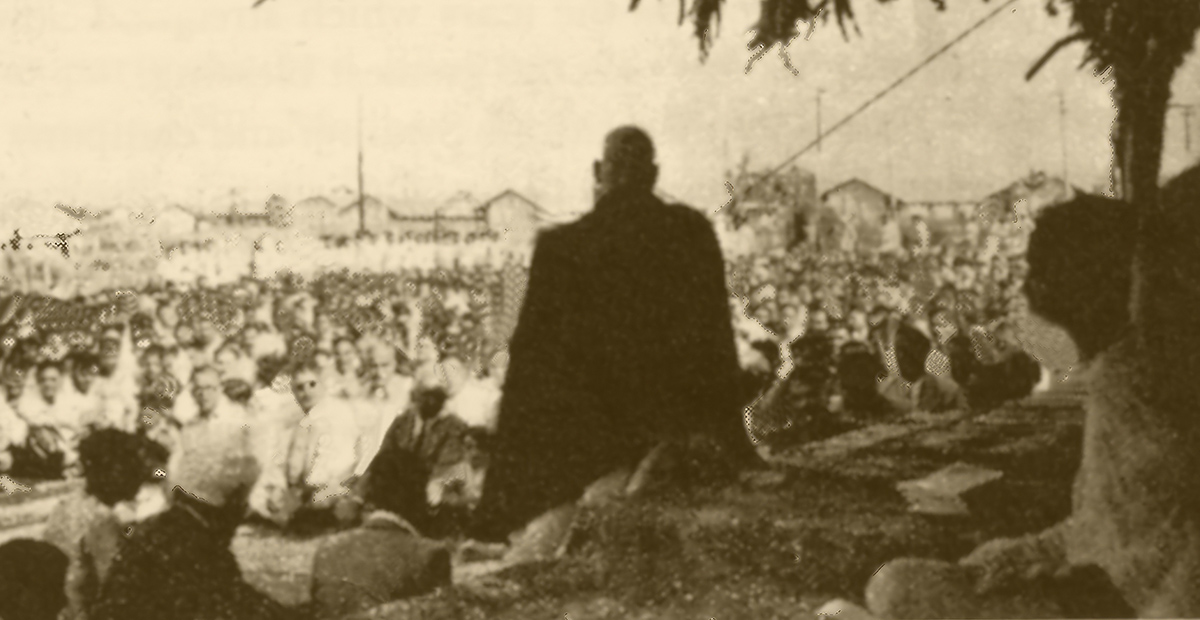
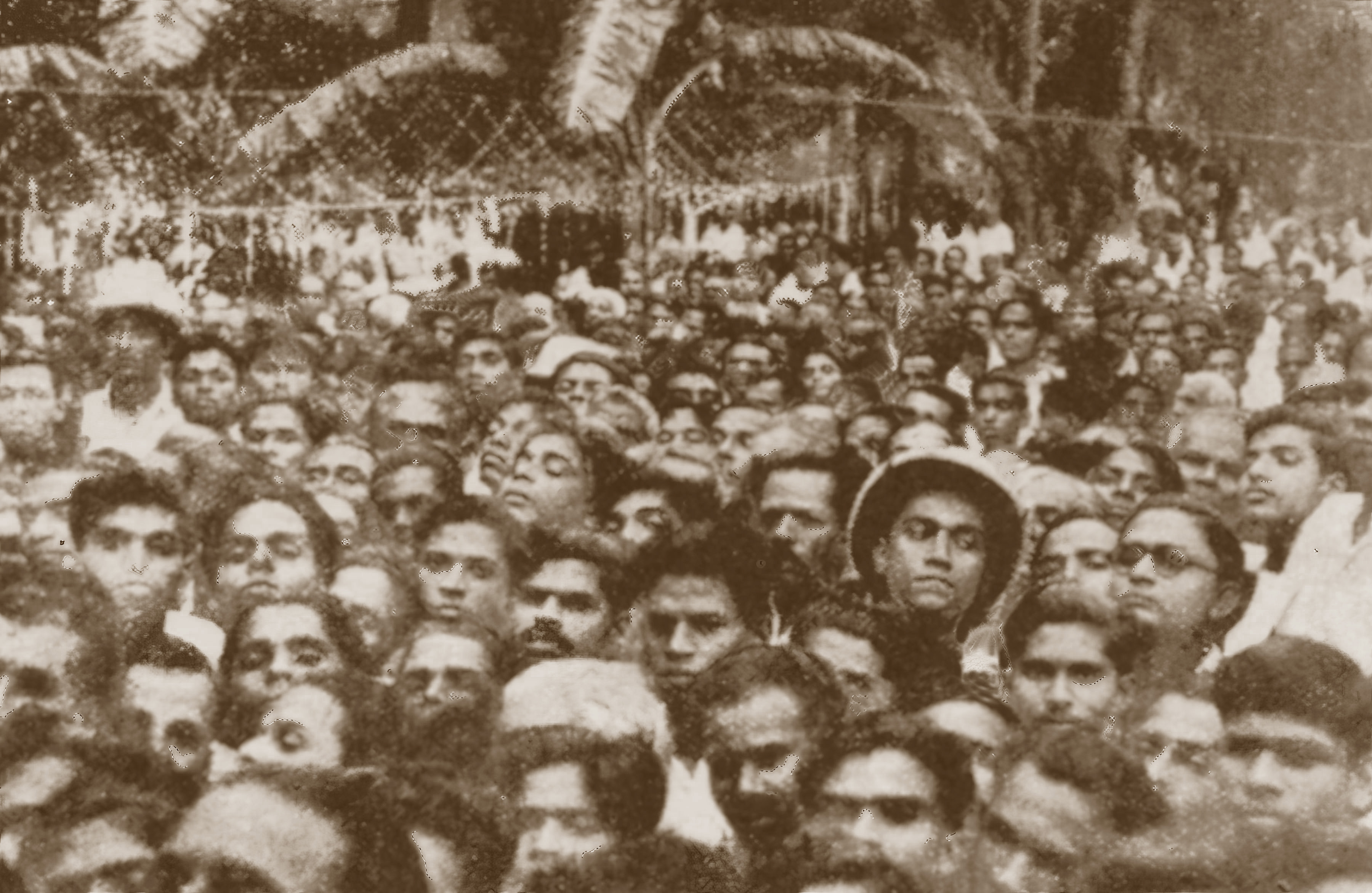
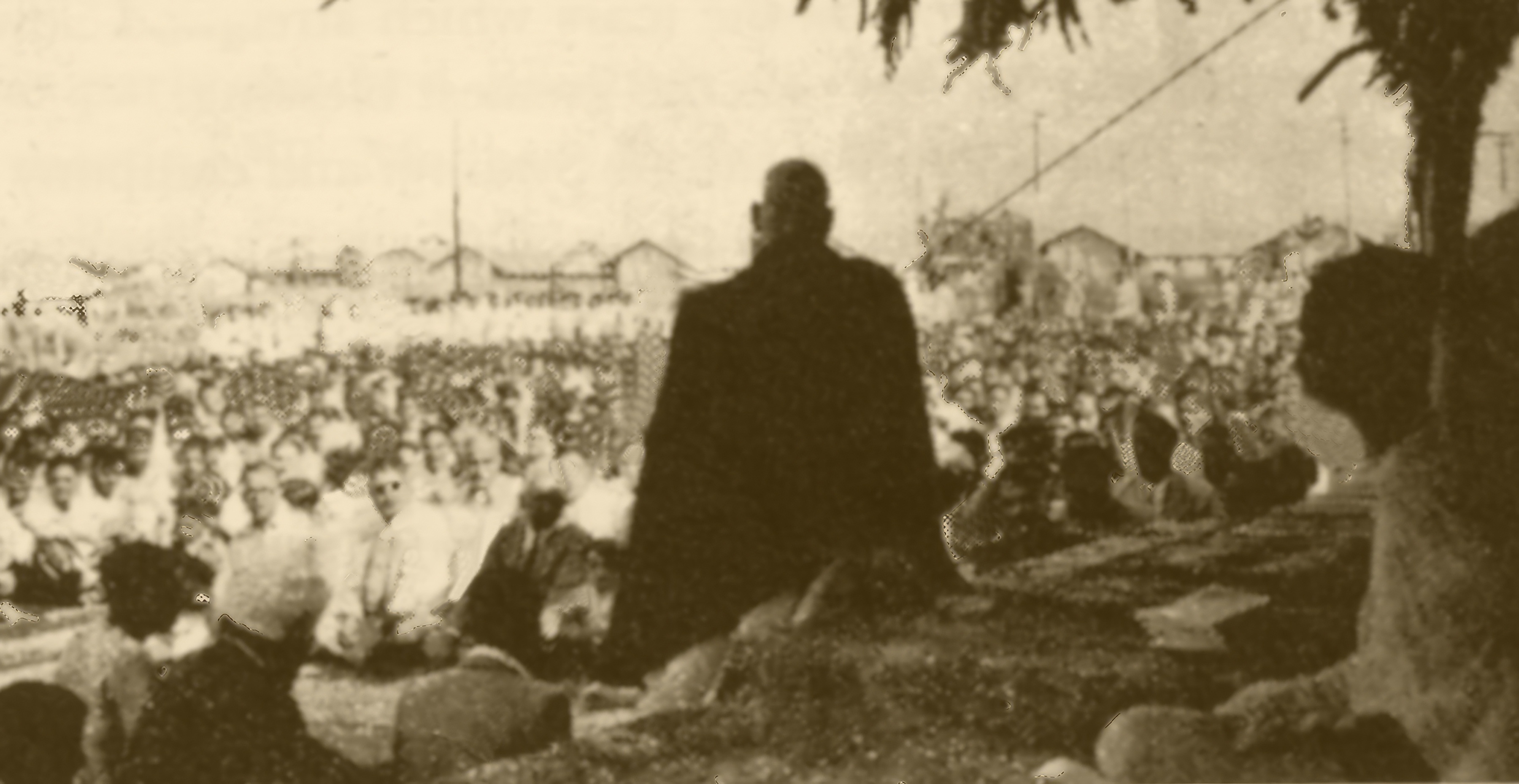
At city after city the crowds that came out to meet Swami Sivananda were matchless—sometimes as many as 50,000! Yet in each venue, he roused them with kirtan and inspiring talks. He made an indelible impact on the country in only two months. Yet, his health was also impacted and he was diagnosed with an enlarged heart while visiting Trichinopoly (Tiruchirappalli), the very city where he had attended medical college.
-
 See full screen image
Sivananda’s All India Tour
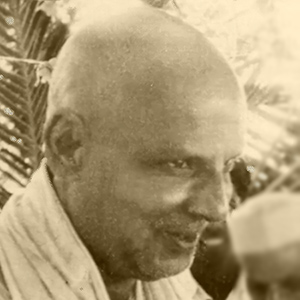
Hyderabad, Bombay, Baroda, Ahmedabad…huge crowds were drawn by the news that a great sage, Swami Sivananda, was visiting their city. Though his schedule was packed and left him little opportunity to restore himself with rest, Swami Sivananda, feeling the yearning of the crowds, responded with thundering talks, dancing in joy as he led them in kirtan. But this intense pace took a toll on his body and though he had the intention to rest, he dropped it as soon as he glimpsed the eager faces pulled by his spiritual magnetism. An energy that could only come from a divine source, would pour from him uplifting all present.
At each stop he roused devotees with song, cleverly knitting his teachings into ‘the Song of the eighteen ‘ities:”
“Serenity, regularity, absence of vanity, sincerity, simplicity, veracity, equanimity, fixity, non-irritability, adaptability, humility, tenacity, integrity, nobility, magnanimity, charity, generosity, purity. Practise daily these eighteen ‘ities, you will soon attain immortality. Brahman is the only real entity, Mr. So-and-so is a false non-entity. You will abide in Infinity and Eternity, you will behold unity in diversity. You cannot attain this in the university, you will again it in the forest-university.”
-
 See full screen image
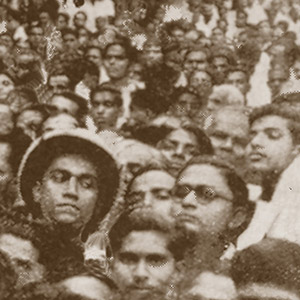
Sivananda’s All India Tour:
A vast crowd awaited Swami Sivananda at Talaimannar Pier as he stepped onto the soil of Ceylon. Many had traveled from the far reaches of the island. Colombo Port Railway Station had been decorated like a temple and thousands awaited him there in the early hours of October 12, 1950. The Prime Minister himself was there to greet him later at the Civic Reception. His teachings were always direct and simple. To one group he said: “There are four types of human beings: the active, the emotional, the mystic and the intellectual. The seers have therefore evolved four paths—Karma Yoga, Bhakti Yoga, Raja Yoga and Jnana Yoga—to enable the people of the four temperaments to reach the goal, Atma-jnana. Everyone is endowed with all four, but one aspect is predominant in each. Therefore, the yoga of synthesis, with a stress on one system, is the most suitable yoga for the present age. This yoga of synthesis develops you harmoniously….”
Needless to say, the people of Ceylon lost their hearts to Swami Sivananda and, in turn, their devotion, piety and love of God and the divine life, left an indelible impression in his heart.
-
 See full screen image
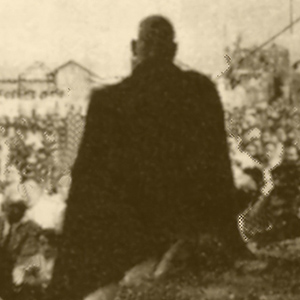
Sivananda’s ALL INDIA Tour : Bangalore
A crowd of more than 8000 awaited Swami Sivananda at the Bangalore airport, and this in a time when air travel was uncommon and airports quite basic. Later he addressed another huge gathering, this time of officers and men of the armed services with a message especially tailored to them: “You are all powerful, strong men, full of vim, vigour and vitality. Your OM-chanting also should be powerful and strong. OM is a great purifier. Om-chanting will infuse power into you, and it will tranquilise your mind.” This had an immediate and marvelous effect and the OM that arose seemed to rend the air! Speaking to them of inner conflicts faced by spiritual seekers, he continued: “Even a world-war may last only for a few years, but this inner warfare with ignorance, desire and other evils, might last several lives. By diligence and perseverance, as also by intense application, you can bring victory within easy reach and realize God this very moment.”
Thus, Swami Sivananda met each audience personally, sharing powerful spiritual teachings, yet in words that were immediately comprehensible to the unique experience and temperament of those gathered before him.
-
 See full screen image
Swami Sivananda reached New Delhi on November 4, 1950 and was received at the “Victory Platform” by a crowd that even a well-organized cordon of Scouts could not contain. The Chief Justice of India welcomed him and the next few days flew by, filled with events and receptions that crowned this extraordinary two-month tour. As spiritual leader Sri Goswami Ganesh Dutt remarked, “What a miracle! This one sadhu, by his mere presence in the capital of India, has transformed the entire atmosphere of New Delhi.”
A very special feature of his stay in the Capital was home satsangs—Swami Sivananda and his entourage went from home to home, bringing satsang right into groups of family and friends who had gathered there. Many years later these home satsangs were one of the core features of Swami Venkatesananda’s tours, and we can see the origins right here during the culmination of Swami Sivananda’s All-India tour. Swami Sivananda later spoke of this: “I do not think that the highly publicised and organised tour like the one we have had is as effective as these house-to-house visits and satsangs….That is the most effective way of disseminating spiritual knowledge.”
After two months of the most intense service, having effected an unprecedented nation-wide spiritual awakening, Swami Sivananda returned to Ananda Kutir, his abode on the bank of the Ganges. He only took time to remove his overcoat before the call of Mother Ganges drew him outside onto the sacred ghat where he lost himself in divine contemplation.
-
 See full screen image
Sivananda’s Return After The All-India Tour
Hardly an hour had passed after his return to the Ashram before Swamiji took his seat in the office and resumed his duties. Not a trace of the physical strain of the All-India Tour nor a shadow of its glory was noticeable on his face—he had offered all to Mother Ganges. He conducted the morning prayers and began to attend to the correspondence awaiting him.
Later, he reflected on the tour: “That wisdom, that fundamental spirituality, that aspiration for the Eternal, that love for God which characterized the peoples of the Vedic era, still runs in the lifeblood of the Indian today. That is what I found during the All-India Tour.”
Swamiji’s epoch-making tour nourished that aspiration for the Eternal in places where it had run dry, bringing about a spiritual awakening in the country. This taste of divine awakening whetted the appetite for a deeper experience in the thousands whom he had briefly touched. They arrived in Rishikesh seeking Swami Sivananda’s darshan and, once again, Sivananda Ashram entered a period of rapid expansion. The sage of Ananda Kutir’s aspiration for life of secluded contemplation was once again forfeited to his destiny as the harbinger of the world-wide renaissance of Yoga.
-
 See full screen image
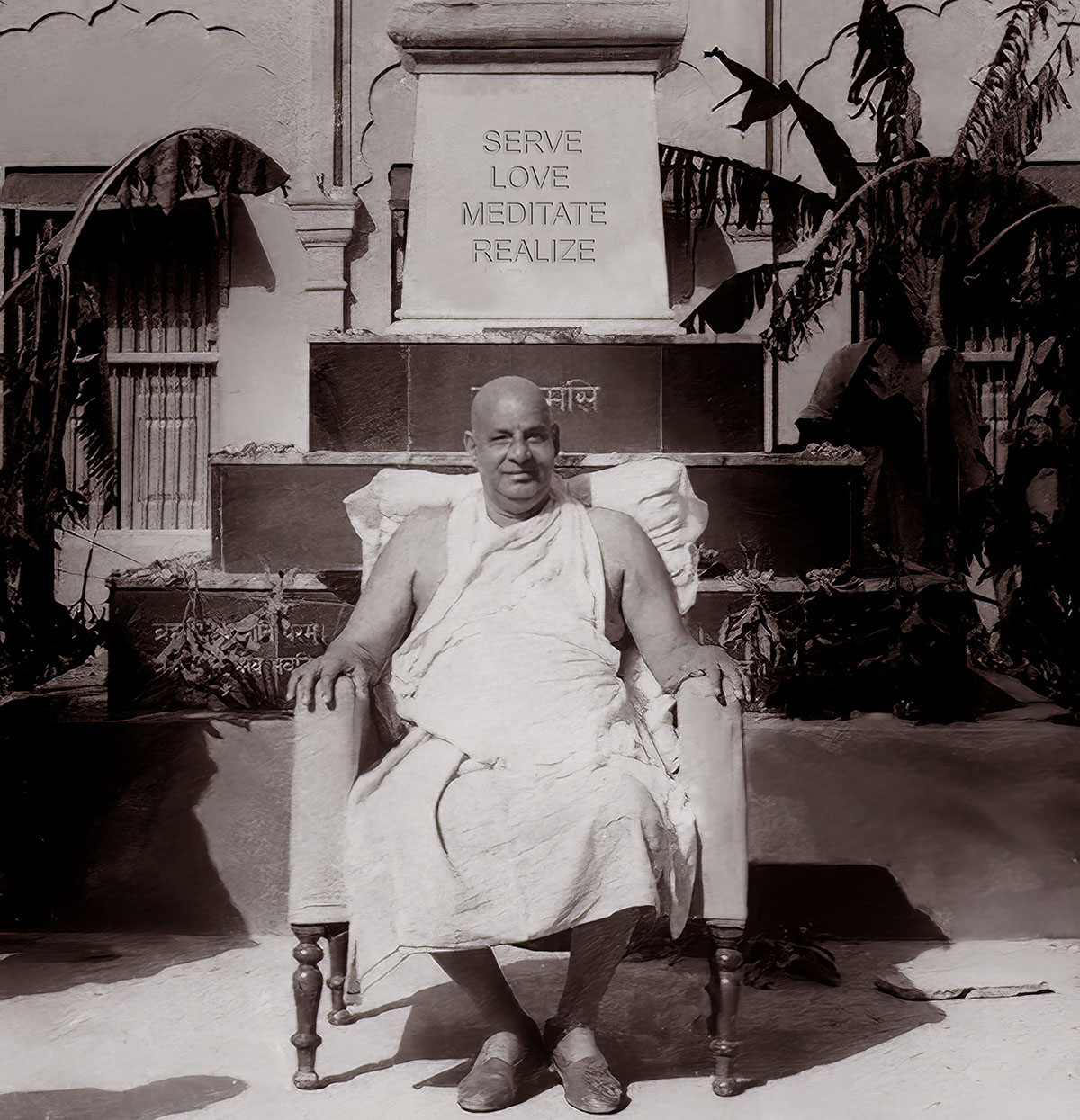
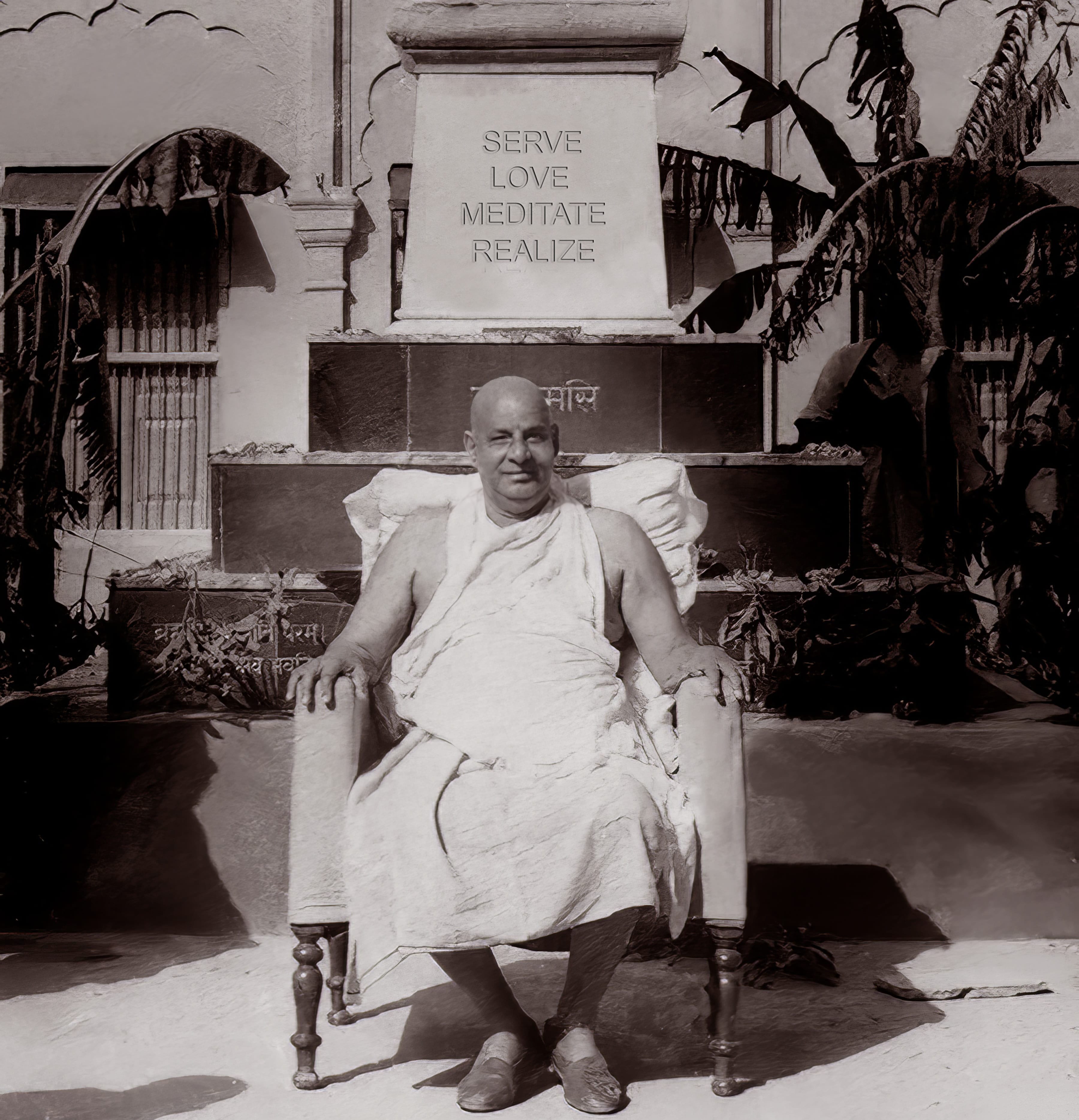
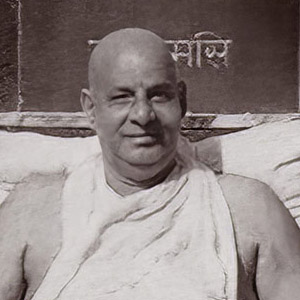
Swami Sivananda sitting in front of the Sivananda Pillar, consecrated in 1958.
The Pillar, standing just below the Sri Viswanath Mandir, encapsulates Swamiji’s teachings in the memorable Twenty Spiritual Instructions, giving spiritual structure to one’s day beginning with arising early for Japa and Meditation. The base of the Pillar boldly proclaims BE GOOD, DO GOOD, SERVE, LOVE, MEDITATE, REALIZE and appropriately you must pass by this, almost as a portal, before reaching the Temple.
-
 See full screen image
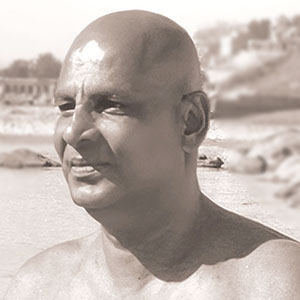
Swami Sivananda in Contemplation on the bank of Mother Ganges
Swami Sivananda drew inspiration and energy from Mother Ganges and was often seen sitting in contemplation on the Ghat in front of his kutir.
The Ganges flows as the life-stream through the sacred Himalayan Valley where Sivananda Ashram is situated. Countless sadhus throughout the ages have settled along her banks in simple huts or gathered in ashrams. To the eye, its waters appear smooth as a mirror, but when you enter them, you discover a powerful current that will sweep you away if you do not give her respect she is due. Sannyasins are “born” in the Ganges, entering her reciting the sacred mantras and dropping their past only to emerge bearing a new name and the ochre robes of renunciation. Upon death, traditionally, their bodies were consigned to her current once again.
-
 See full screen image
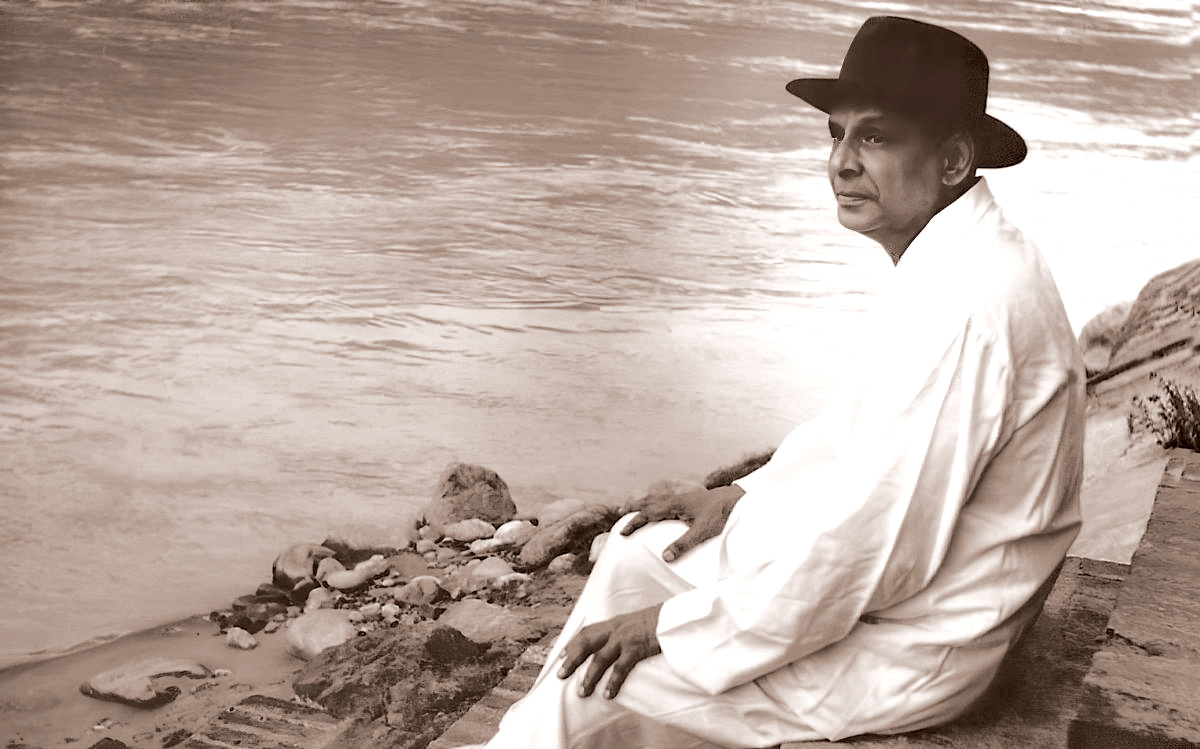
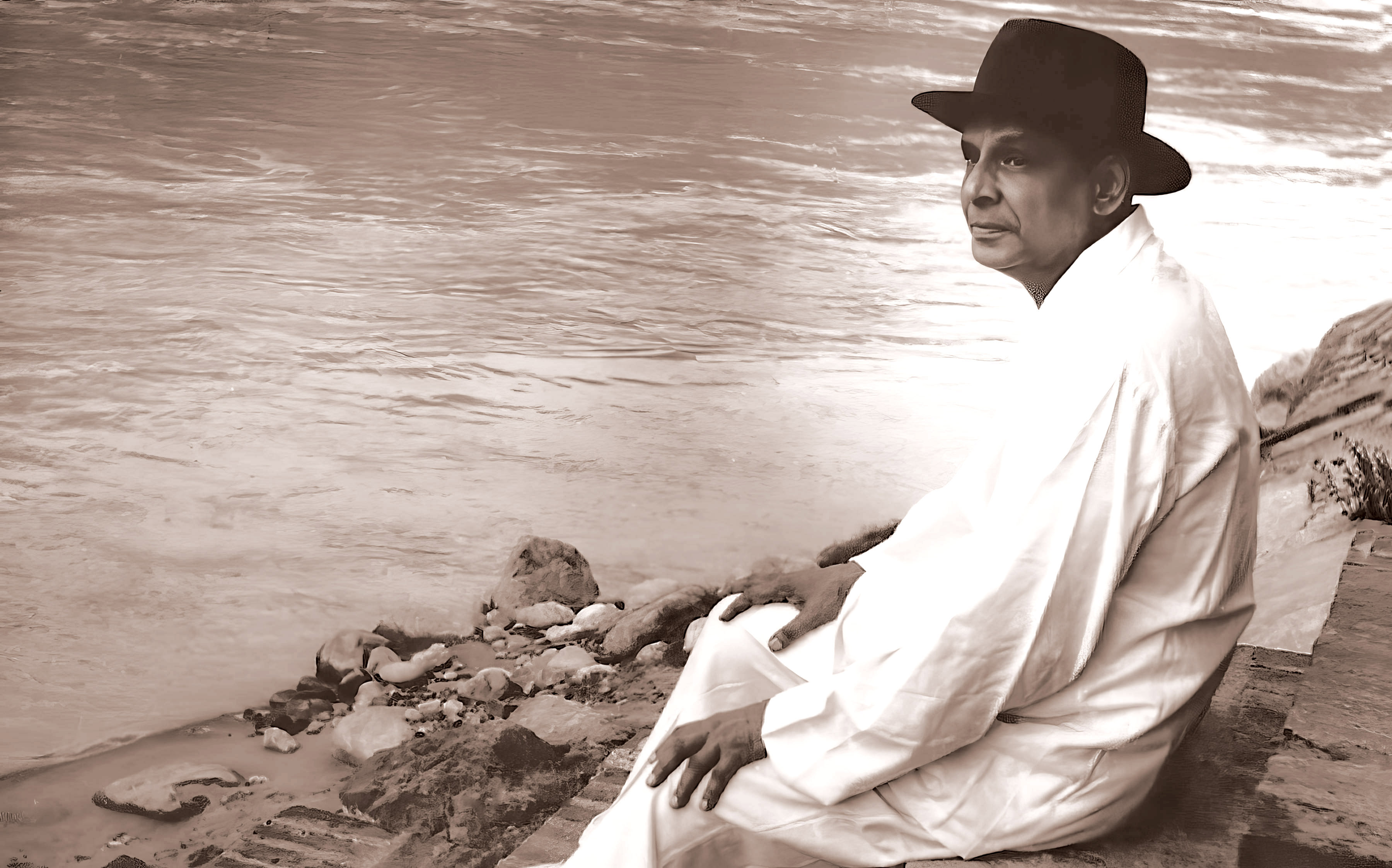
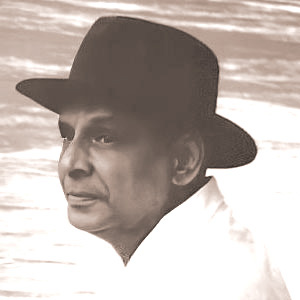
Swami Sivananda was rarely seen wearing a hat though devotees delighted in sending him different style headgear as gifts. Here he is pictured gazing out at his beloved Mother Ganges sporting such a gift from a devoted disciple.
-
 See full screen image
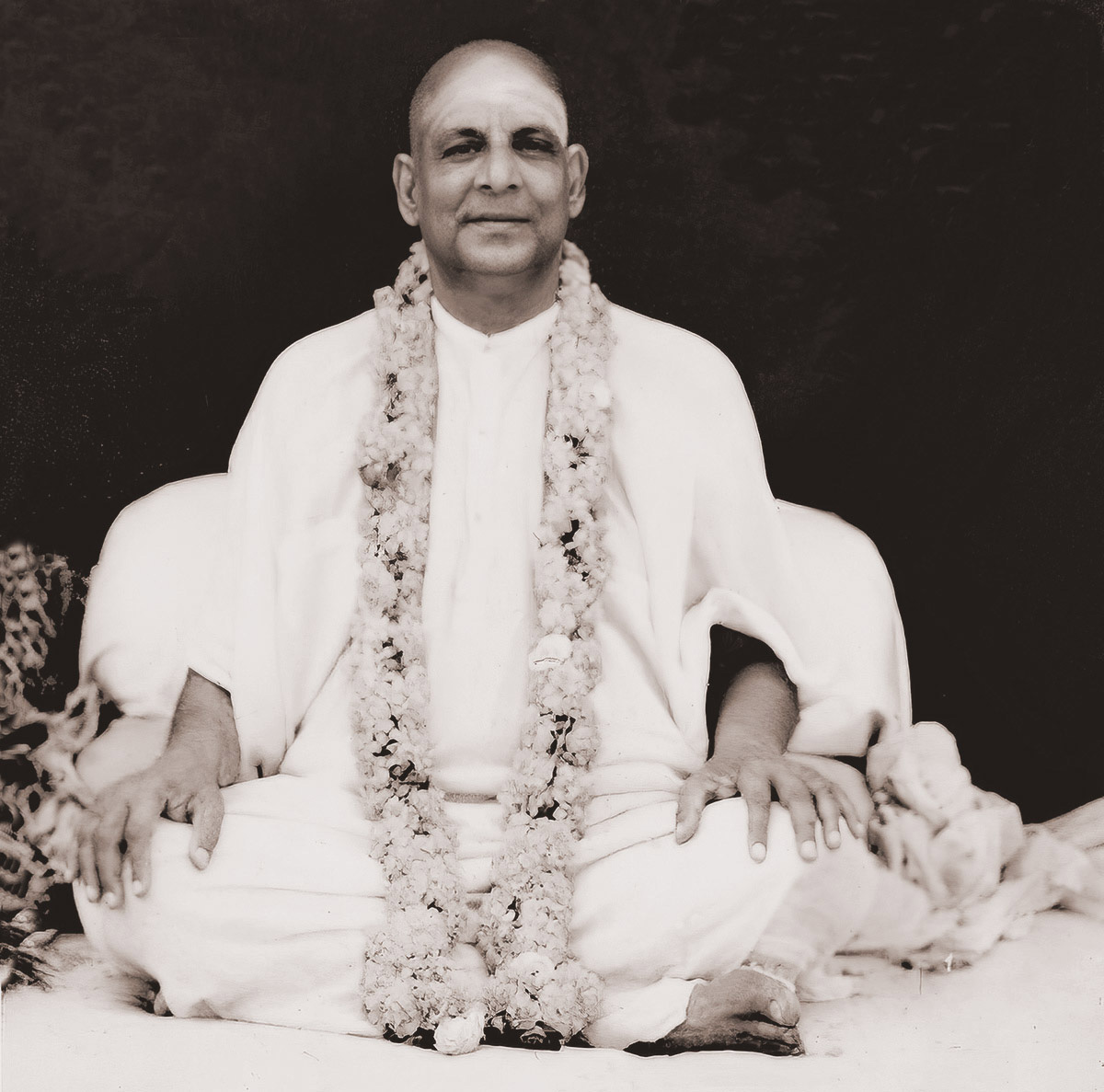
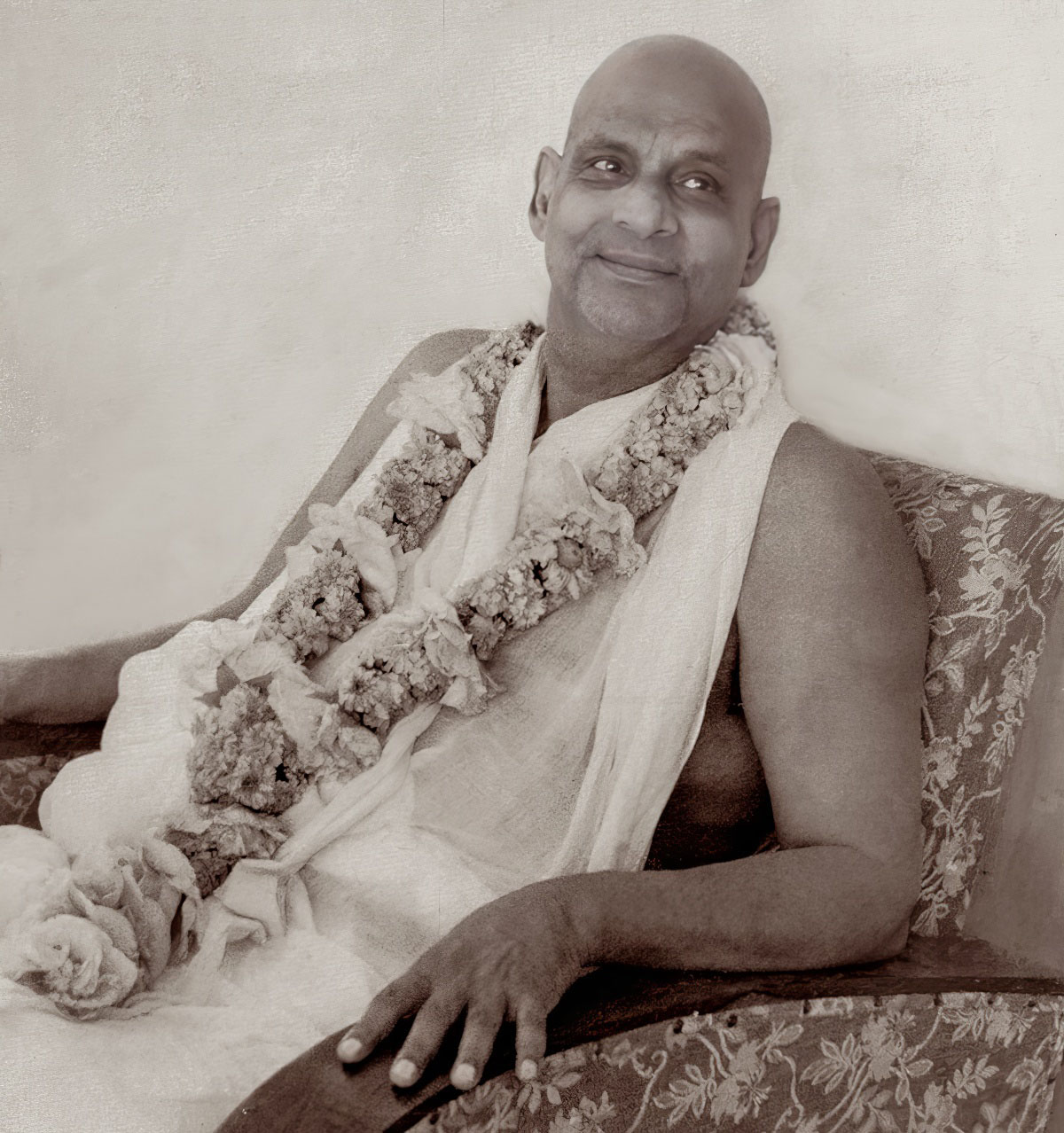
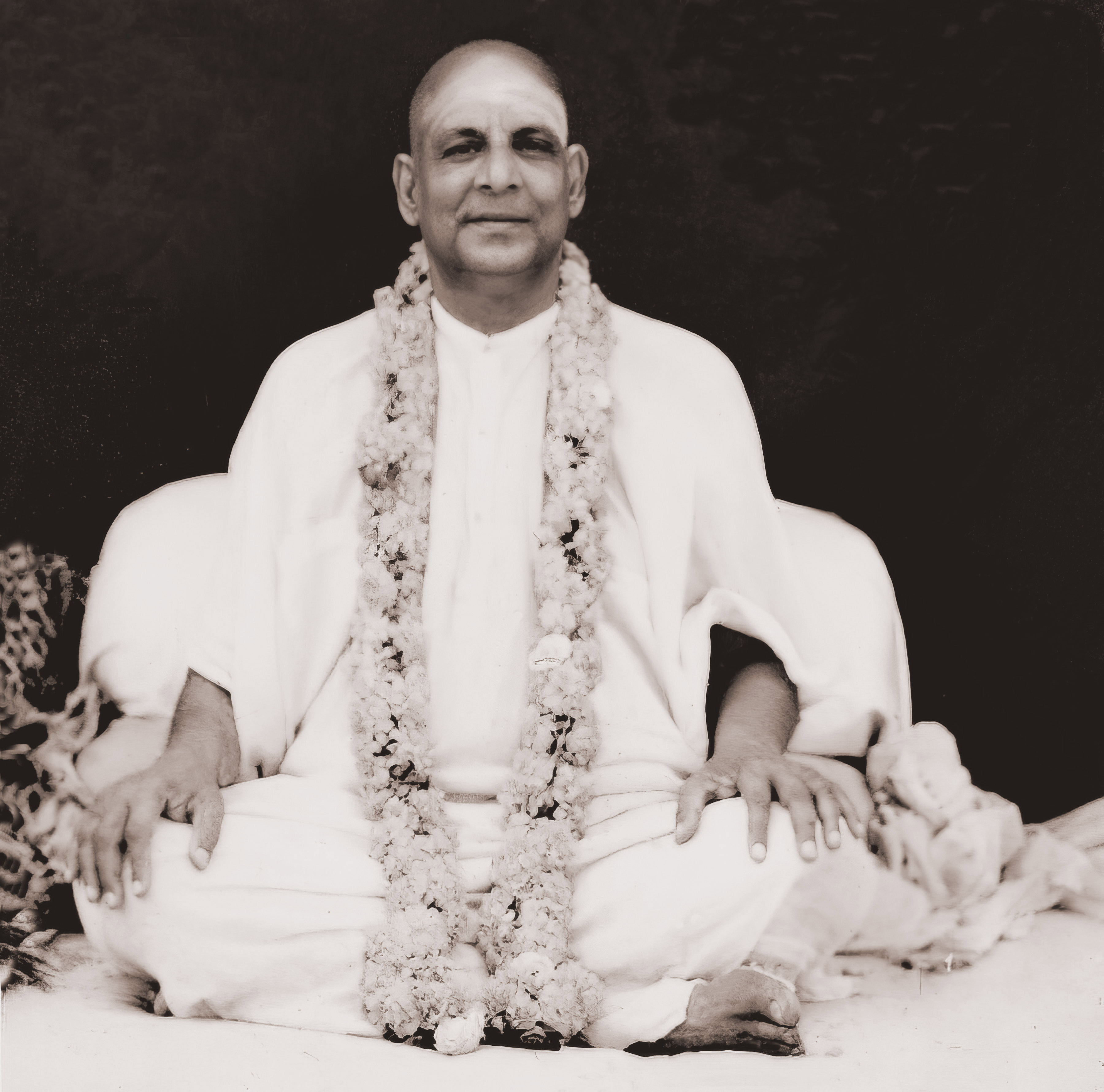
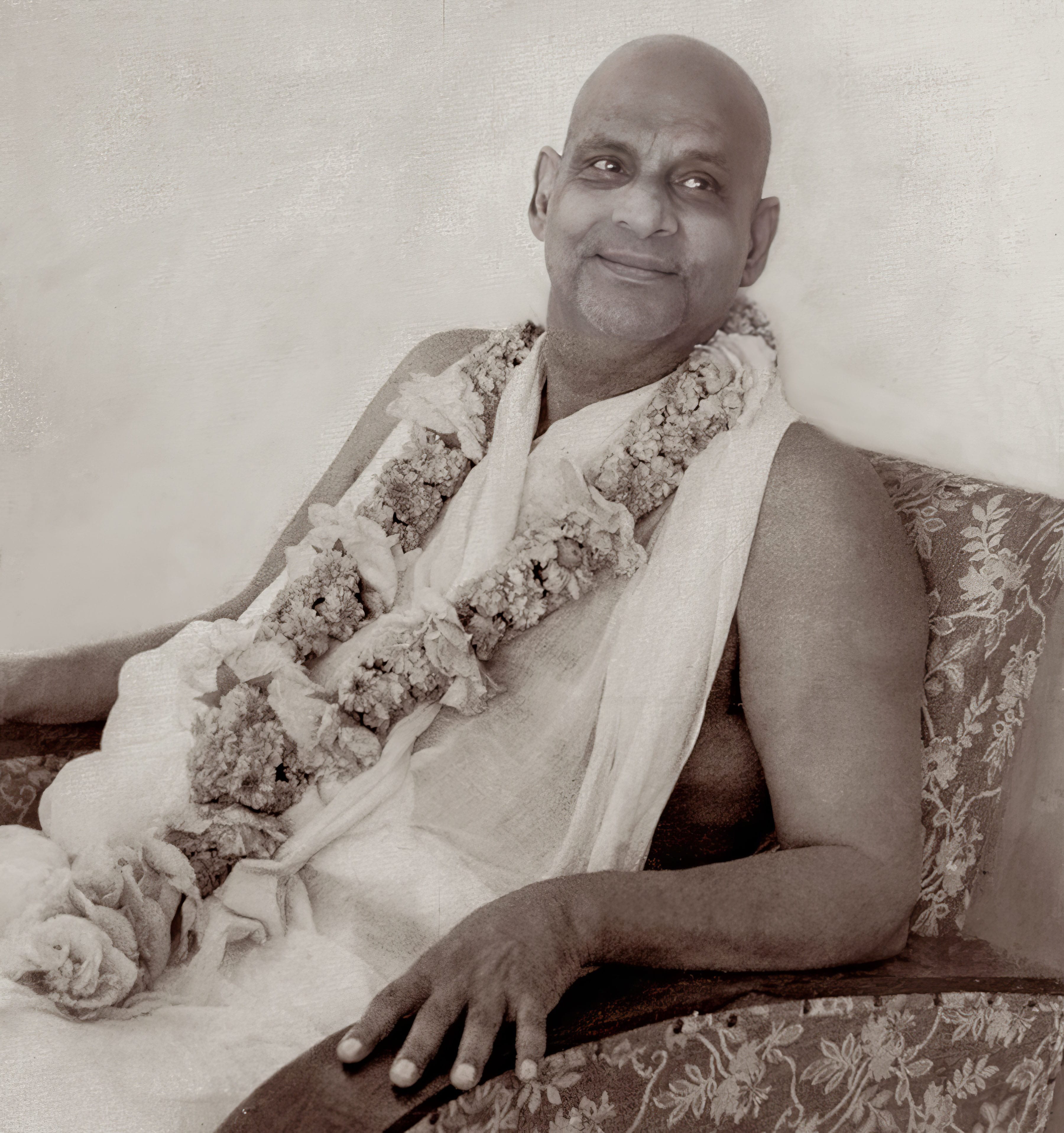
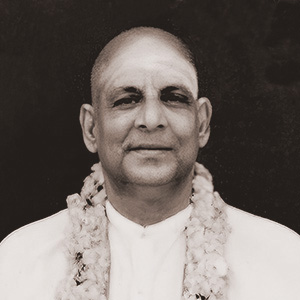
Swami Sivananda pictured after being garlanded by a devotee
Each devotee who came to the Ashram for Swami Sivananda’s darshan yearned for personal contact with him and they were not disappointed. Every day he held open office hours where he not only conducted ashram business, with the help of brilliant disciples like Swami Venkatesananda, but also met with guests. These devotees often came with a burning question, either personal or philosophical, knowing that no question was out-of-bounds for Swami Sivananda. But they never approached him with empty hands but bore gifts and garlands to honor him, drawing close to place the garland around his neck and to prostrate and receive the special blessing of touching his feet.
-
 See full screen image
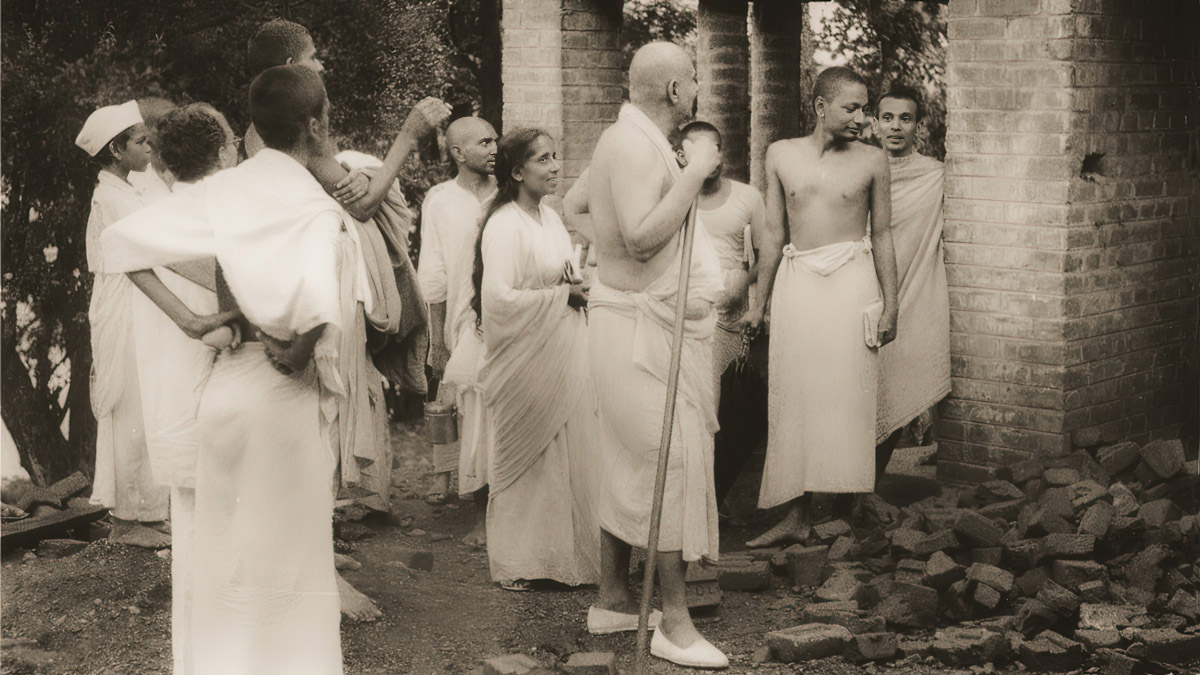
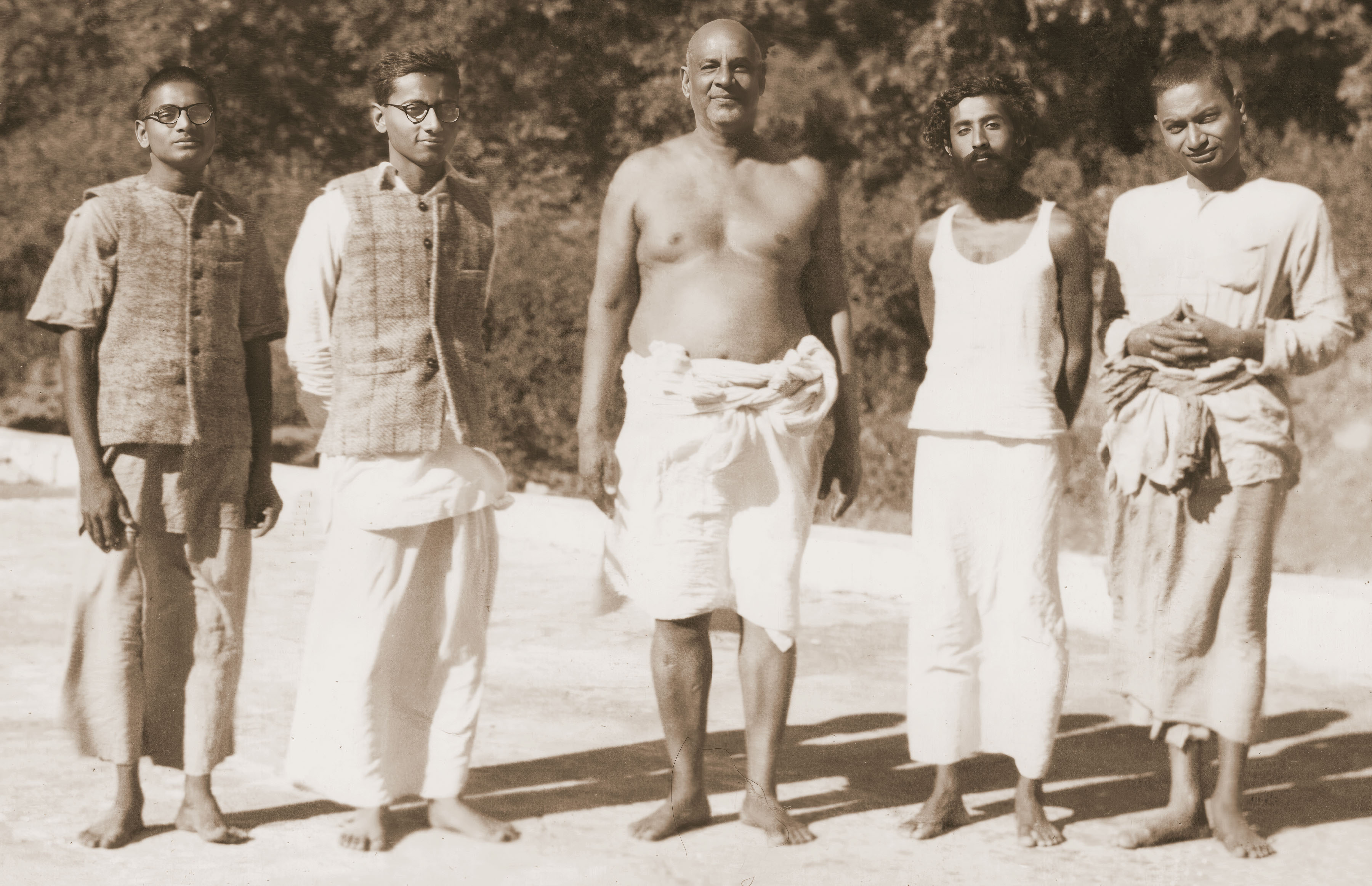
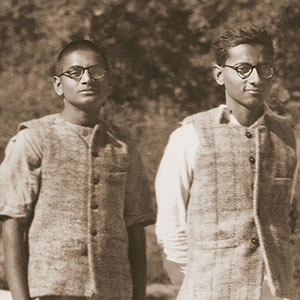
Swami Omkarananda and Swami Shivapremananda standing with Sivananda and Swami Venkatesananda on the far right.
Need better description.
-
 See full screen image
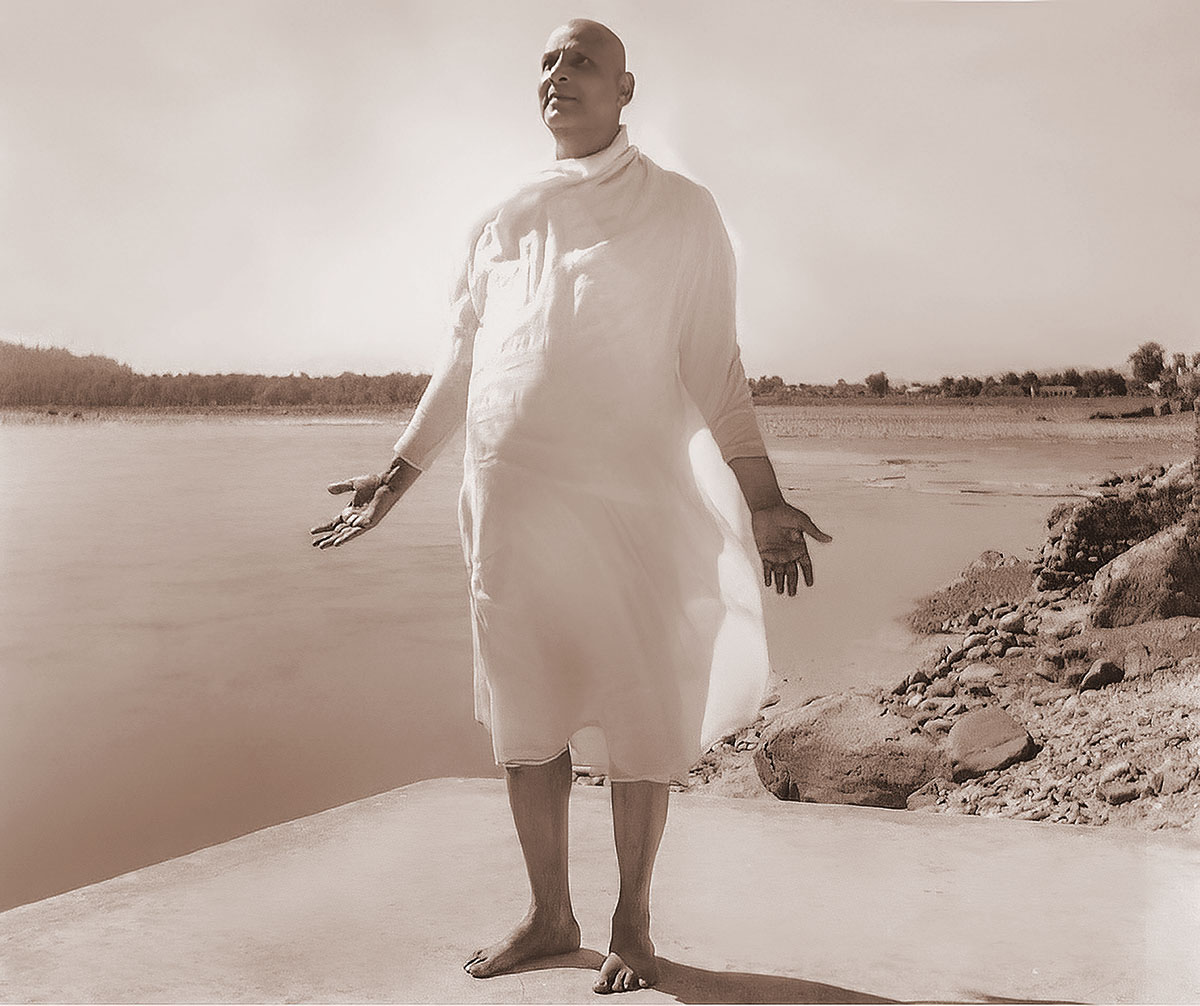
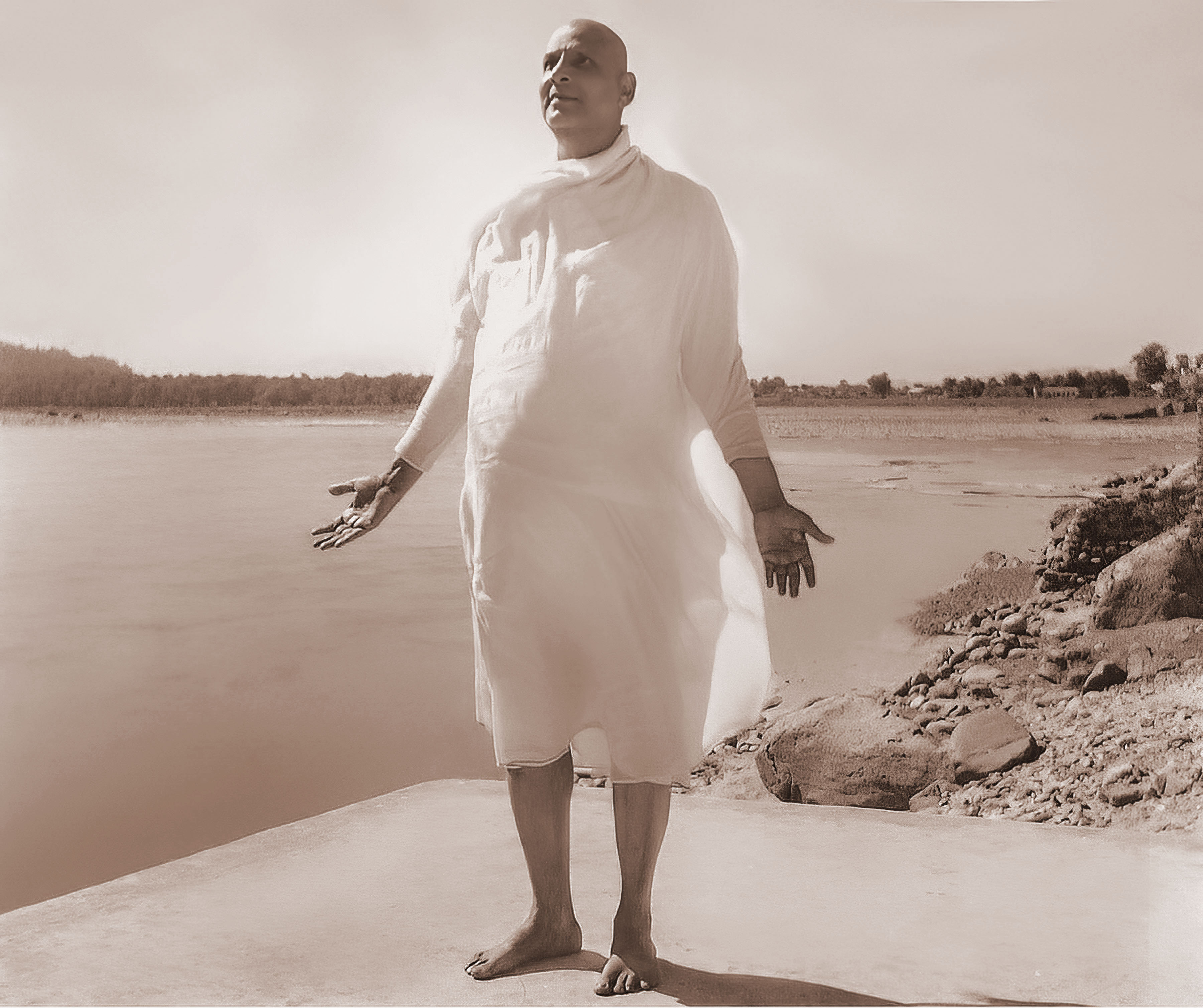
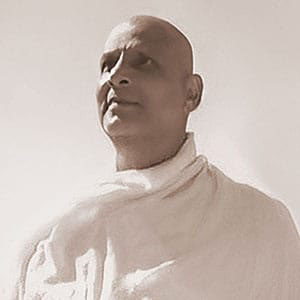
Swami Sivananda taking in the morning sun on the bank of Mother Ganges
Swami Sivananda had great respect for the healing power of the sun and each day spent a few minutes basking in its radiance on the Ganges Ghat below his kutir. Here he is pictured soaking in the solar rays while standing in a simplified “Mountain Pose.”
-
 See full screen image
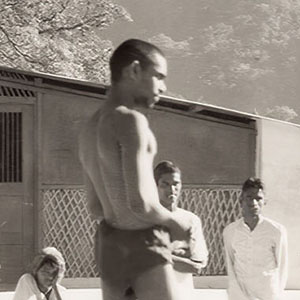
Hatha Yoga on the banks of the Ganges
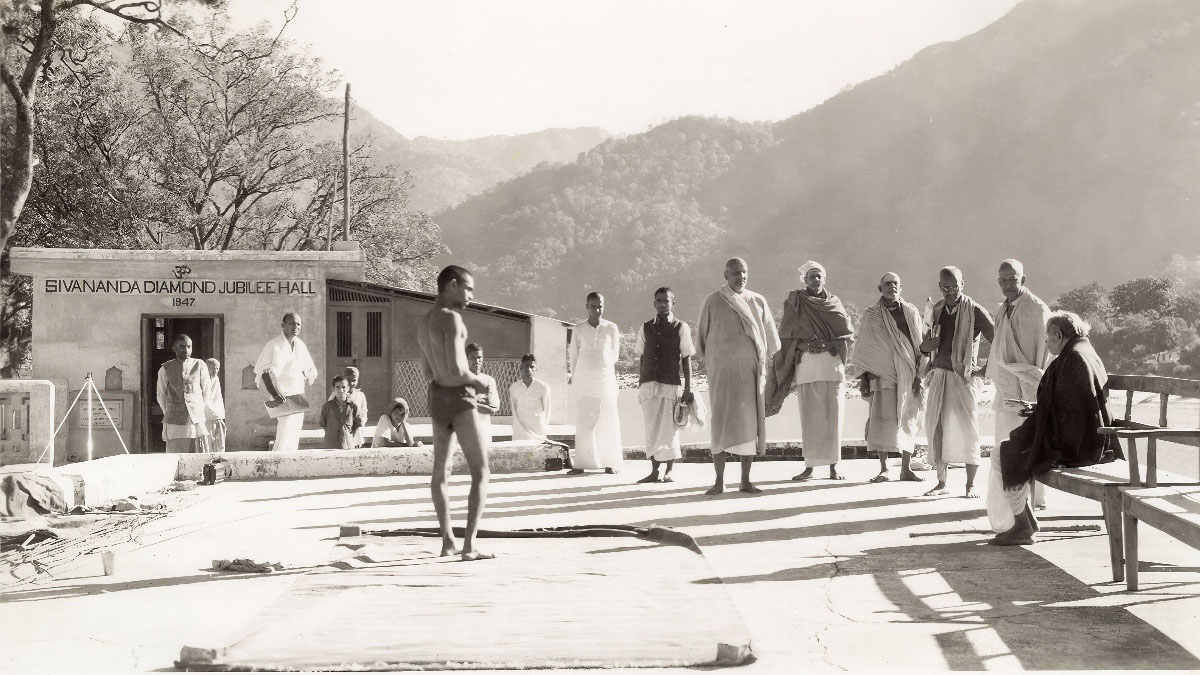
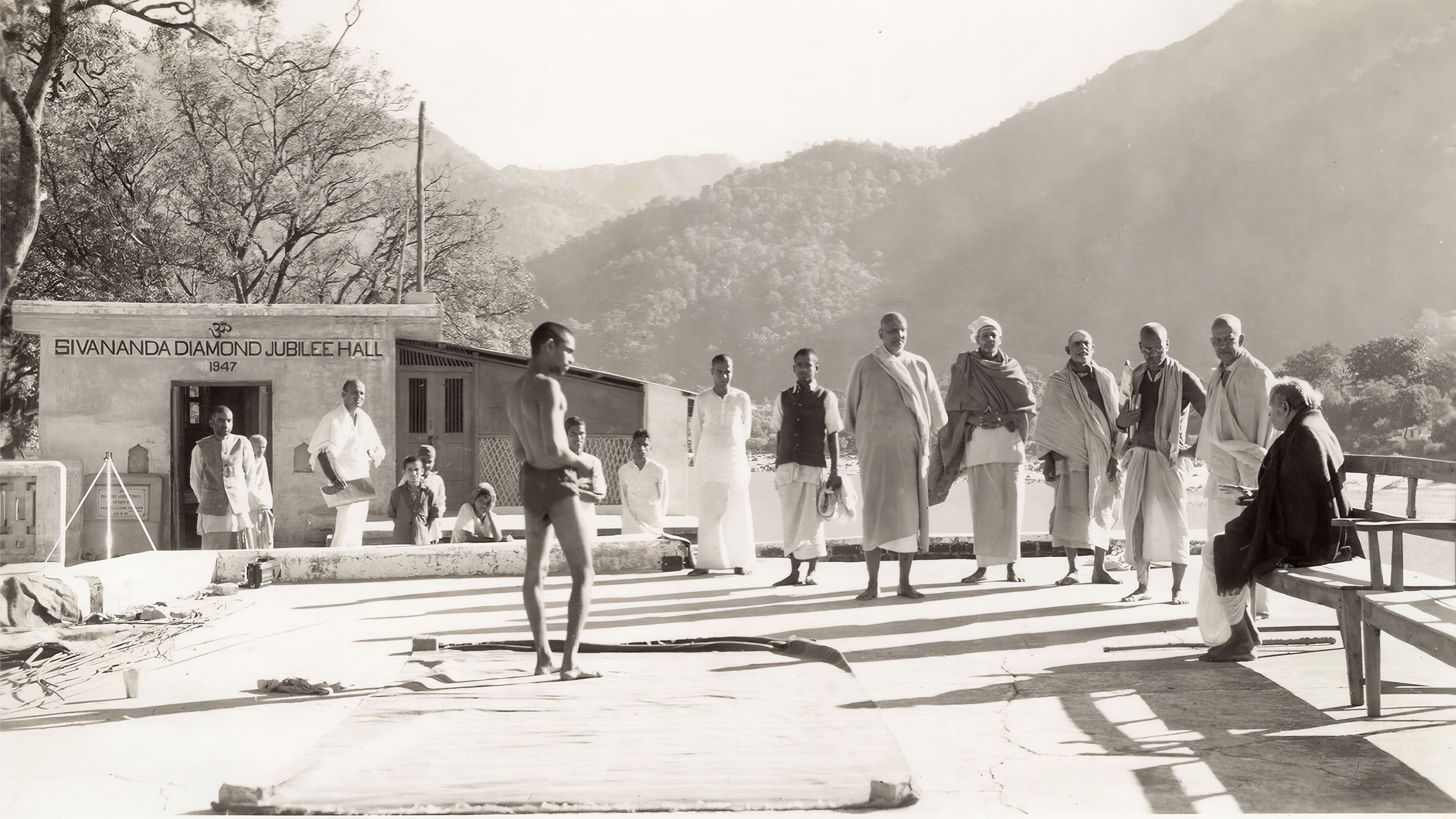
The Ganges and the Himalayas frame this informal Hatha Yoga Class as the young Swami Vishnu-Devananda prepares to demonstrate a few postures for the group. The Sivananda Diamond Jubilee Hall completes this idyllic setting.
-
 See full screen image
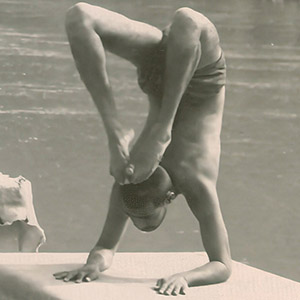
Hatha Yoga class on the Ganges bank
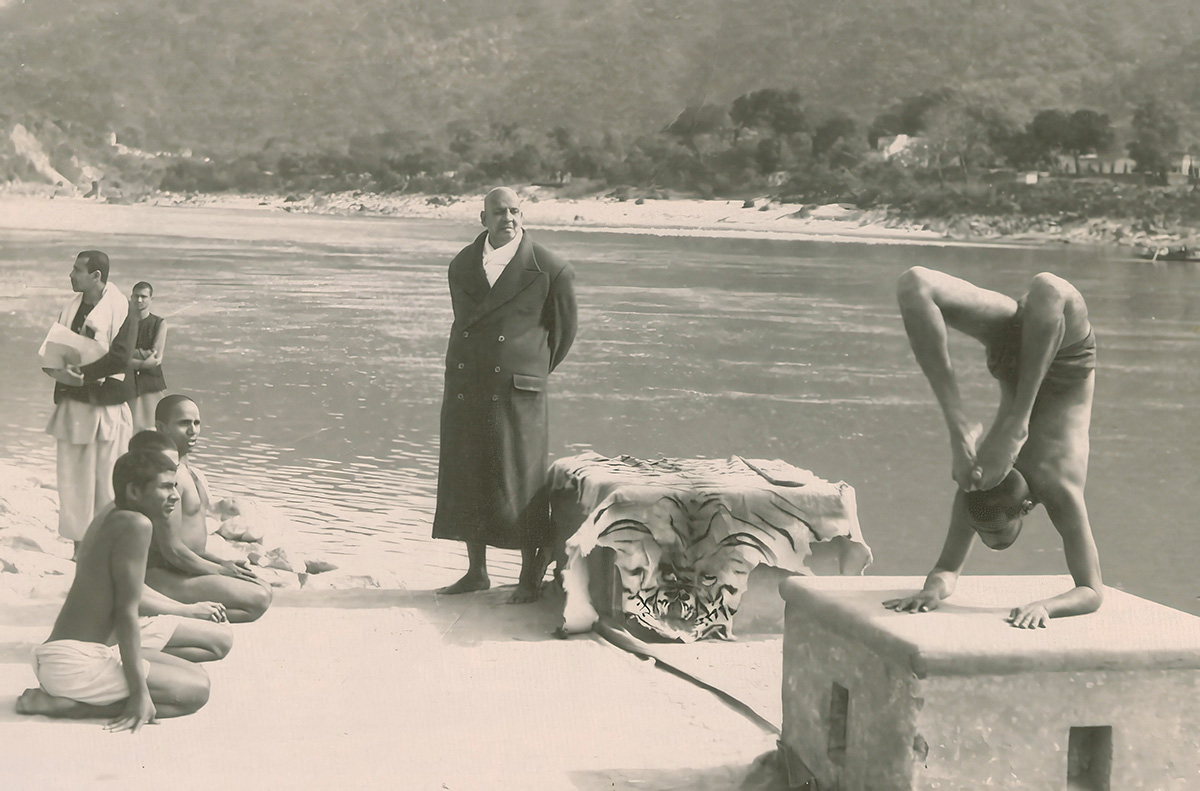
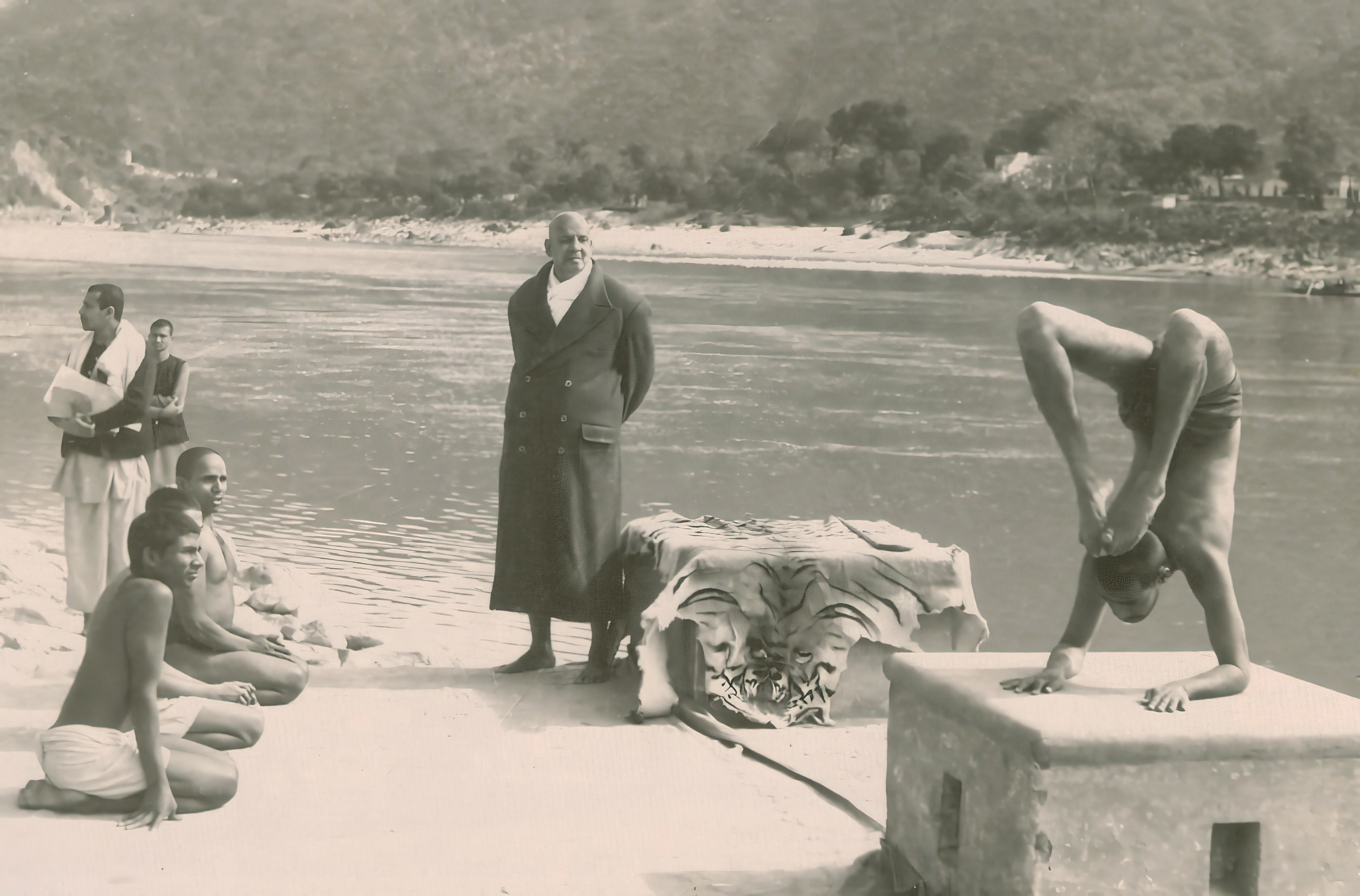
Each of Swami Sivananda’s young sannyasi disciples had their own area of brilliance, and together beautifully illumined his Mission. Here, Swami Vishu-Devananda (later to shine internationally for his expertise in Hatha Yoga) demonstrates the difficult Scorpion Pose while Swami Sivananda looks on with approval. Swami Sivananda stands next to his meditation seat, which is spread with the traditional tiger skin, said to symbolize strength and to insulate the subtle electrical field generated by the yogi in meditation from the ground.
-
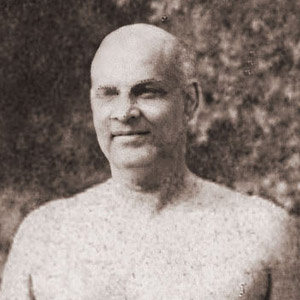 See full screen image
Swami Sivananda and Sannyasi disciples preparing to practice Hatha Yoga
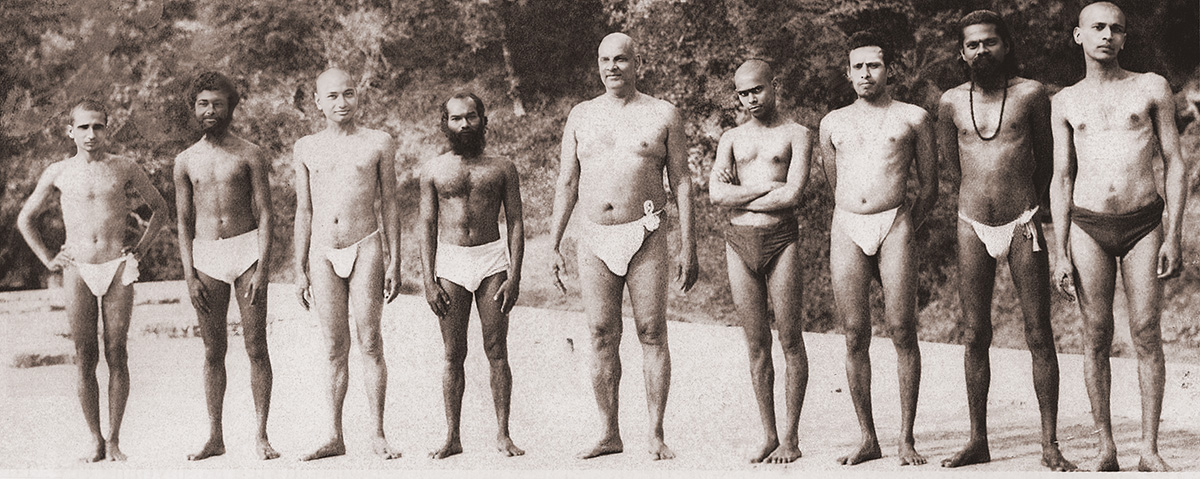
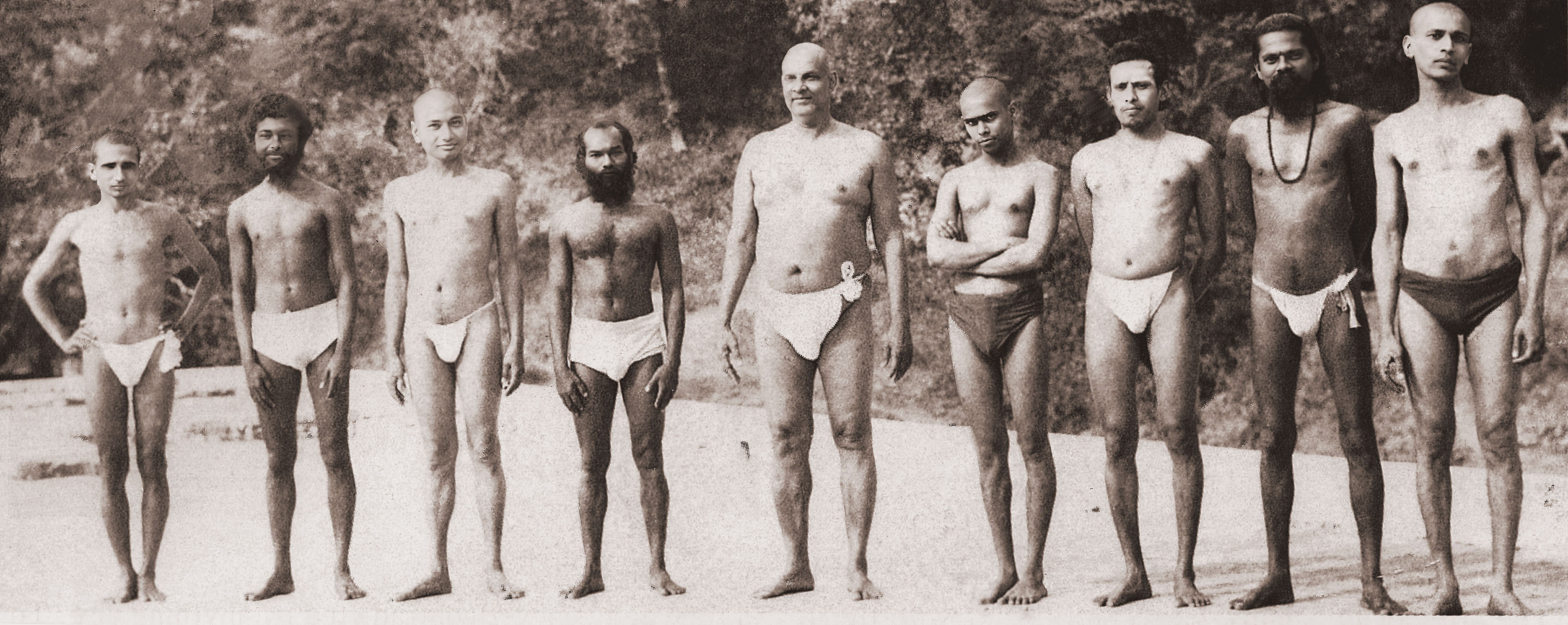
Unlike many yogis, Swami Sivananda did not disregard any aspect of the spiritual aspirant but rather advocated an integral approach to yoga, bringing together Hatha Yoga, Jnana Yoga, Raja Yoga, Bhakti Yoga and Karma Yoga into what he termed Integral Yoga. Here he puts this into practice with a group of his close disciples as they prepare for their Hatha Yoga practice on the bank of the Ganges.
-
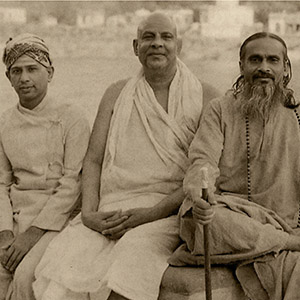 See full screen image
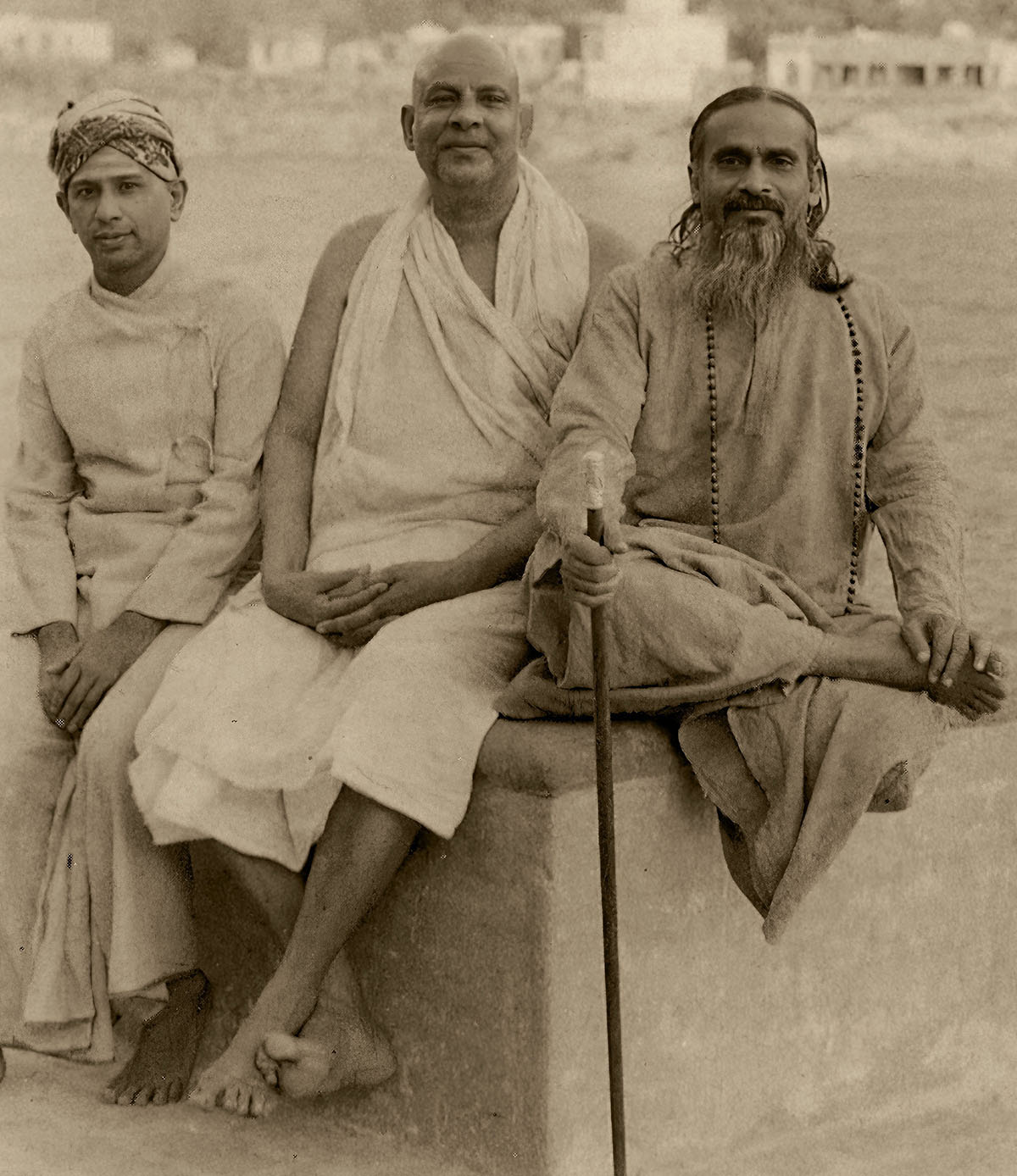
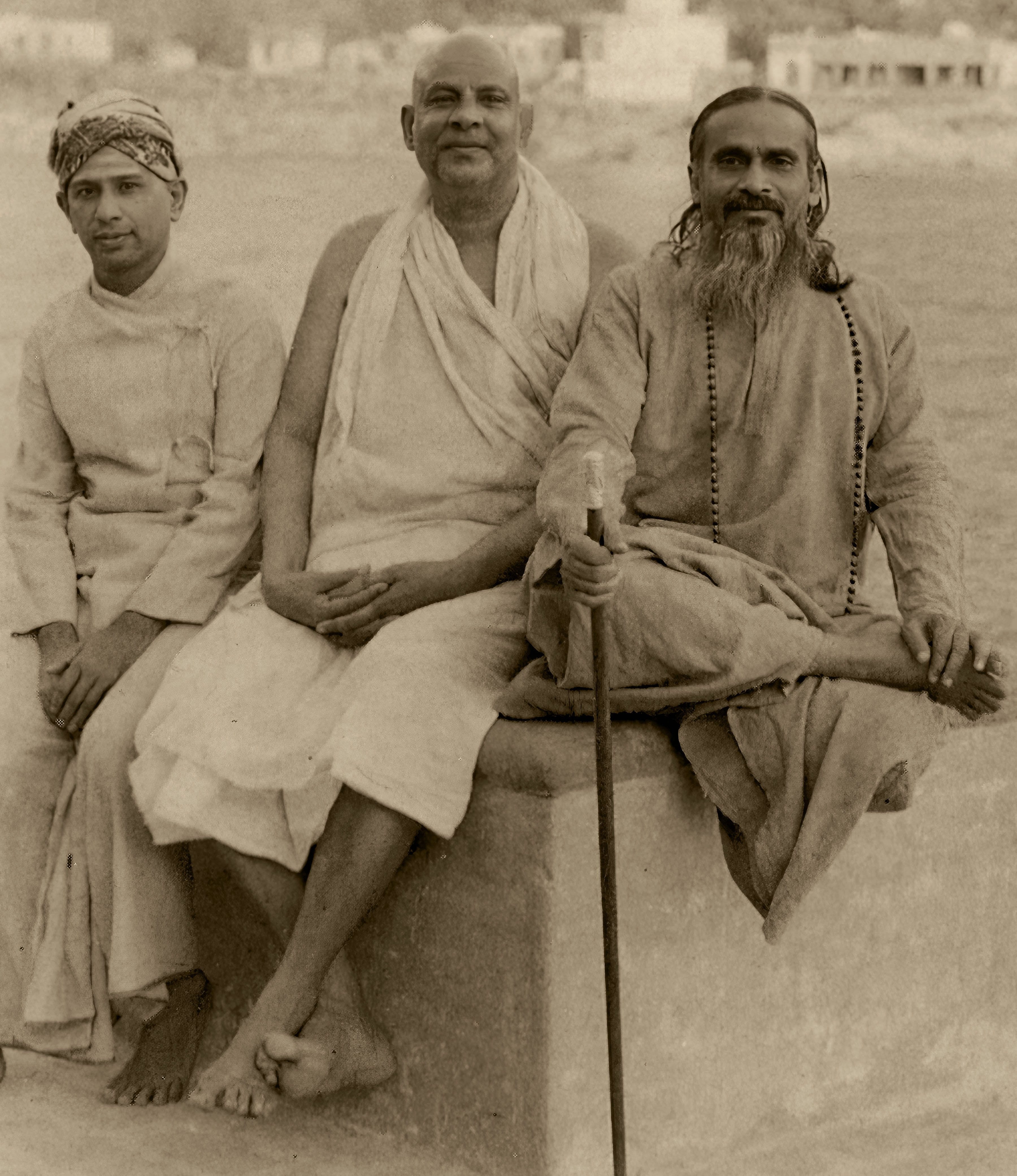
Swami Sivananda pictured sharing his favorite seat by the Ganges with (left to right) H.H. Sri Kumaraswami of Dharwar Mutt and his old friend Maharshi Shuddhananda Bharati.
-
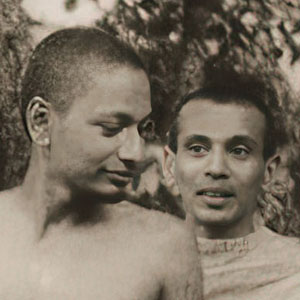 See full screen image
Swami Sivananda surveying the future site of the Sivananda Eye Hospital
Swami Sivananda had a many-pronged mission. In pre-sannyas years, he served the world as a medical doctor and medical service remained close to his heart throughout his life. He was often seen carrying three bags as he made his way along the banks of the Ganges: one with medicine, one with books, and one with sweets. No one’s hands were big enough to hold the bounty he poured from his bags, and he was sometimes called “Swami Give-Ananda.”
A hospital was one of his cherished dreams and in 1950 the ashram dispensary was upgraded to the Sivananda Charitable Hospital. Plans for dedicated eye hospital gradually took shape with the help of two of his ophthalmologist disciples, Dr. Swami Sivananda-Hridyananda (pictured standing directly behind Swami Sivananda) and Dr. Sivananda-Adhvaryoo. It opened its doors in 1956.
-
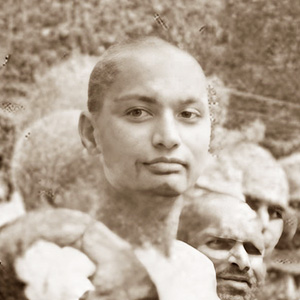 See full screen image
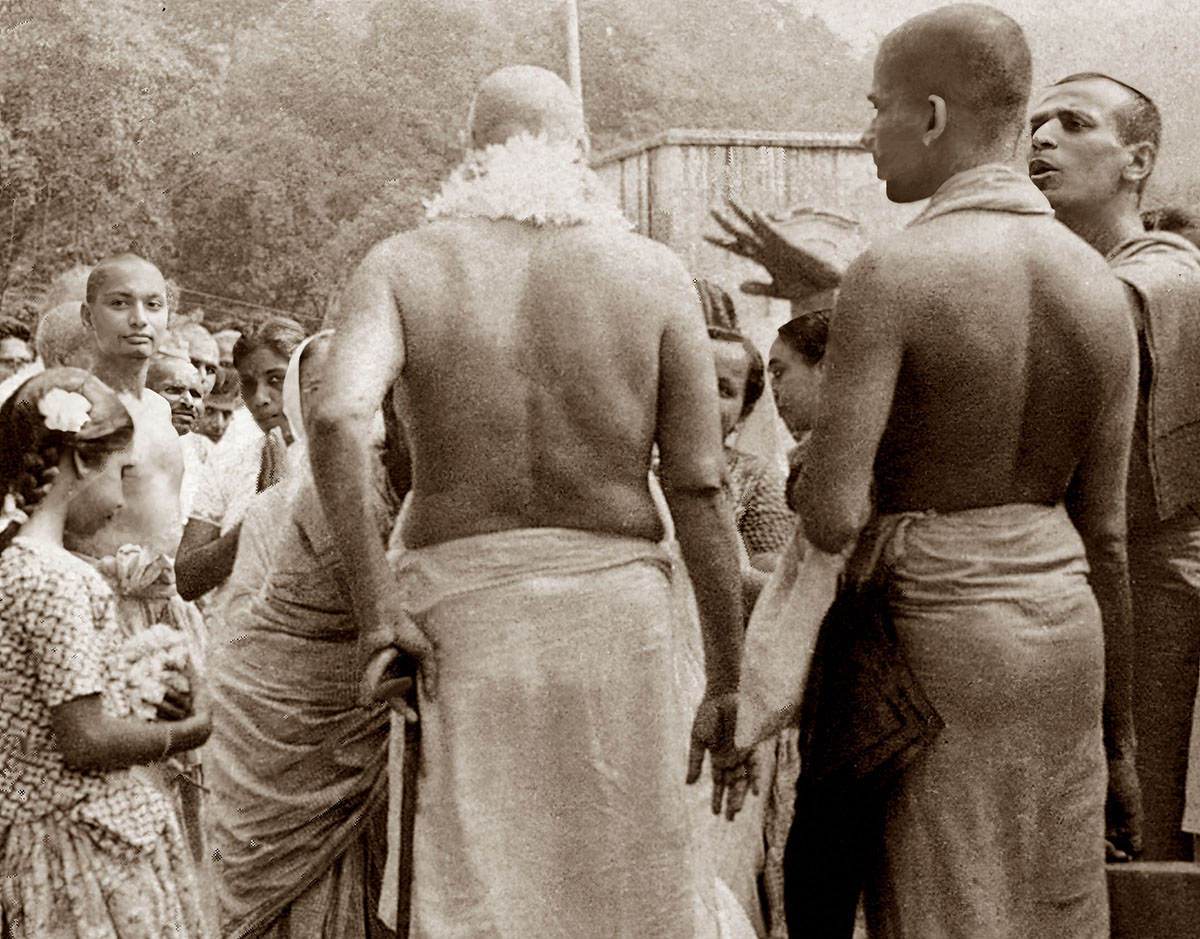
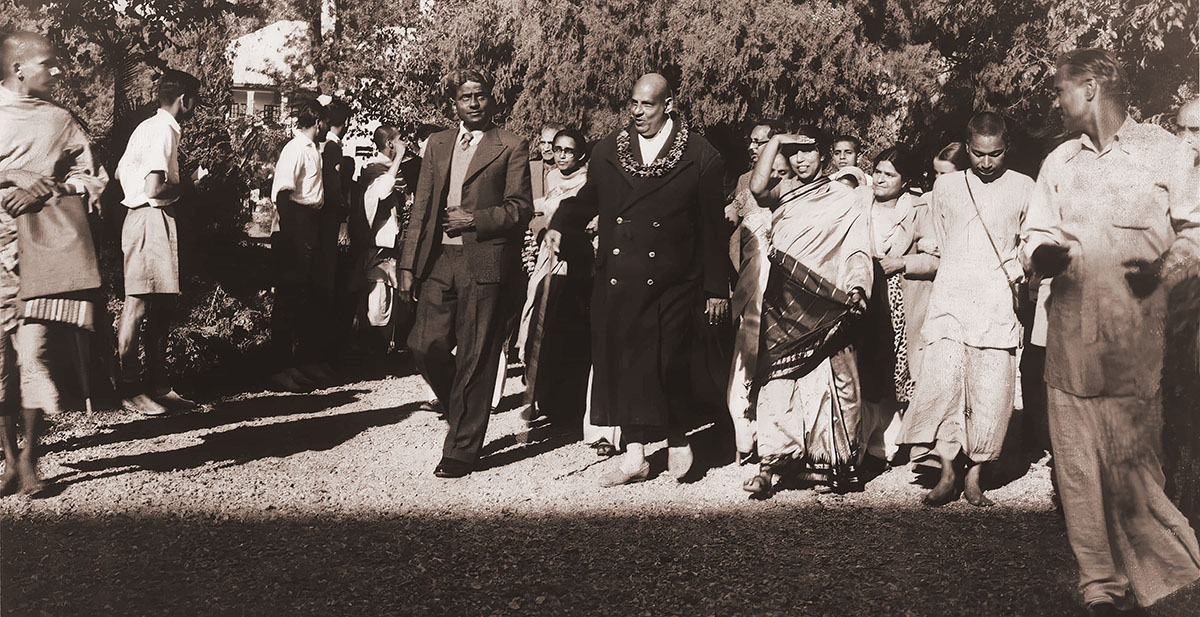
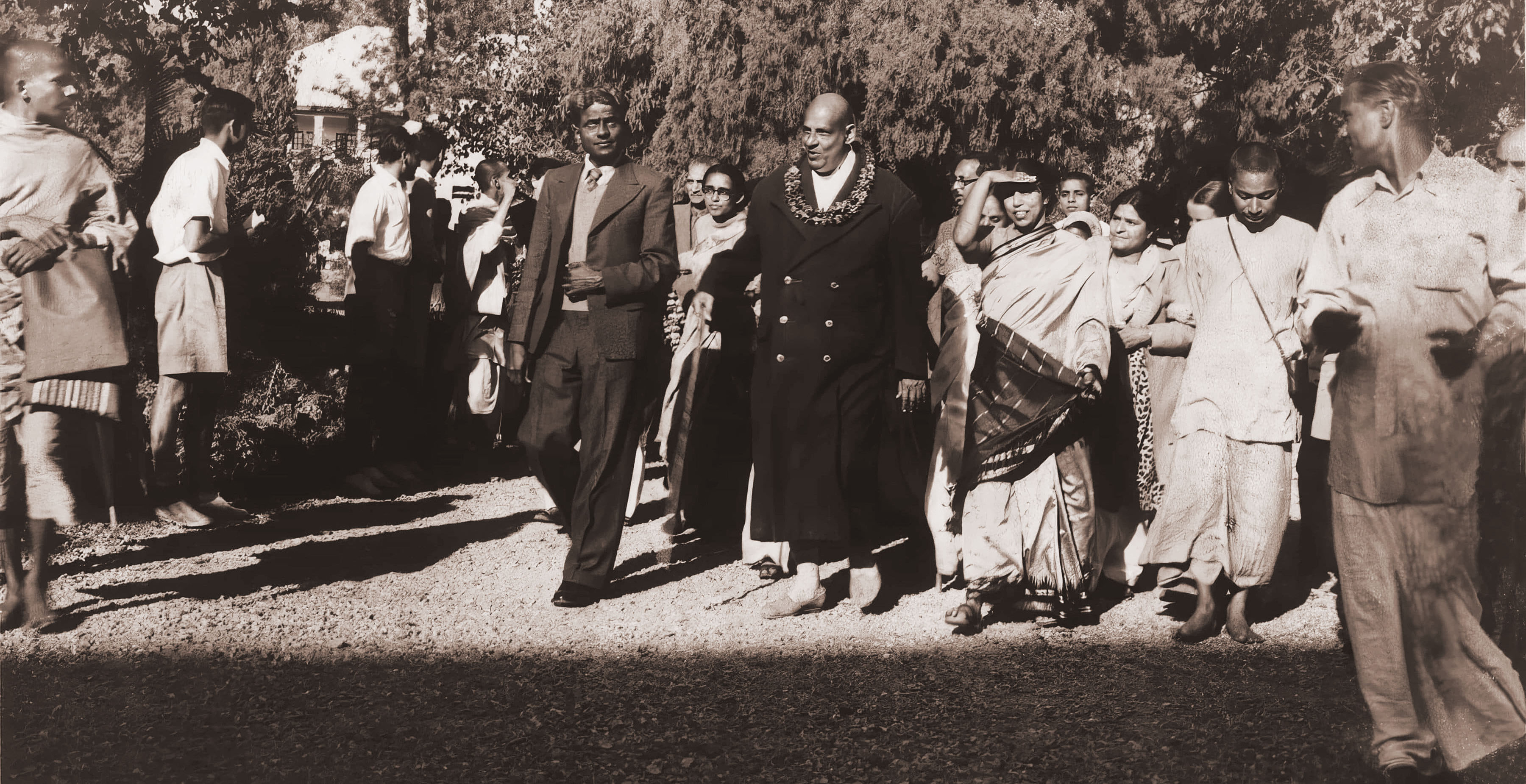
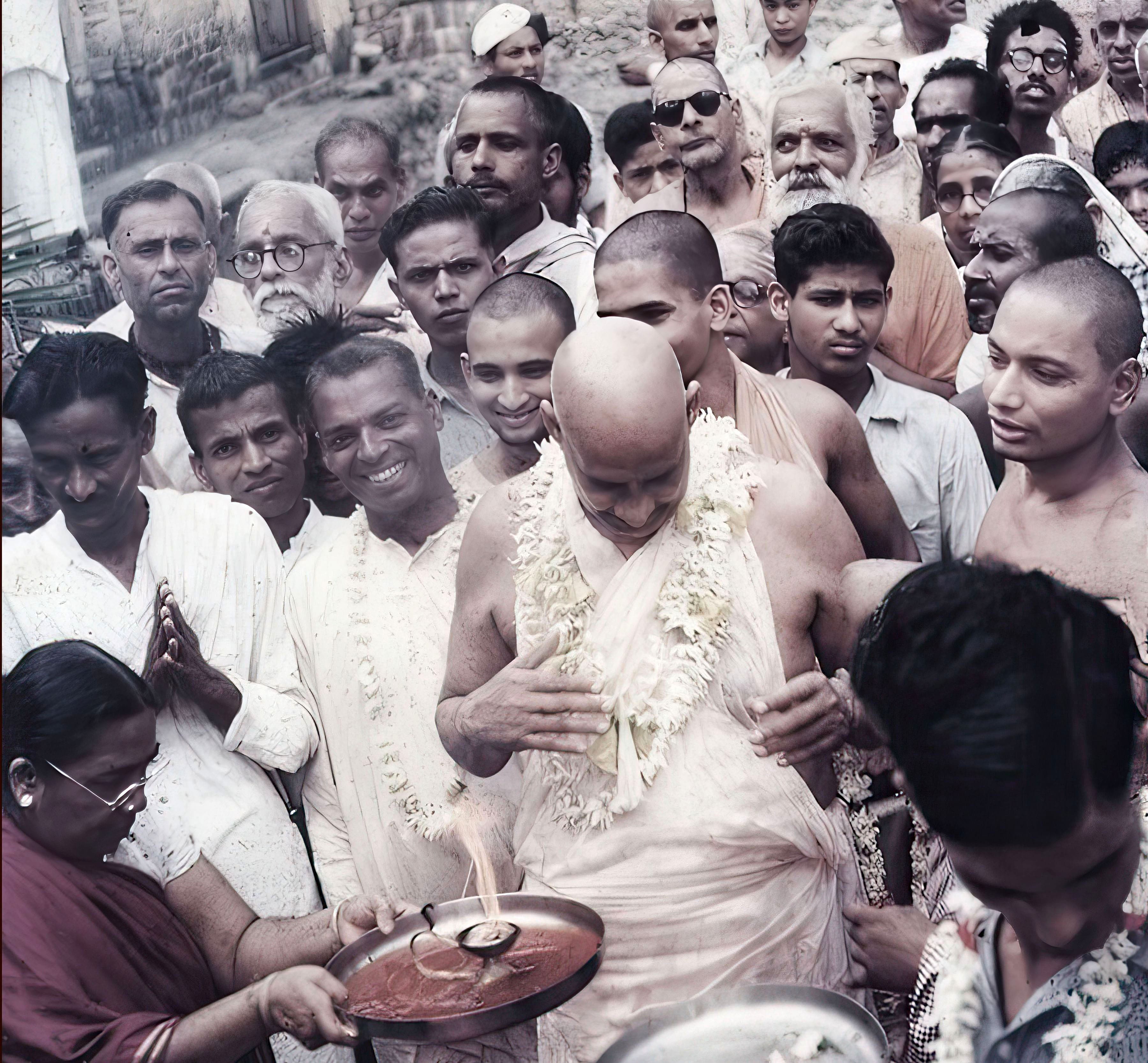
Each day brought countless devotees to the Ashram seeking Swami Sivananda’s darshan and perhaps a special blessing–for a new child, or success in a critical business venture—no wish too insignificant for Swamiji’s attention. More rarely, a devotee would approach him for initiation and guidance on their spiritual path. Here Swami Sivananda, having just been garlanded by a devotee, is moving through the Ashram and greeting a crowd of visitors, stopping often for a private word that just might be critical in throwing light on the next step in their lives. Pictured next to Swamiji is his attendant, Swami Satchidananda, Swami Chidananda on the right and Swami Venkatesananda facing him.
-
 See full screen image
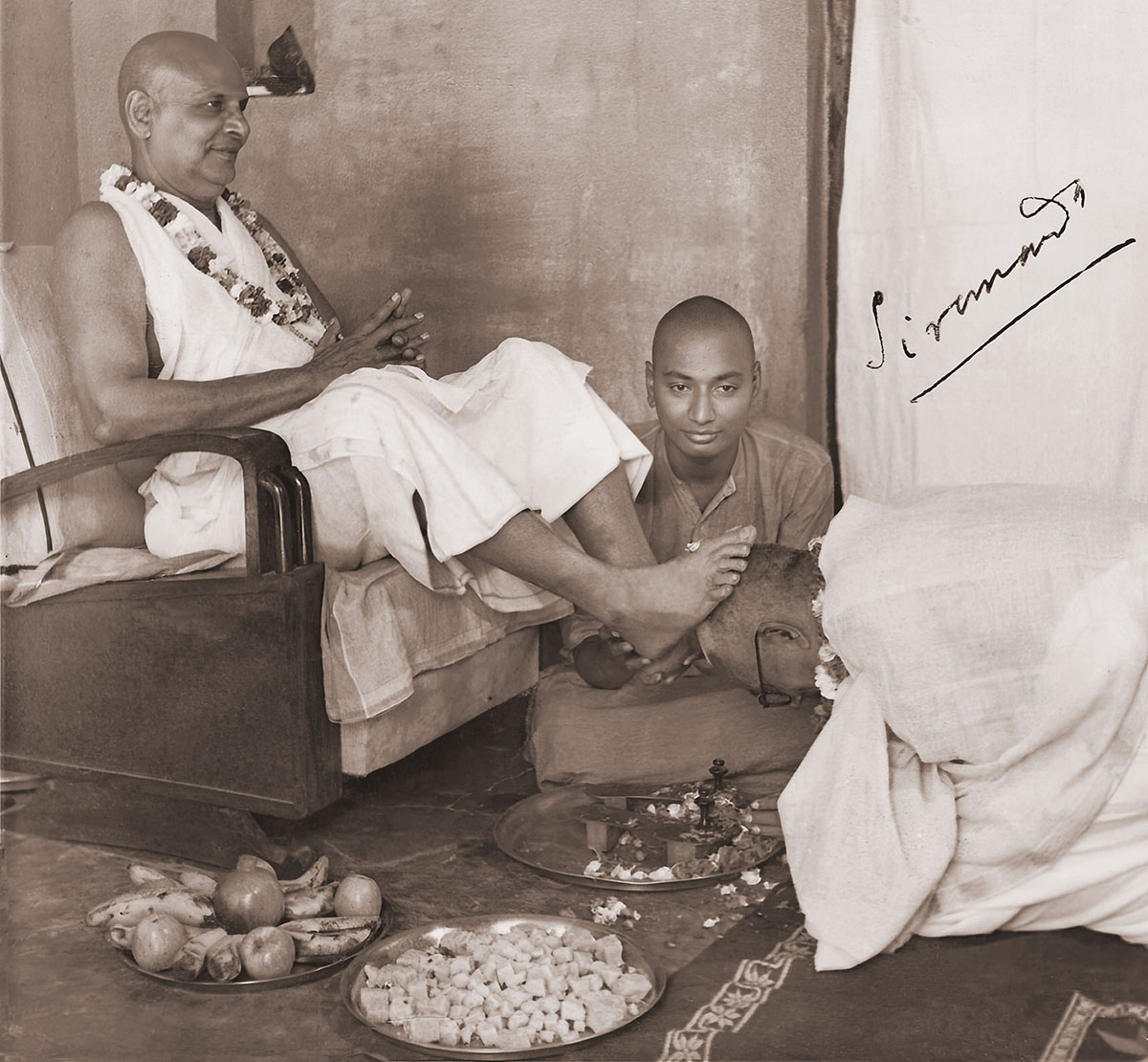
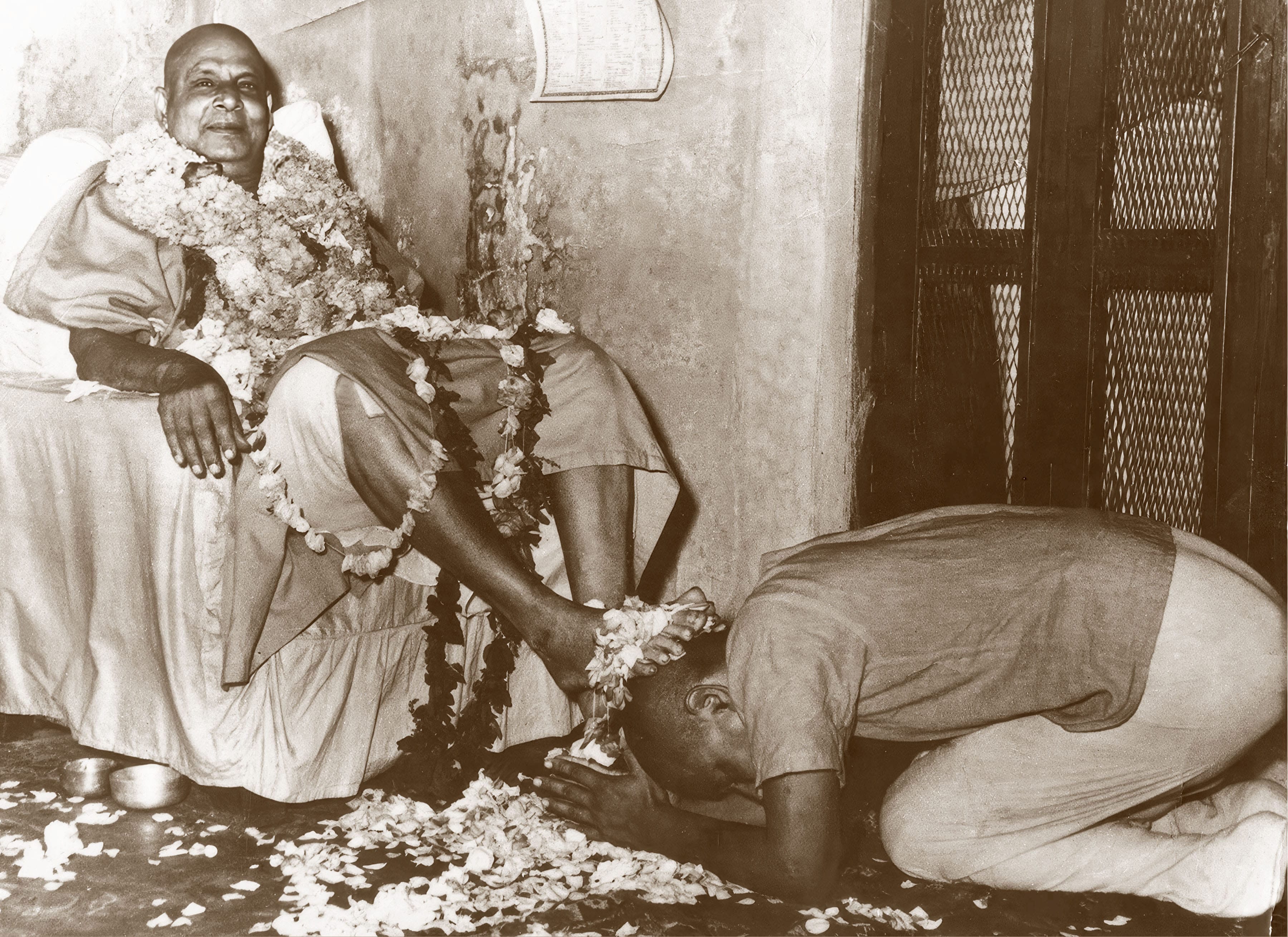
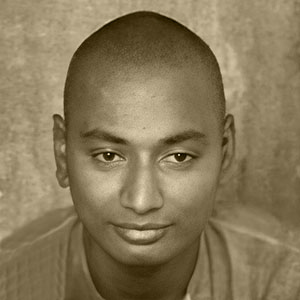
Pada Puja offered by Sri N. Srinivasan
Swami Sivananda bestows a cherished blessing on Sri N. Srinivasan, father of Swami Venkatesananda, at the end of a Pada Puja ceremony. By placing his feet on the disciple’s head, the Master transmits sacred Shakti in this sublime form of blessing.
-
 See full screen image
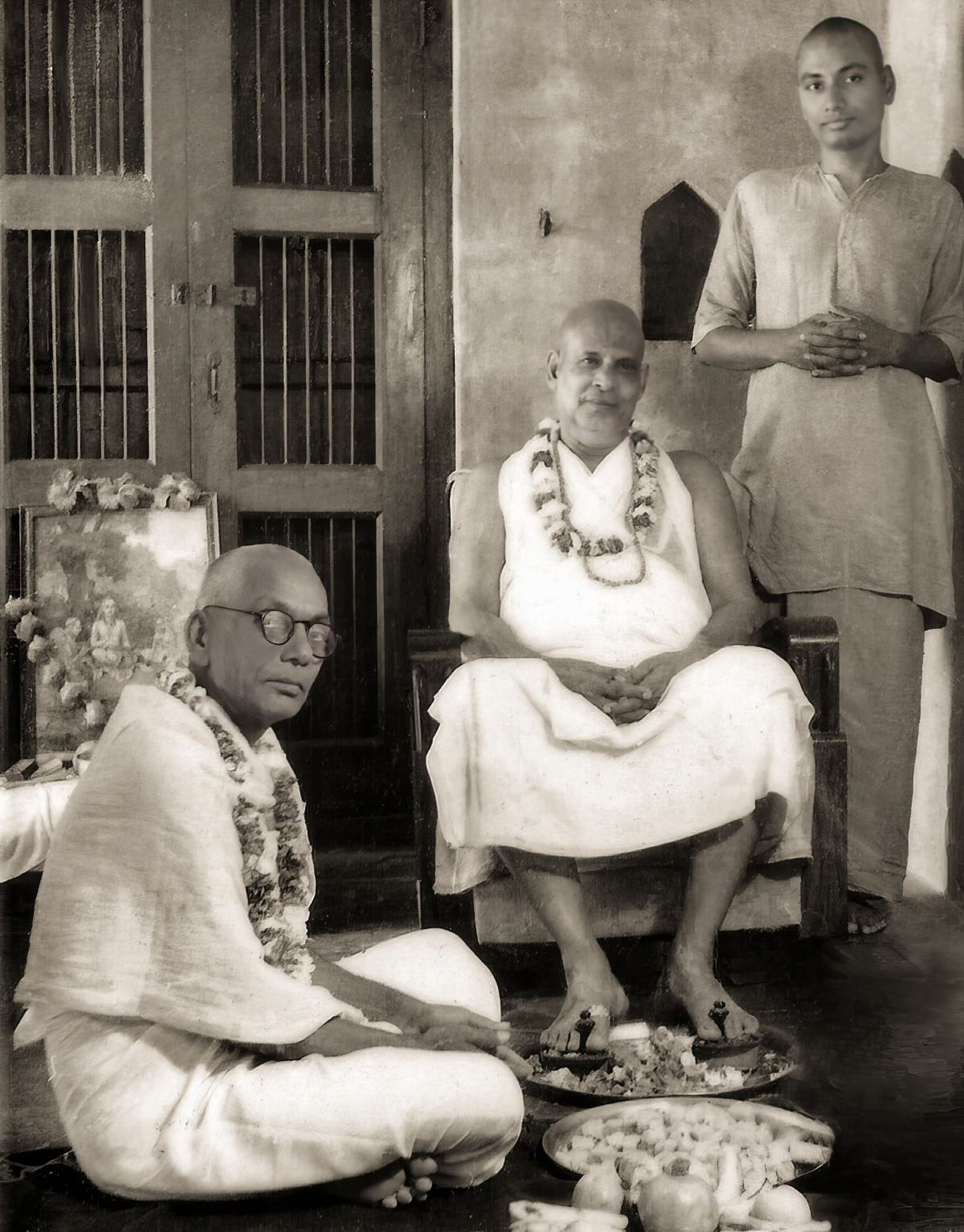
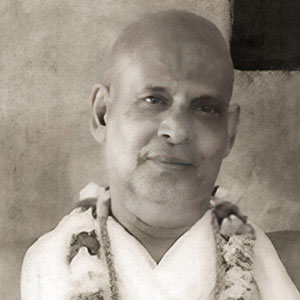
Pada Puja
Sri N. Srinivasan, father of Swami Venkatesananda, is pictured after offering Pada Puja to Swami Sivananda.
Initially, Swami Venkatesananda did not have his family’s blessing for joining Swami Sivananda in his Rishikesh ashram. As his father’s oldest son and his mother’s only child, he was expected to marry, have children, and eventually become the head of the family, taking care of his parents in their old age. In time, Swamiji’s father became a devotee of Swami Sivananda and his mother moved into the ashram to be near her son, but the relationships were often fraught with tension. Swami Venkatesananda is standing next to his Master.
-
 See full screen image
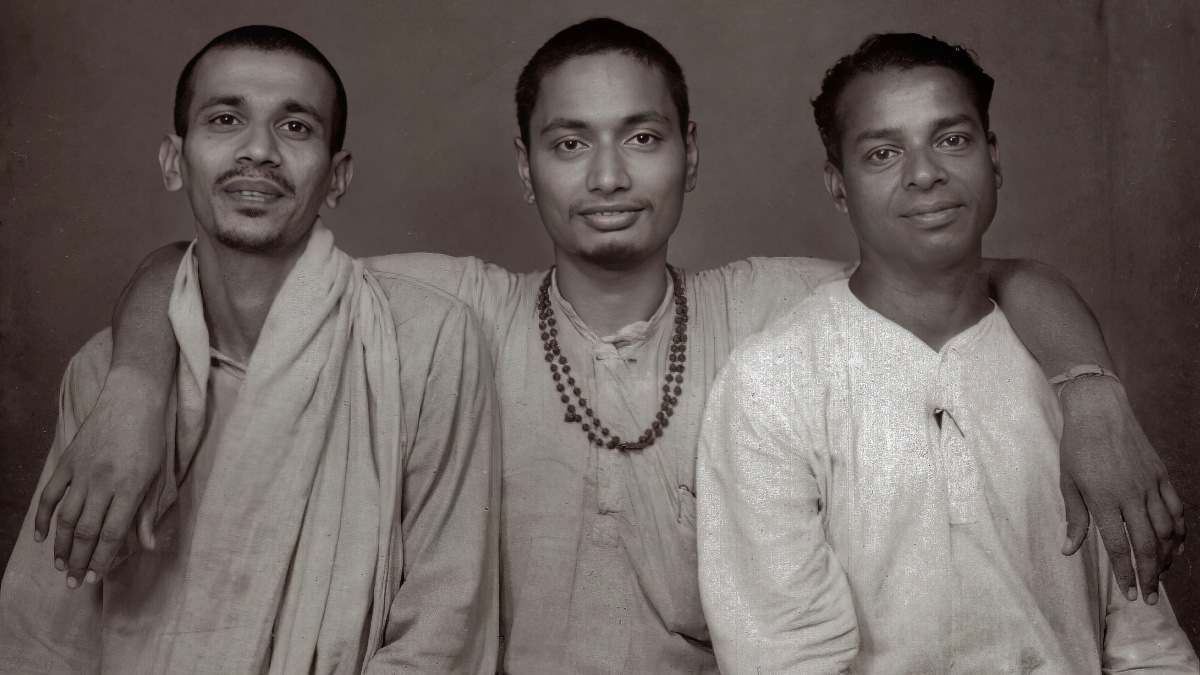
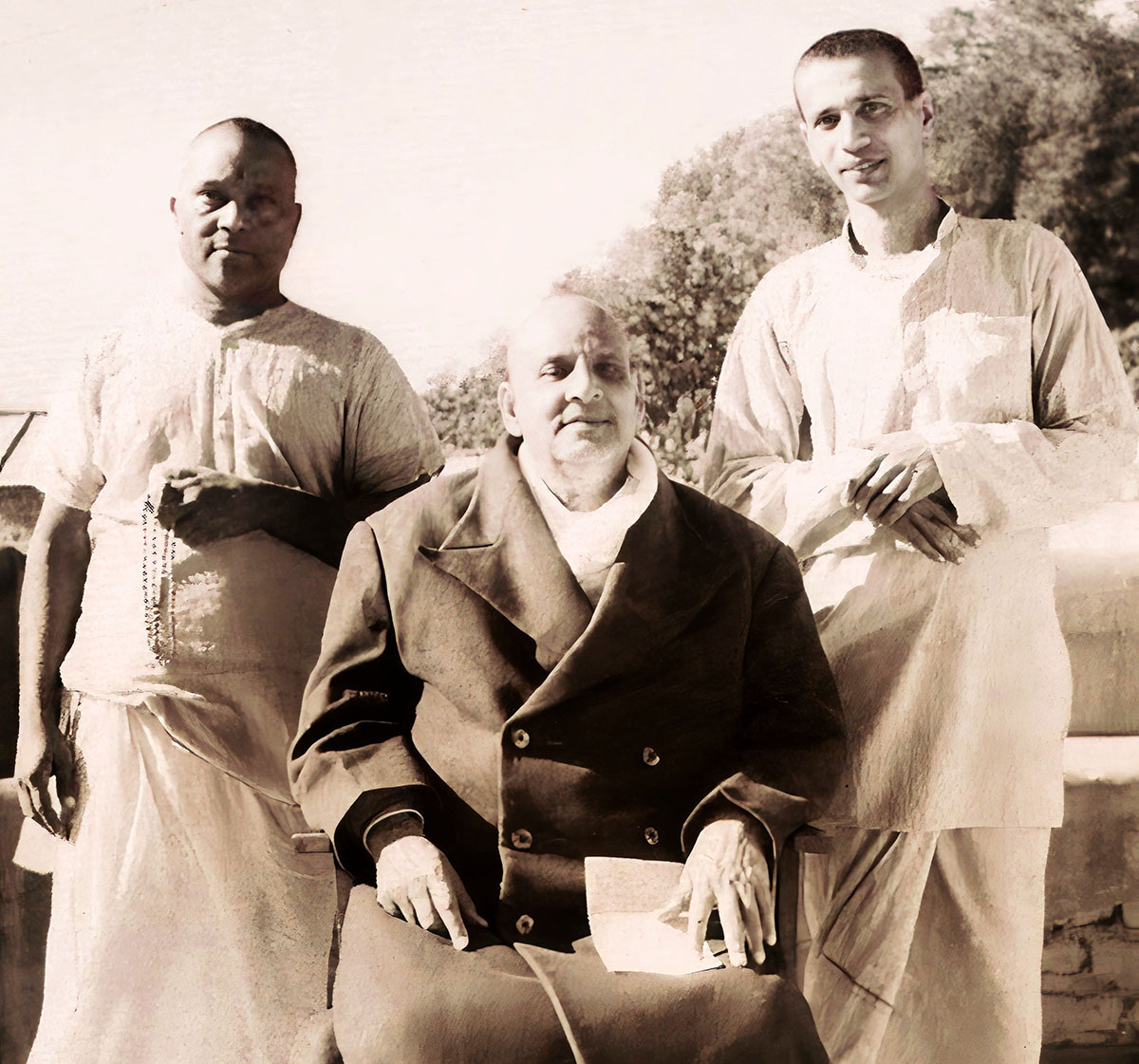
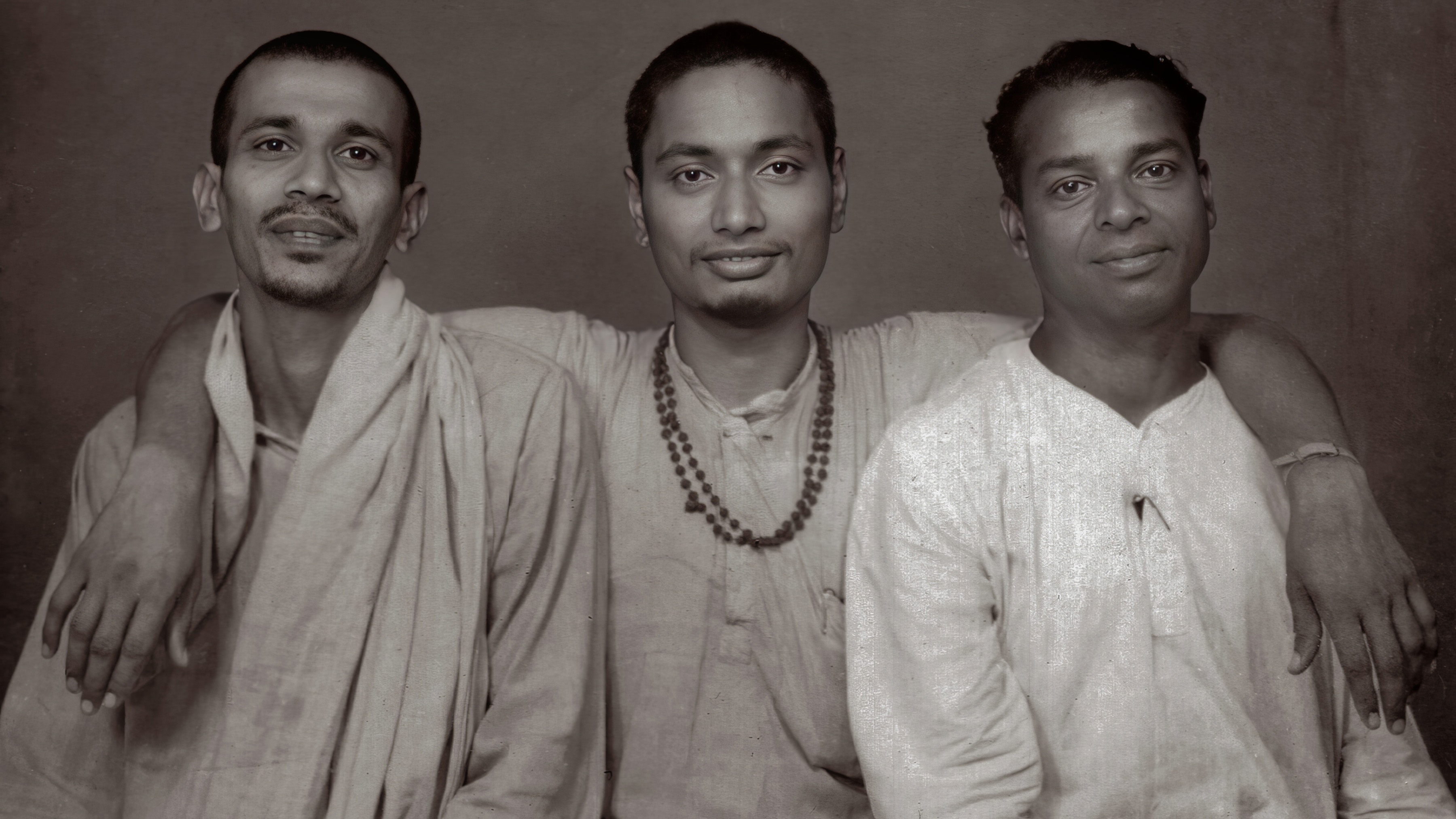
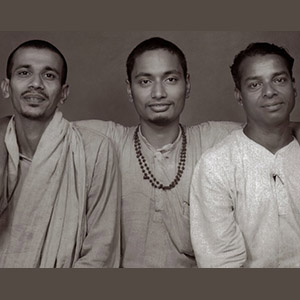
Swami Sivananda’s spiritual radiance attracted remarkable young men to him. The Ashram became an outpost of exceptional talent and dedication, propelling his mission of Divine Life forward. Pictured here are three of these remarkable brothers in discipleship and service: from left Swami Chidananda, Swami Venkatesananda, and Swami Saswathananda.
-
 See full screen image
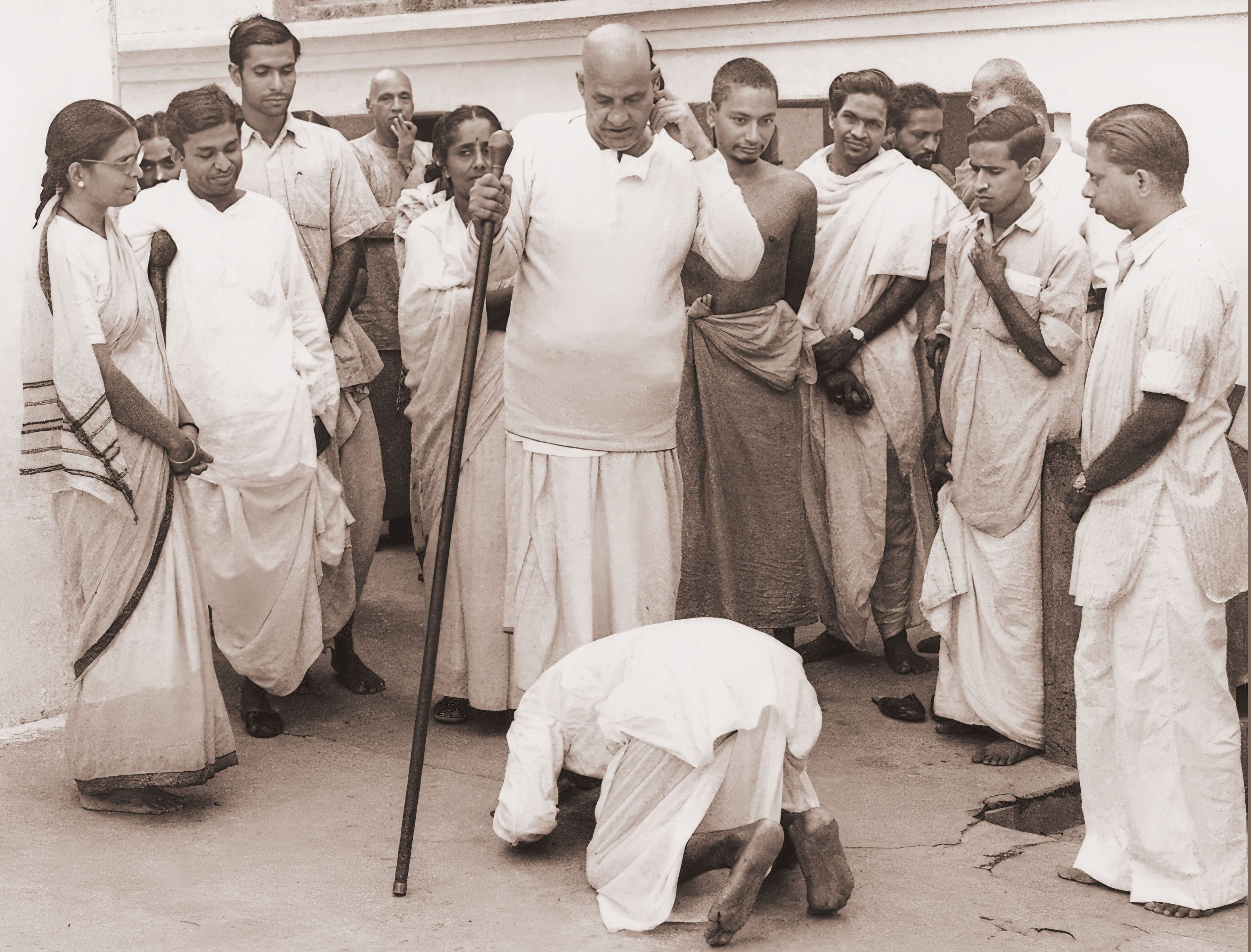
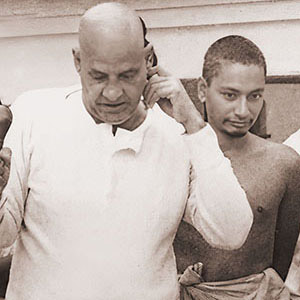
Swami Sivananda and visitors
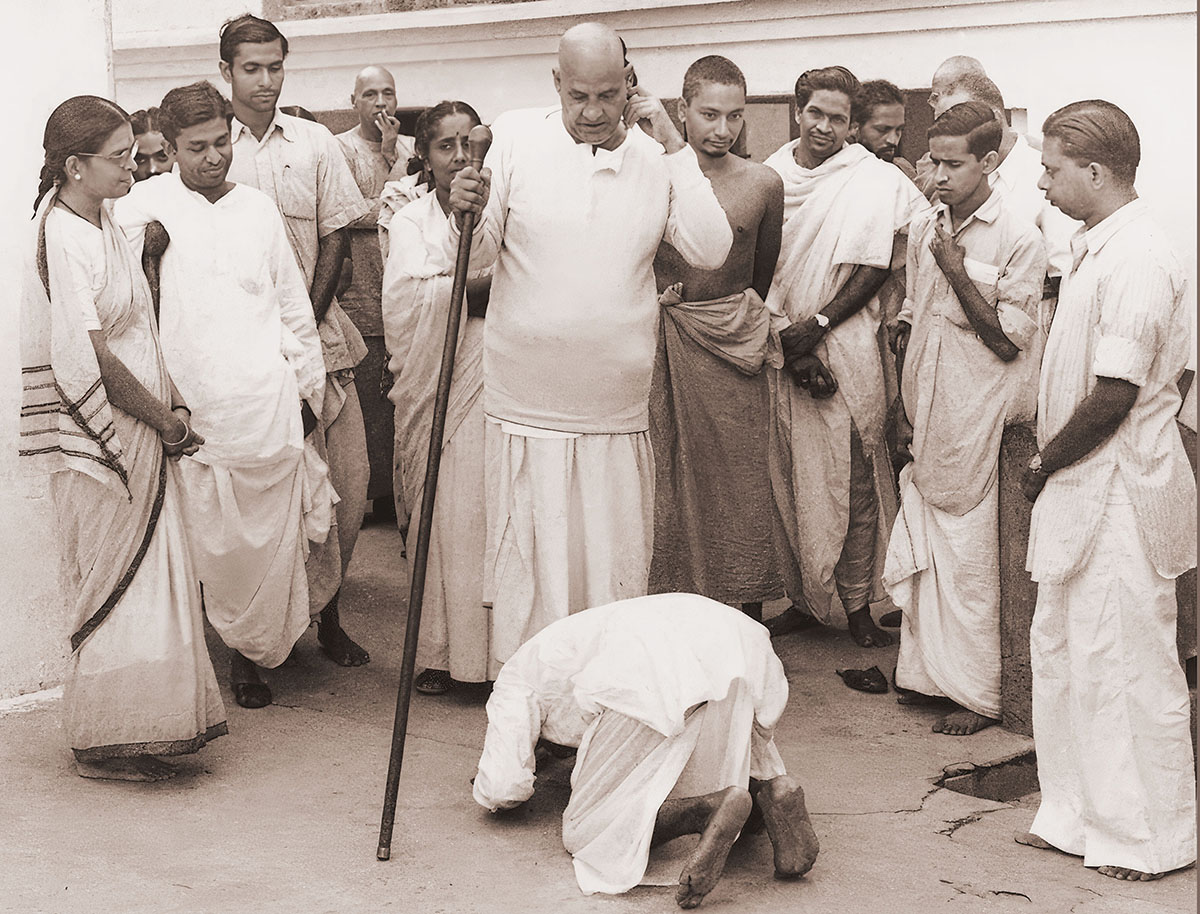
A devotee is pictured prostrating at Swami Sivananda’s feet, expressing his reverence for the Master. Though Swami Sivananda did not invite gestures of veneration, he accepted the heartfelt wish of his devotees to express their reverence, as Bhakti opens the heart to the Divine. Flanking Swamiji on his left and right are Swami Sivananda-Hridyananda and Swami Venkatesananda.
-
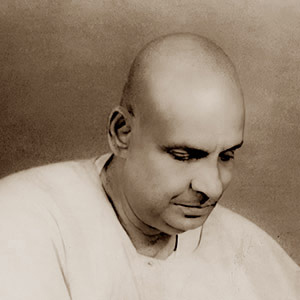 See full screen image
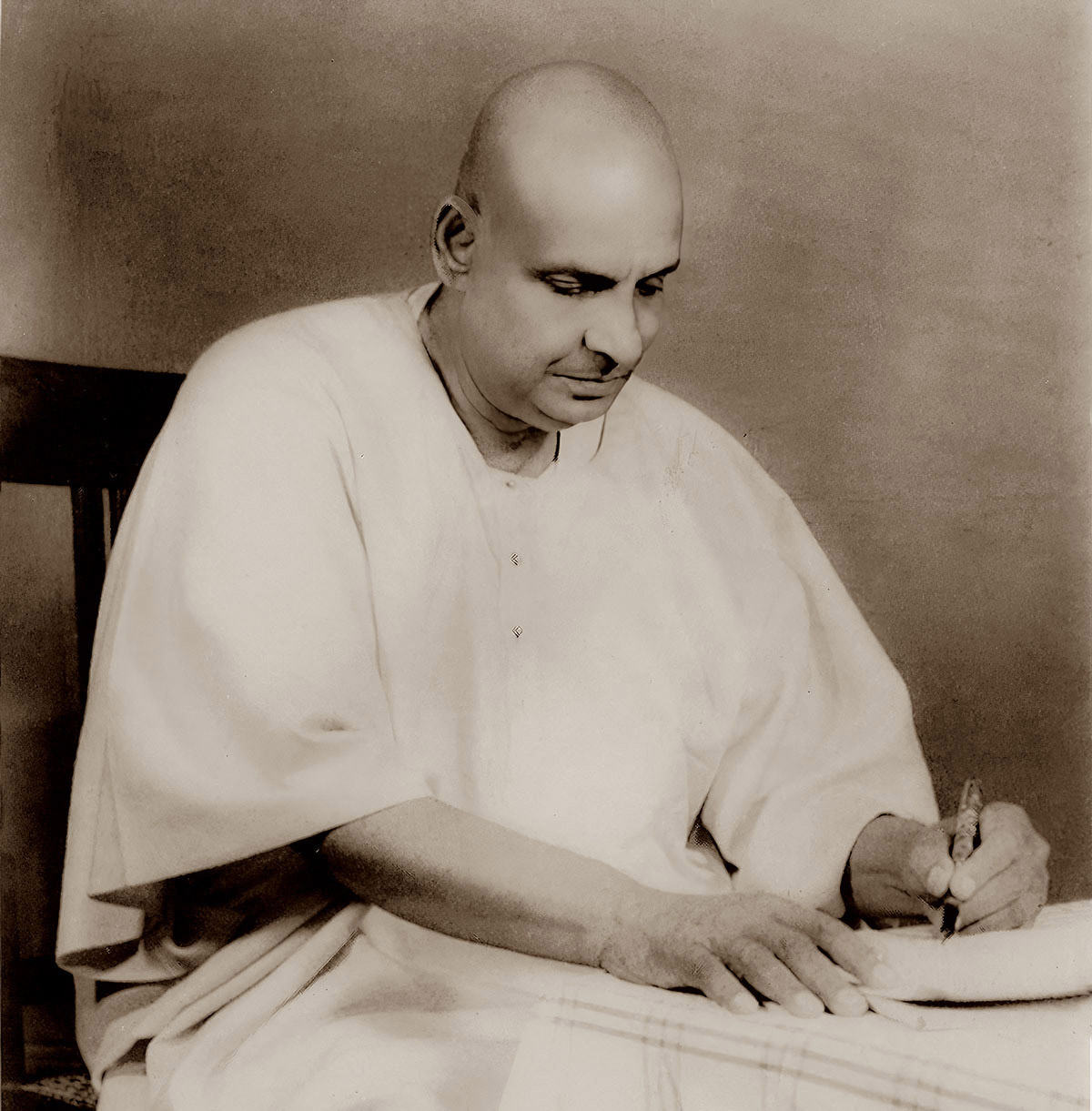
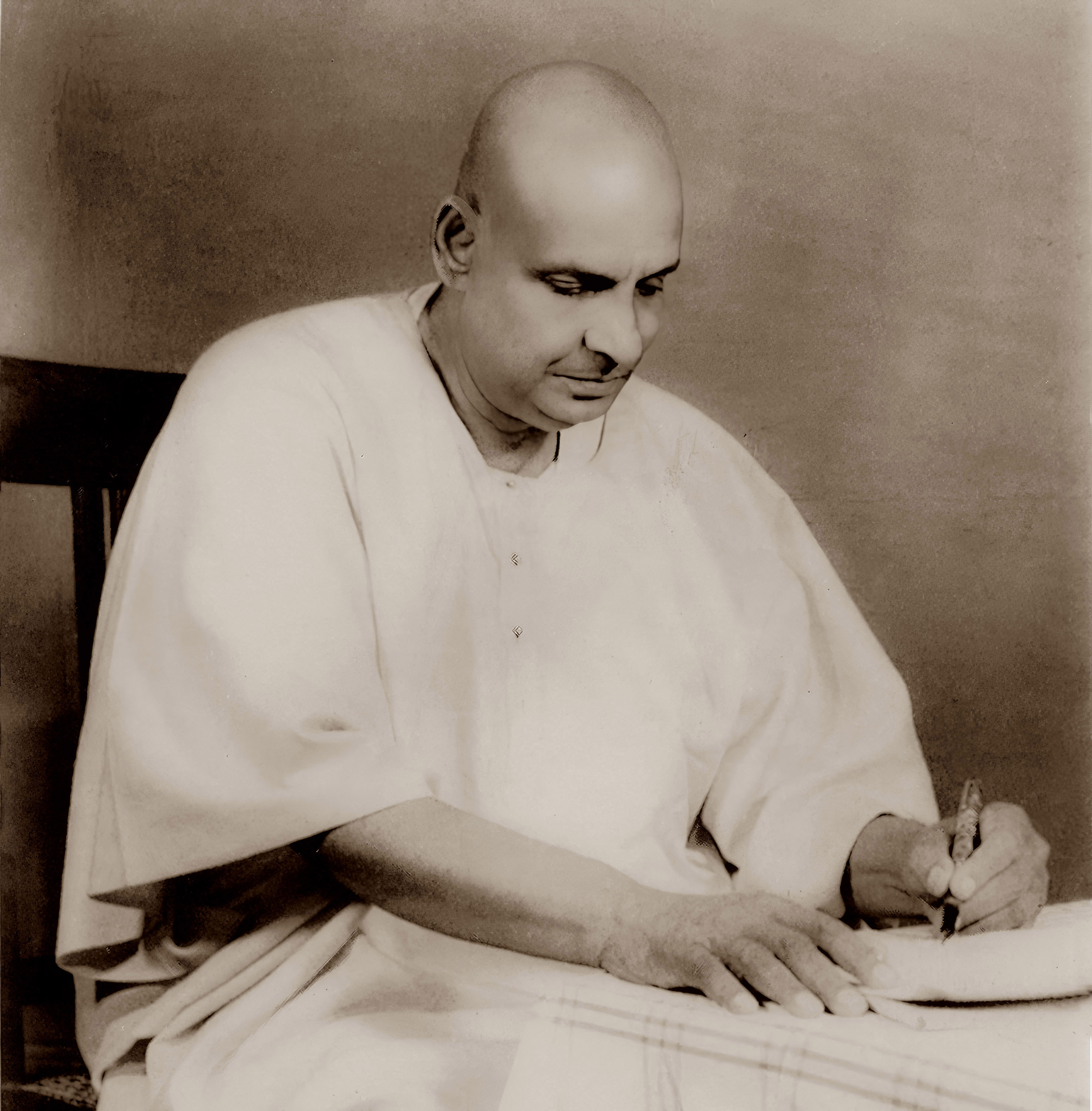
Swami Sivananda, pen in hand
Swami Sivananda liked to compose catchy songs in English, capturing some of his basic teachings in simple lyrics. One began: “Eat a little, drink a little, talk a little, sleep a little….” All these “littles” added up to a balanced life, balanced as was his own. Each day he allocated time for a little of many things. One important “little” was writing. That “little” added up to nearly 300 books!
-
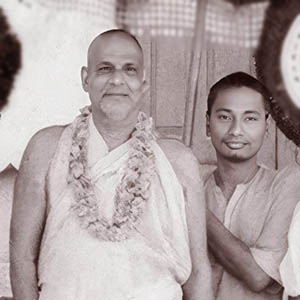 See full screen image
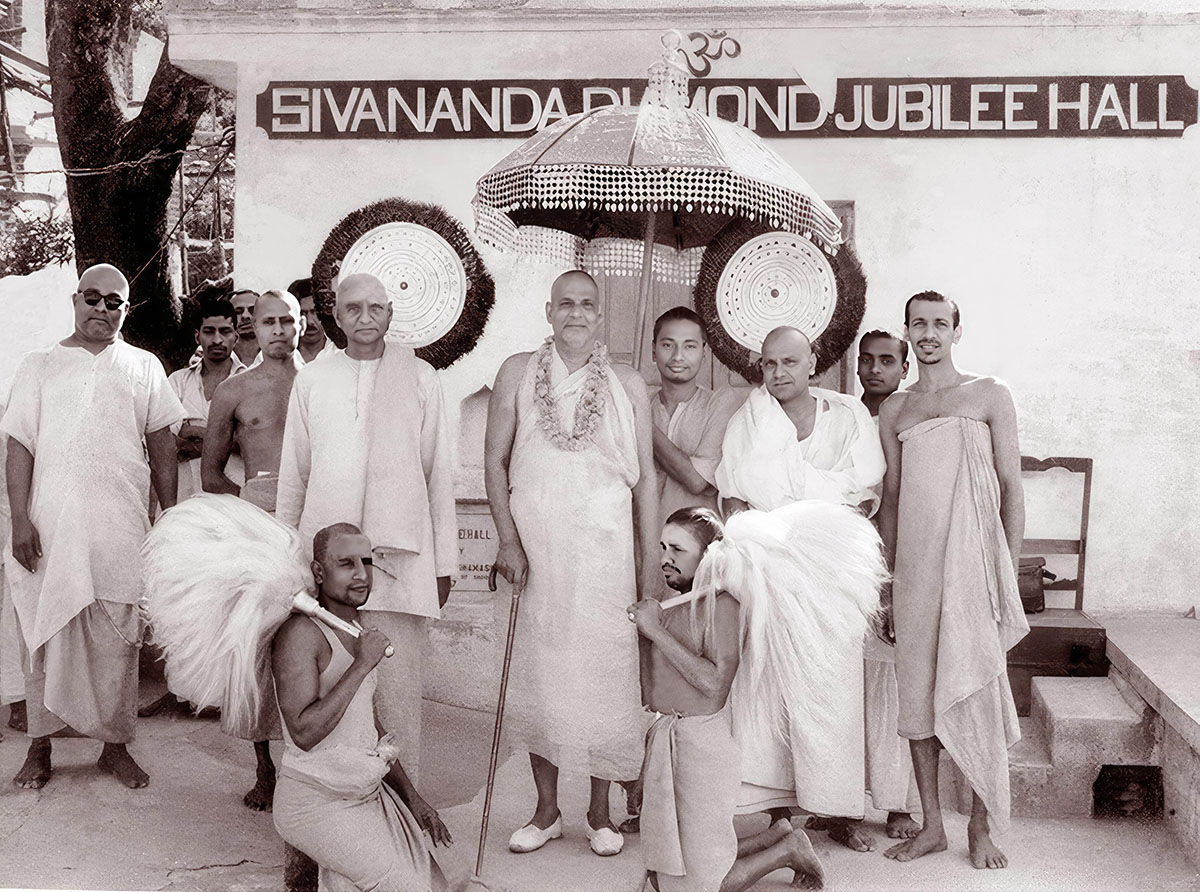
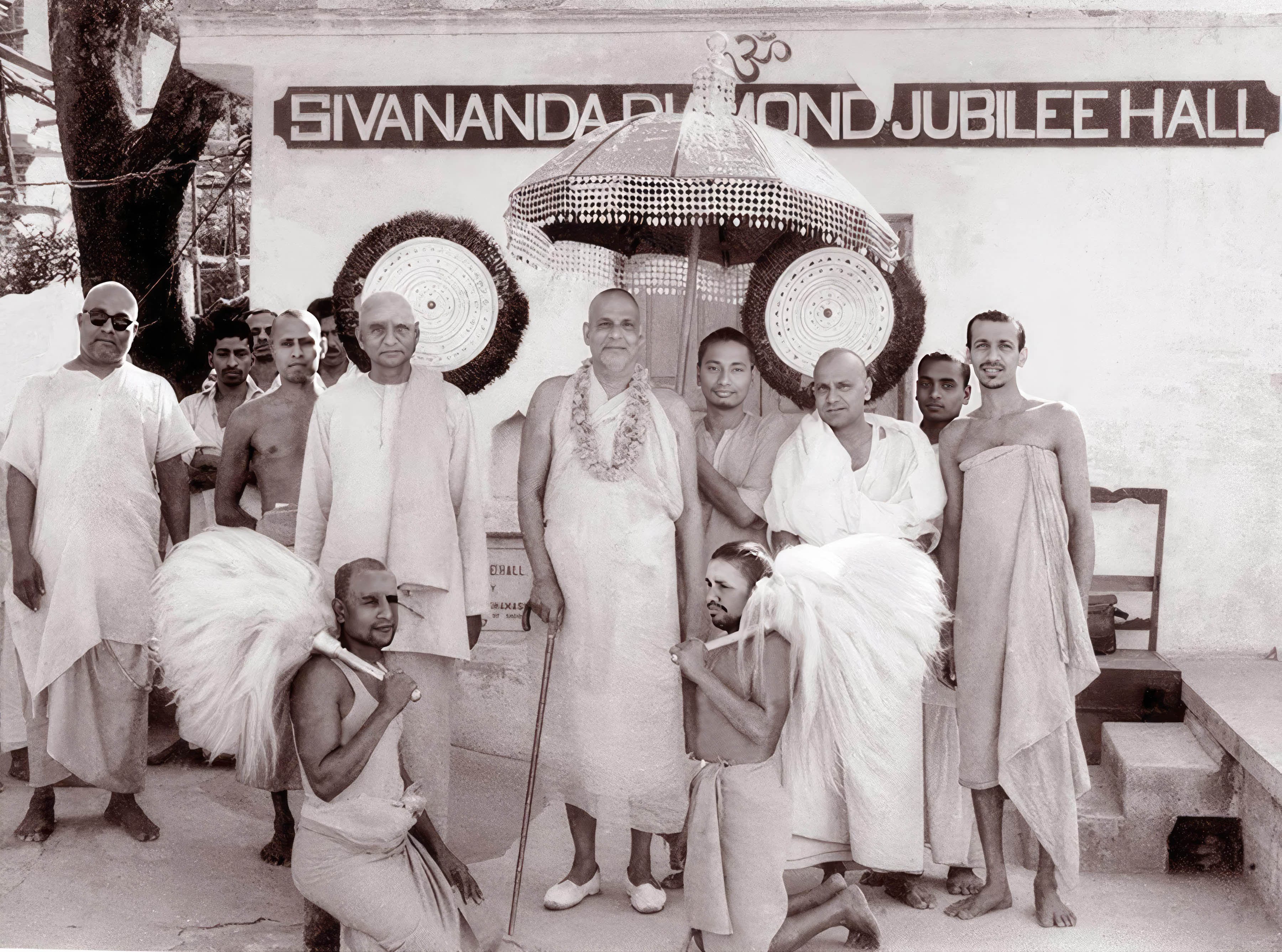
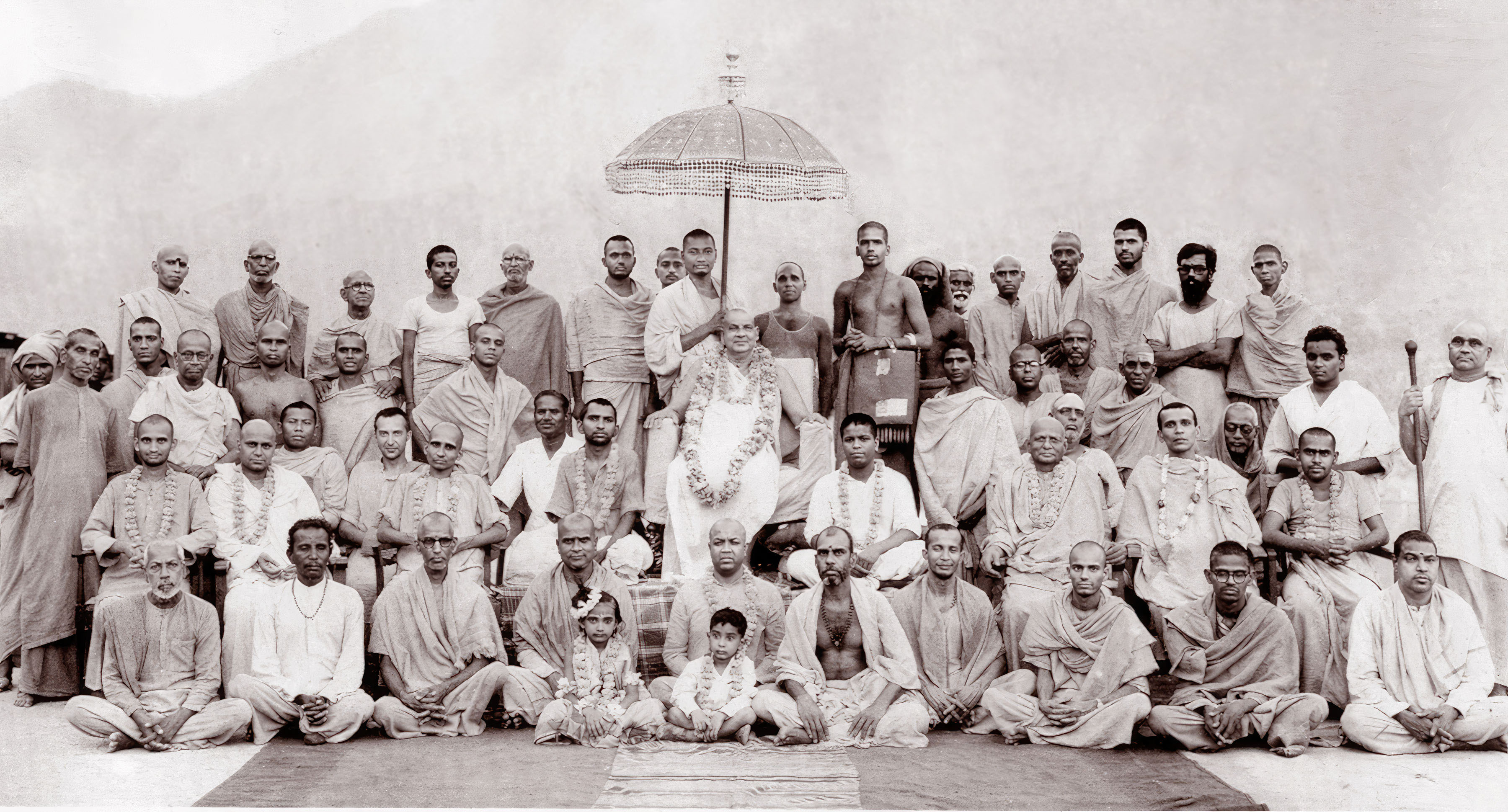
Swami Sivananda and disciples posed in front of the Diamond Jubilee Hall
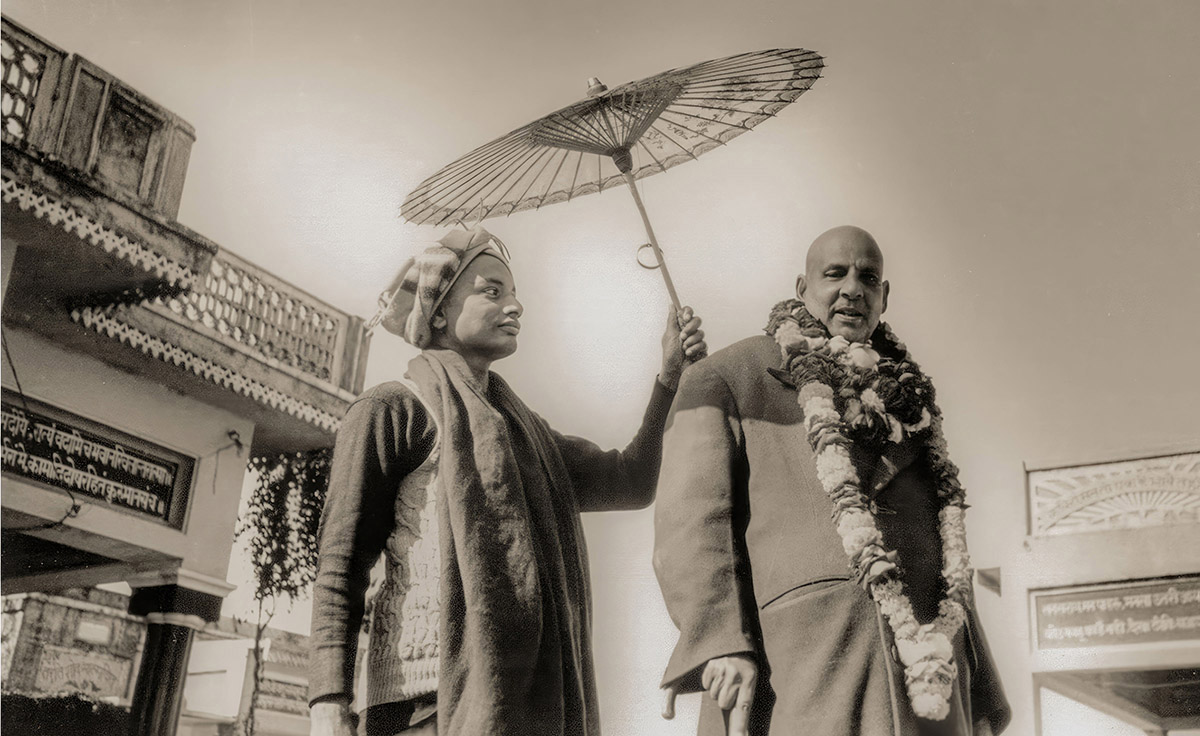
Swami Sivananda with traditional symbols used to honor a saint, such as the ceremonial umbrella. Pictured here is Swami Paramananda on the far left, Swami Venkatesananda holding the umbrella, Swami Madhavananda next to him, and Swami Chidananda on the far right. Though Swami Paramananda stands off to the side, as he did in many photos, he was central to Swami Sivananda’s mission. His extraordinary organizational abilities and his fierce devotion to Swamiji were behind many of the achievements of the Divine Life Society.
-
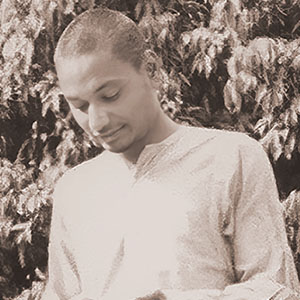 See full screen image
Informal literary conference between Swami Sivananda and Swami Venkatesananda
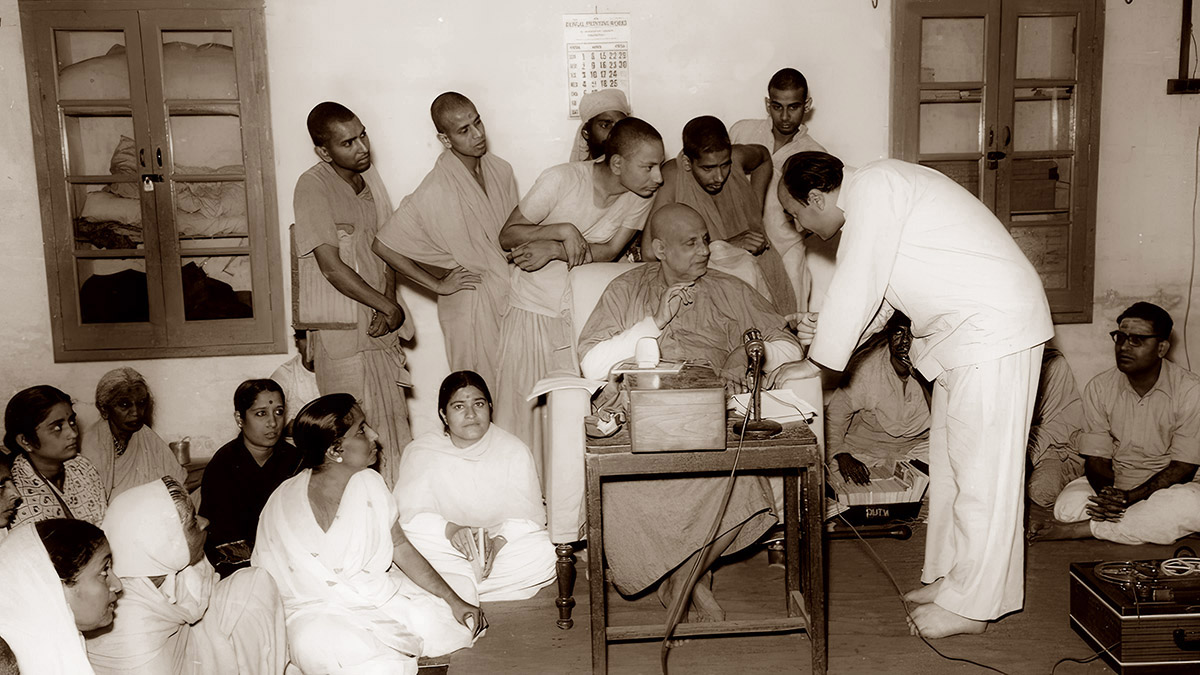
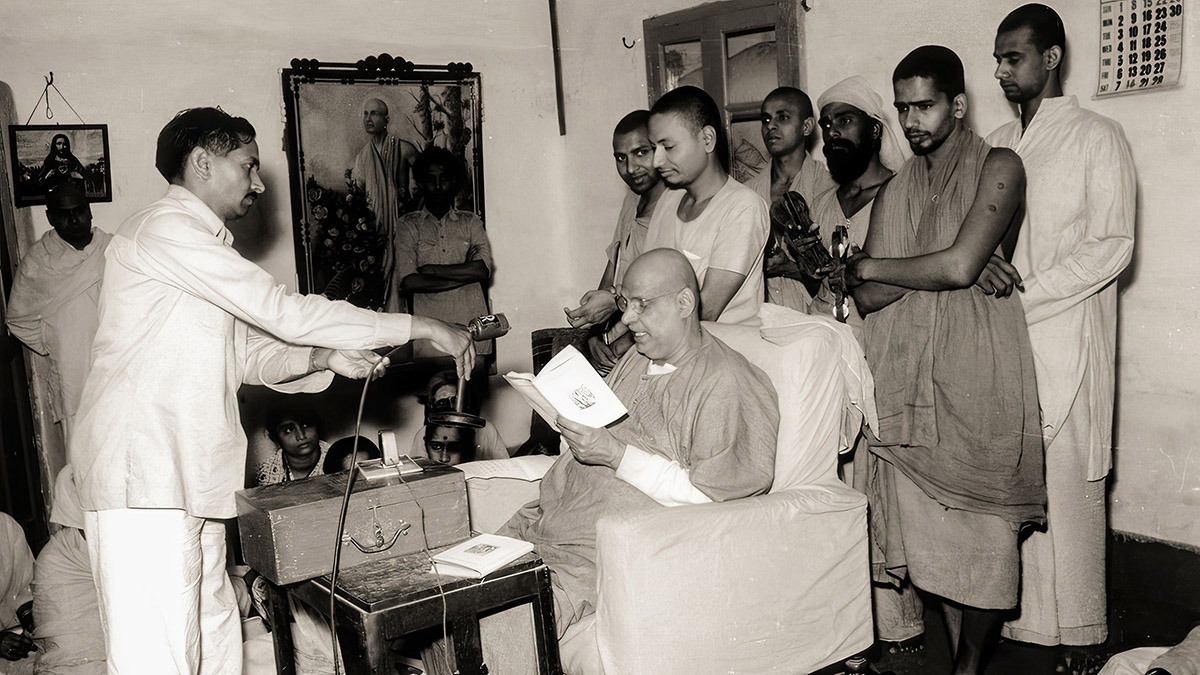
Swami Venkatesananda was uniquely attuned to Swami Sivananda; when Swami Sivananda spoke, whether in casual conversation or in a formal lecture, every word was recorded in Swami Venkatesananda’s memory. He would listen quietly then go to his room and type out Swami Sivananda’s words verbatim, transforming his lectures and informal discussions into manuscripts and books that carried Yoga throughout India and into the West.
In later years, when tape recorders became available, Swamiji’s “memory transcripts” were checked against tape recordings and found to be extraordinarily accurate. His dedication to his Master was legendary and he could usually be found typing in his room late at night, long after his oil lamp had run dry. Finally, about 2 a.m., he would cover his typewriter with a cloth, using it as a pillow, and sleep until 4 a.m. when he arose for meditation.
-
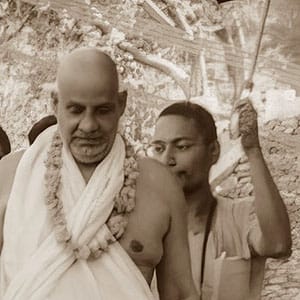 See full screen image
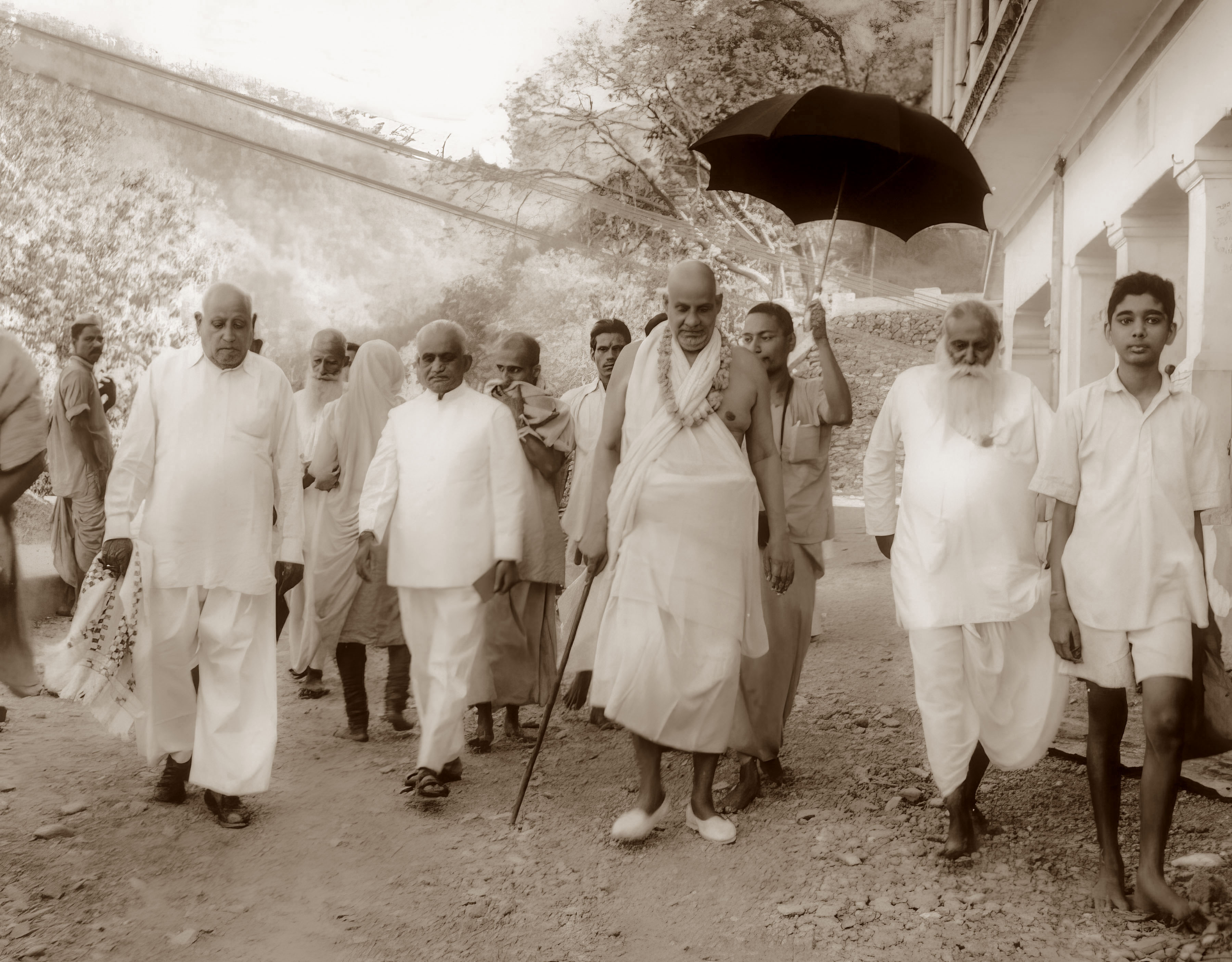
Visitors were as much a part of the daily life of the ashram as were the permanent residents and Swami Sivananda always gave each new arrival his loving attention. Well-known visitors and government officials alike sought him out in Rishikesh, as well as countless devotees who met him during the All-India Tour in 1950. And not surprisingly, as Swami Sivananda’s fame spread, visitors from overseas also began to arrive in the Ashram, hoping not only for Swamiji’s darshan but to embrace ashram life, if only for a short period.
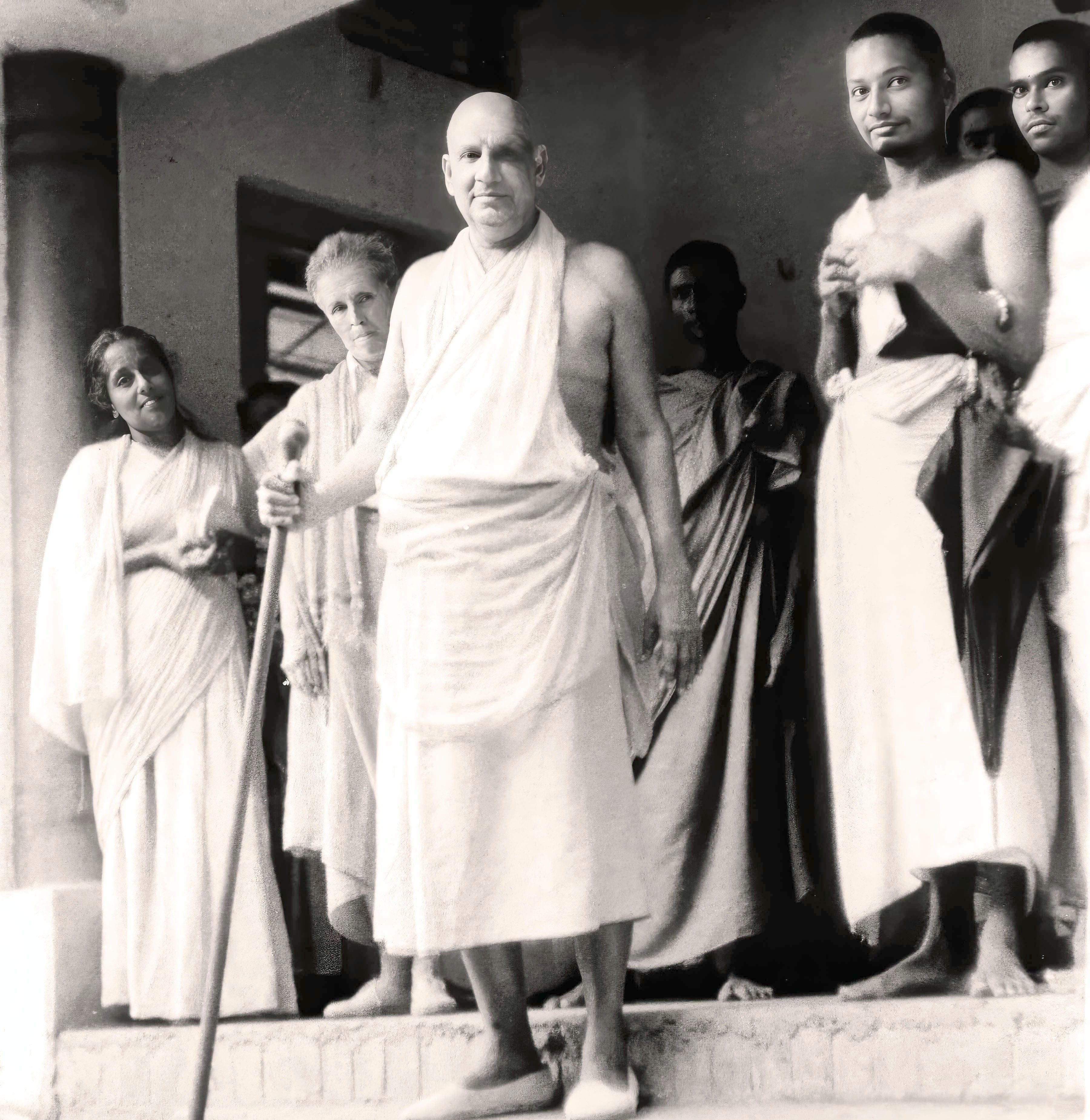
Here Swami Sivananda is escorting a group of visitors through the ashram as Swami Venkatesananda shields him from the hot sun with an umbrella.
-
 See full screen image
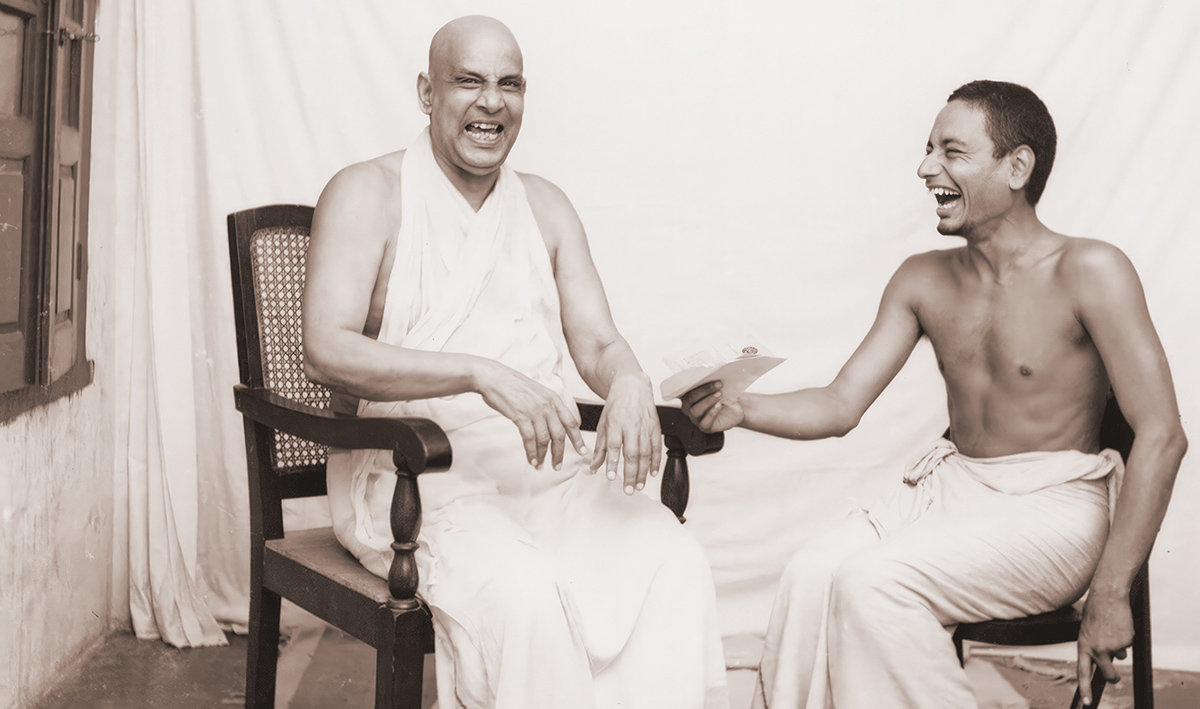
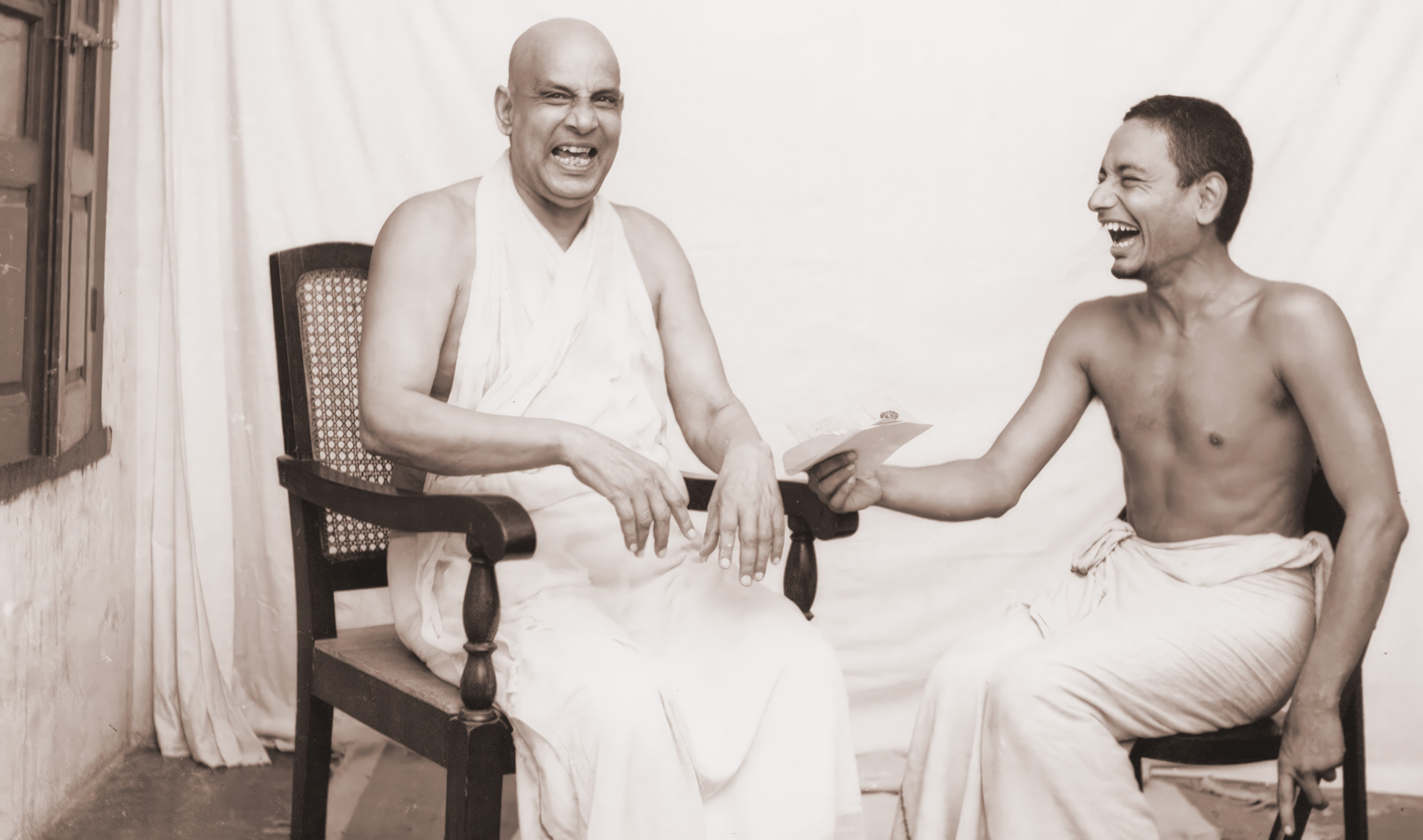
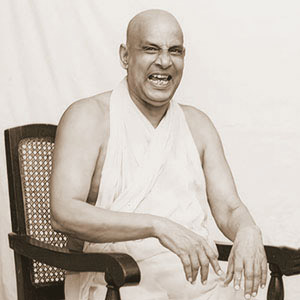
Yogis are serious-minded, right?
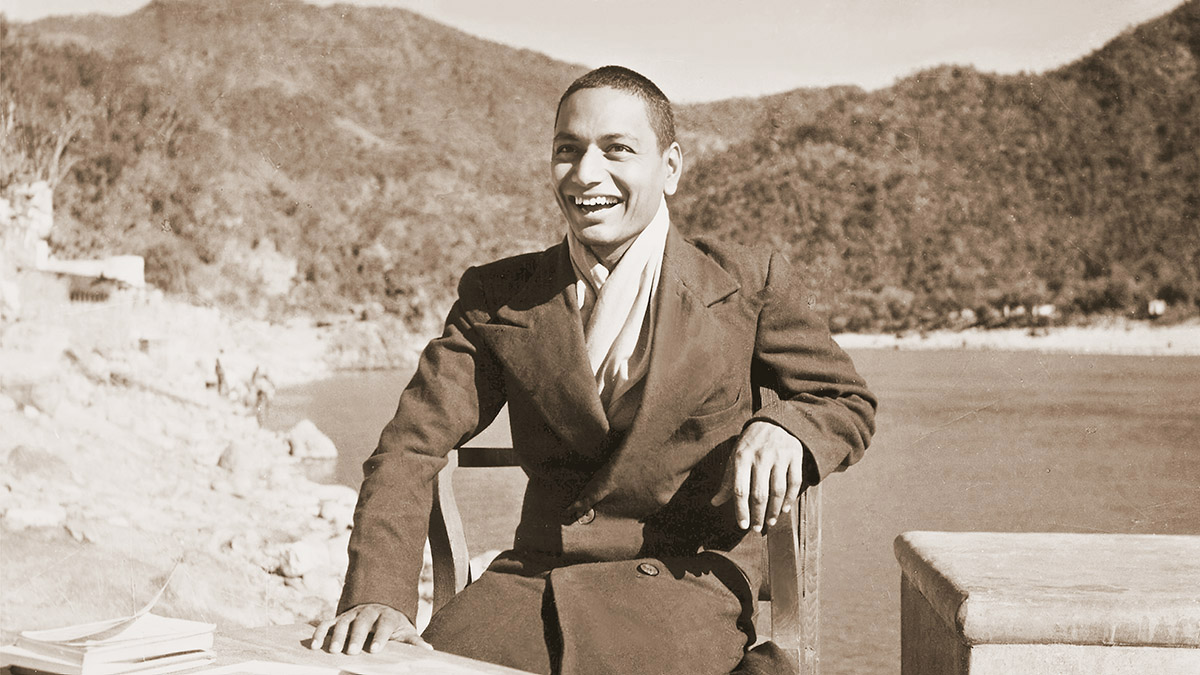
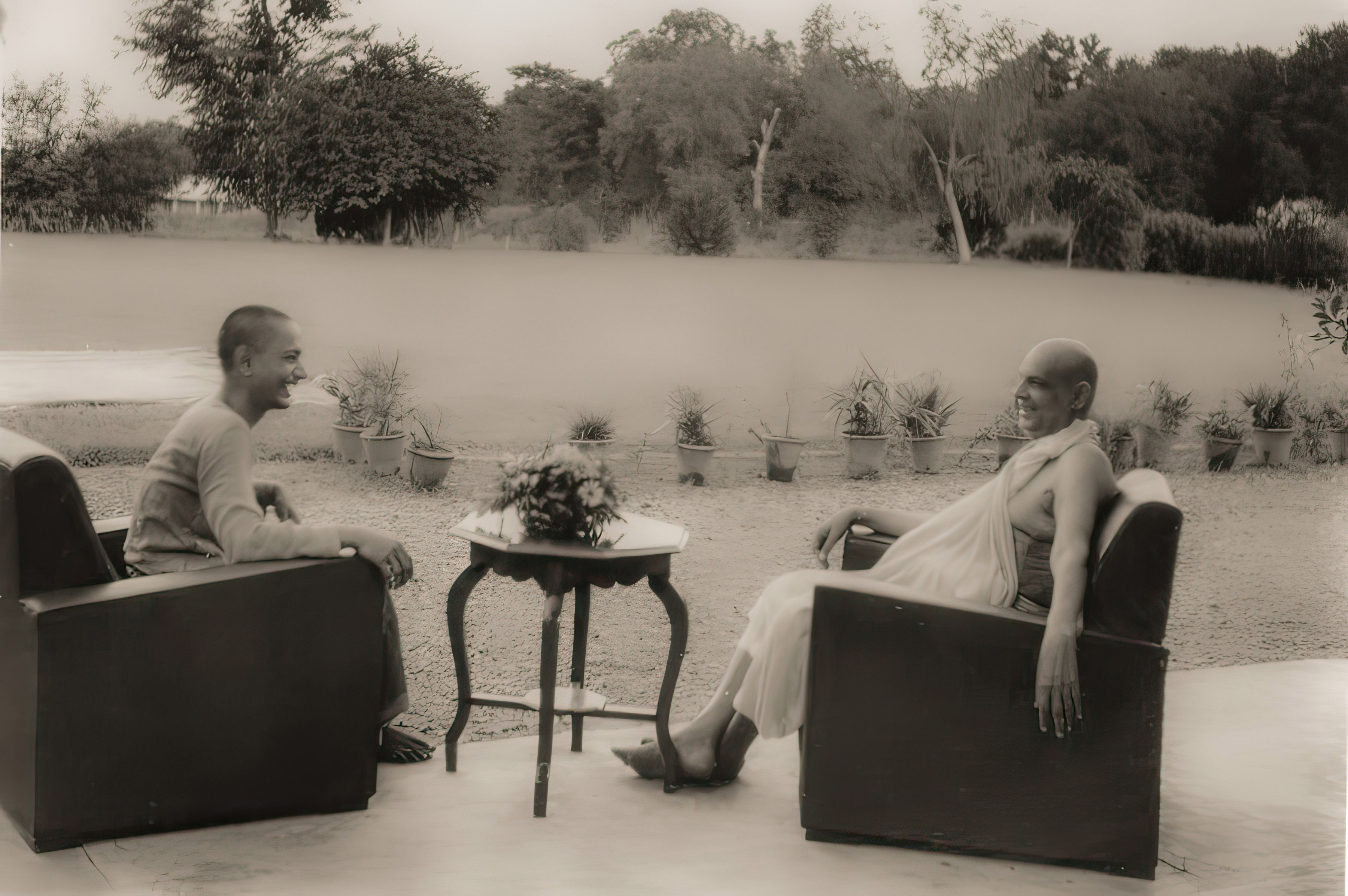
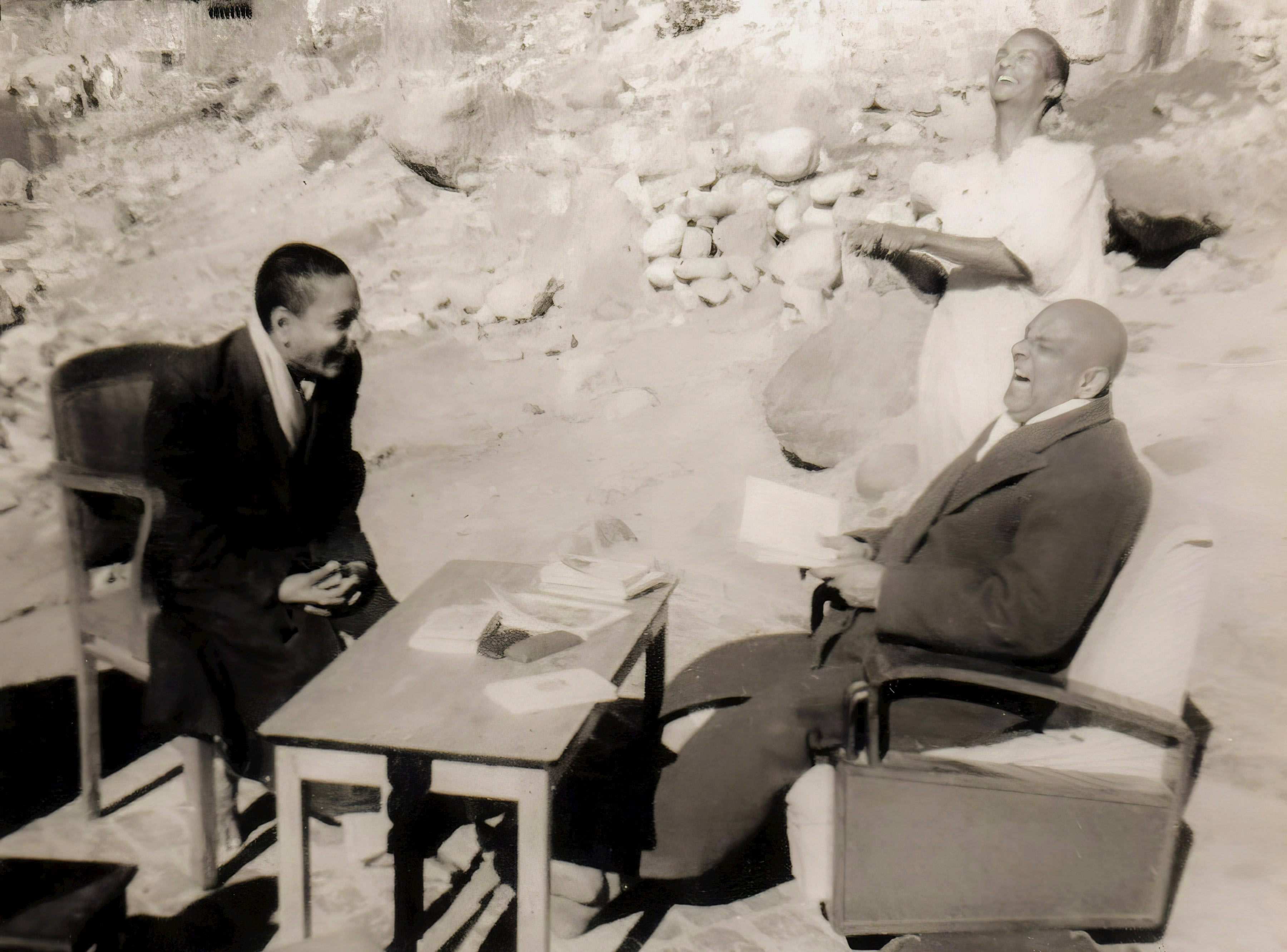
True, but along with a laser-like spiritual focus, Swami Sivananda had a very nimble sense of humor, and who better to share it with than Swami Venkatesananda—a monk known for almost personifying humor. This photo captures the sheer joy they shared in each other, and often expressed in laughter.
-
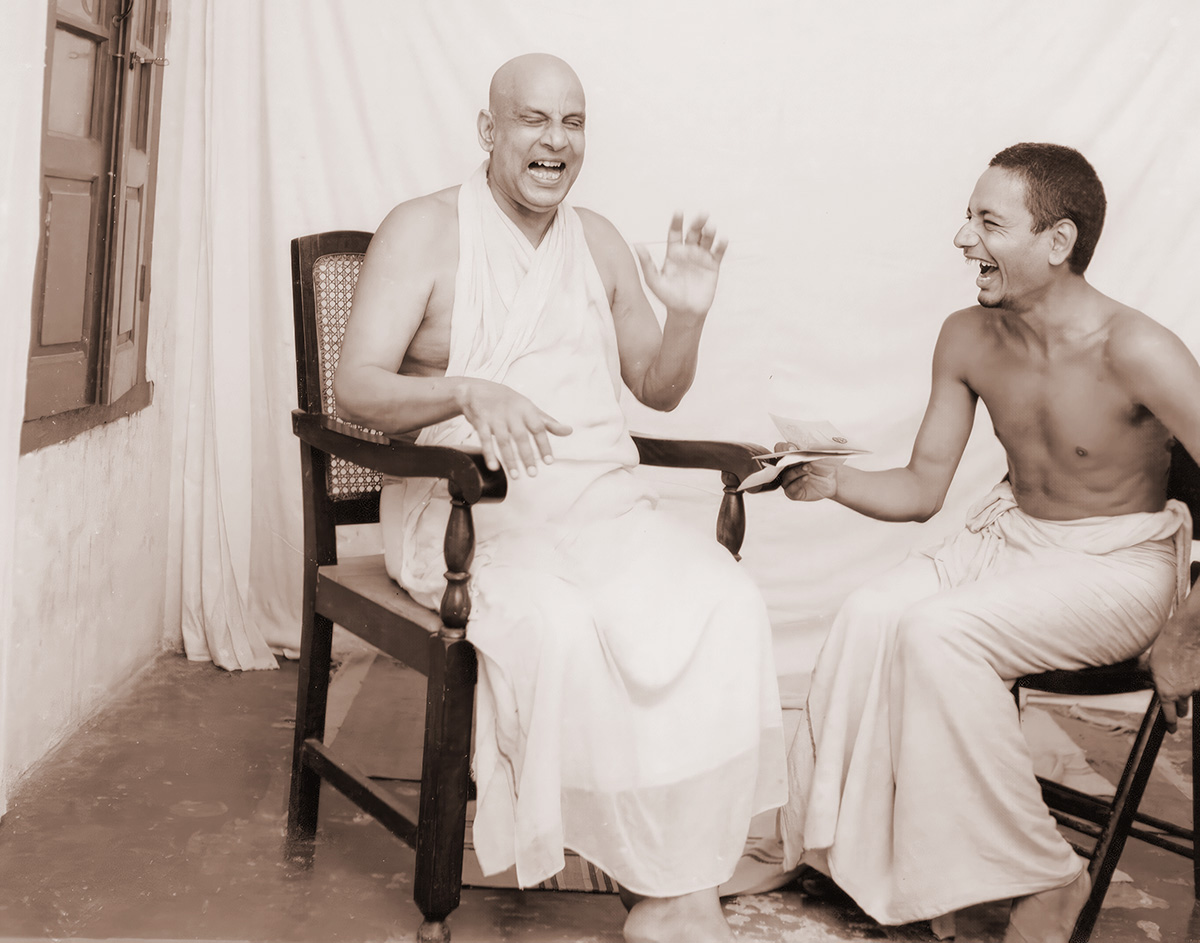
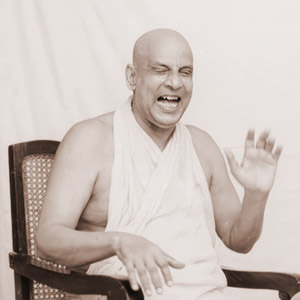 See full screen image
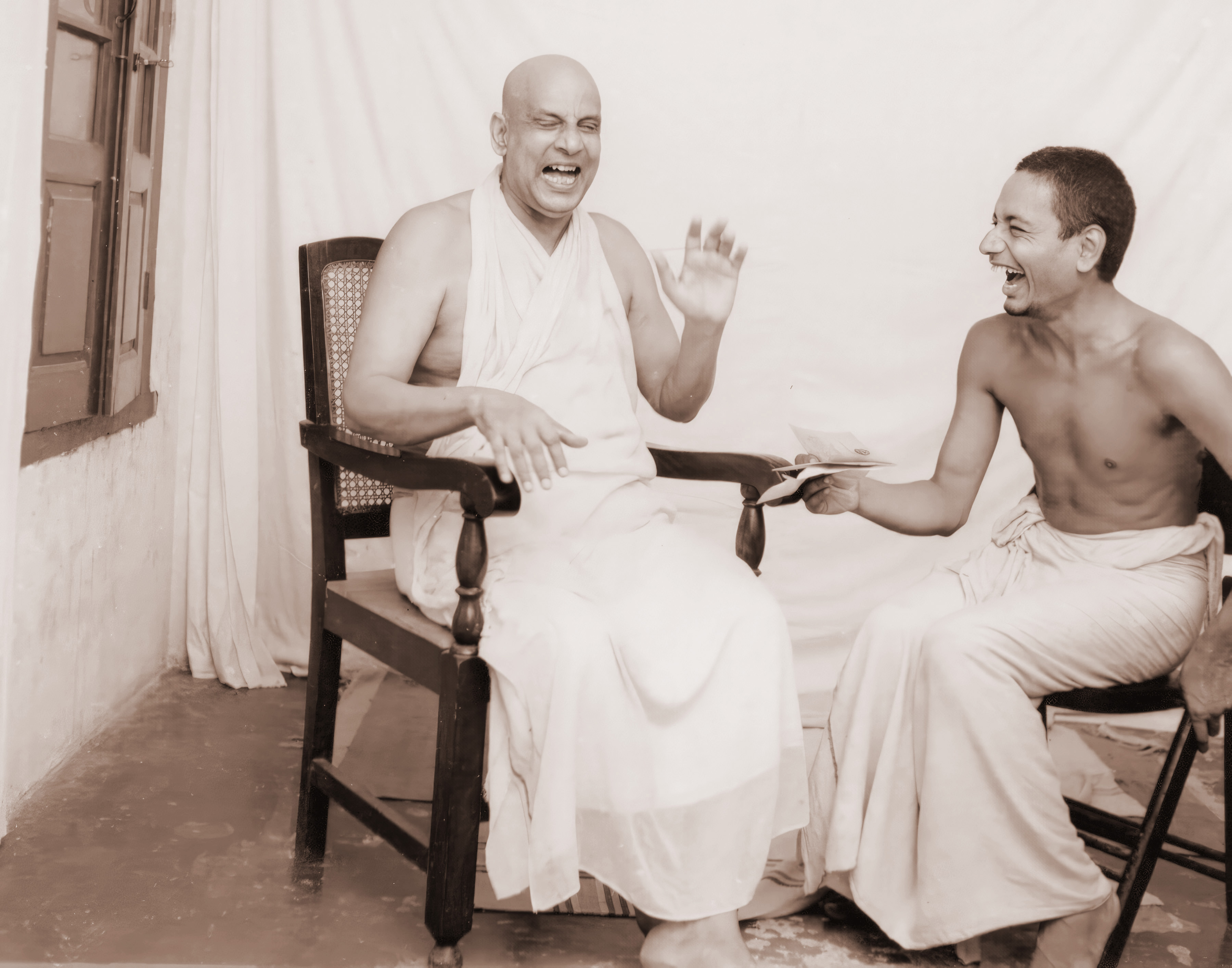
Swami Venkatesananda was sometimes criticized for not taking life seriously enough. If that was a fault, Swami Sivananda didn’t seem to mind! Master and disciple shared an intimacy akin to Father and son and here it bubbles into laugher. This intimacy wasn’t simply familiarity, but rather a connection that defied definition and eclipsed time and space.
-
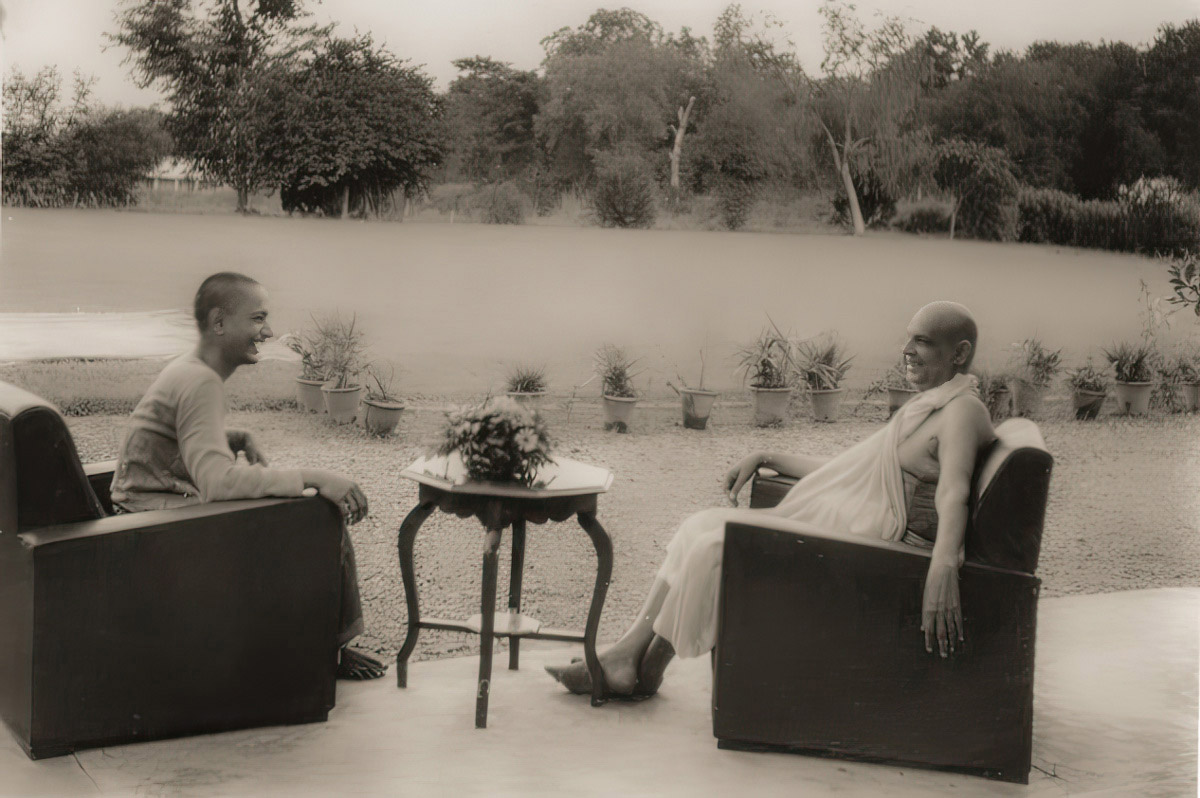
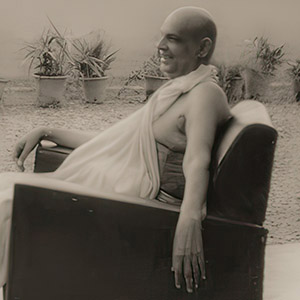 See full screen image
Formal settings could not constrain their mirth. Here Swami Sivananda and Swami Venkatesananda pose in a more formal setting, but once again laughter “spoiled the photo!”
-
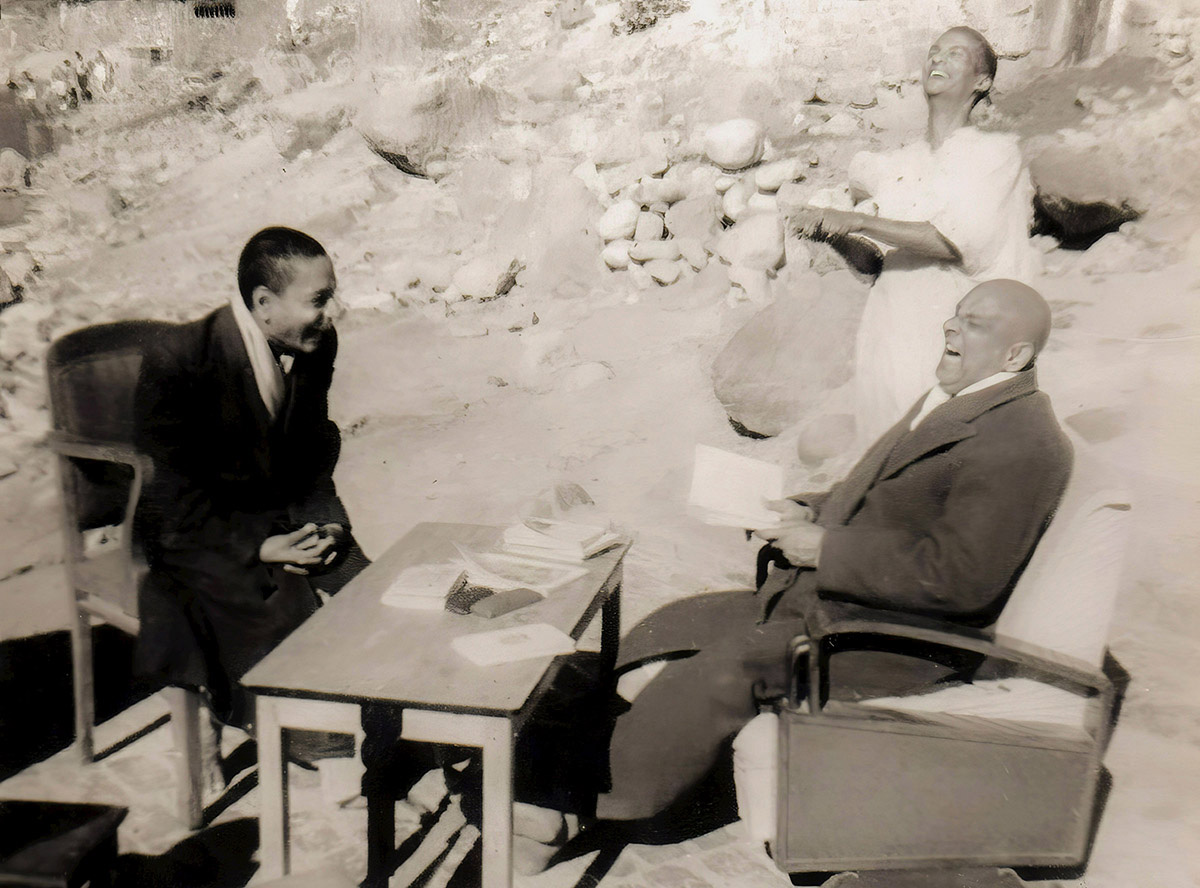
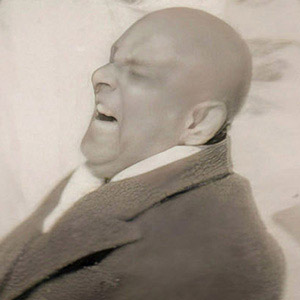 See full screen image
Sometimes Swami Sivananda challenged Swami Venkatesananda to a laughing contest. From the photos, it seemed to always end in a draw! Their laughter was contagious, as shown here.
-
 See full screen image
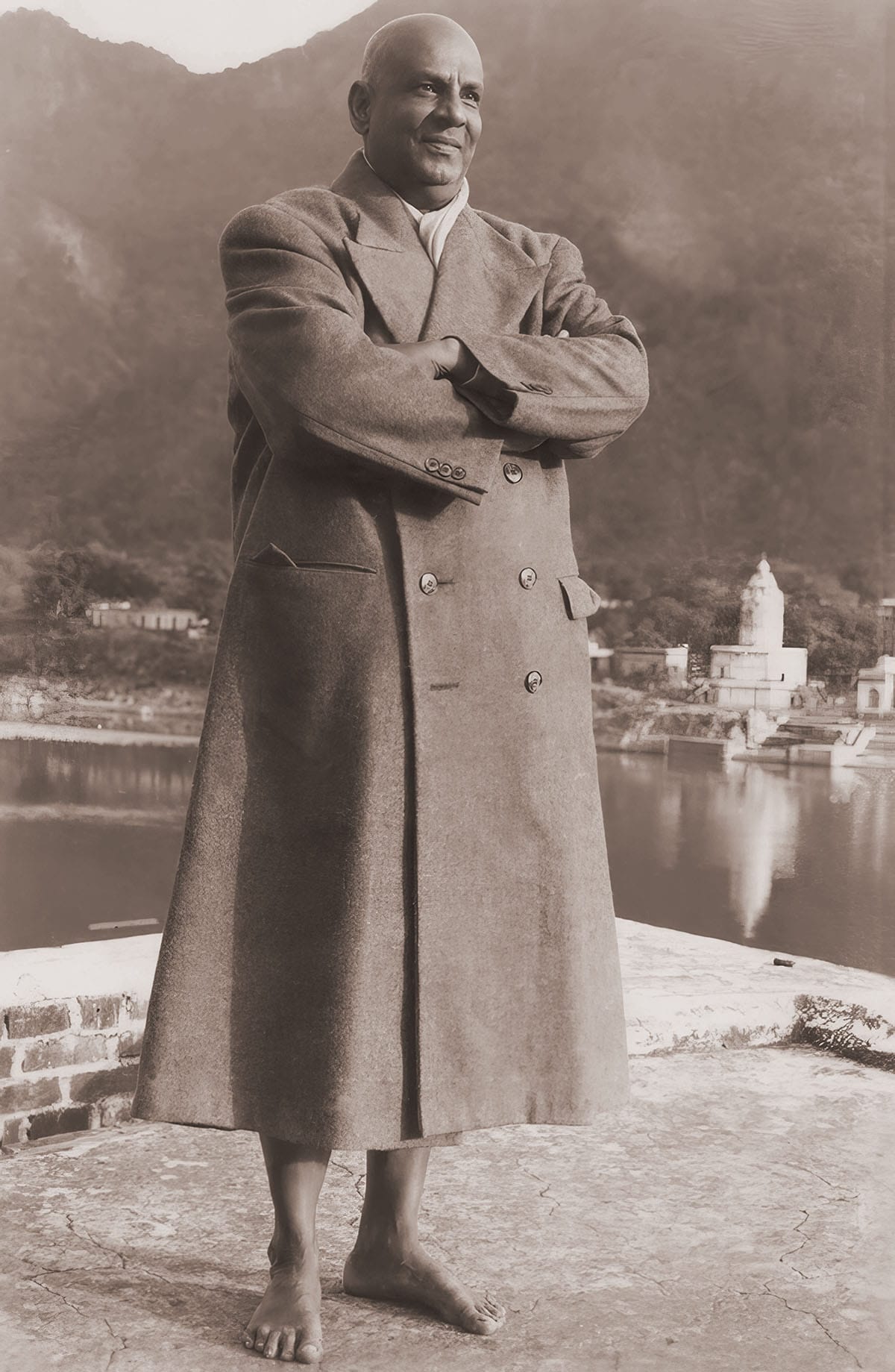
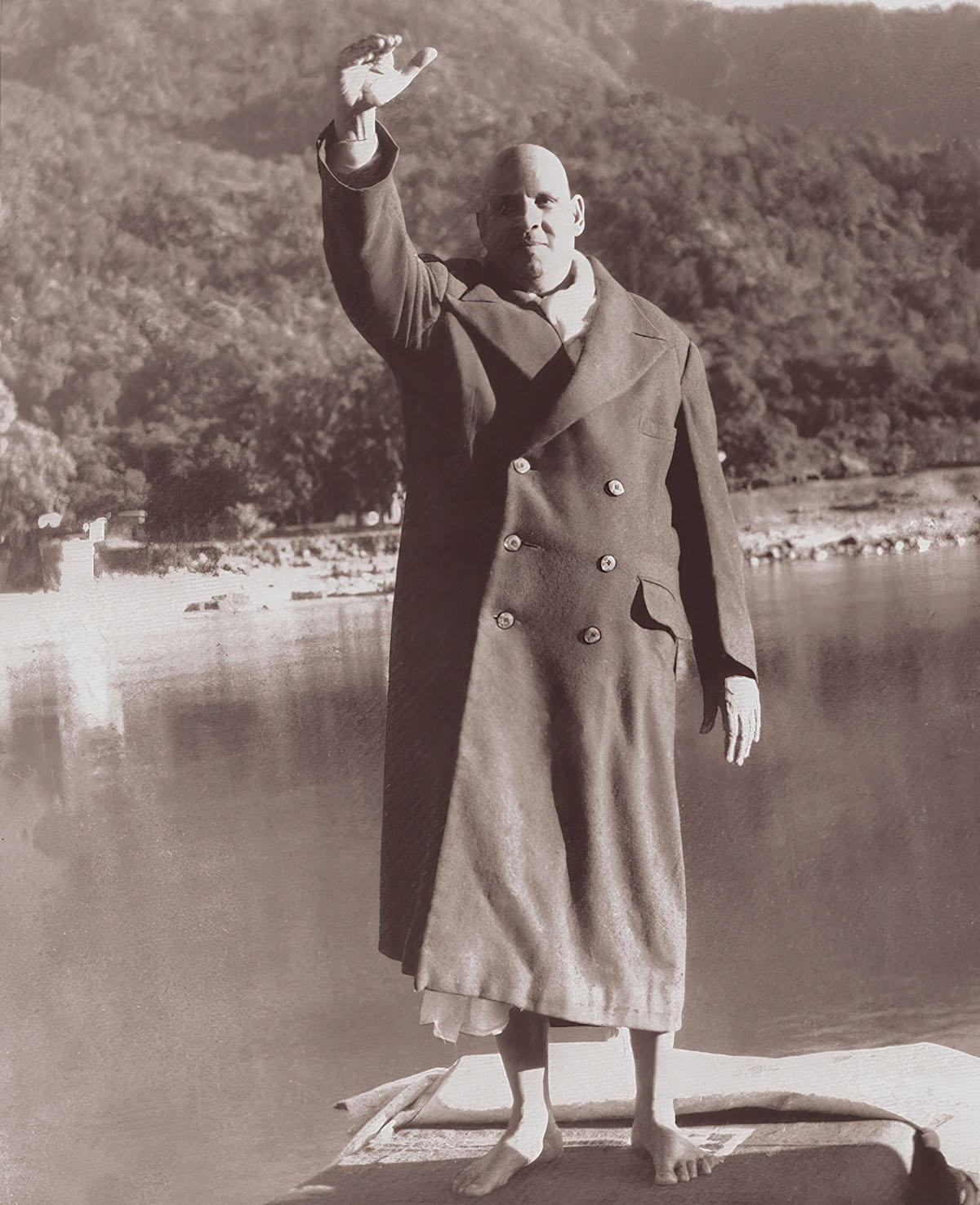
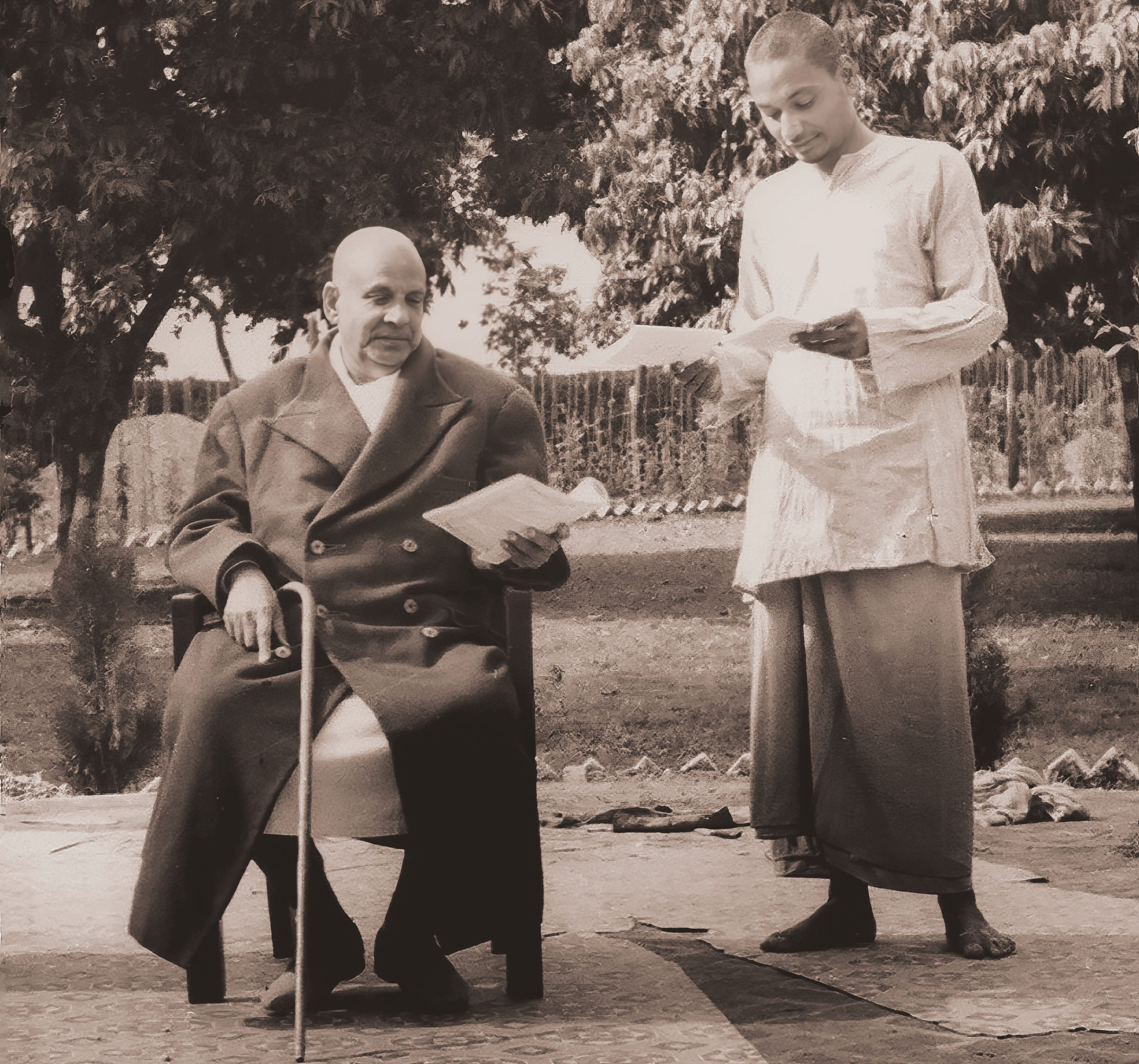
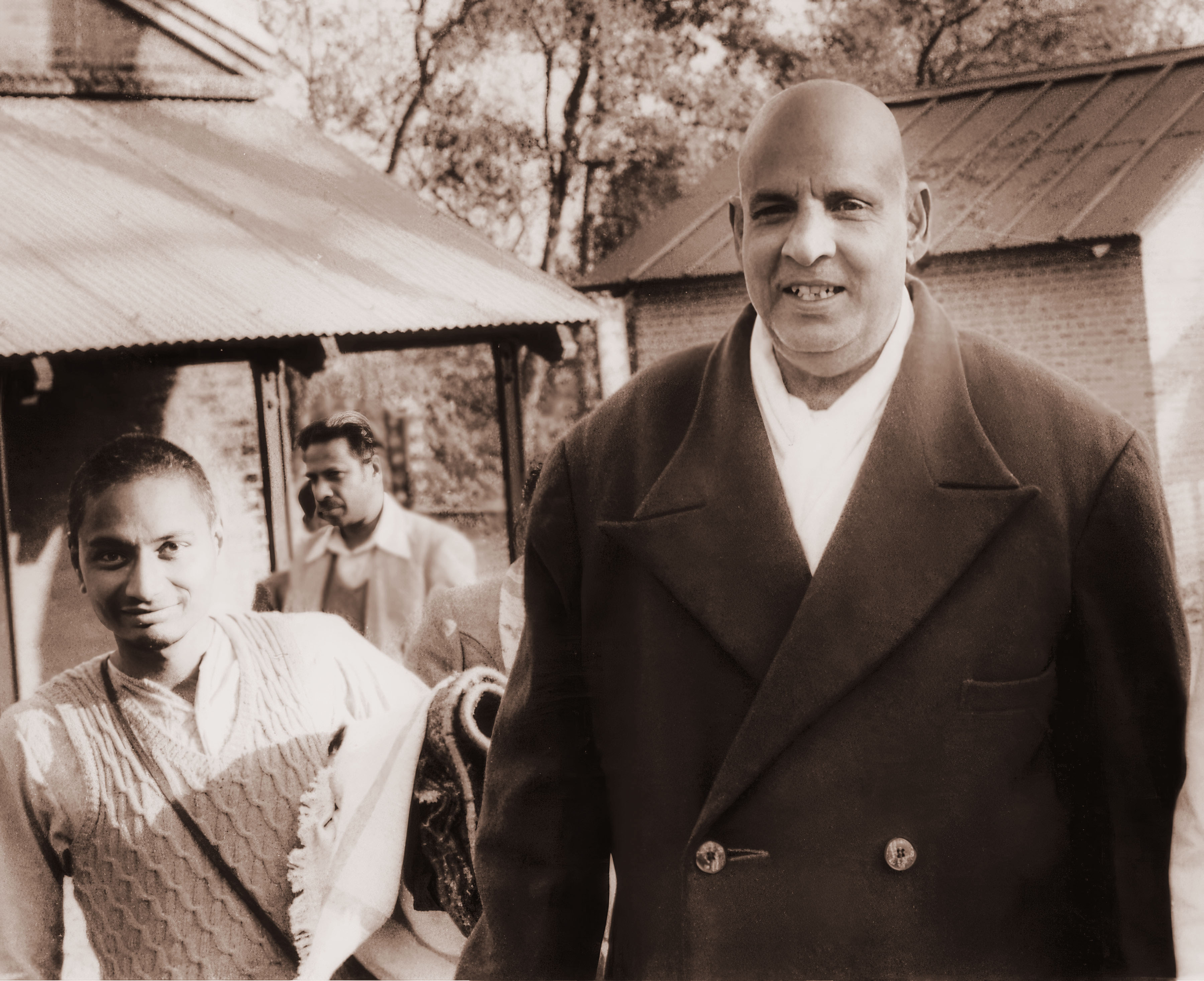
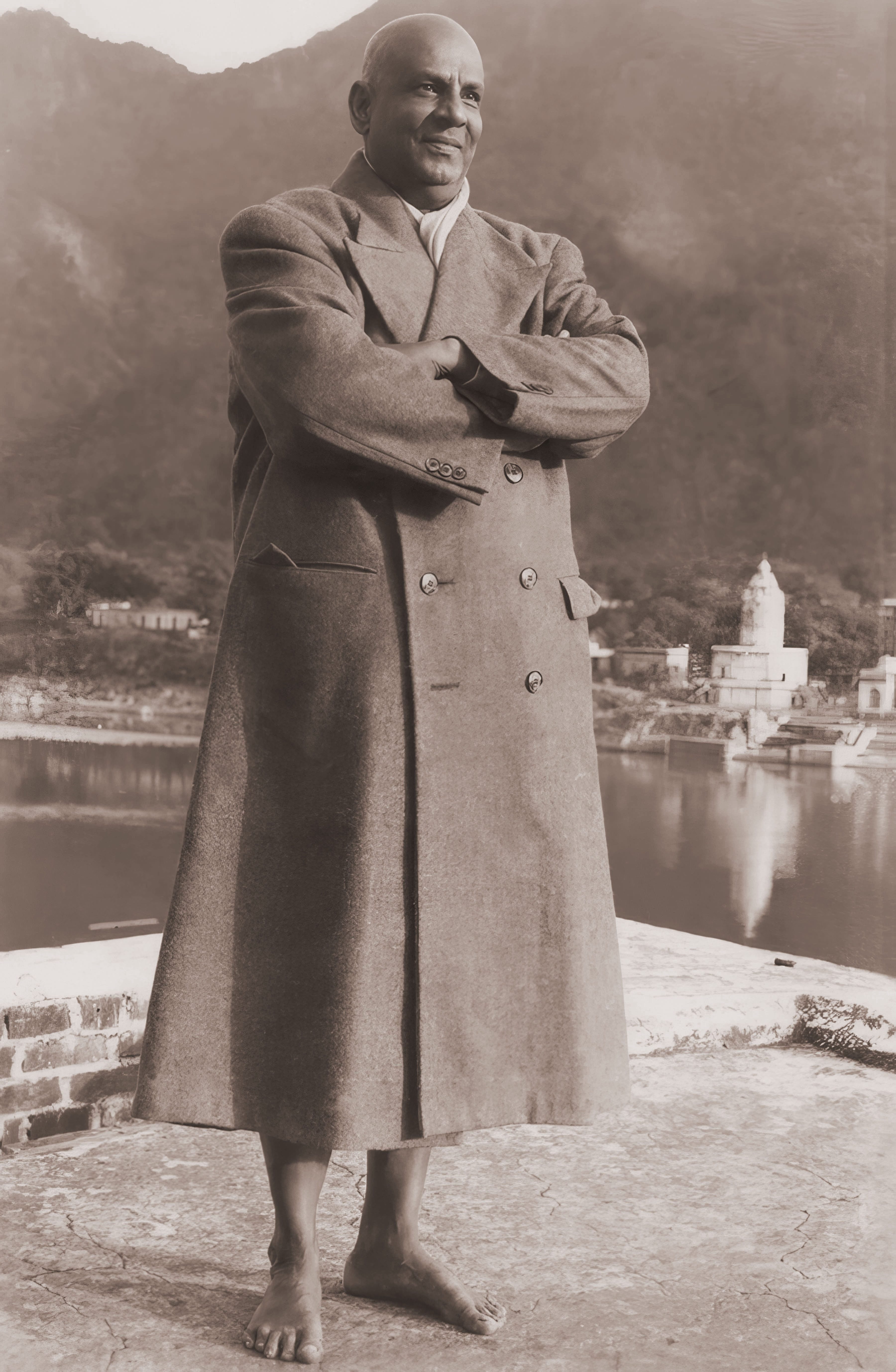
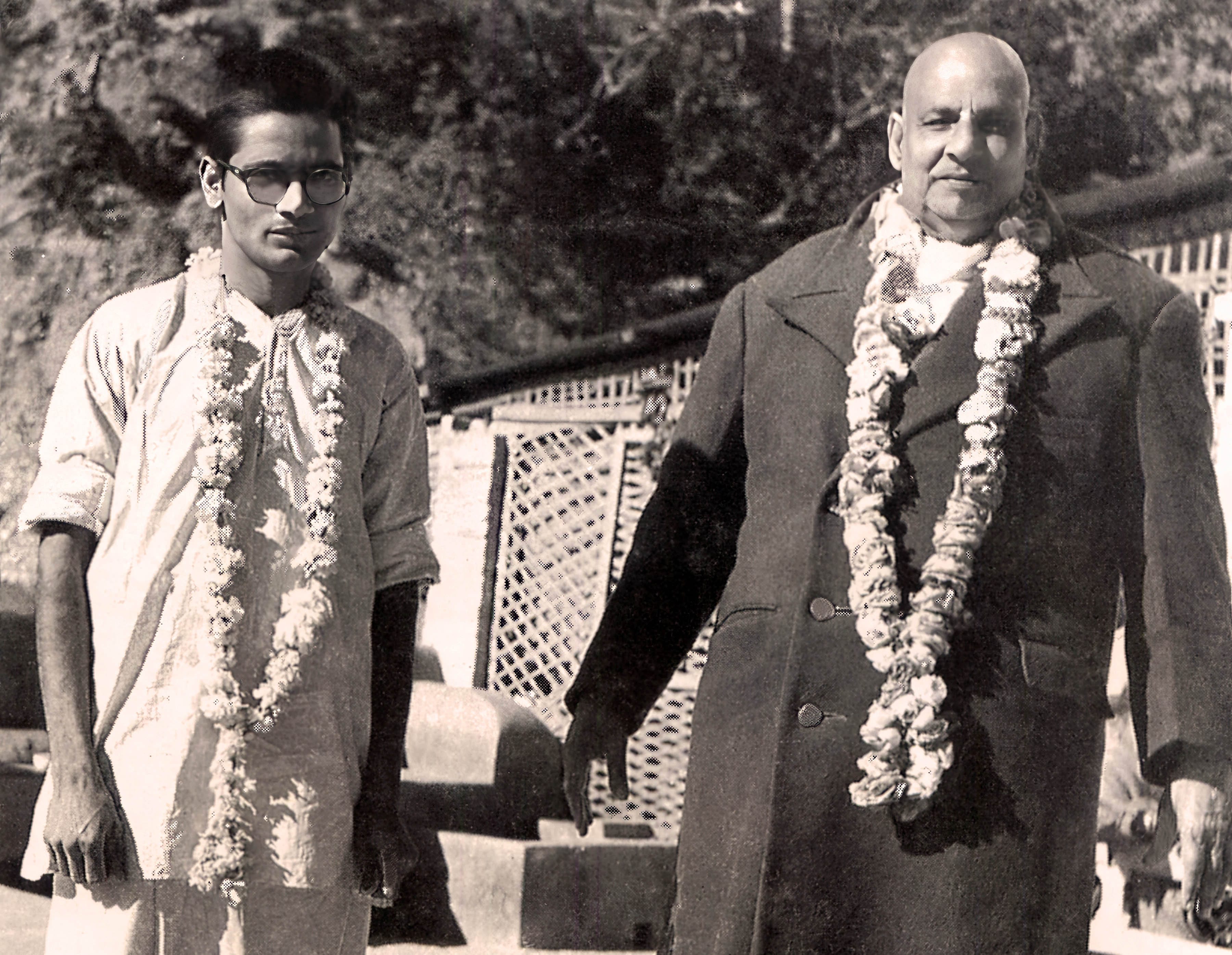
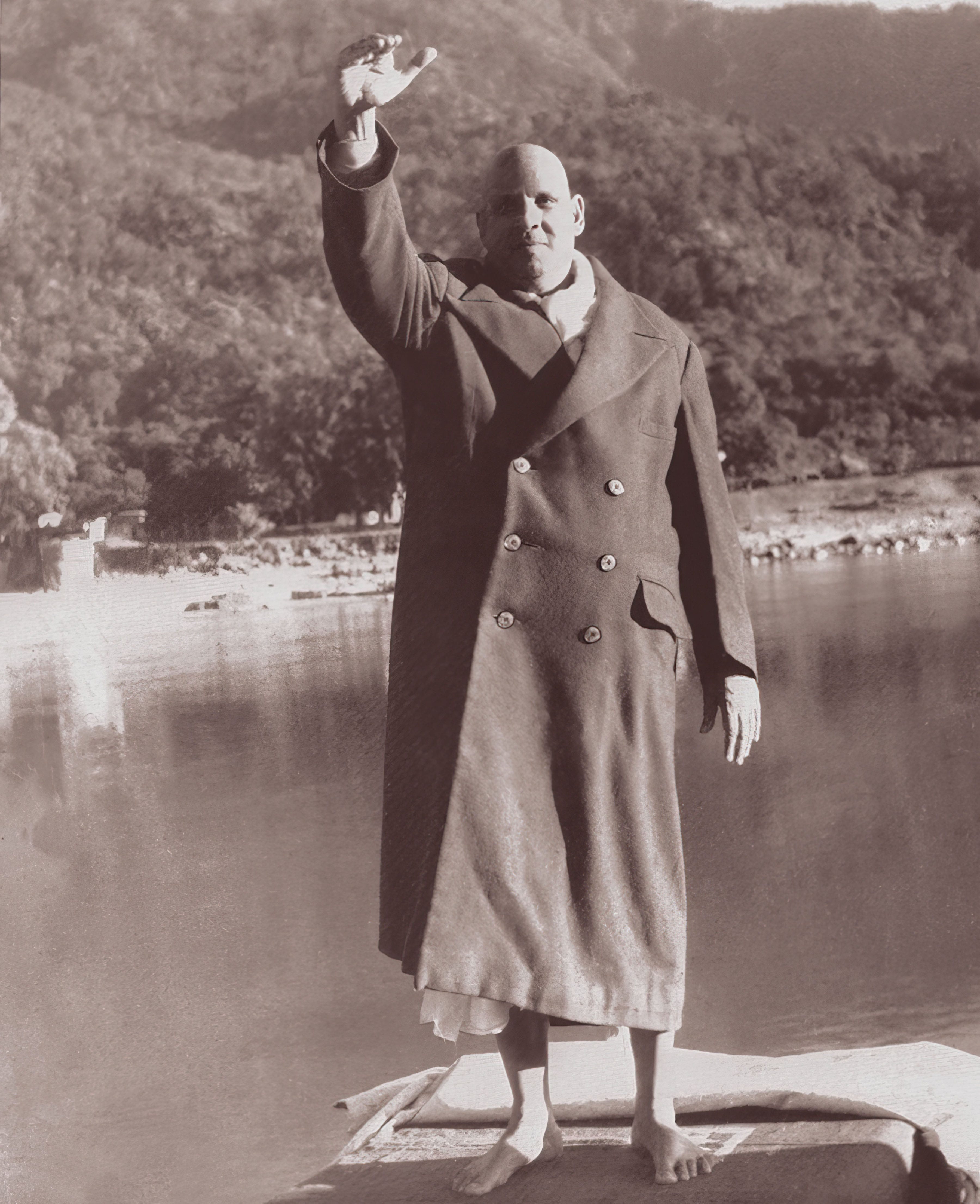
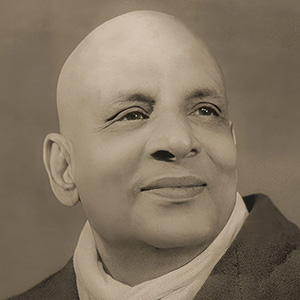
Swami Sivananda pictured in his signature winter overcoat
Swami Sivananda was a practical Yogi who valued logic over arbitrary tradition. Though it was customary for Yogis to wear shawls rather than overcoats, the freezing winds that swept down the Ganges Valley made shawls quite impractical, swiftly parting shawl from wearer! Thus, even in the face of criticism, Swami Sivananda gladly donned the heavy overcoat given to him by a devotee. After all, wasn’t an overcoat simply a shawl tailored to withstand the harsh winds of winter?
-
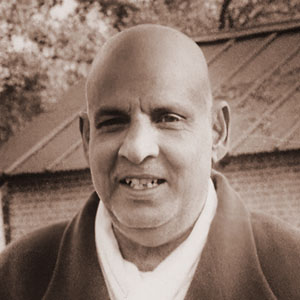 See full screen image
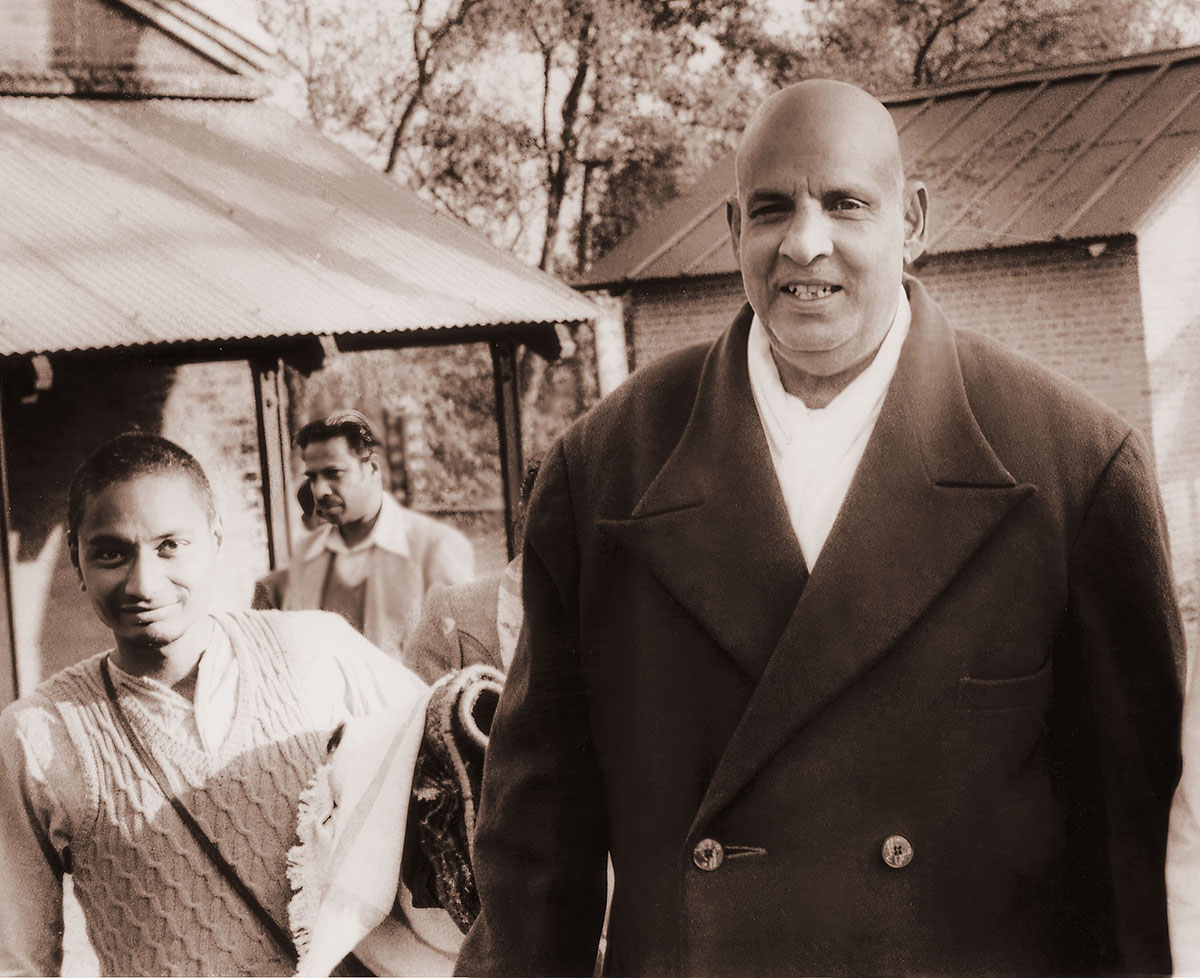
The first thing people noticed about Swami Sivananda was his extraordinary spiritual presence. The second thing was his height! At about six feet tall, he towered over others. Here his signature overcoat only adds to his compelling presence. Swami Venkatesananda, pictured at his side, never forgot his Master’s overcoat and years later when facing harsh winters while traveling in the West, he chose a similar coat, though chosen from the racks of a used clothing store.
-
 See full screen image
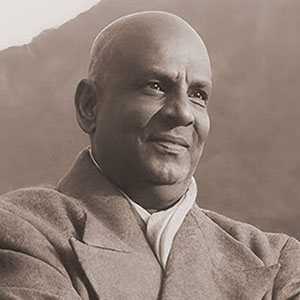
Swami Sivananda silhouetted against the Himalayan foothills
The image of Swami Sivananda silhouetted against the Himalayas and the Ganges, mirroring the strength of granite and the serenity of the majestic river, is both hauntingly beautiful and symbolic: neither Swami Sivananda nor the Himalayan grandeur can be fully captured in words or contained in the mind.
-
 See full screen image
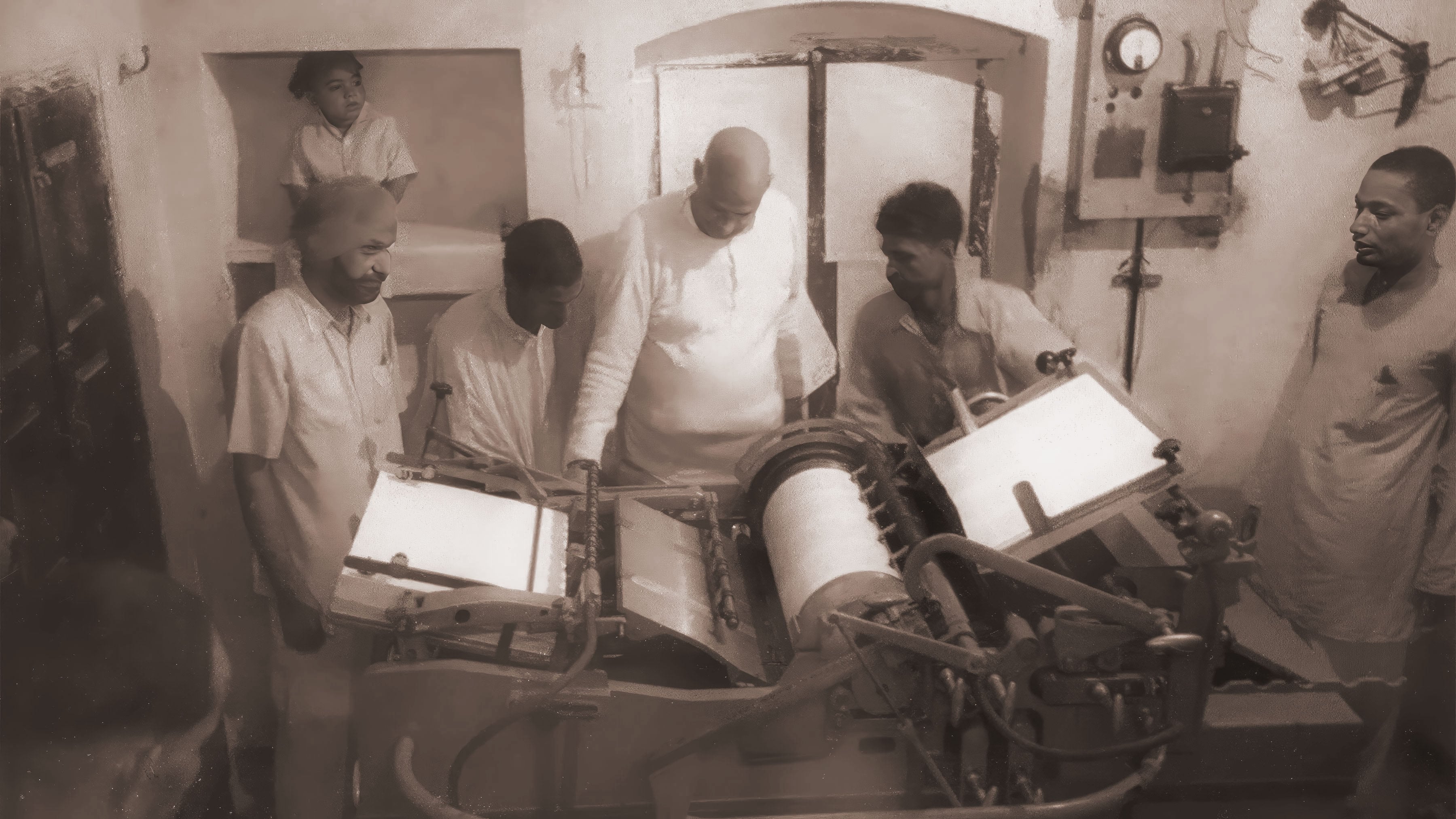
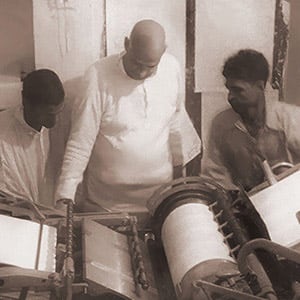
Inauguration of the Ashram Press
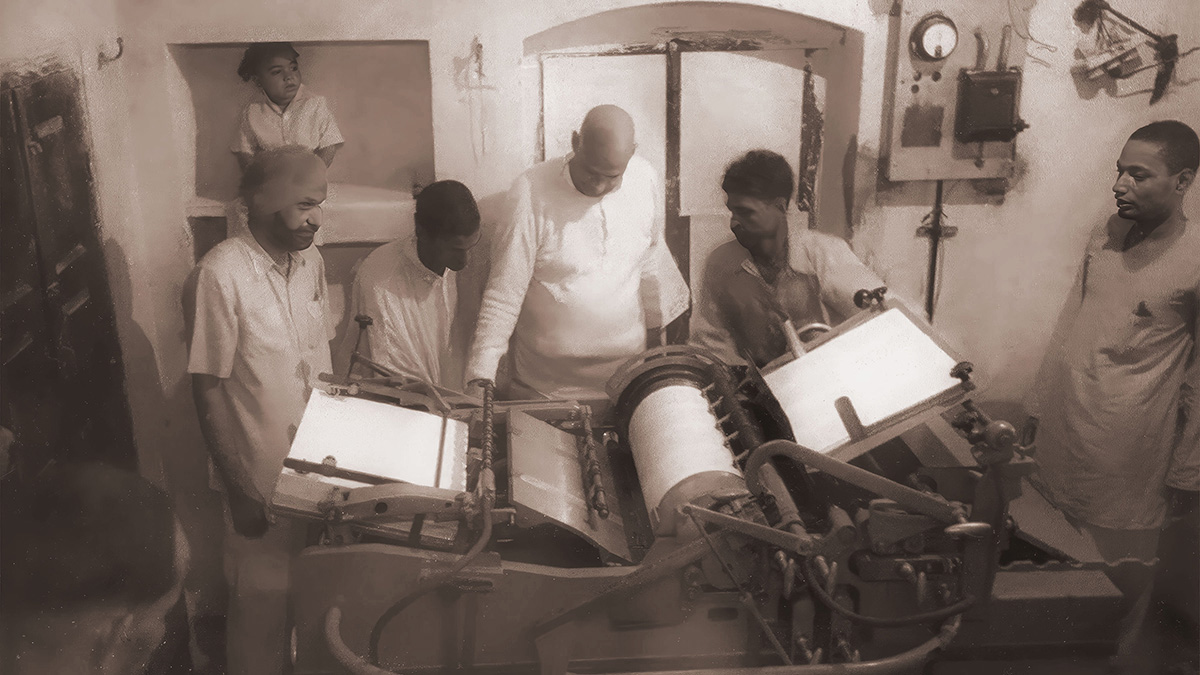
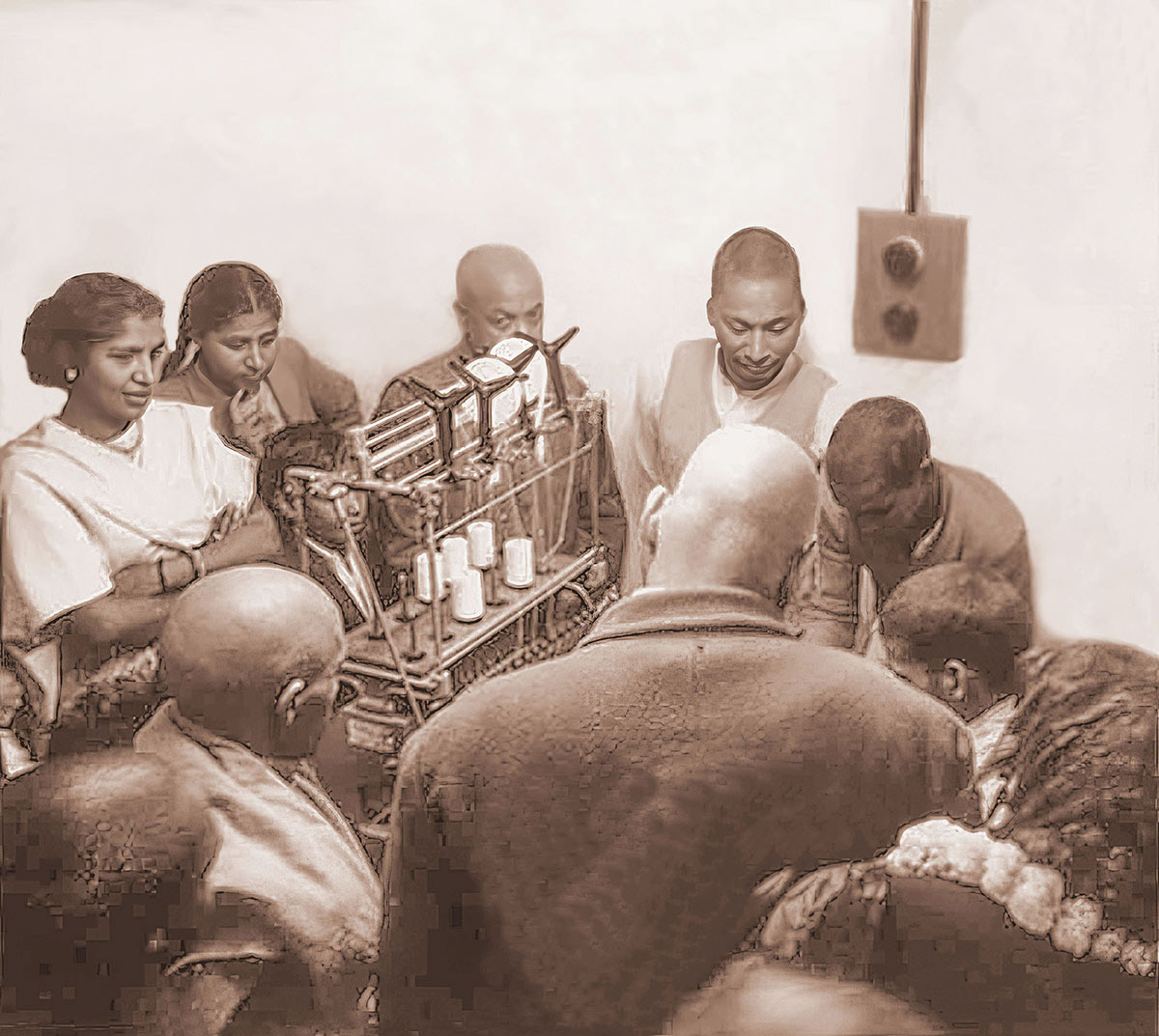
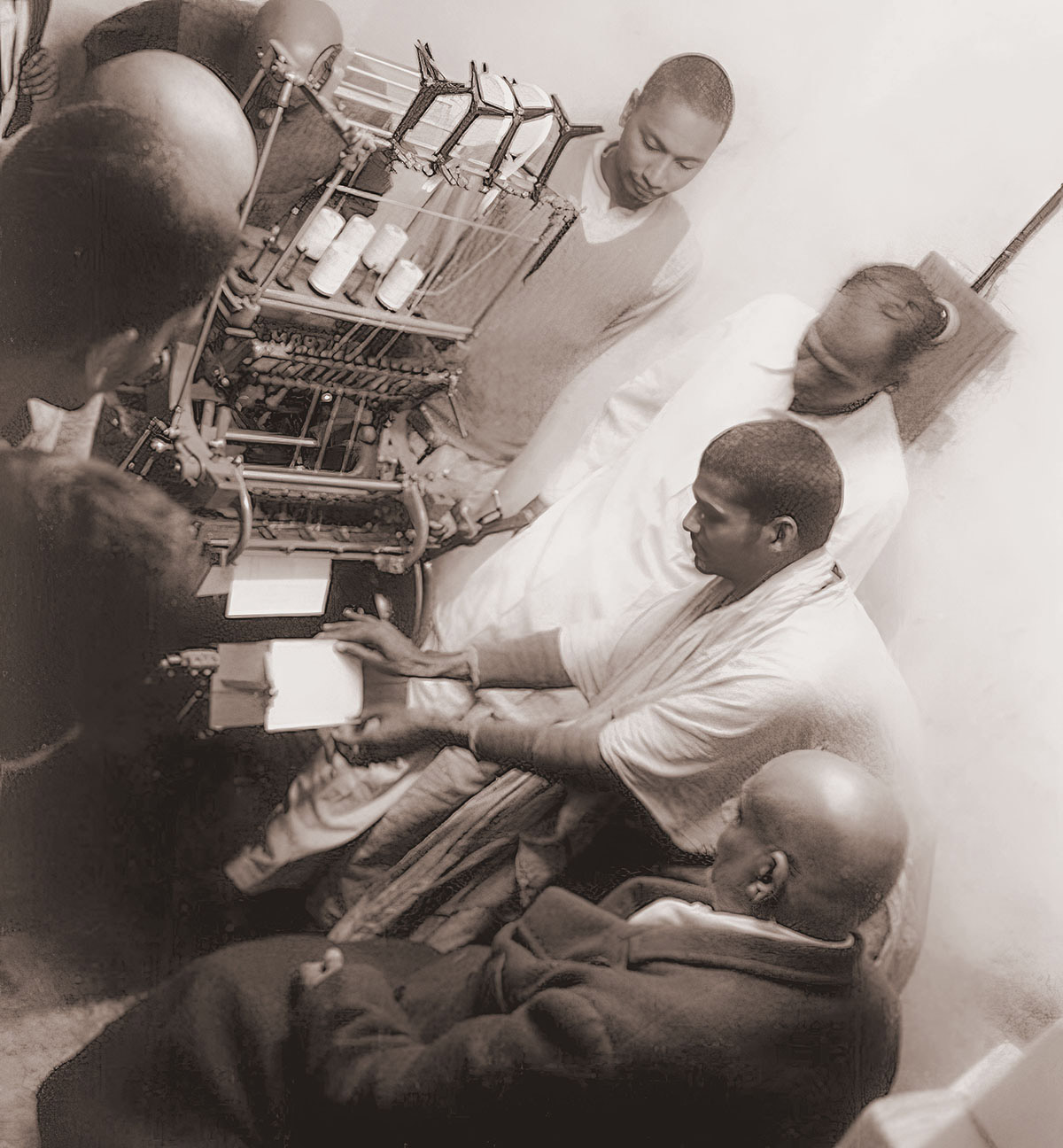
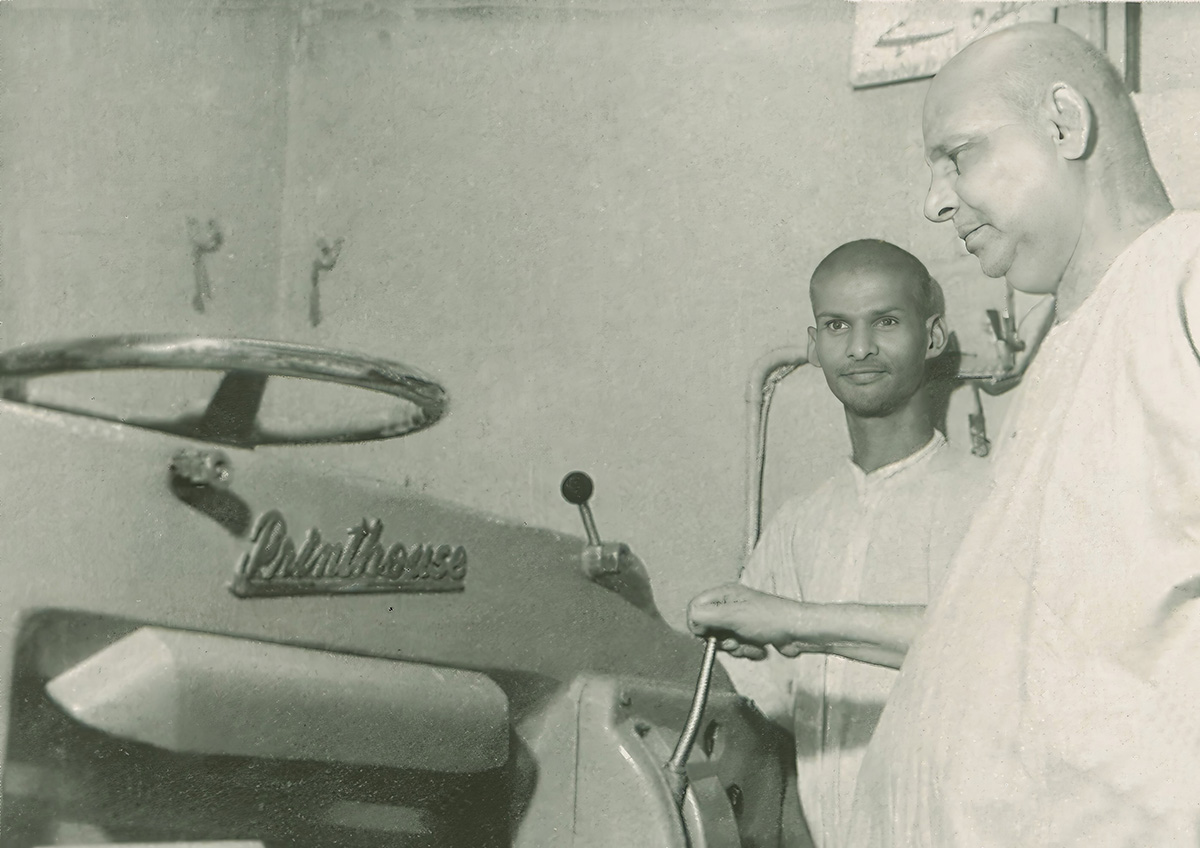
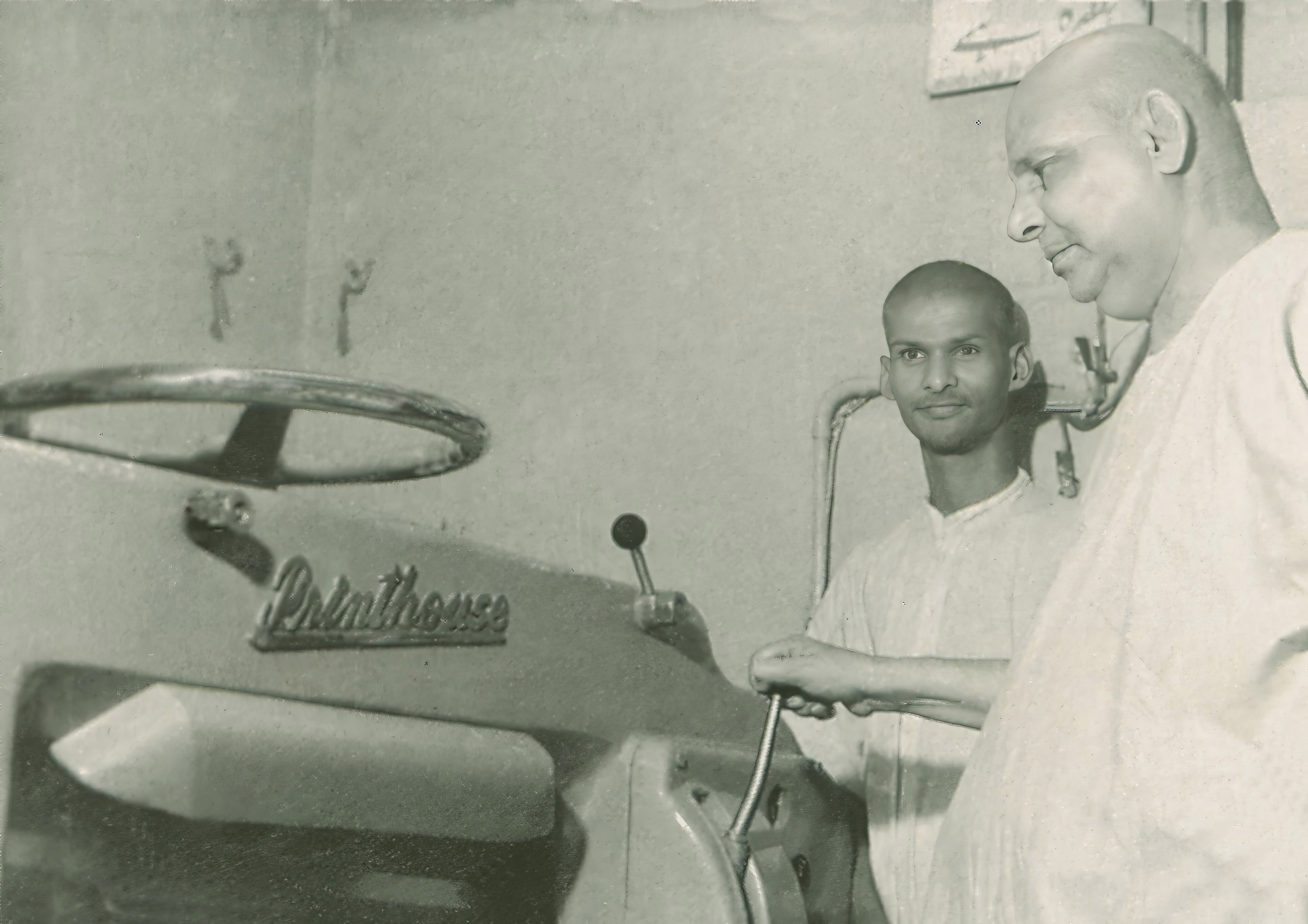
As Swami Sivananda’s global mission grew, the printed word became an essential means for spreading the message of Divine Life. Swami Sivananda’s early pamphlets and books had been printed at commercial presses, but this all changed in 1956 when Swami Sahajananda of South Africa personally sponsored the purchase of a Mercedes automatic printing machine, forming the basis of a new press, right in the Ashram, revolutionizing Swamiji’s ability to spread the teachings of Yoga to the world. It was the dawn on a new era in his mission.
Here Swami Sivananda examines the new machine, with Swami Venkatesananda at the far right.
-
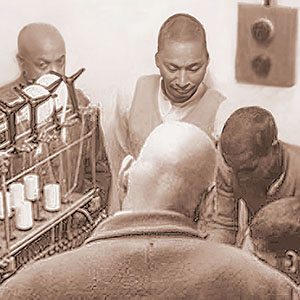 See full screen image
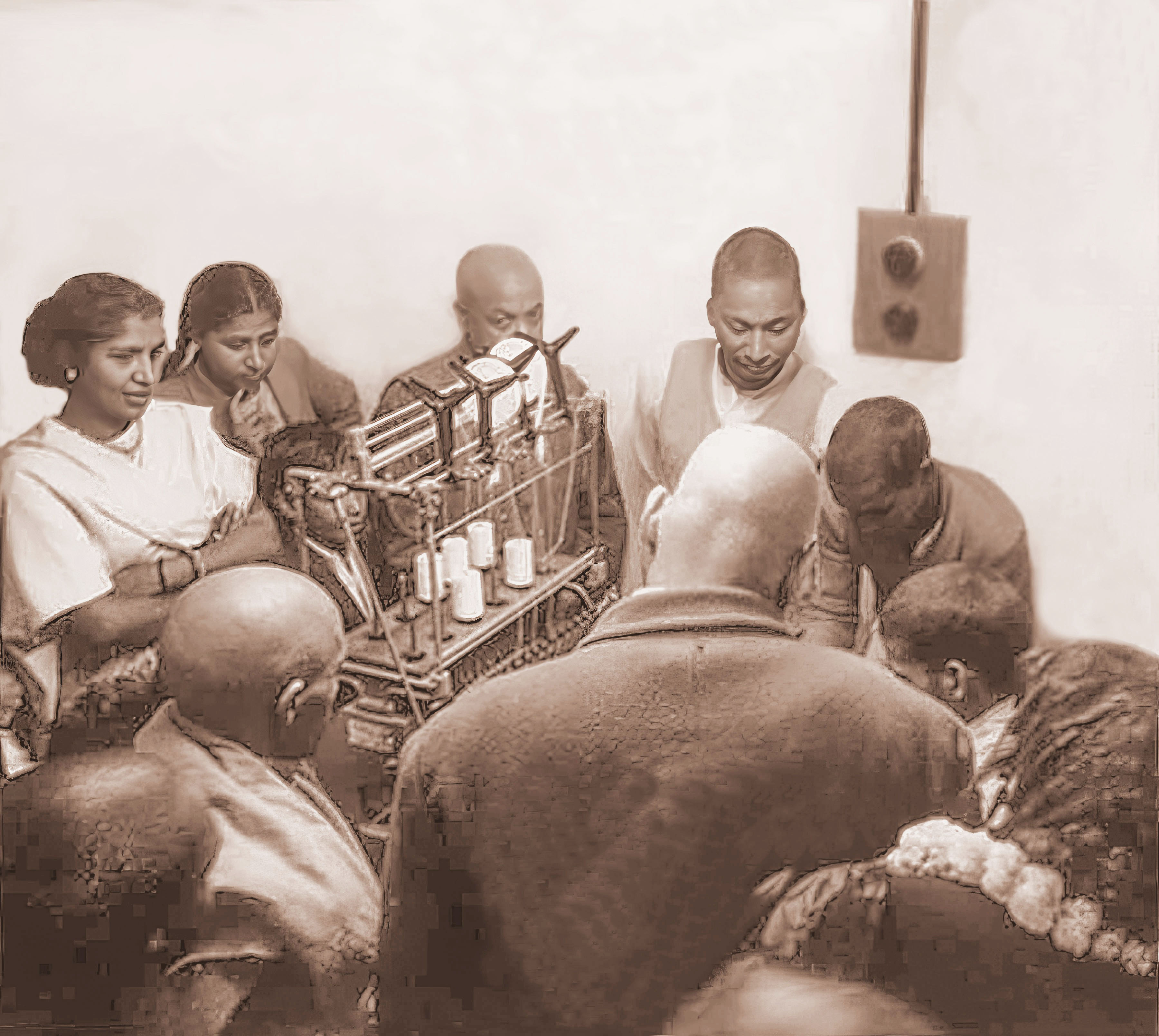
Press Binding Operation
Once Swami Sivananda’s books were printed, next they needed to be bound. Here Swami Sivananda peers intently at the new binding machine, with Swami Venkatesananda opposite him, looking on.
-
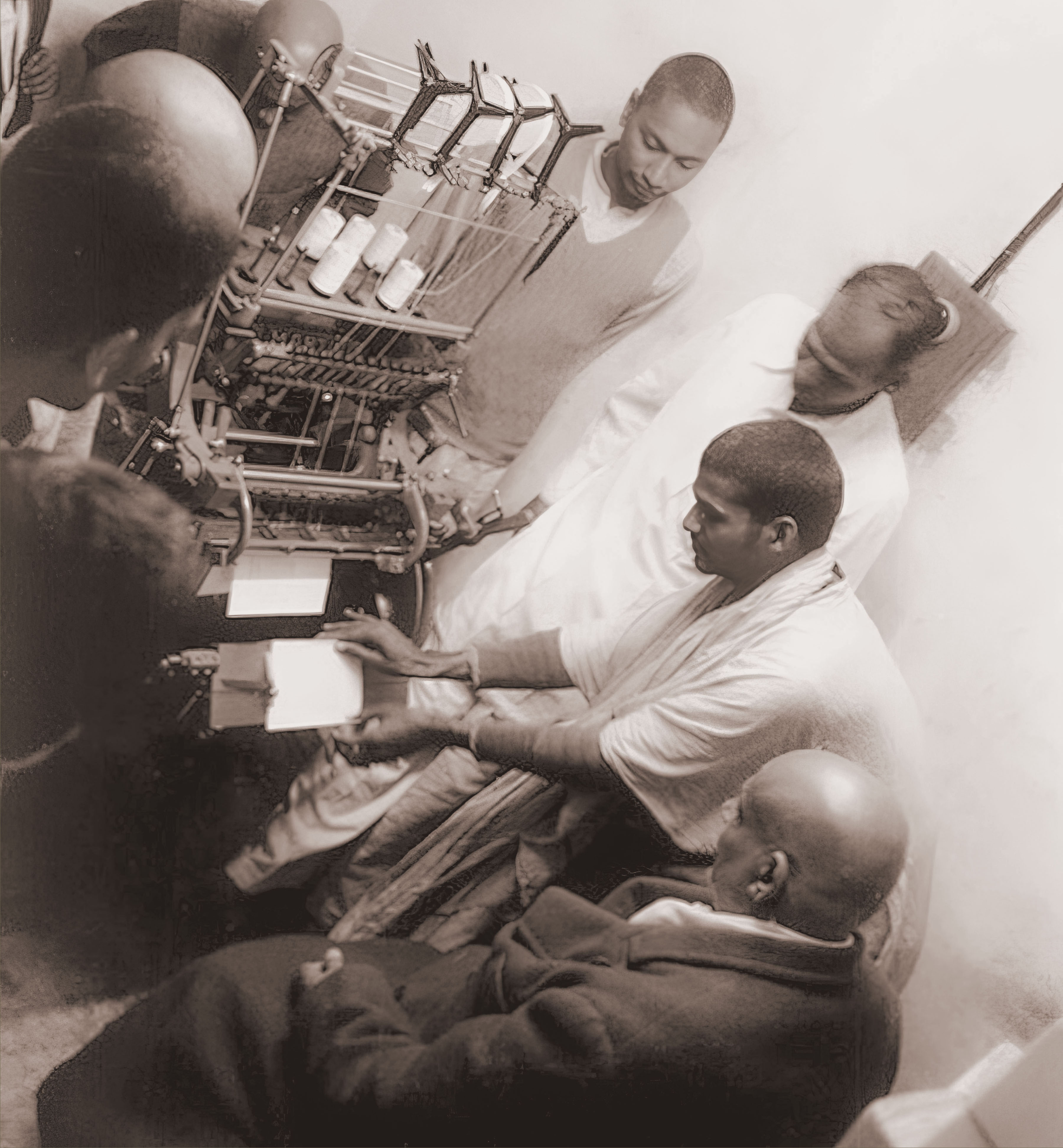
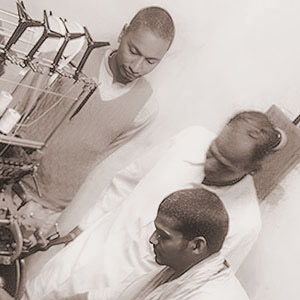 See full screen image
Press Binding Operation, a closer look
Swami Sivananda observes the book binding process step by step.
-
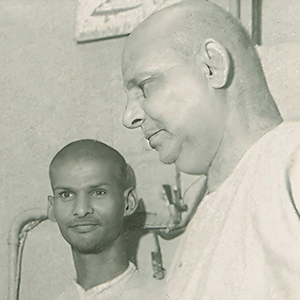 See full screen image
NOTE: THIS PAGE NEEDS TO BE MOVED BEFORE THE TWO PHOTOS ON BINDING, AS GUILLOTINING COMES FIRST
Swami Dayananda, head of Ashram Press operations, demonstrates the guillotine machine for Swami Sivananda, as it cuts the printed sheets to page-size before binding them into individual books.
-
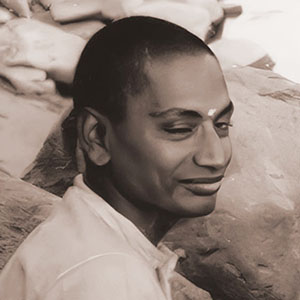 See full screen image
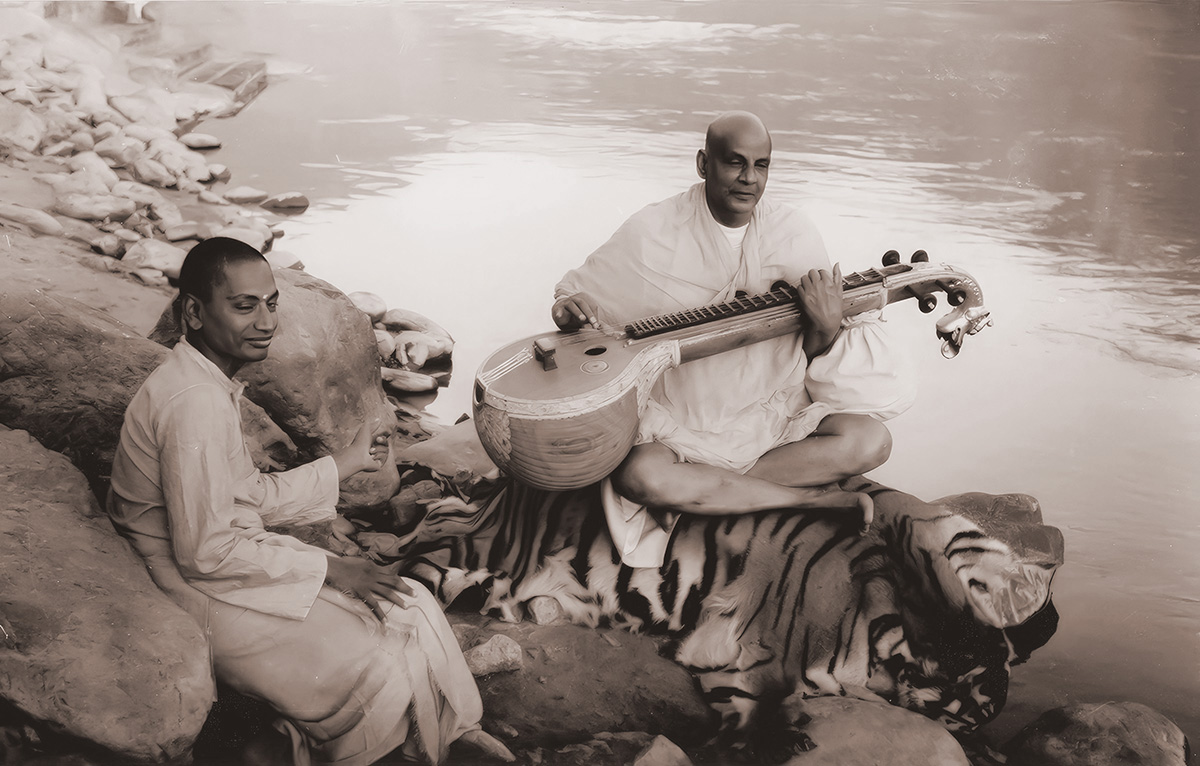
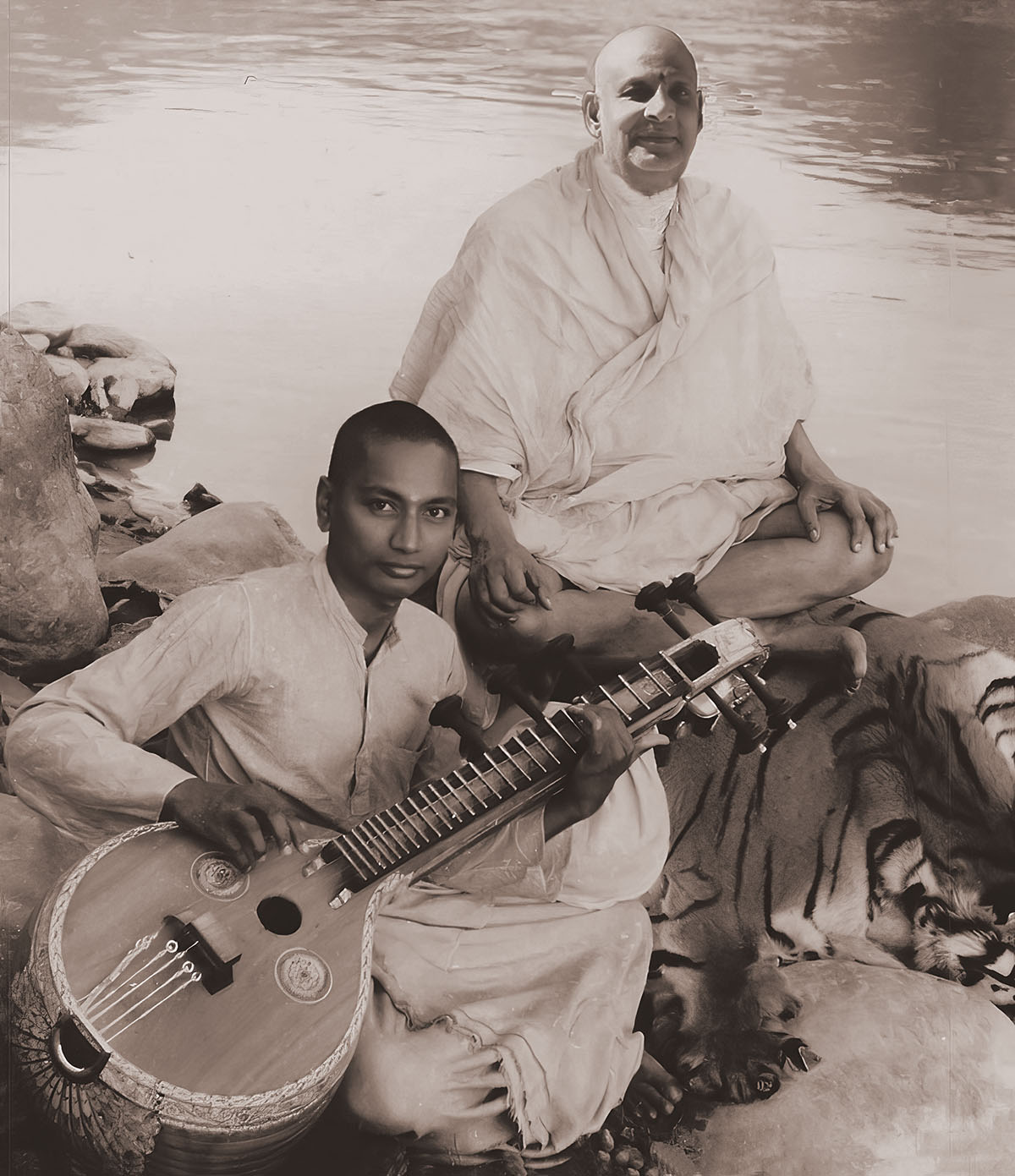
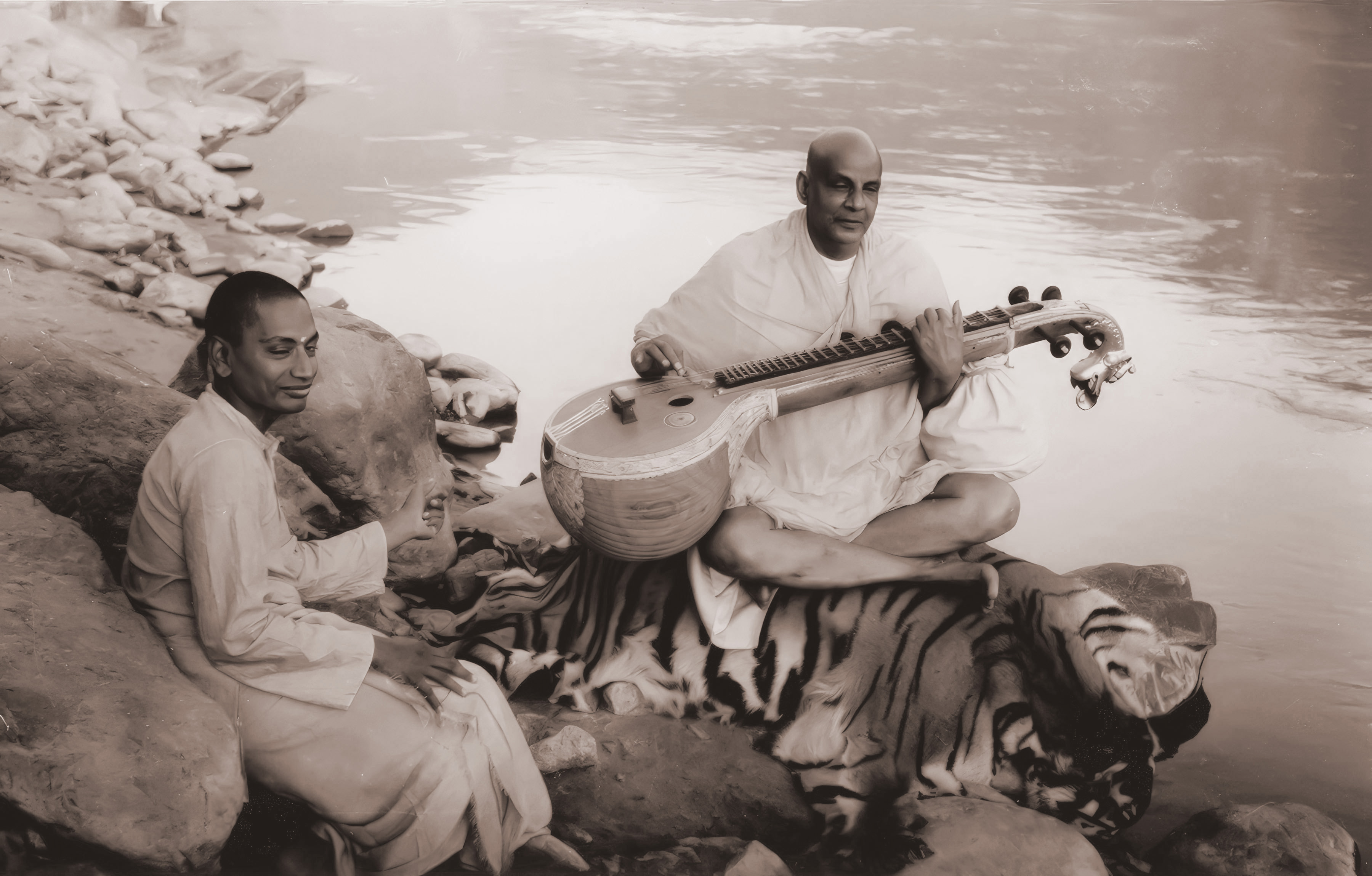
An idyllic scene: Swami Sivananda playing the veena on the bank of the Ganges with Swami Venkatesananda sitting in silent reverie.
-
 See full screen image
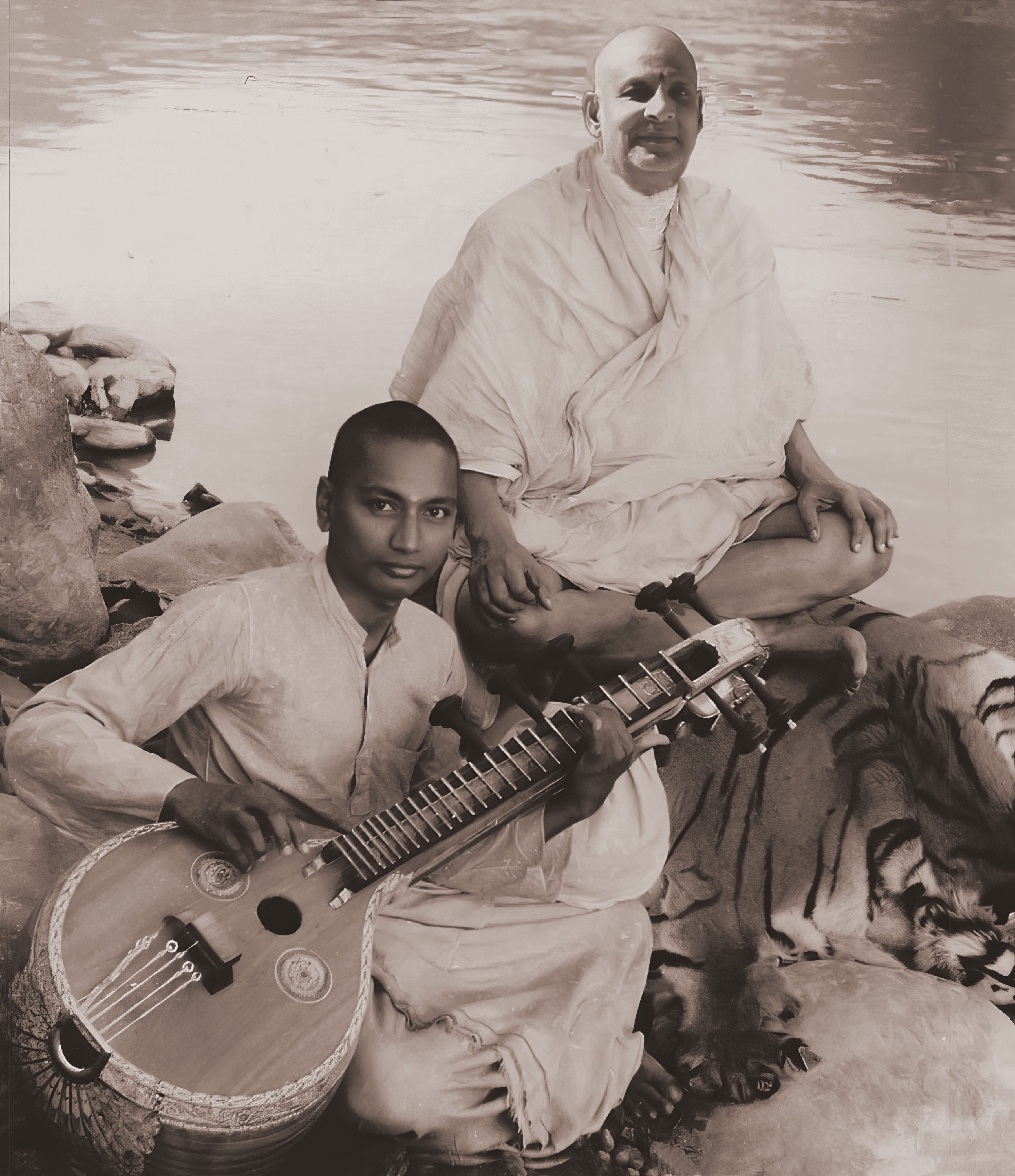
Reversing roles, Swami Venkatesananda plays the veena for his Master, Swami Sivananda.
-
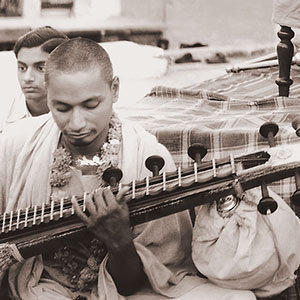 See full screen image
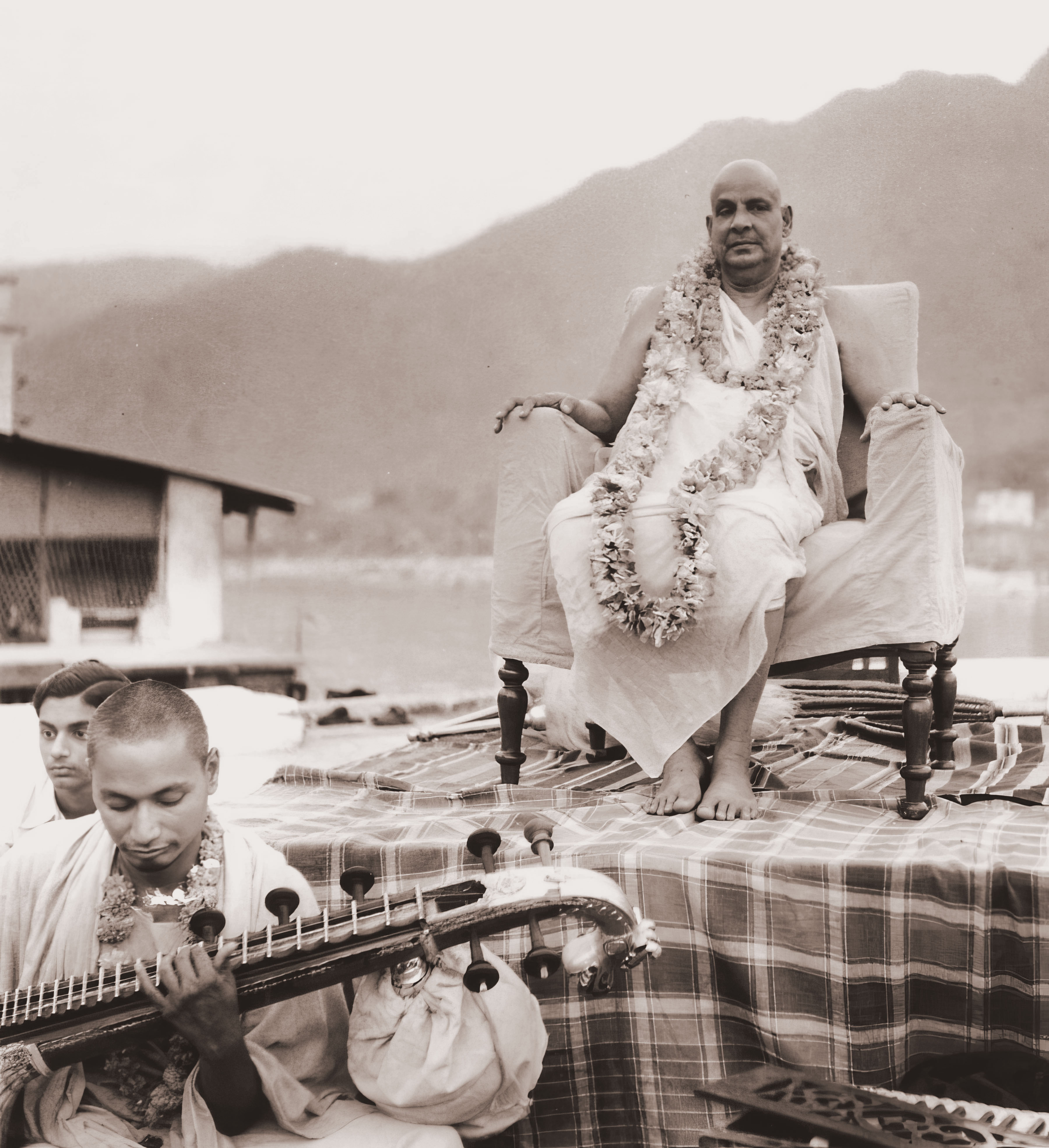
Satsangs in the early days of Sivananda Ashram did not include musical instruments, though in later years that changed, and many famous musicians graced the ashram. Here Swami Venkatesananda plays the veena for his Master.
Music was woven into the fabric of life in Swami Sivananda’s early life in South India: “Music is the medium for expressing emotion. Music kindles love and infuses hope. It has countless voices and instruments. Music is in the hearts of all men and women.”—Swami Sivananda
-
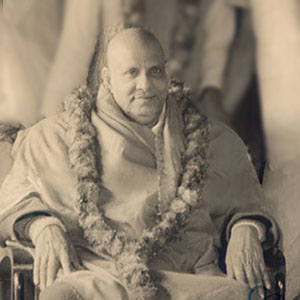 See full screen image
The opportunity to offer Pada Puja to Swami Sivananda was a once-in-a-lifetime privilege for devotees who visited the Ashram. Though many Revered Saints prohibited anyone from touching their feet, Swami Sivananda’s huge heart could not refuse devotees their cherished desire: he knew that the grace they received did not come from him but from the Divine itself and that he was but the conduit.
Here a small group of visitors are joined with (from the right) Swami Chidananda, Swami Venkatesananda and Swami Madhavananda, standing behind Swami Sivananda.
-
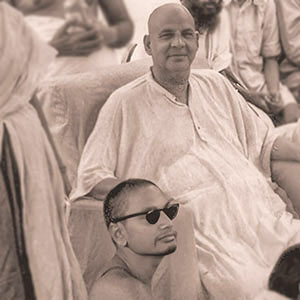 See full screen image
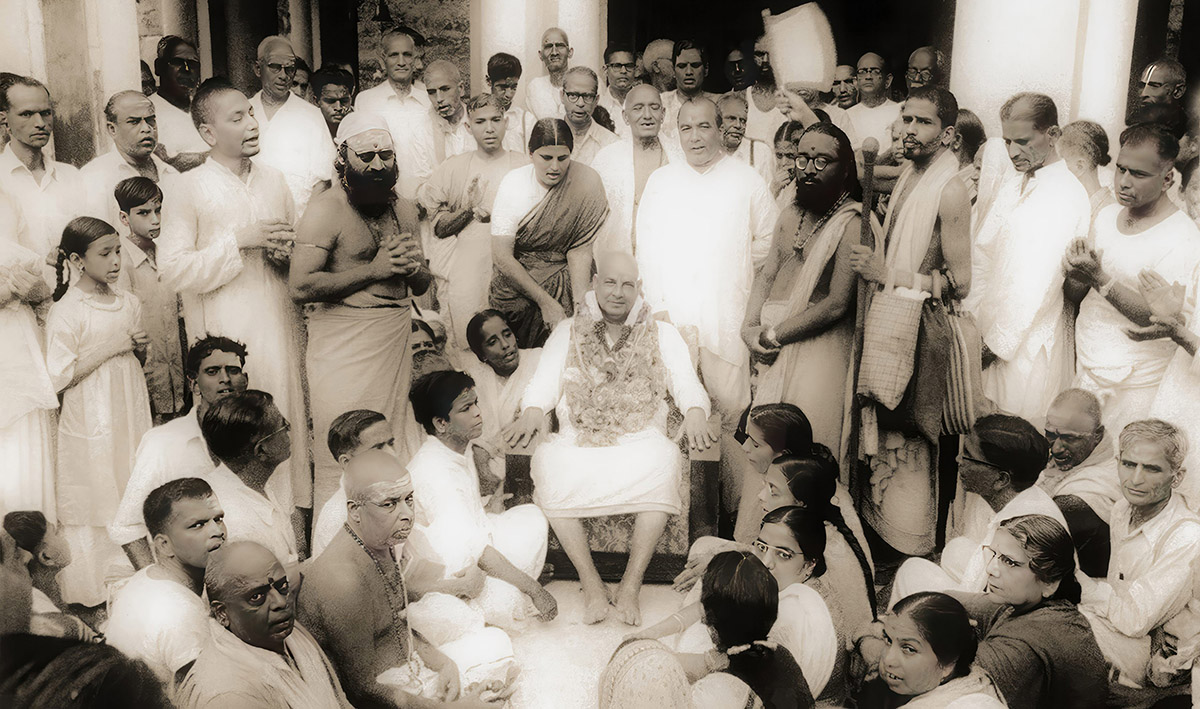
Each year Swami Sivananda’s birthday, September 8, marked a festive season in the Ashram. Swami Sivananda, ever detached personally, capitalized on the devotees’ fervent desire to celebrate his birthday in Rishikesh and organized the events to promote Sadhana: Japa, Kirtan, Satsang, Meditation. Devotees came from India and abroad for Darshan and left uplifted through deepened spiritual disciplines and experiences.
Not many photos of these celebrations have survived the more than 60 years since his Mahasamadhi, but a few were carefully preserved. Here we see Swami Sivananda amidst the festivities, with Swami Venkatesananda (in sunglasses) to his right and his personal attendant, Swami Satchidananda looking on from his left.
-
 See full screen image
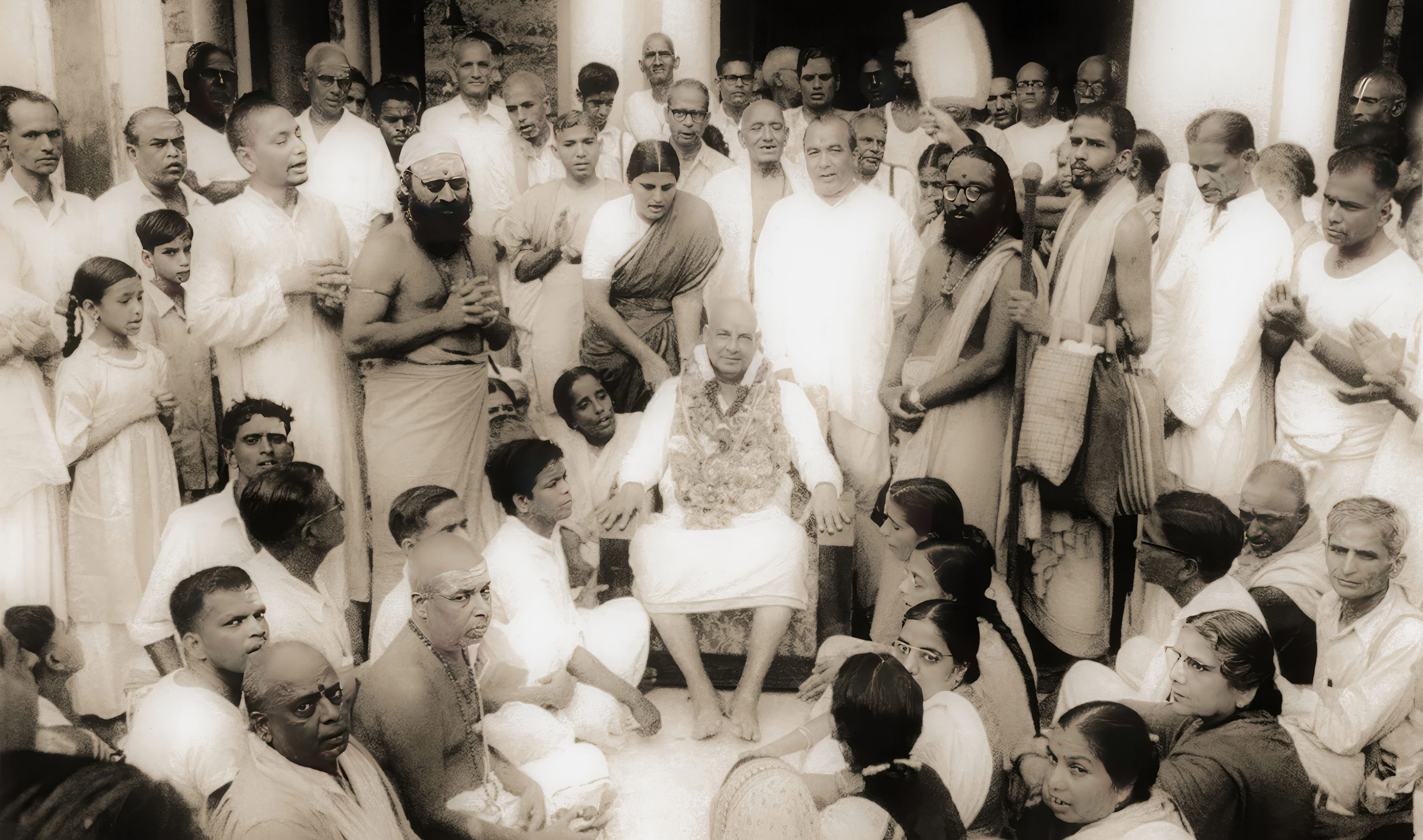
Another precious birthday photo
Looking closely, you can see that the devotees are chanting, honoring both the Lord and their Master, Swami Sivananda. Swami Venkatesananda is seen standing in the upper left of the photo, Swami Satchidananda (his personal attendant) is standing in the upper right (holding bags), and Swami Hridayananda is sitting at Swami Sivananda’s right.
-
 See full screen image
The opportunity of offer Pada Puja to Swami Sivananda was the most cherished privilege for devotees who made the pilgrimage to Sivananda Ashram. Here a group of visitors has just completed the puja and are blessed with a beneficent smile from Swami Sivananda. Swami Venkatesananda is usually pictured in such photos as he was the officiant. Here he is seen at the top left with his arm around Swami Madhavananda.
-
 See full screen image
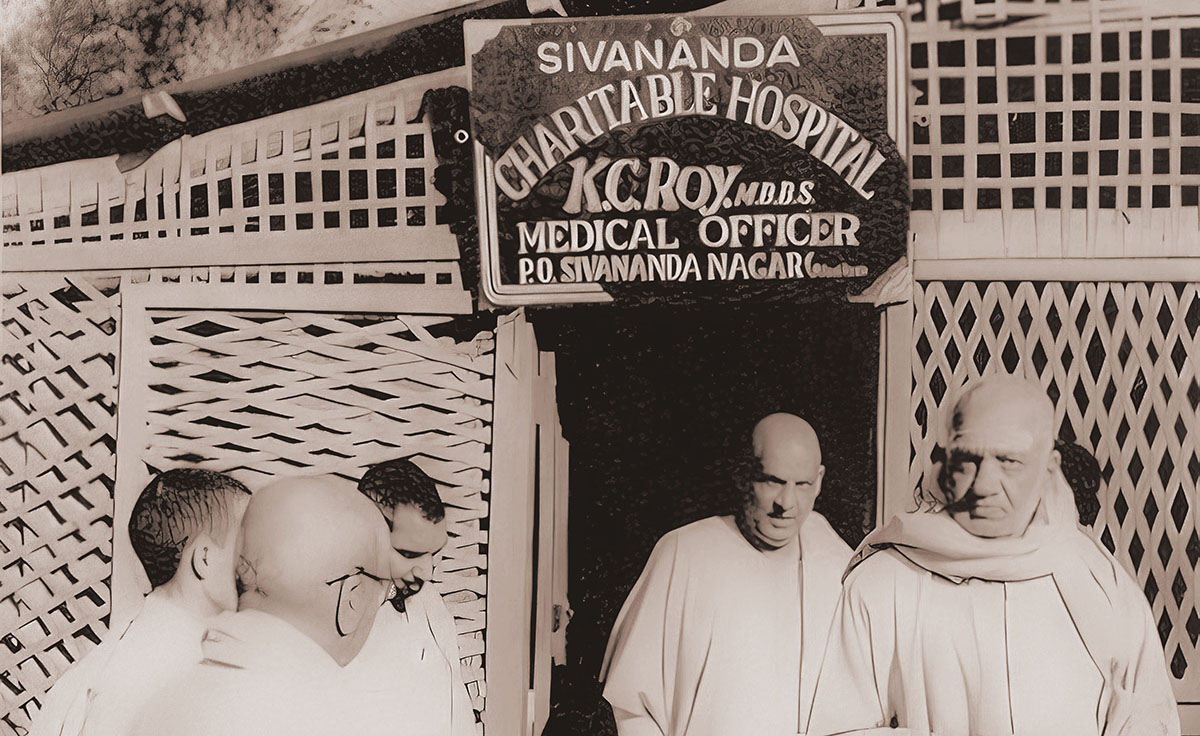
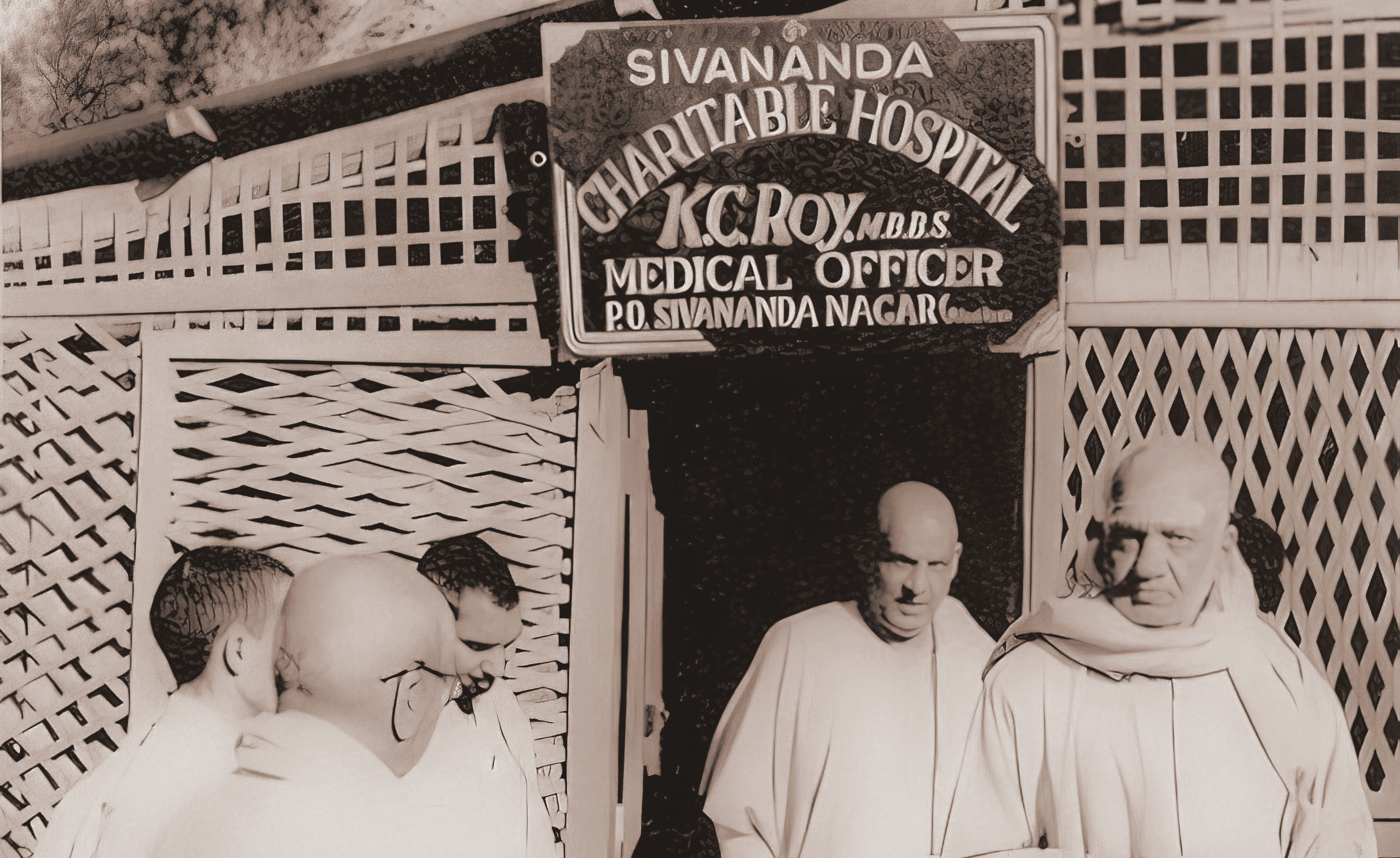
Swami Sivananda escorts H.H. Swami Tapovan of Gangotri on a tour of the Ashram. Here they visit the Sivananda Charitable Hospital. Both Swami Sivananda and Swami Tapovan lived in Swarg Ashram in their early days of sadhana and both were later revered as great spiritual luminaries.
-
 See full screen image
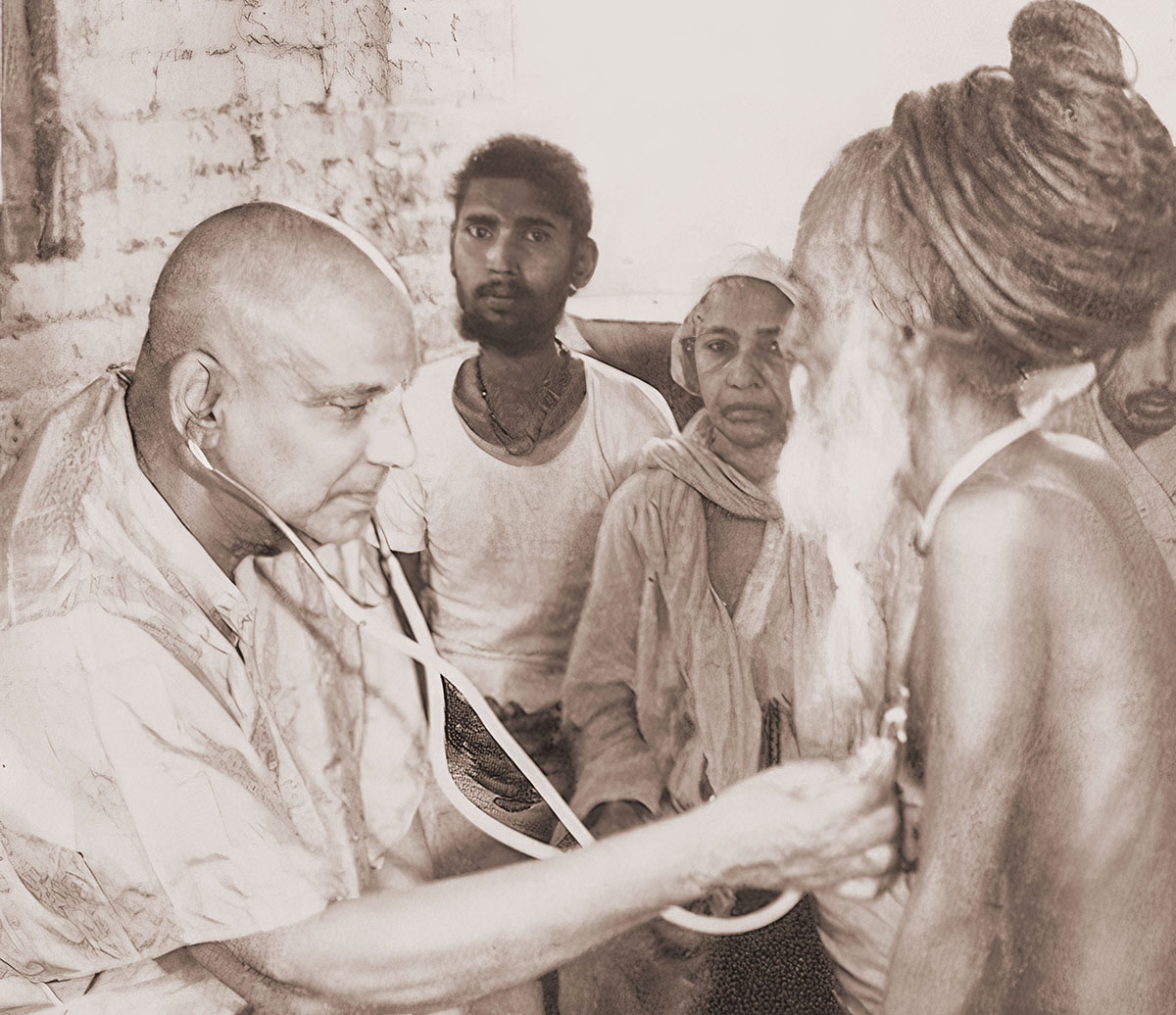
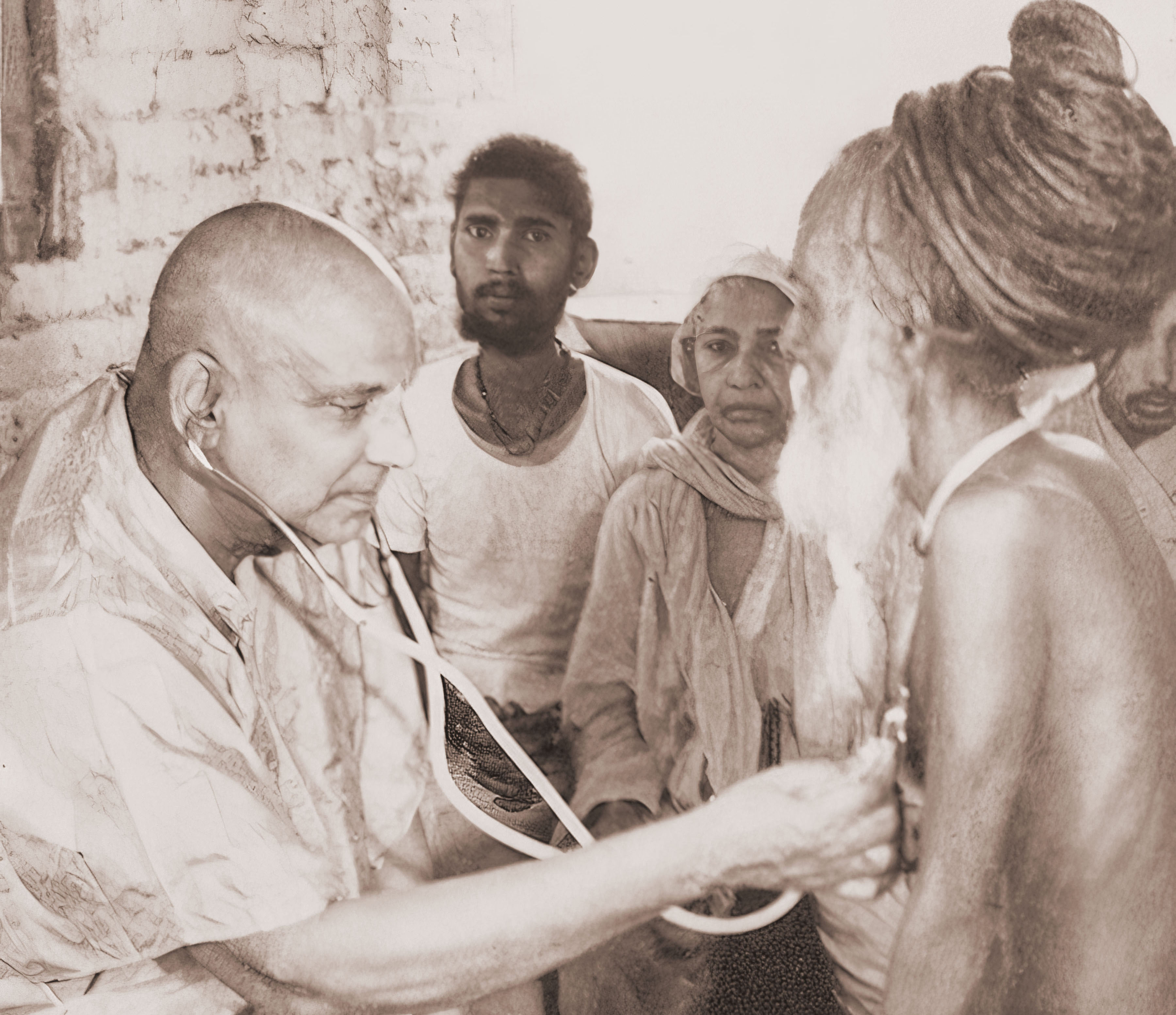
Once a doctor always a doctor
Swami Sivananda was trained as a doctor and ran several hospitals singlehandedly in Malaya, but medicine was not just a profession, or even a career, but rather a deep calling that was dear to him throughout his life. In every stage of his life, he offered medical care freely to anyone in need. Here he examines a Sadhu who had come to the Sivananda Charitable hospital for treatment.
-
 See full screen image
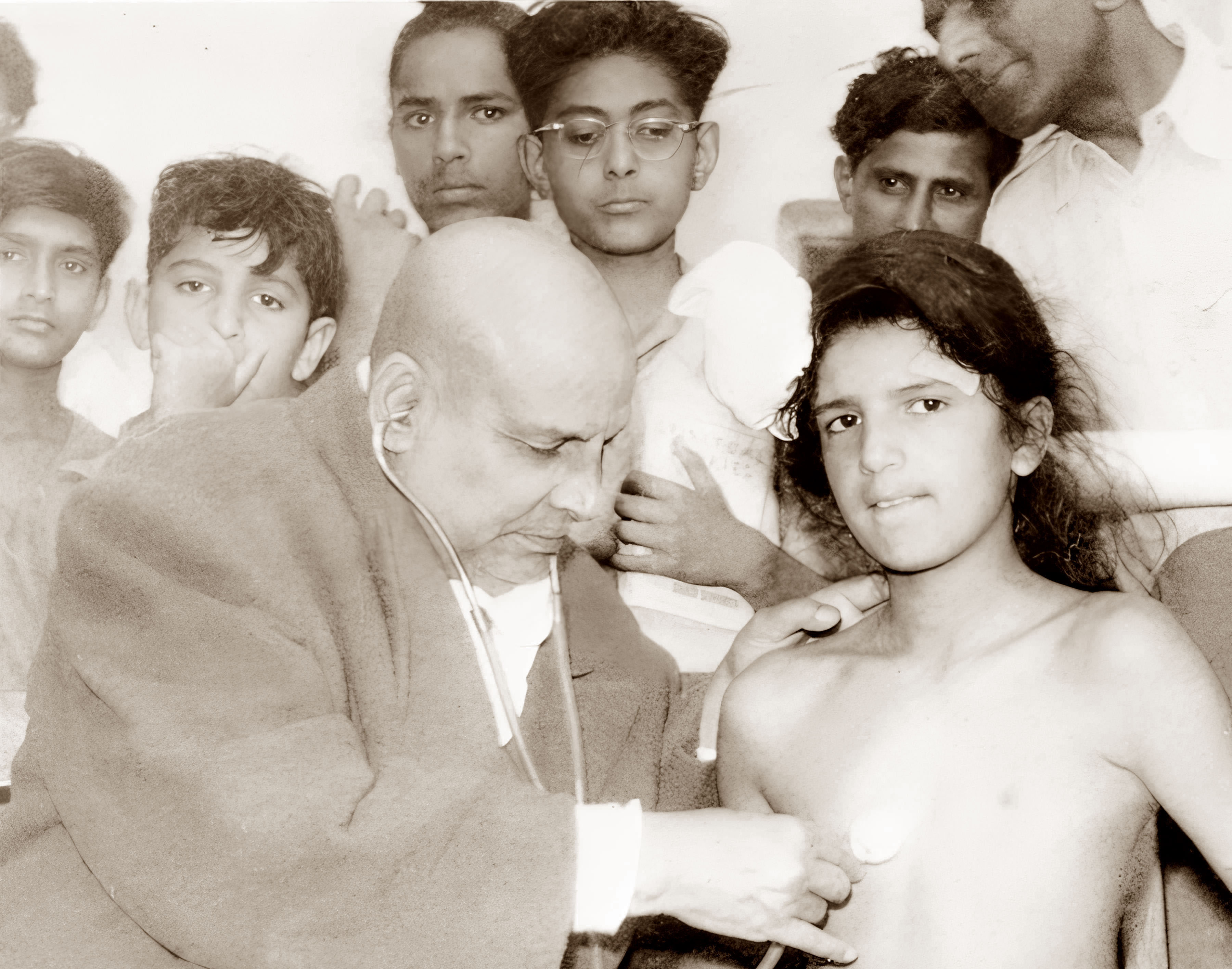
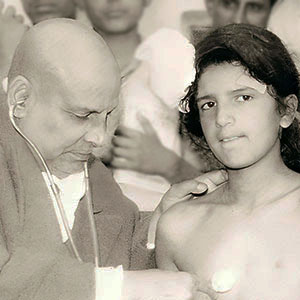
Once a doctor, always a doctor
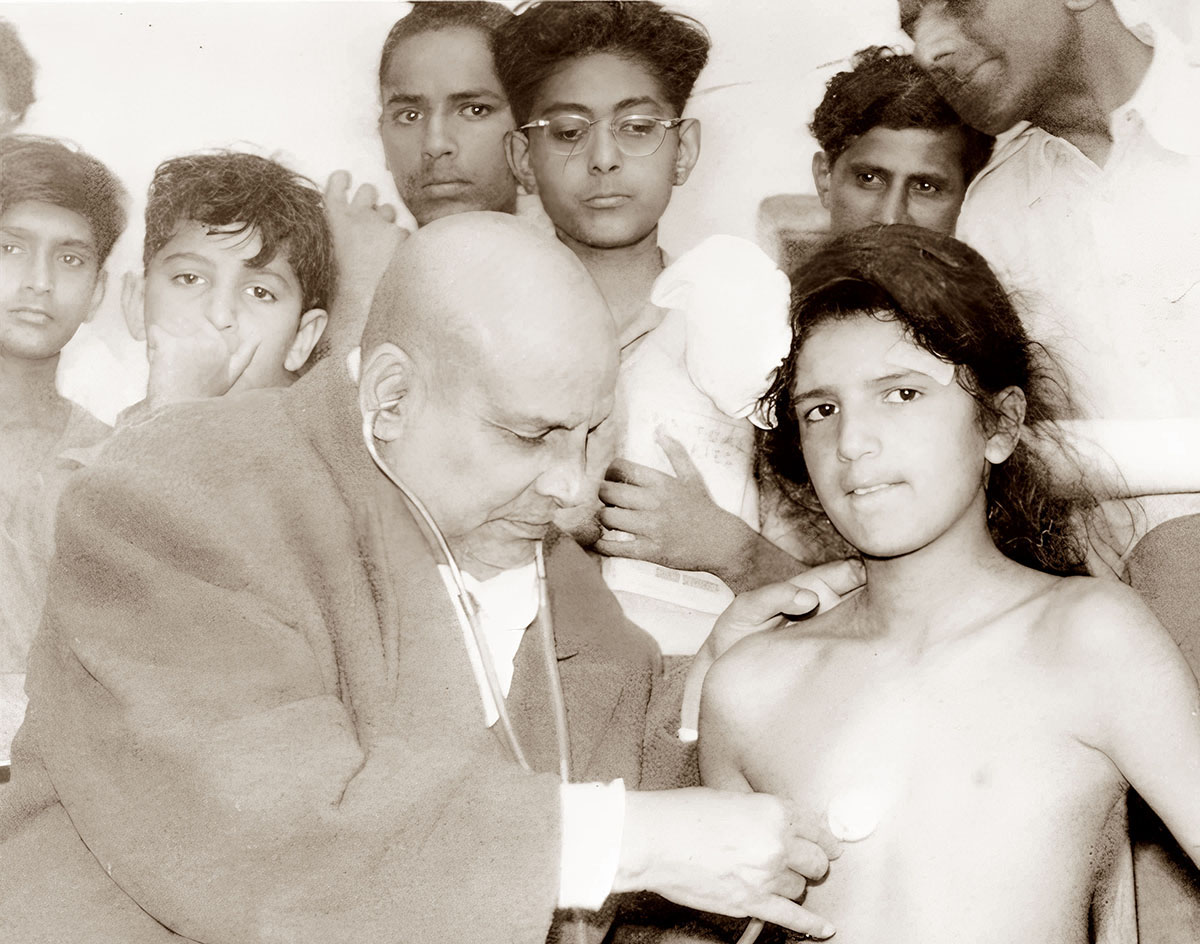
The medical clinic and later the Sivananda Charitable Hospital were as important parts of the Ashram as the Bhajan Hall and kitchen! Swami Sivananda realized that for most of us, physical health was necessary in order for the mind to be still enough to put into practice the principles of Divine Life. Here he examines a young boy with his stethoscope.
-
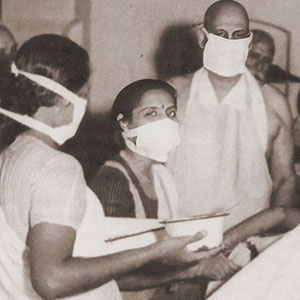 See full screen image
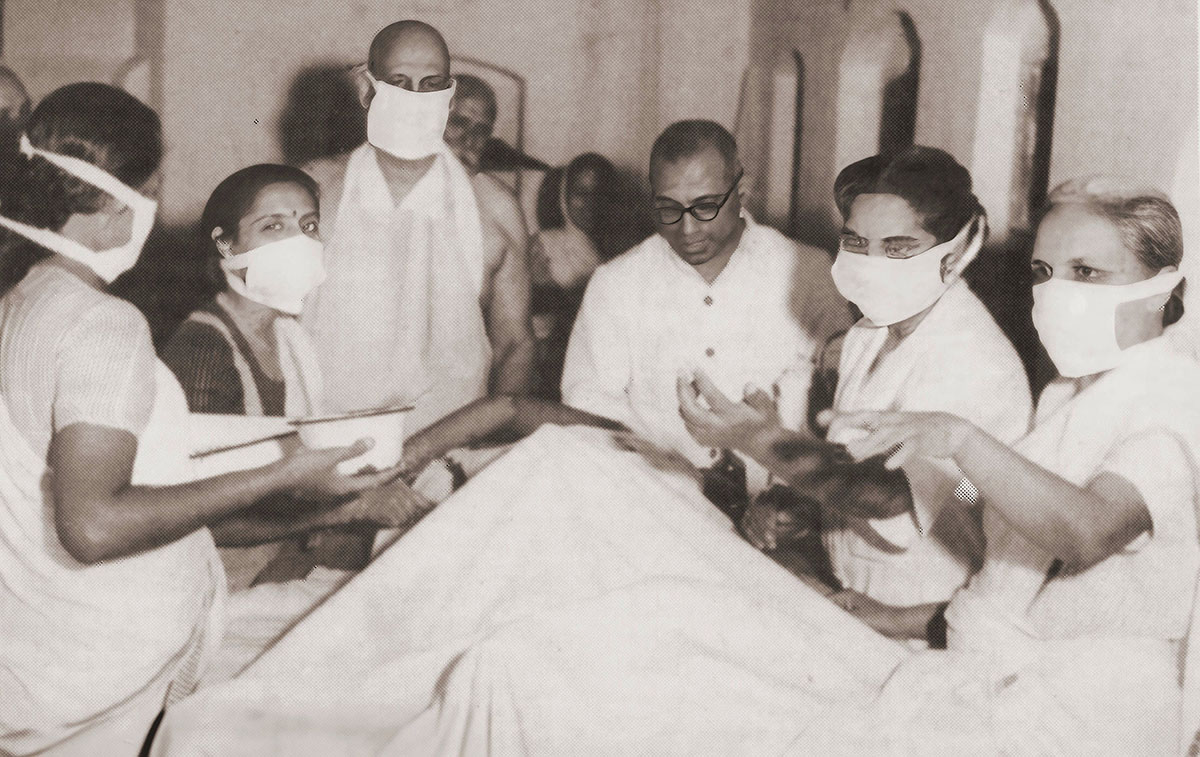
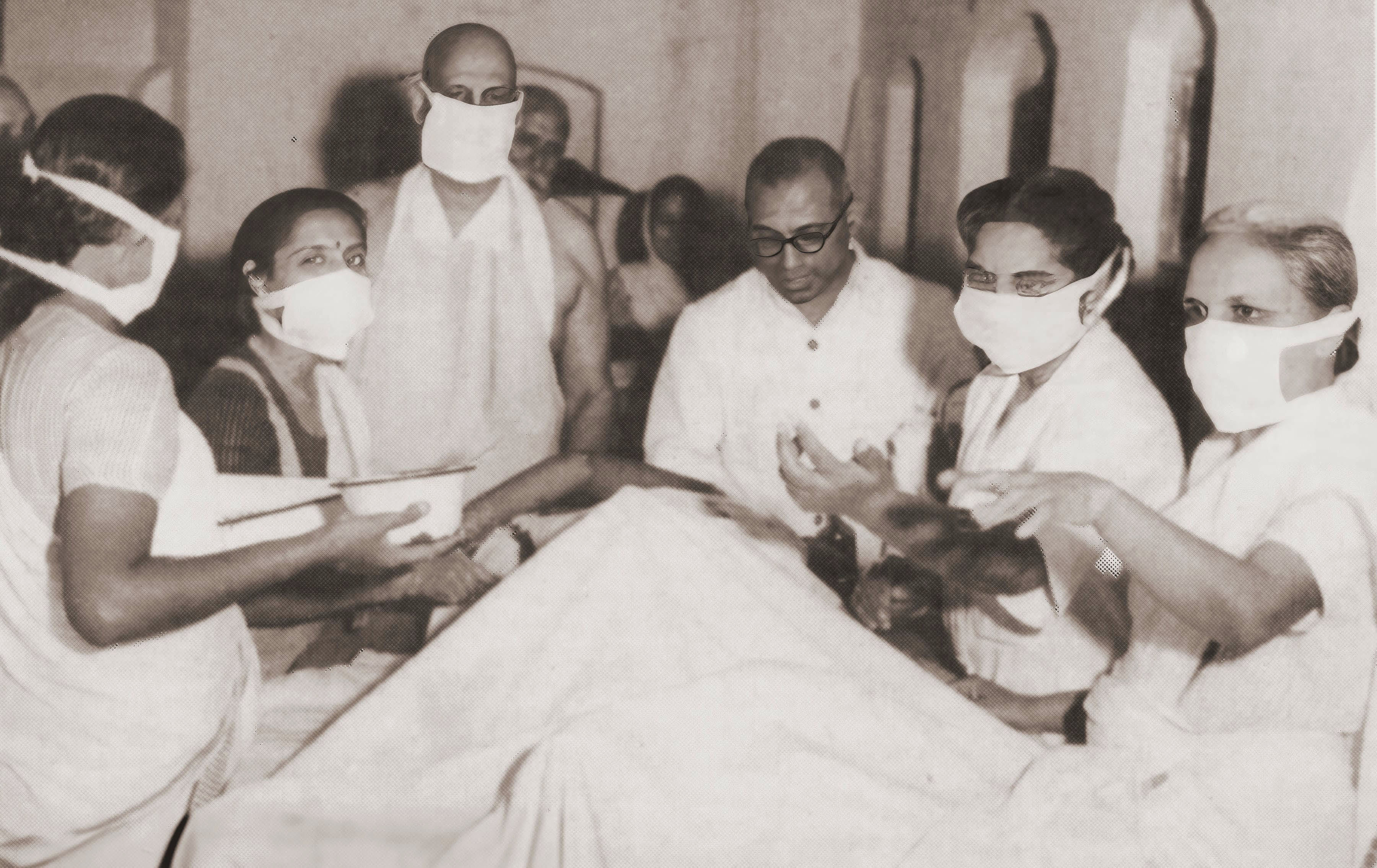
Dr. D. Kutty, a Trustee of the Ashram and a renowned gynecologist, performs an operation at the Sivananda Charitable Hospital with the assistance of other devotee-physicians, as Swami Sivananda looks on.
-
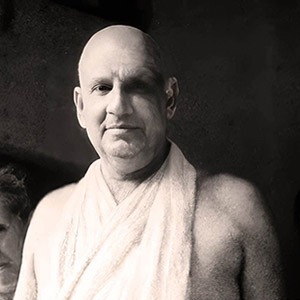 See full screen image
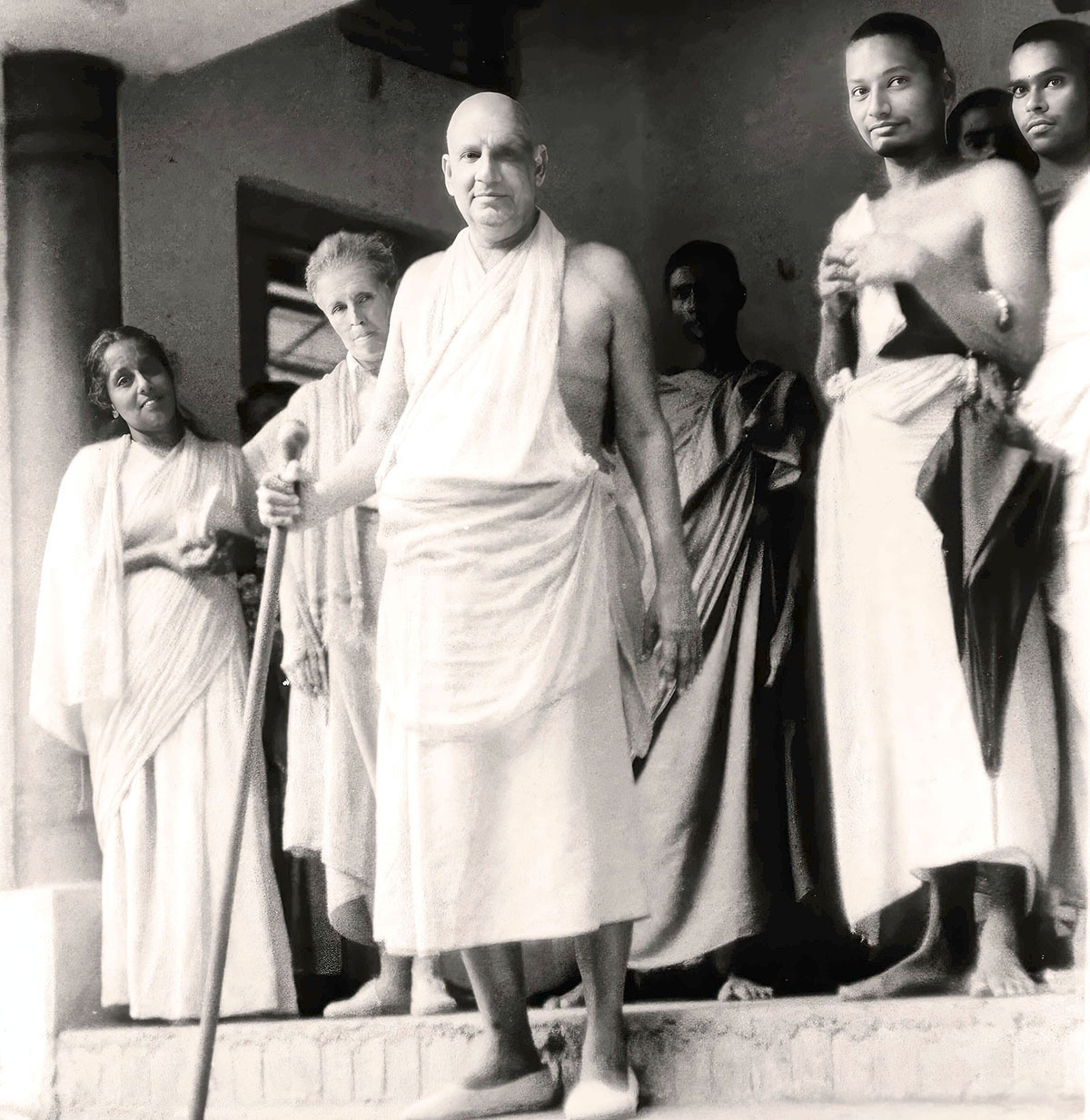
Simply being in the presence of Swami Sivananda, their Master, brings a tranquil smile to his disciples as they walk with him through the Ashram. From left: Swami Sivananda-Hridayananda, Swami Sivananda, Swami Venkatesananda, and Swami Vishnudevananda.
-
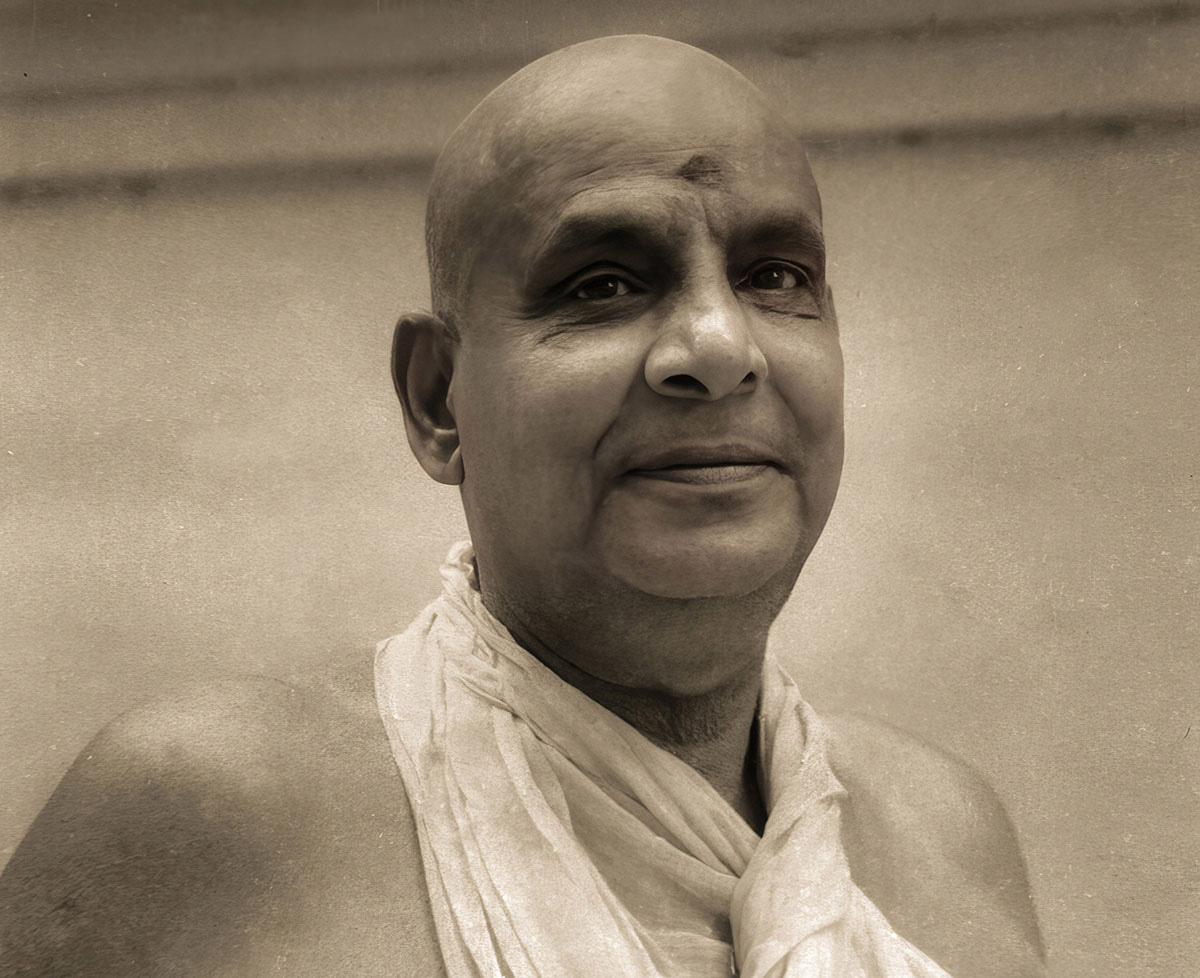
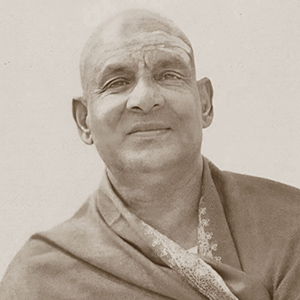 See full screen image
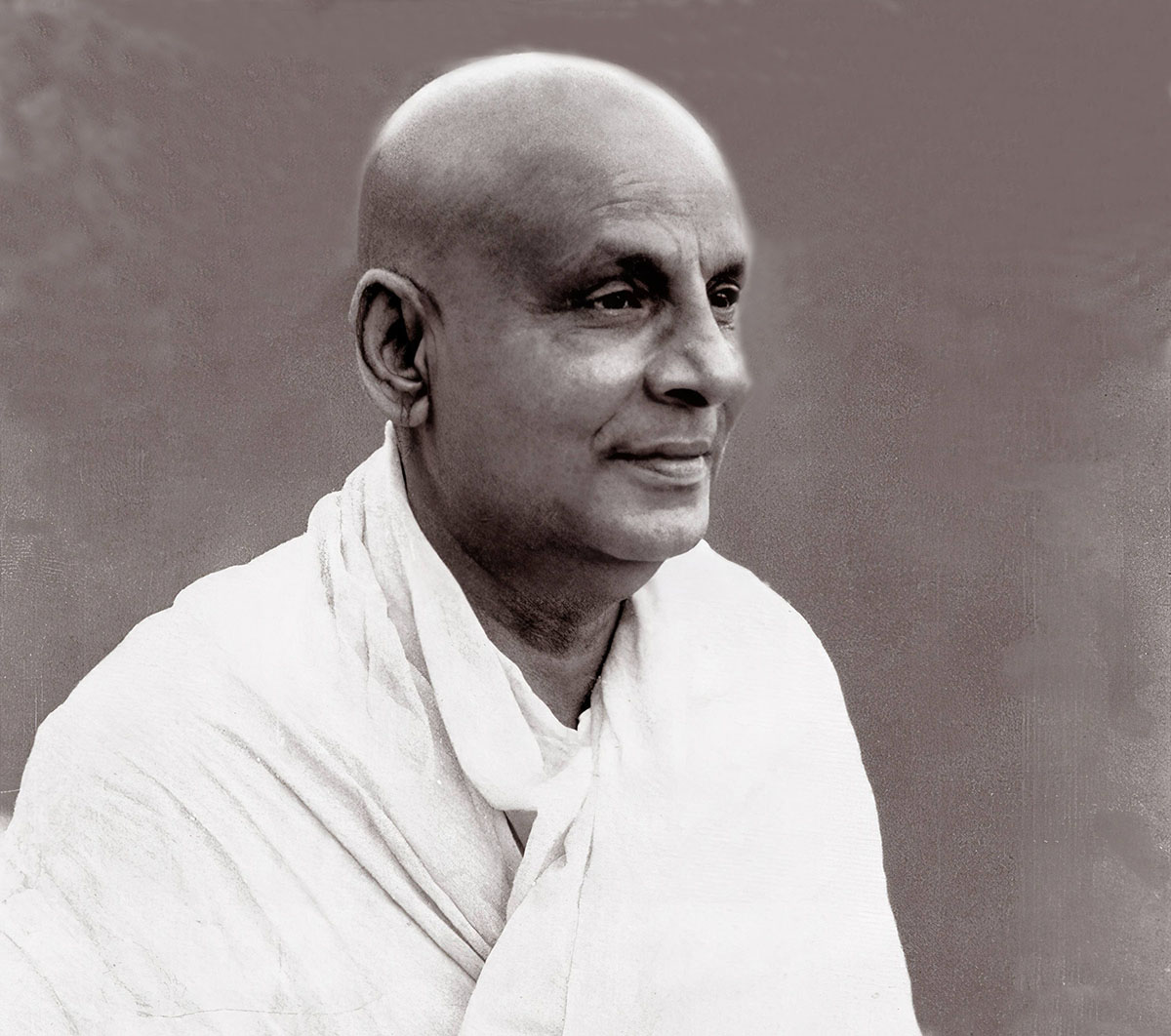
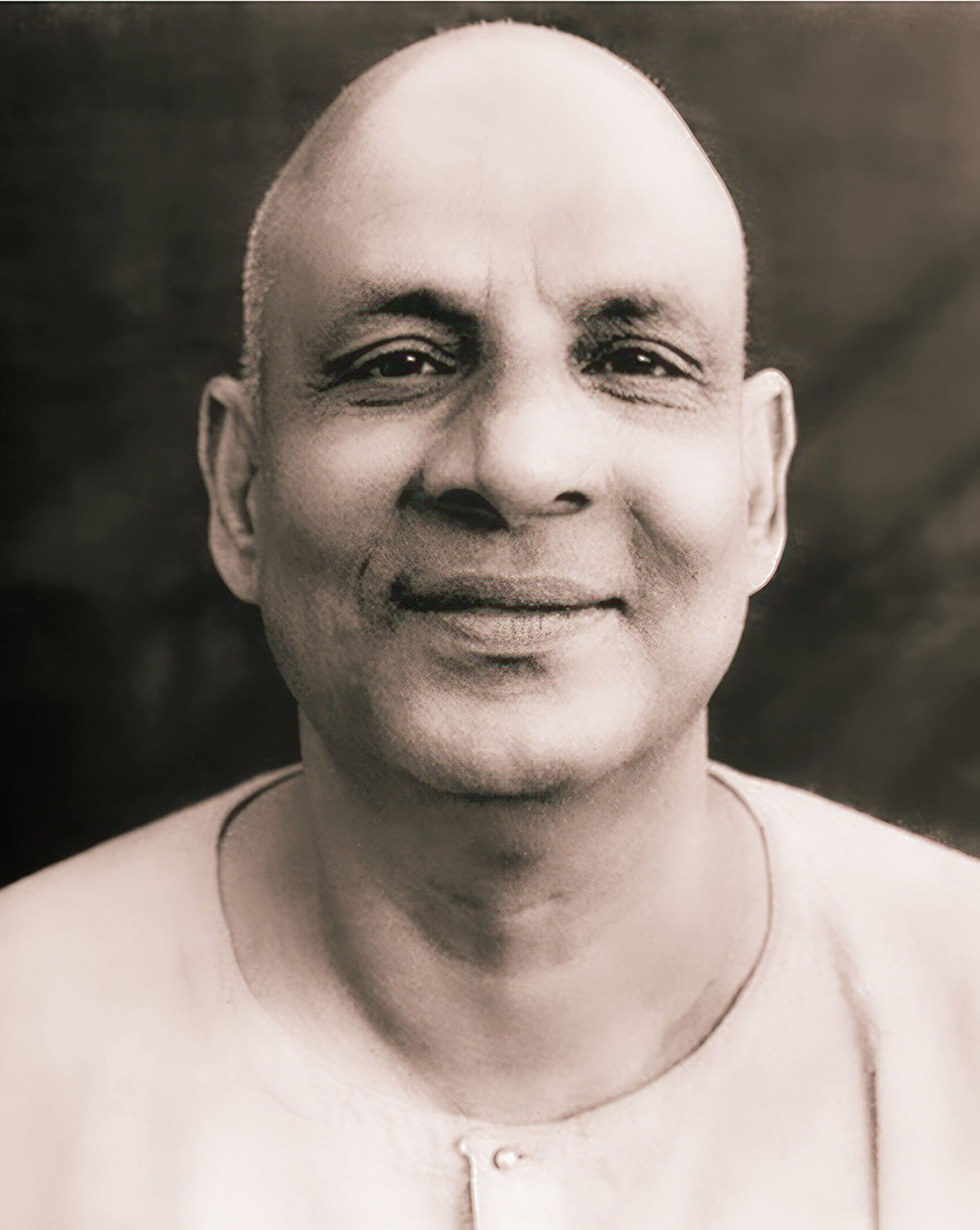
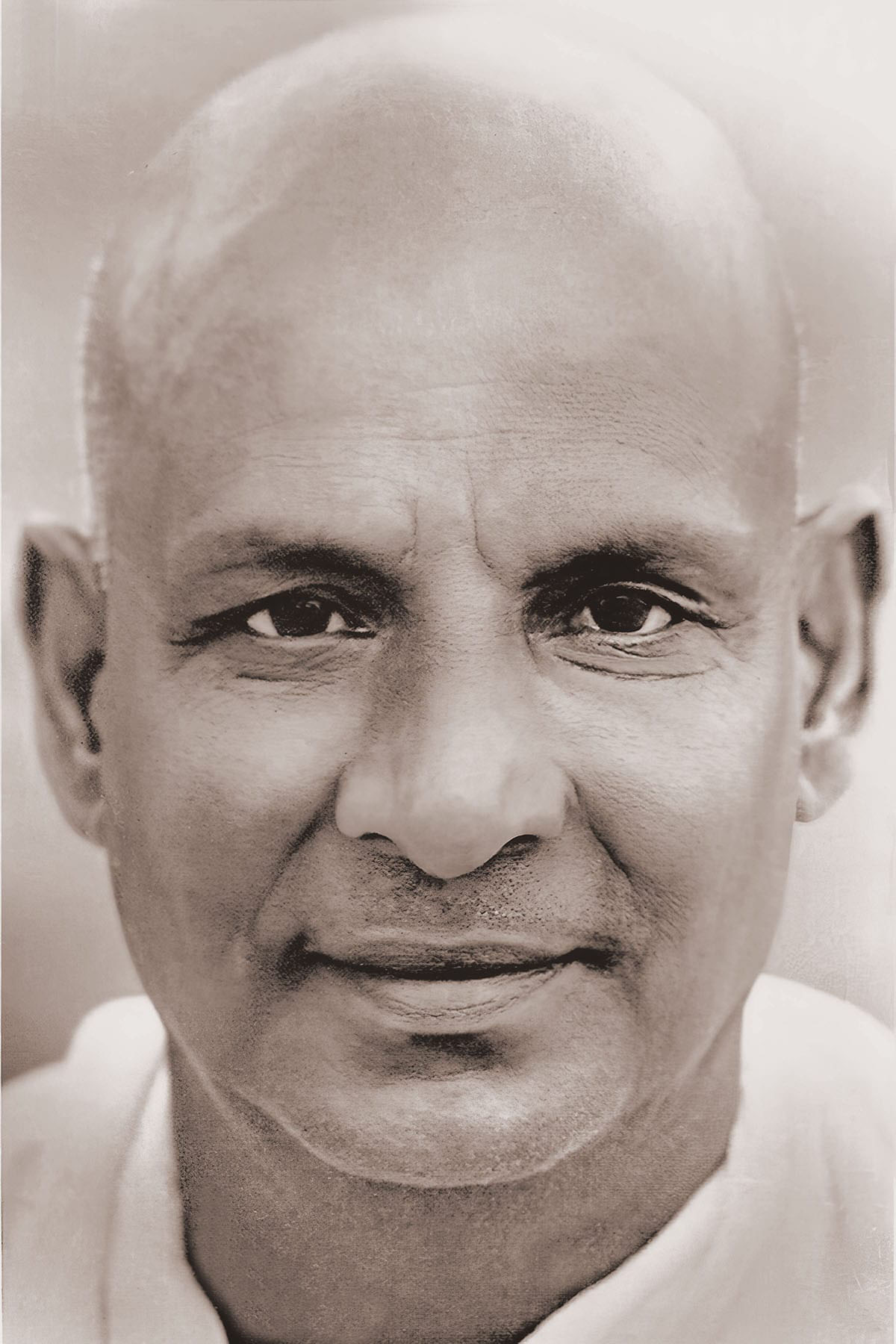
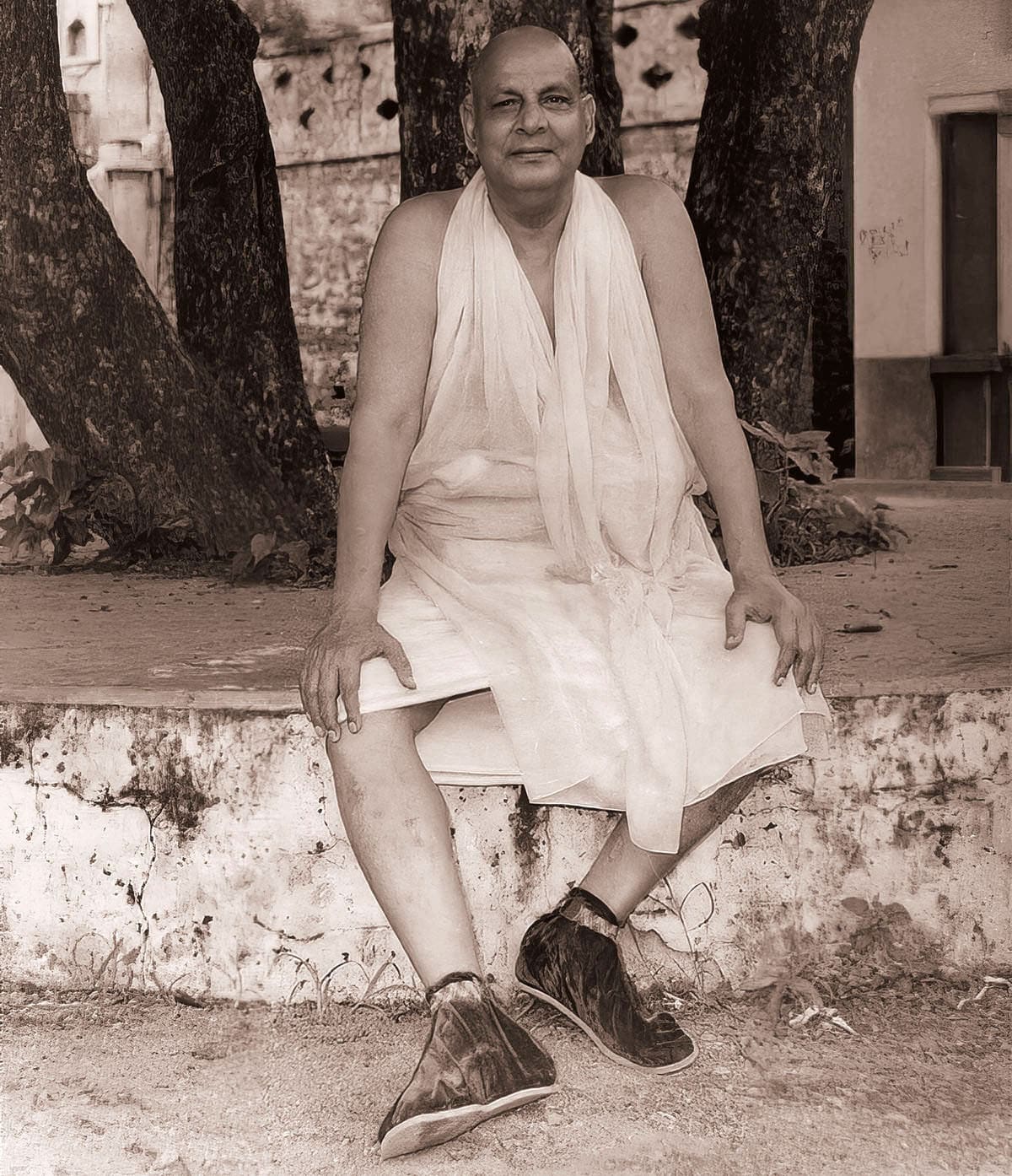
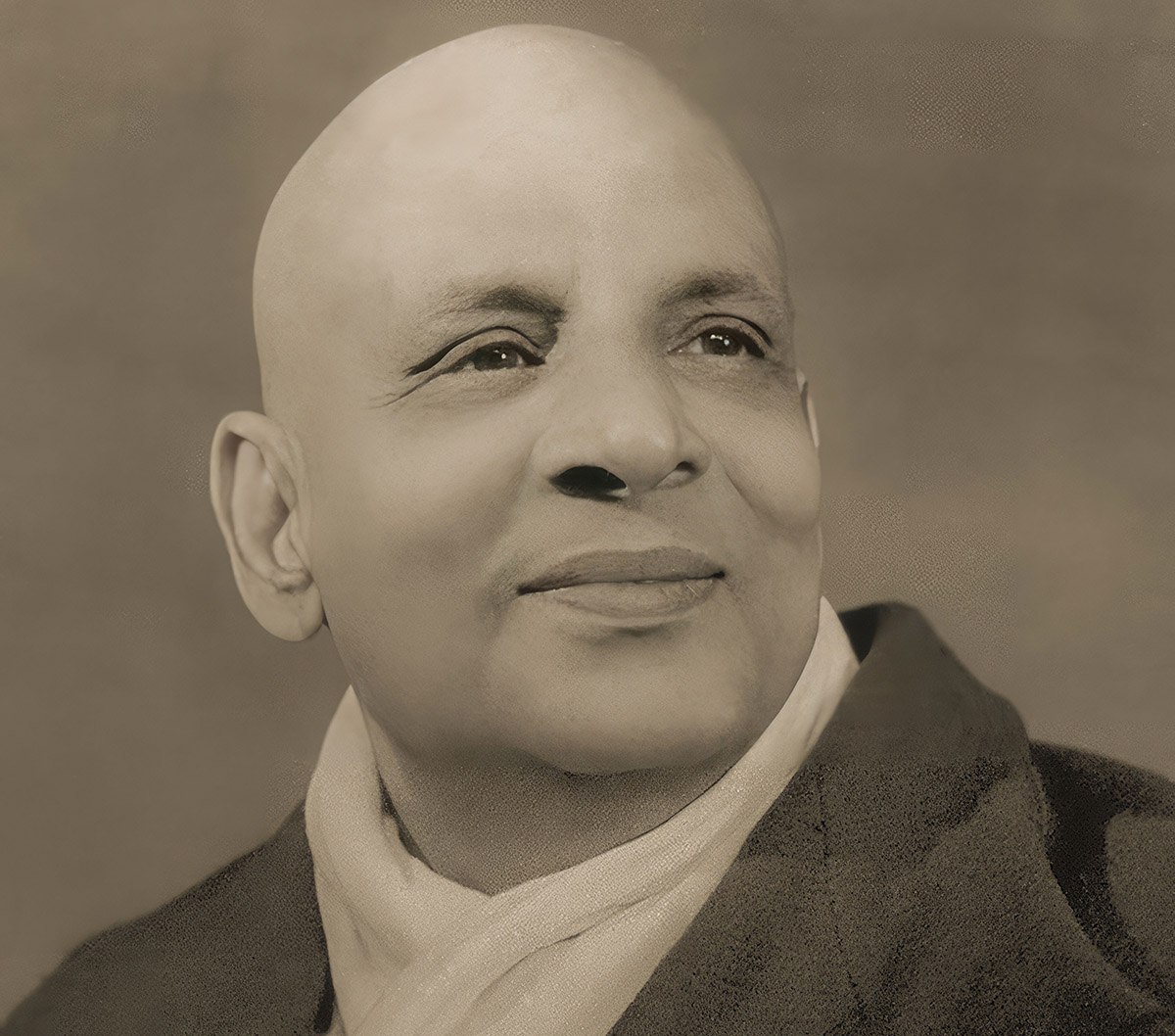
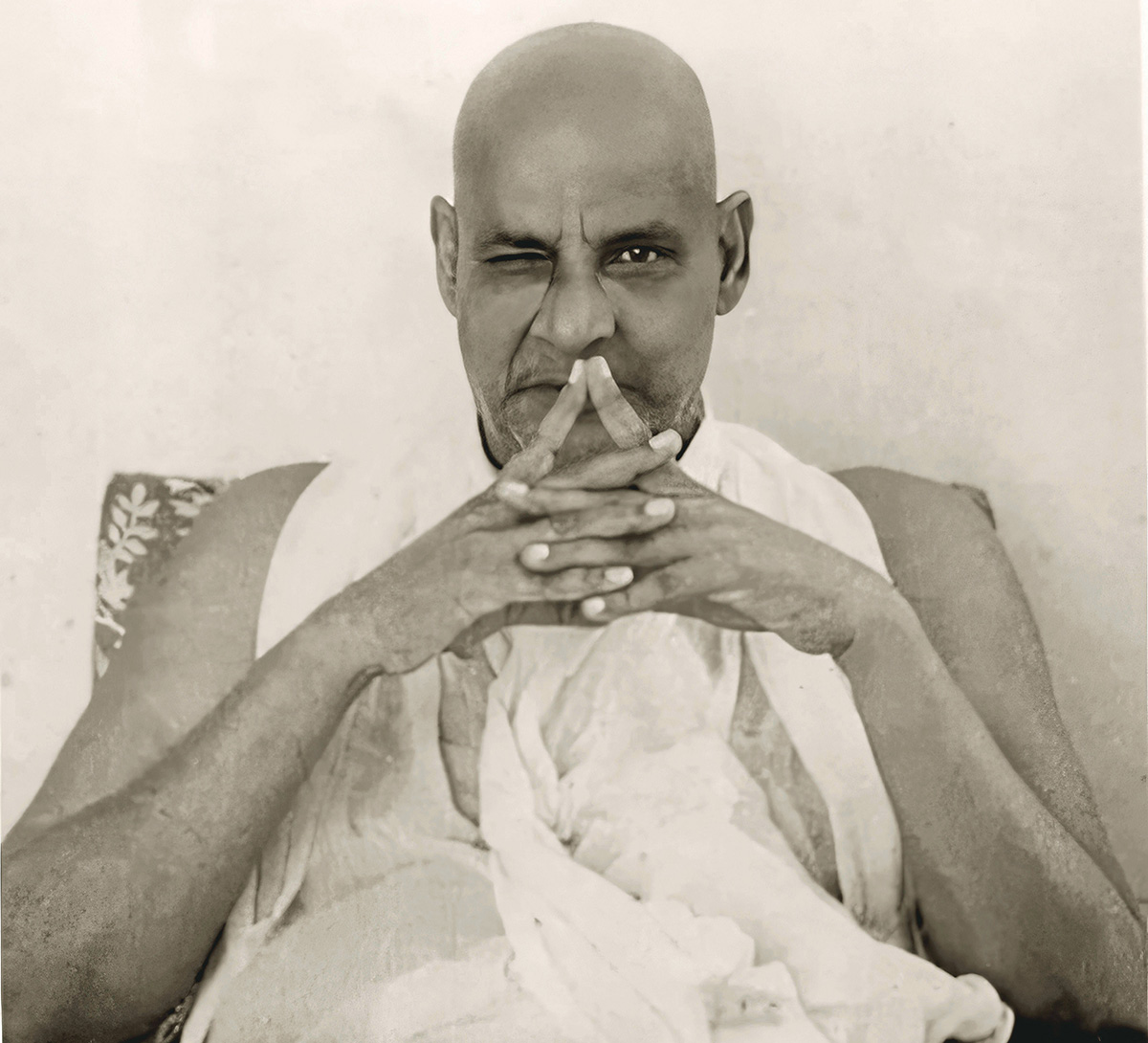
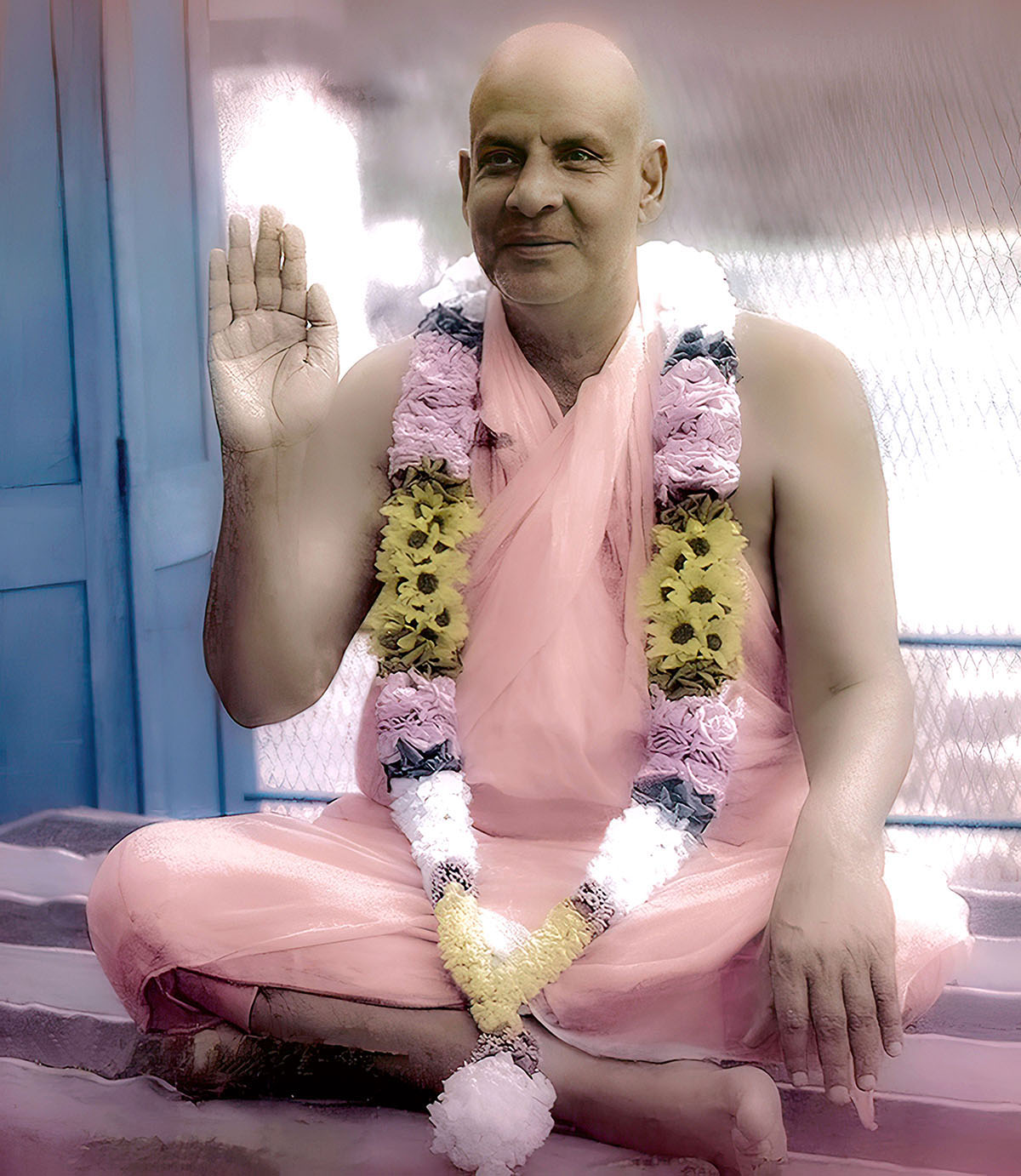
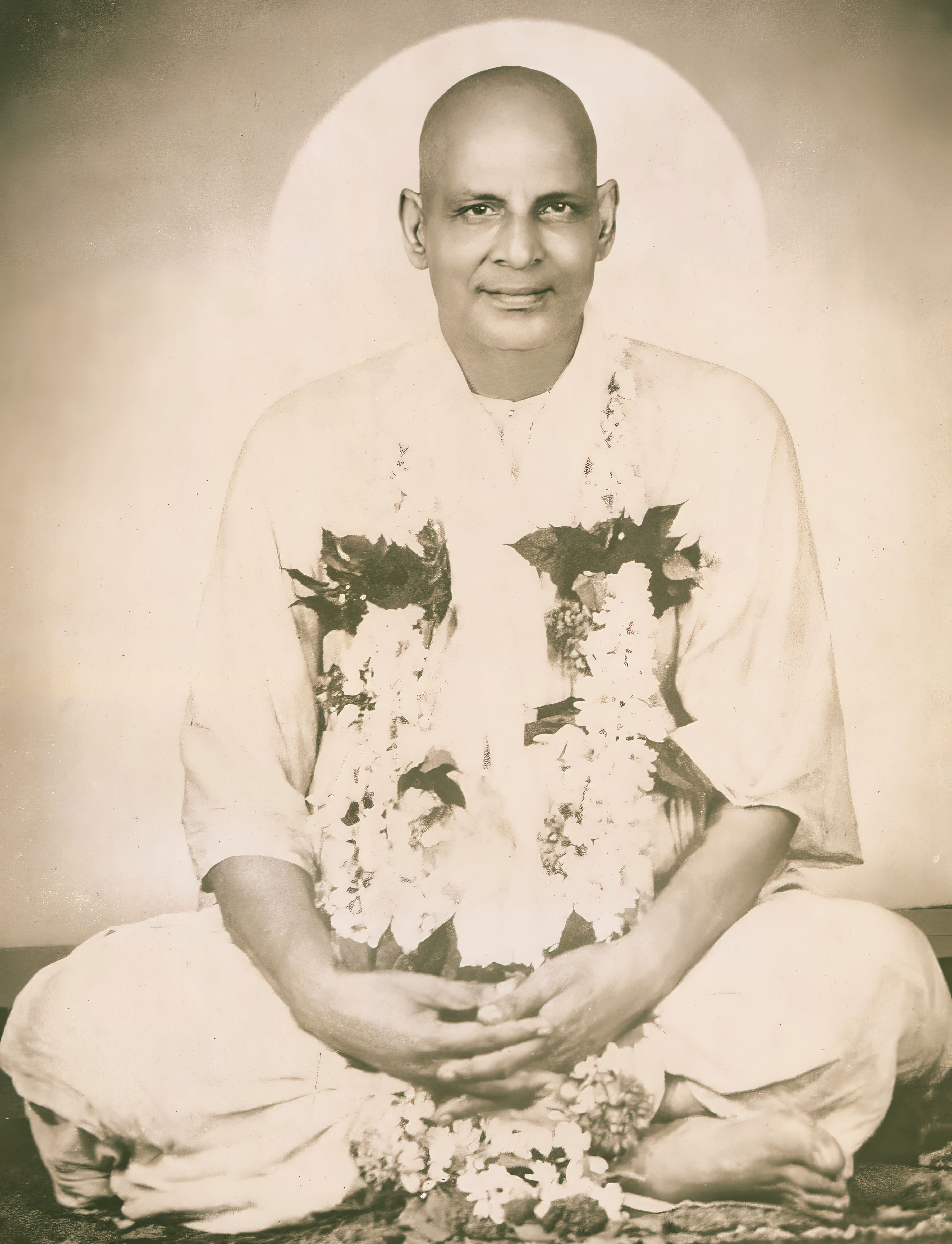
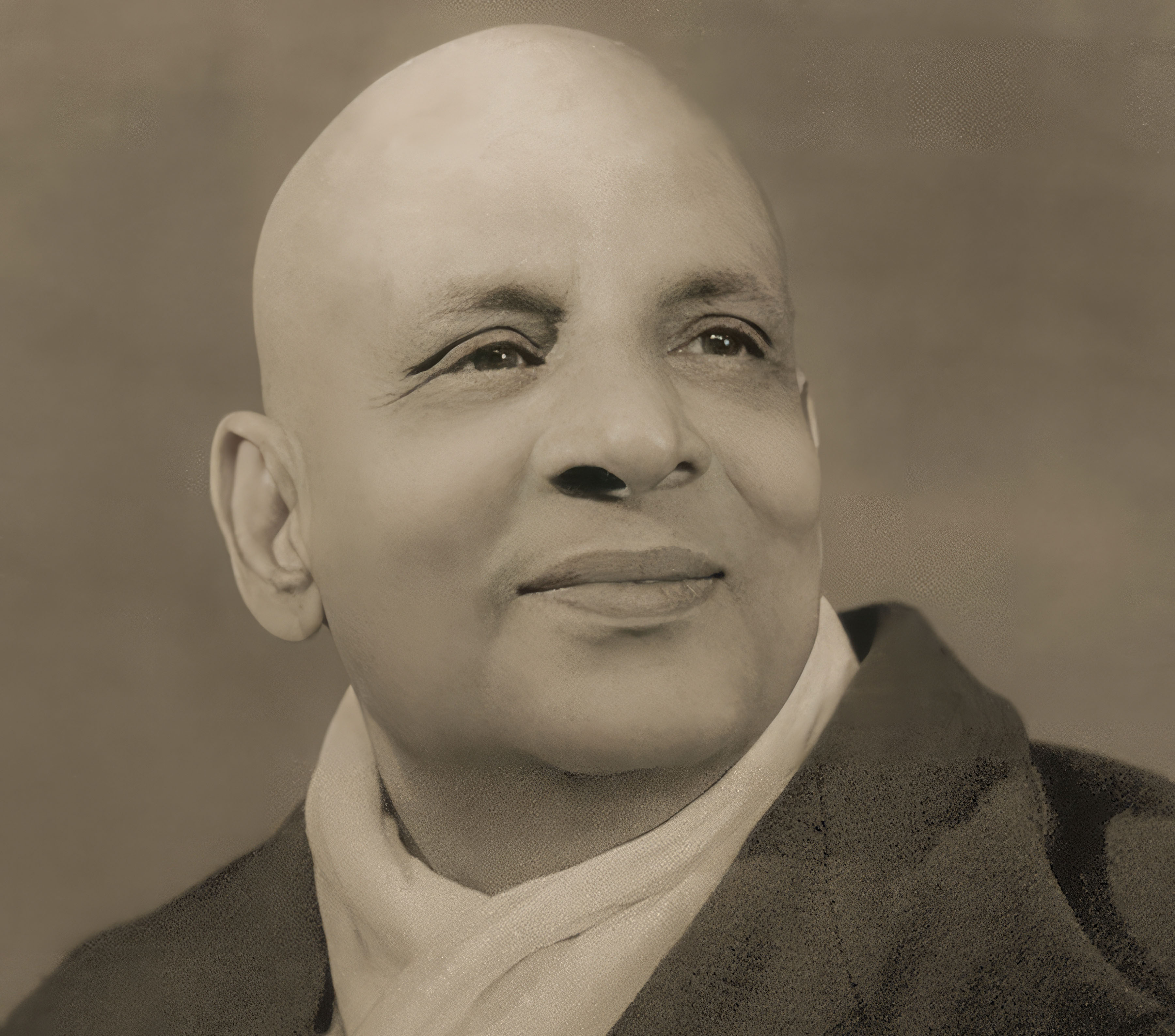
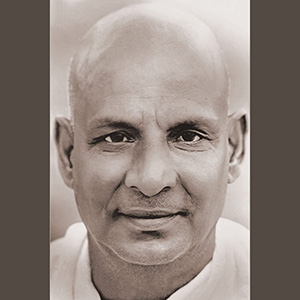
This is one of the most recognized and beloved portrait photos of Swami Sivananda—it has been widely reprinted in books, calendars, posters and on the internet. Because it is so beloved, there have been many well-meant efforts to enhance it until it sometimes appears more like an illustration than an actual photo. Here it is presented without these enhancements, in all its simple elegance, revealing that it is indeed a truly marvelous photo of the Master.
-
 See full screen image
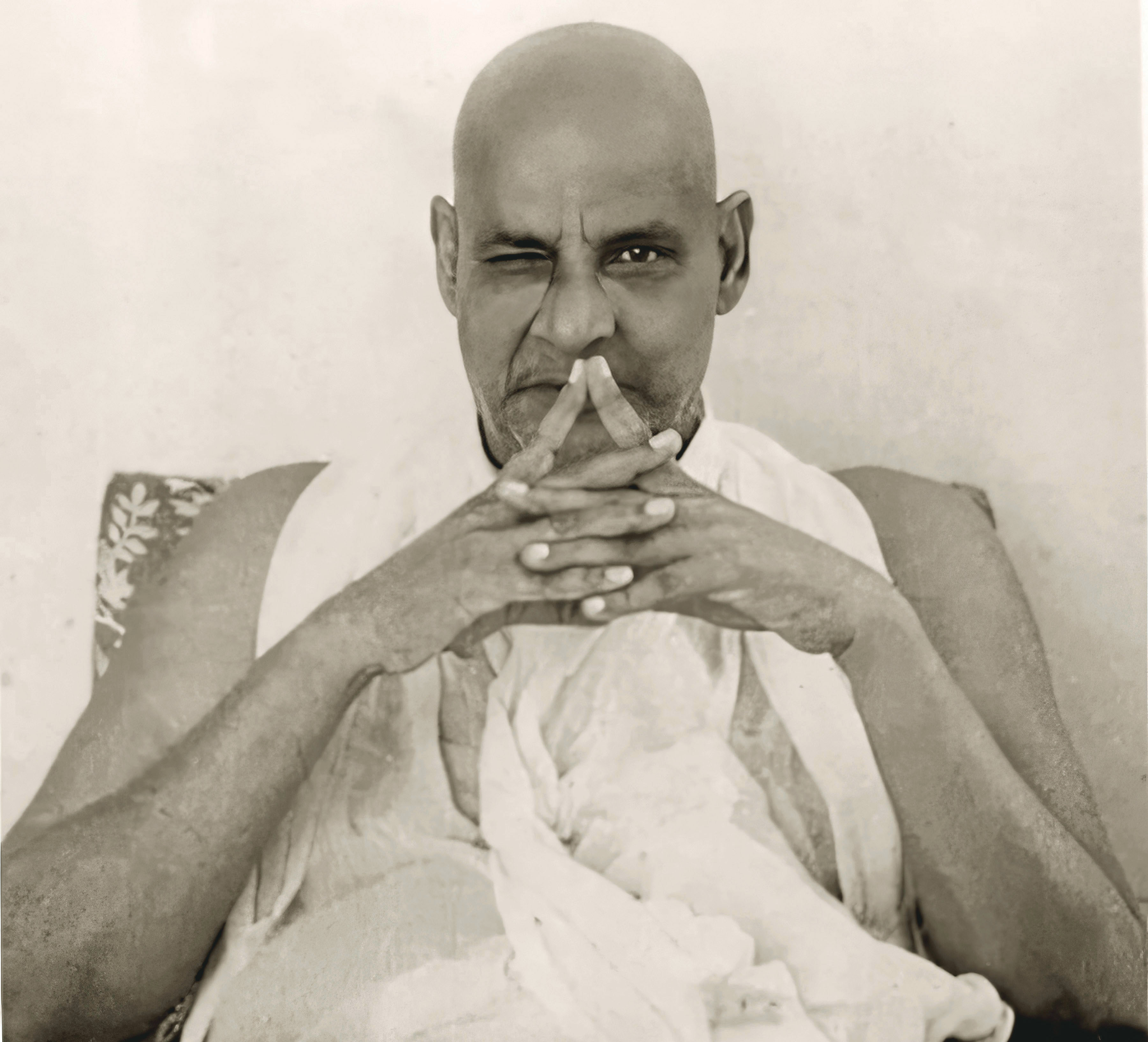
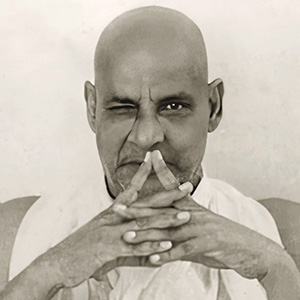
This equally remarkable photo captures an aspect of Swami Sivananda never forgotten by anyone who ever encountered it. Though he was sometimes known as “Swami Give-ananda” for his generous and loving heart, he also could be stern when warranted. Though visitors flocked to him as he moved through the Ashram, the occasional sannyasi disciple, with something on his conscience, might rather duck behind a tree! As Swami Venkatesananda noted: ‘When you see that expression, watch out–something is coming!”
Perhaps a thoughtless remark prompted this penetrating stare? Swami Venkatesananda gave us such an example: a visitor once complained to Swami Sivananda that his disciples were very rude, preventing him from getting close to him. Swami Sivananda pushed his spectacles up his forehead, closed one eye and said pointedly, “I believe a rose has thorns for a reason!”
-
 See full screen image
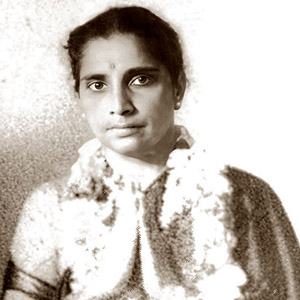
Swami Sivananda with Rani Kumudini Devi
Rani Kumudini Devi was not only a prominent disciple of Swami Sivananda but someone who defied the norms of her time, entering politics to serve humanity. Aside from strictly civic roles in her native Hyderabad, she founded a hospital to serve patients with leprosy, naming it Sivananda Rehabilitation Home. Later she was elected the first female mayor of Hyderabad in 1963. Whenever Swami Sivananda needed dedicated and efficient support with a project, he had only to call on Rani Kumudini Devi. She lived to serve and did so until her death at age 98, in 2009.
-
 See full screen image
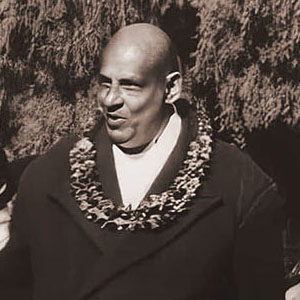
Swami Sivananda, wearing his signature overcoat, walks with a large group of devotees.
-
 See full screen image
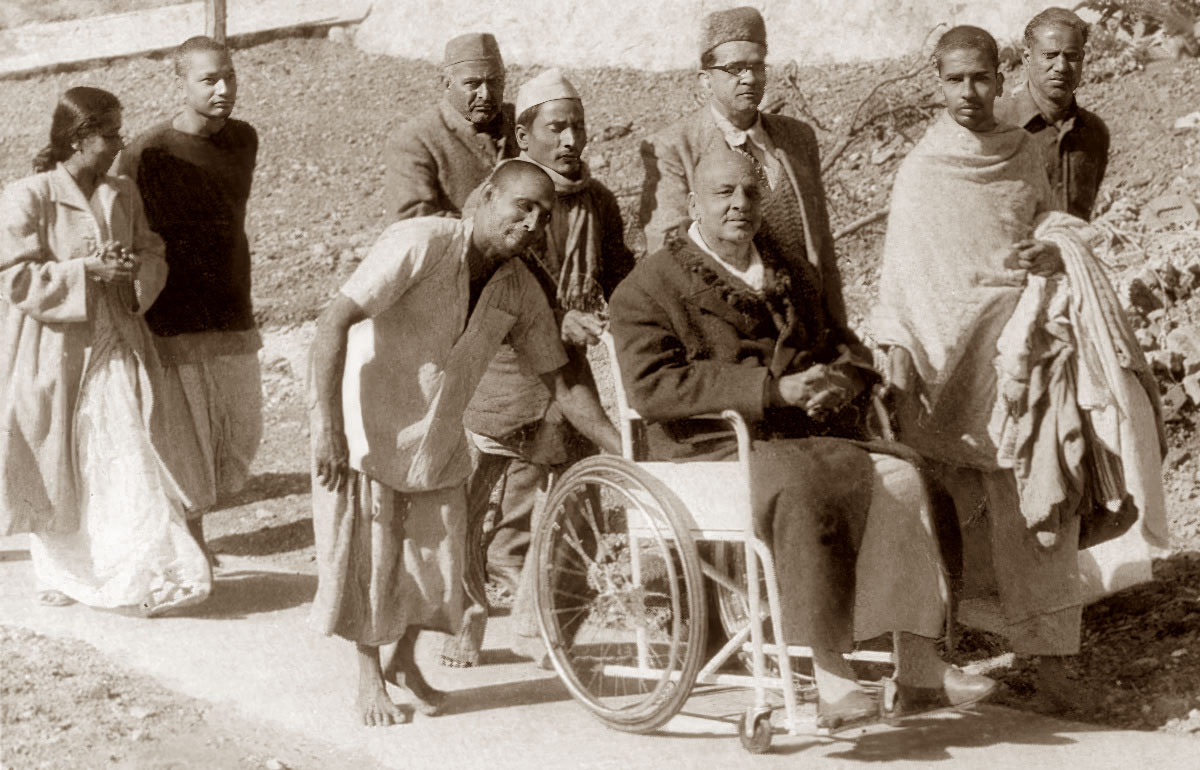
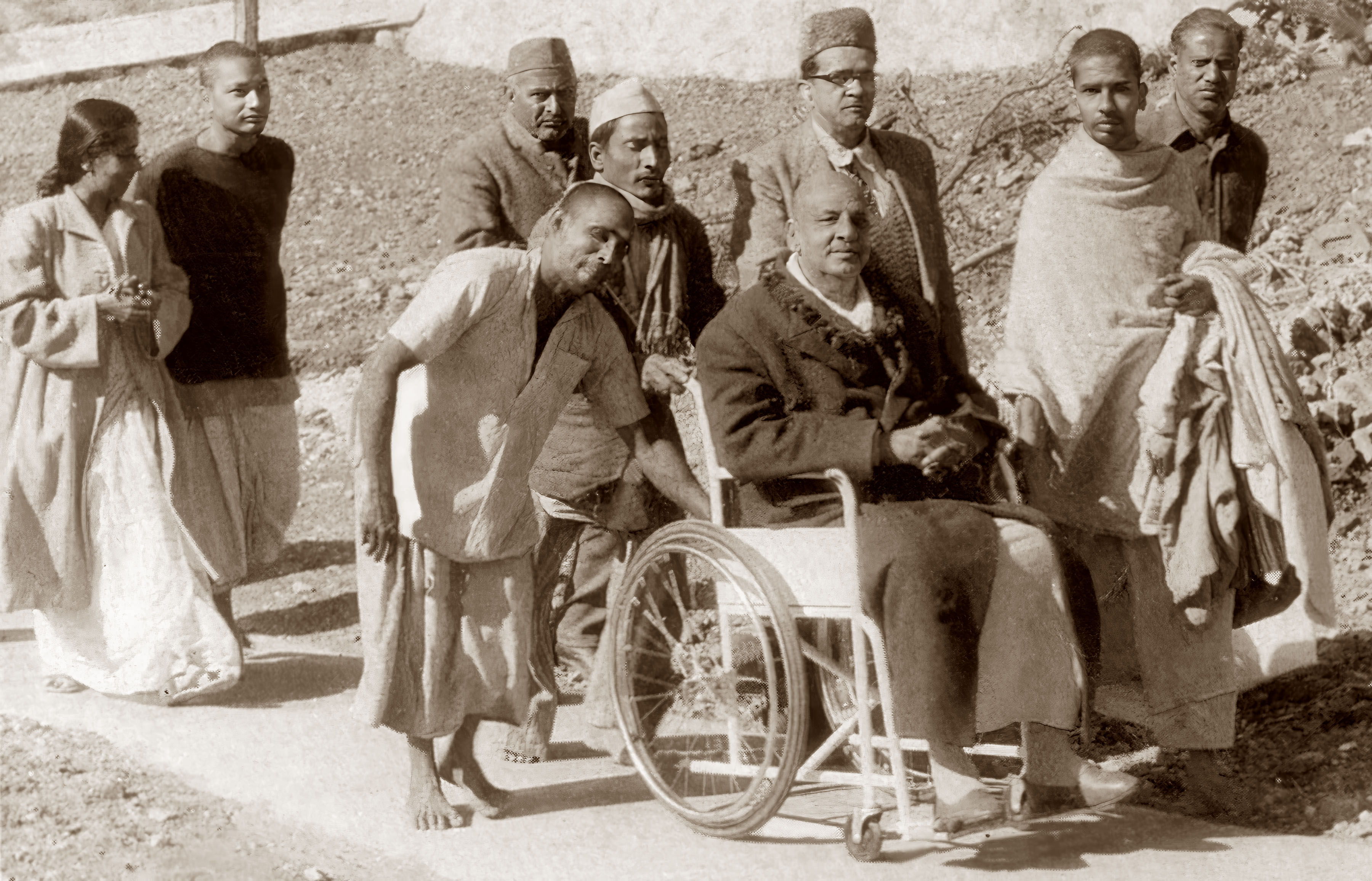
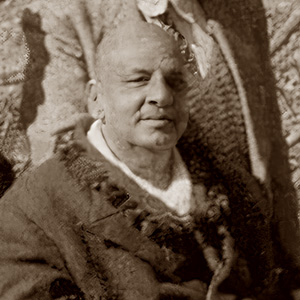
In Sivananda Ashram, the steep slope from the Ganges up to the Vishwanath Mandir made it difficult for Swami Sivananda to move through the Ashram in his later years when he suffered from severe back pain. At times he would crawl up the stairs to reach the temple. Here he is being pushed in a wheelchair, accompanied by Swamis Satchidananda, Hridayananda and Venkatesananda.
-
 See full screen image
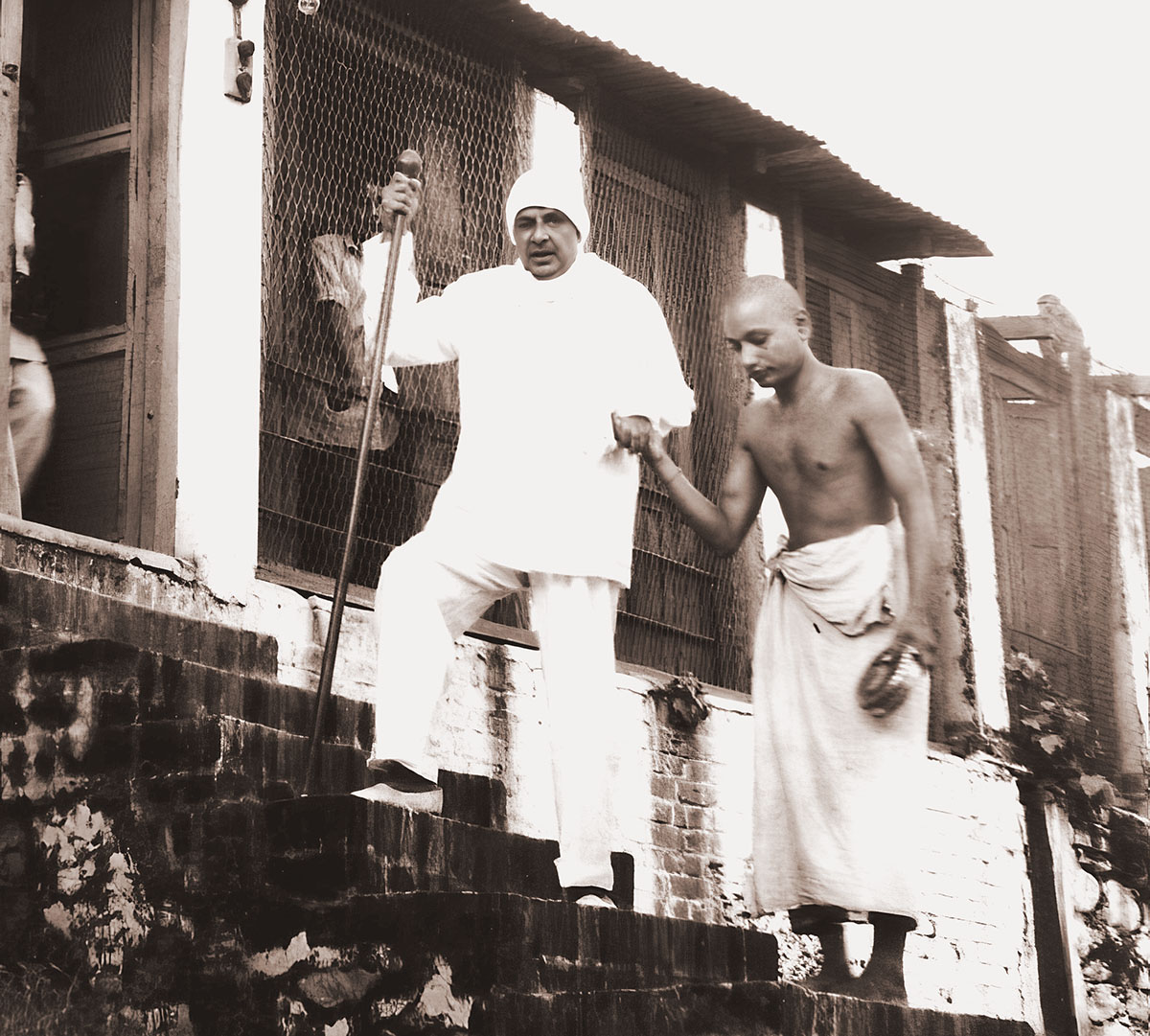
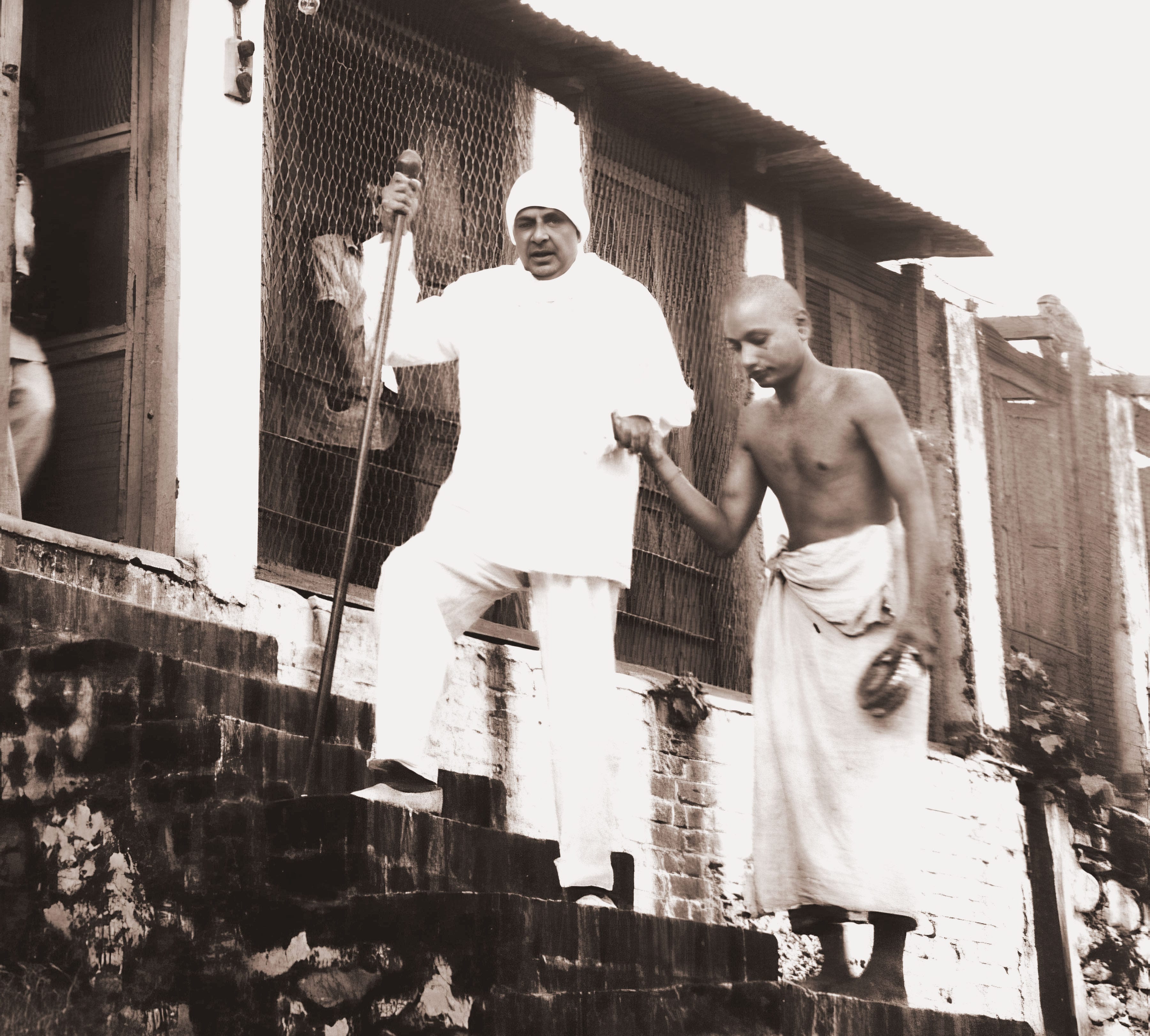
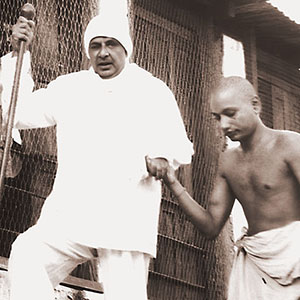
Swami Venkatesananda assists Swami Sivananda down the steep stairs of his kutir
This photo gives a glimpse of the ineffable nature of the Guru–Disciple relationship: note the expression on Swami Venkatesananda’s face; total concentration and stillness as he attunes to his Master.
-
 See full screen image
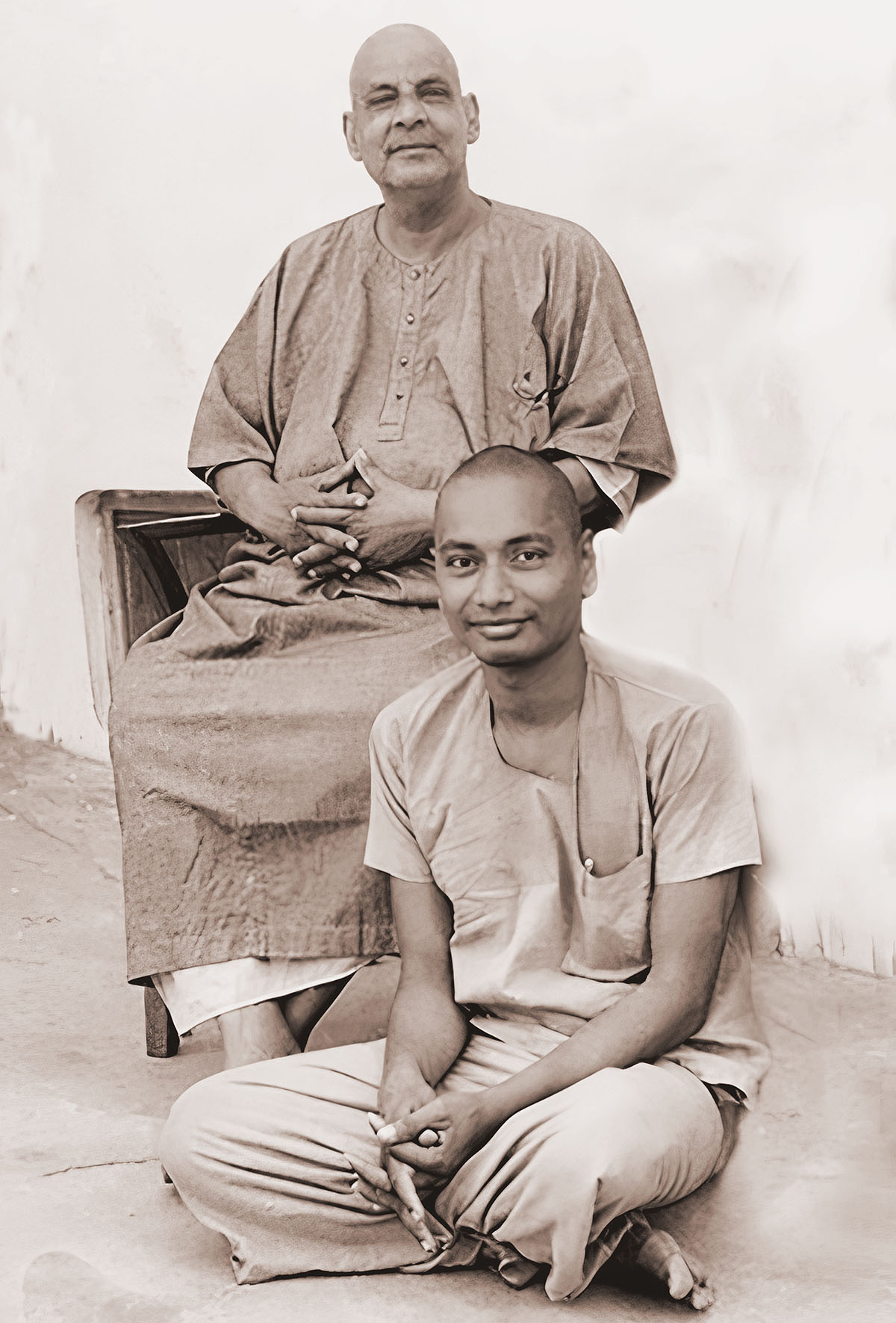
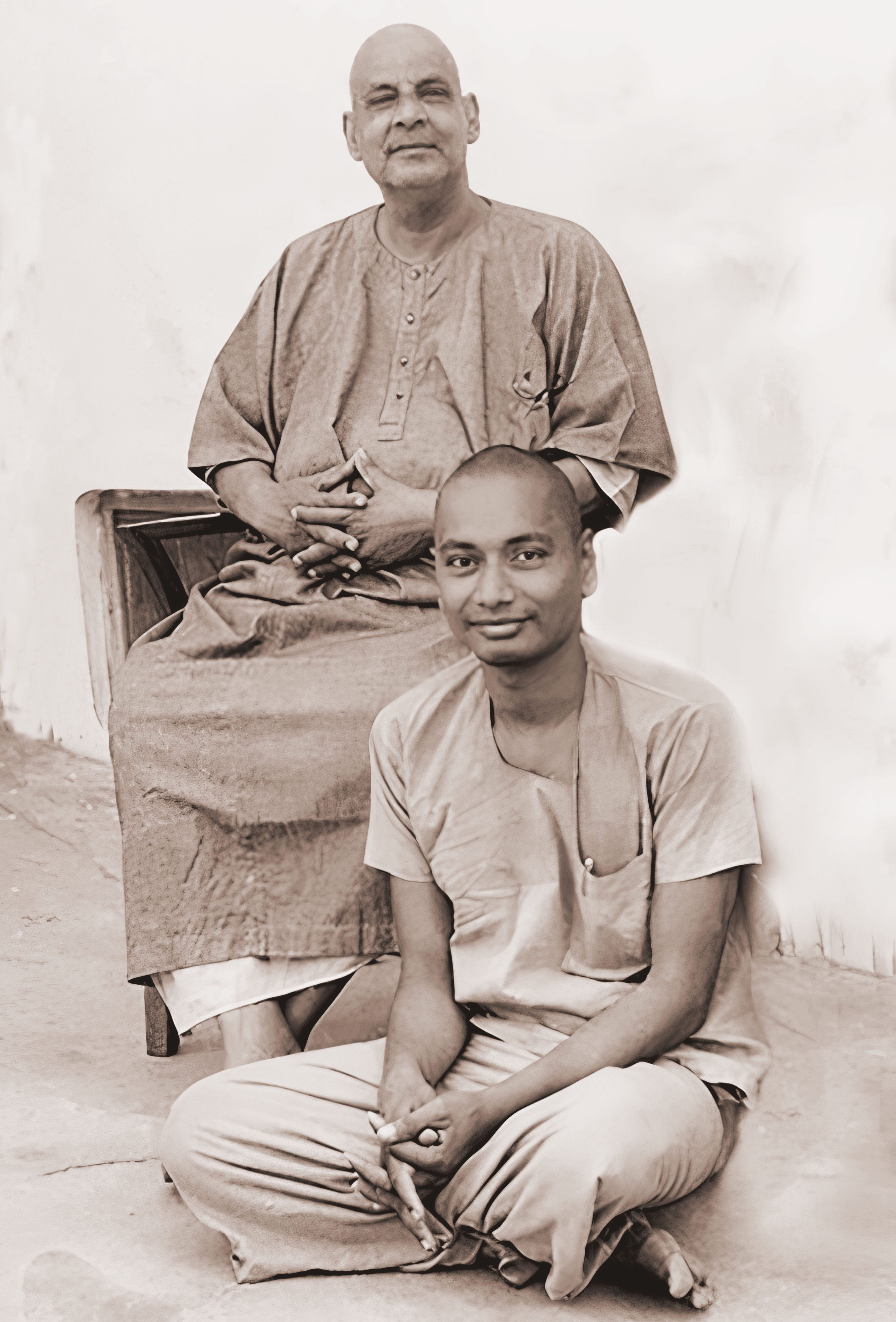
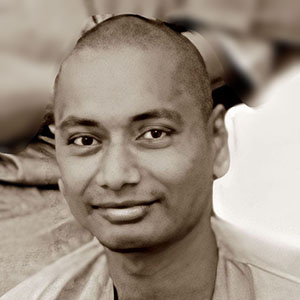
Portrait of Guru and Disciple: Swami Venkatesananda at the feet of Swami Sivananda
On the occasion of his 34th Birthday, Swami Venkatesananda wrote the following, a beautiful and poetic illumination of the nature of discipleship:
Serve the Saints. Serve the Saints humbly, willingly, unassumingly, unquestioningly, ungrudgingly and untiringly. Surrender yourself to them. Become a flower with which they worship the Lord. They take over your responsibility. They will guard you from pitfalls, goad you in your sadhana, and guide you to the goal.
If you are lucky enough to serve a Saint who is all-love like my Master Bhagawan Sri Swami Sivananda the service becomes Supreme Bliss and there is infinite joy in the Surrender.
Dust of Gurudev’s lotus-feet
Venkatesa
-
 See full screen image
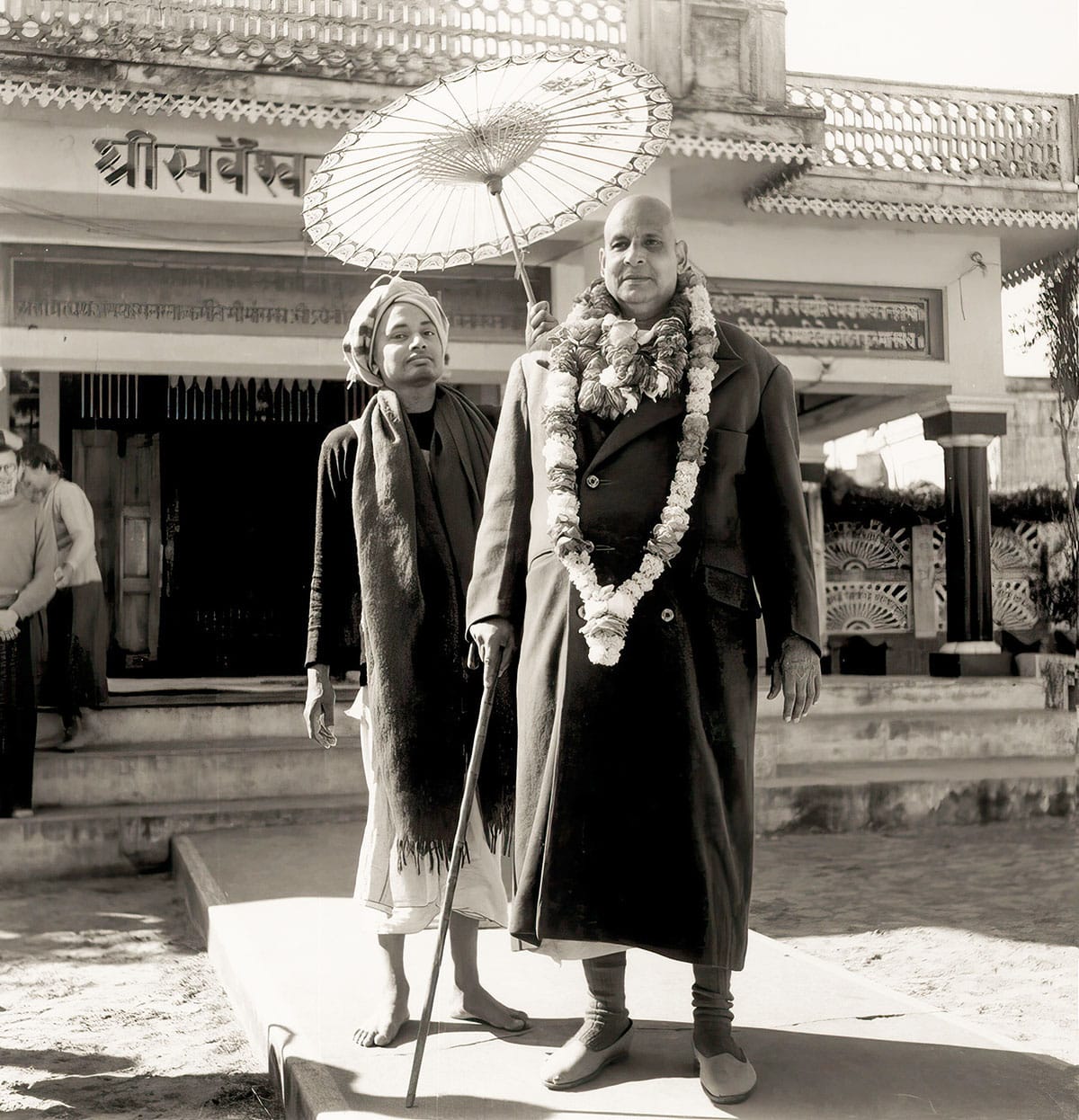
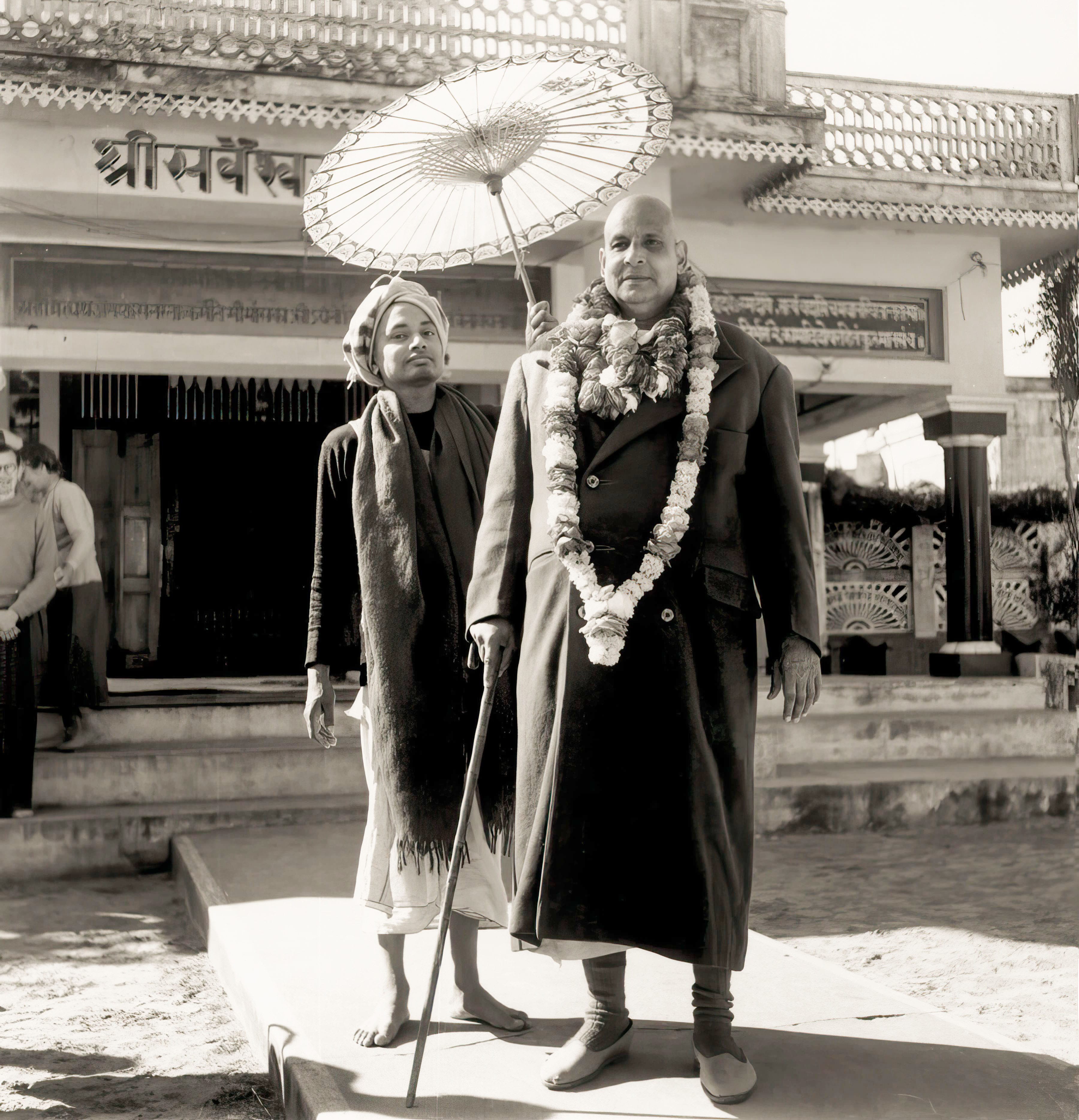
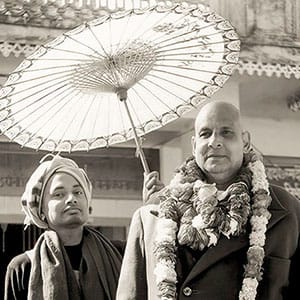
The Guru-Shishya Tradition – Symbolism of the umbrella
In the Guru-Shishya tradition, the sacred Guru-Disciple tradition, the umbrella has dual symbolism—both as umbrella and disciple (the word for both being “chatra”).
So, while the disciple holds an umbrella over the Guru, protecting him from the elements, the disciple is also himself the umbrella, protecting the Guru (the sacred Inner World) from the travails of the outer world through devotion and service.
Here Swami Venkatesananda holds a ceremonial umbrella over Swami Sivananda.
-
 See full screen image
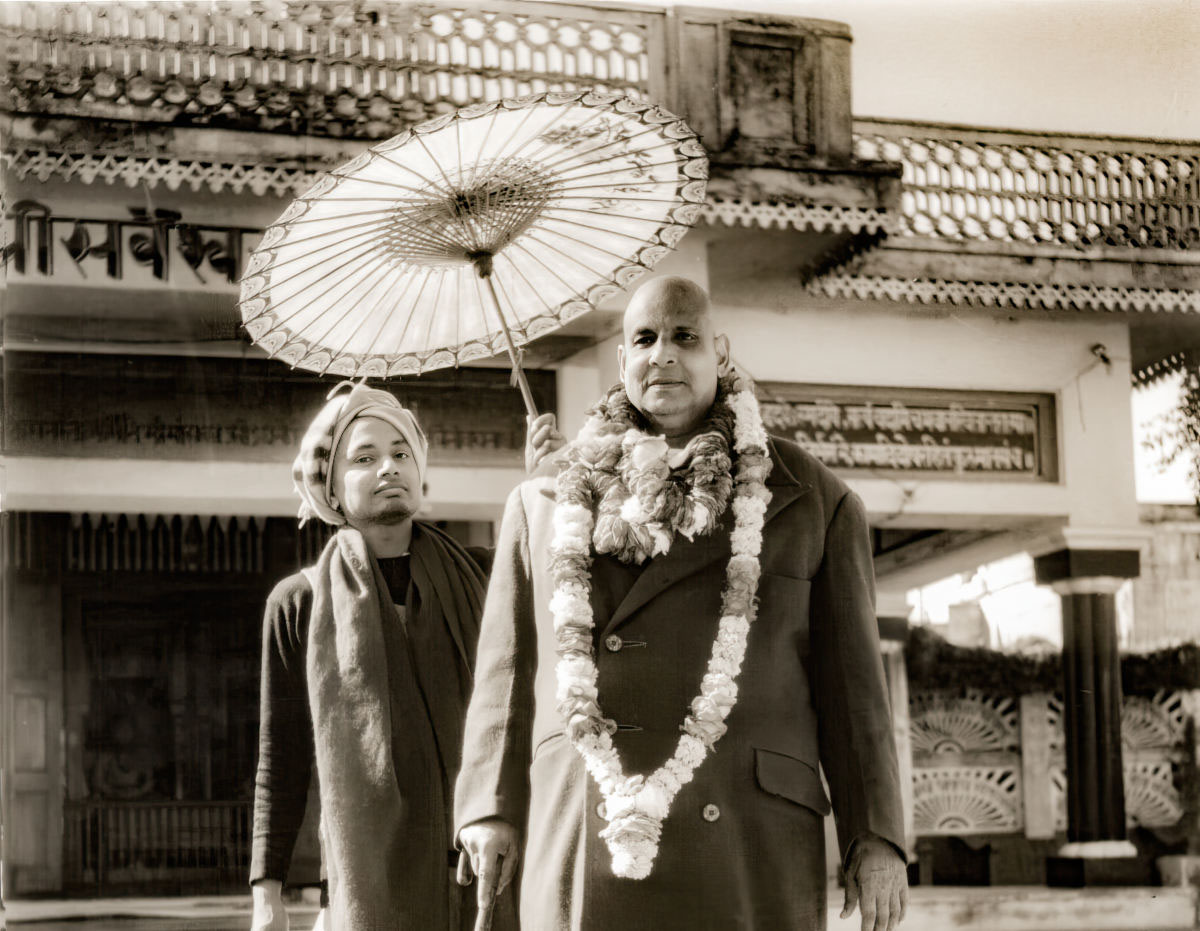
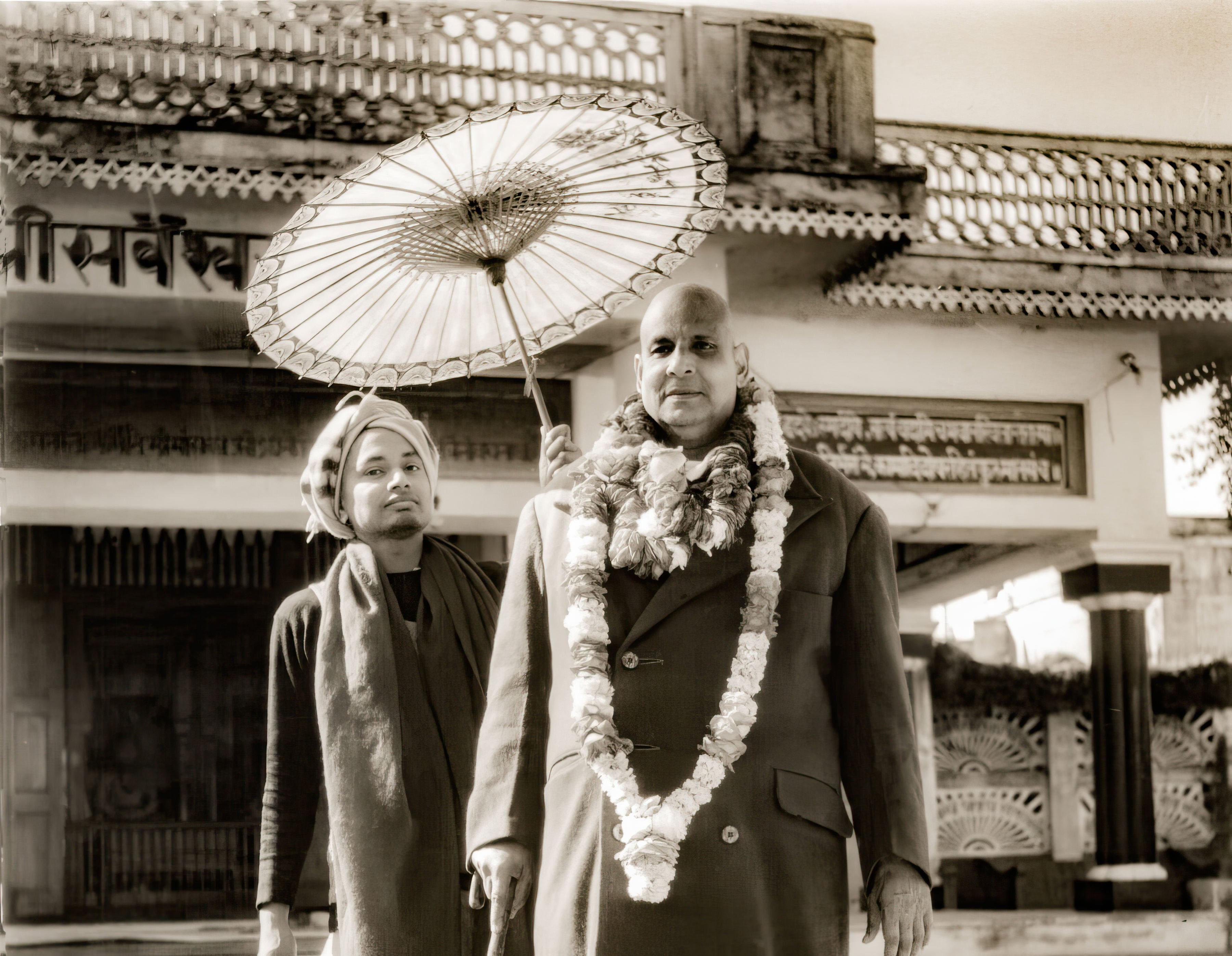
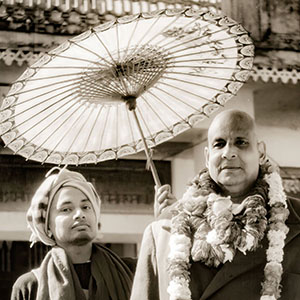
The Guru-Shishya tradition – Symbolism of the umbrella 2
The same photo—a closer look.
-
 See full screen image
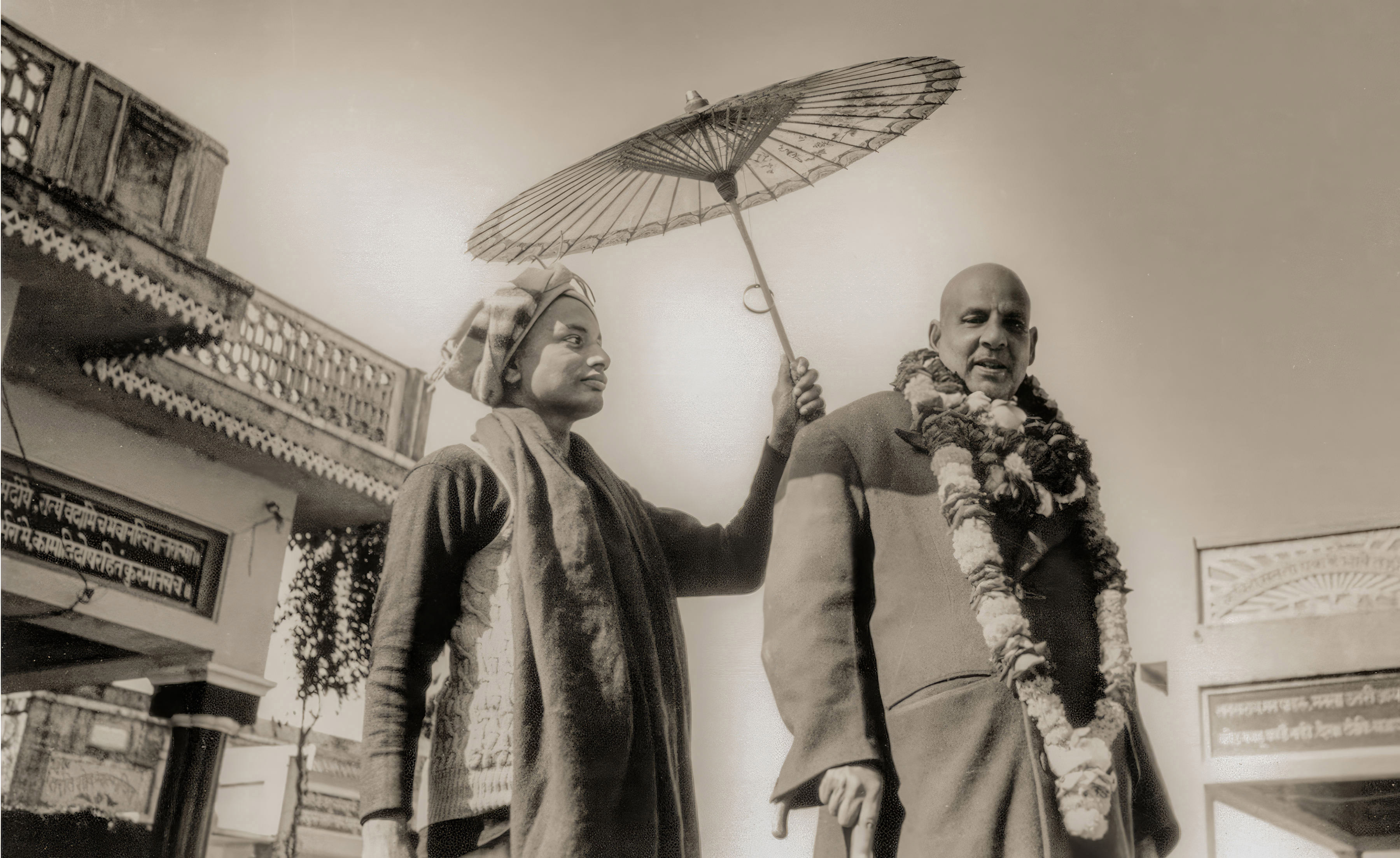
The Guru-Shishya tradition – Symbolism of the umbrella 3
The same scene shot from a different angle.
-
 See full screen image
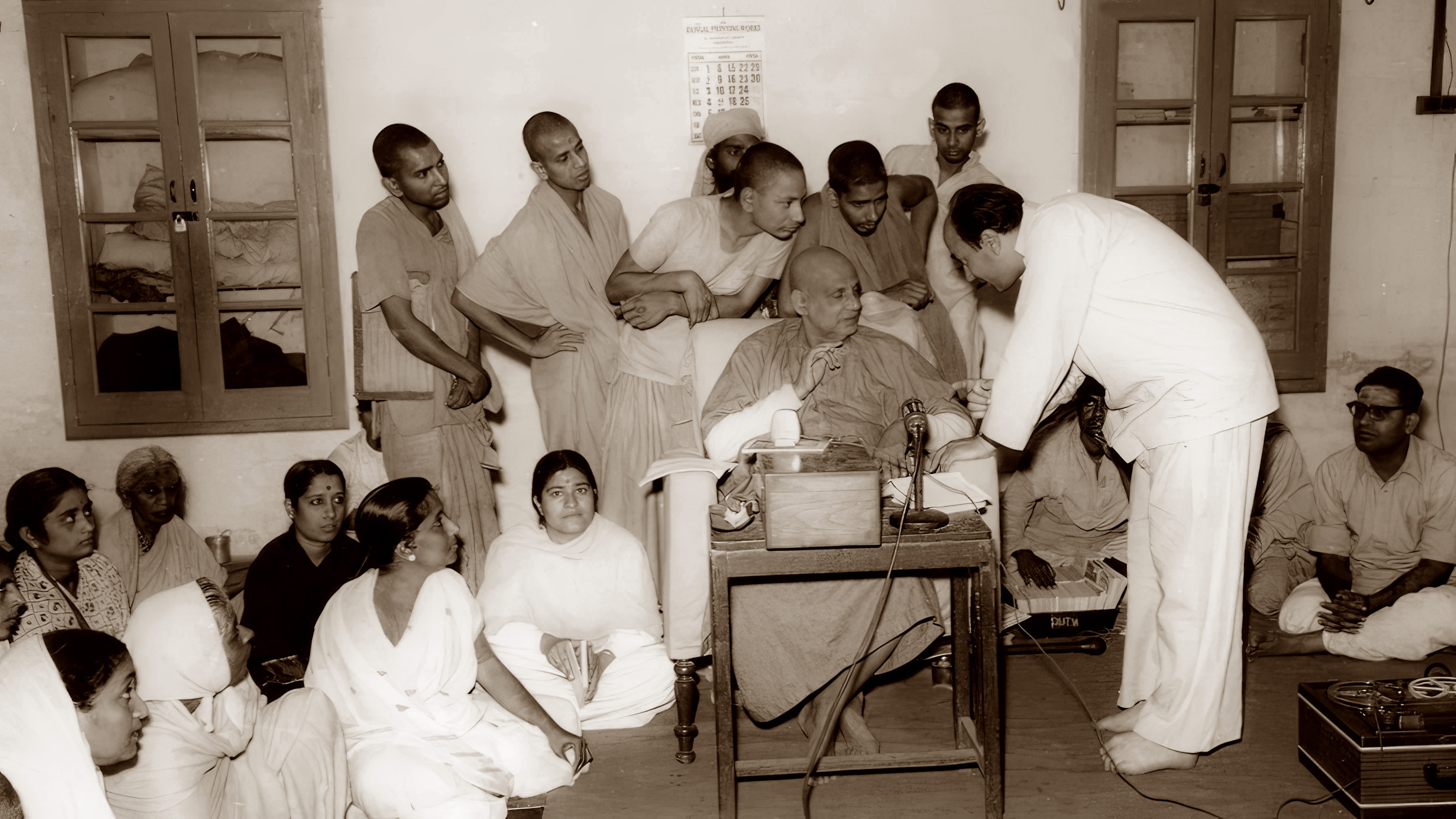
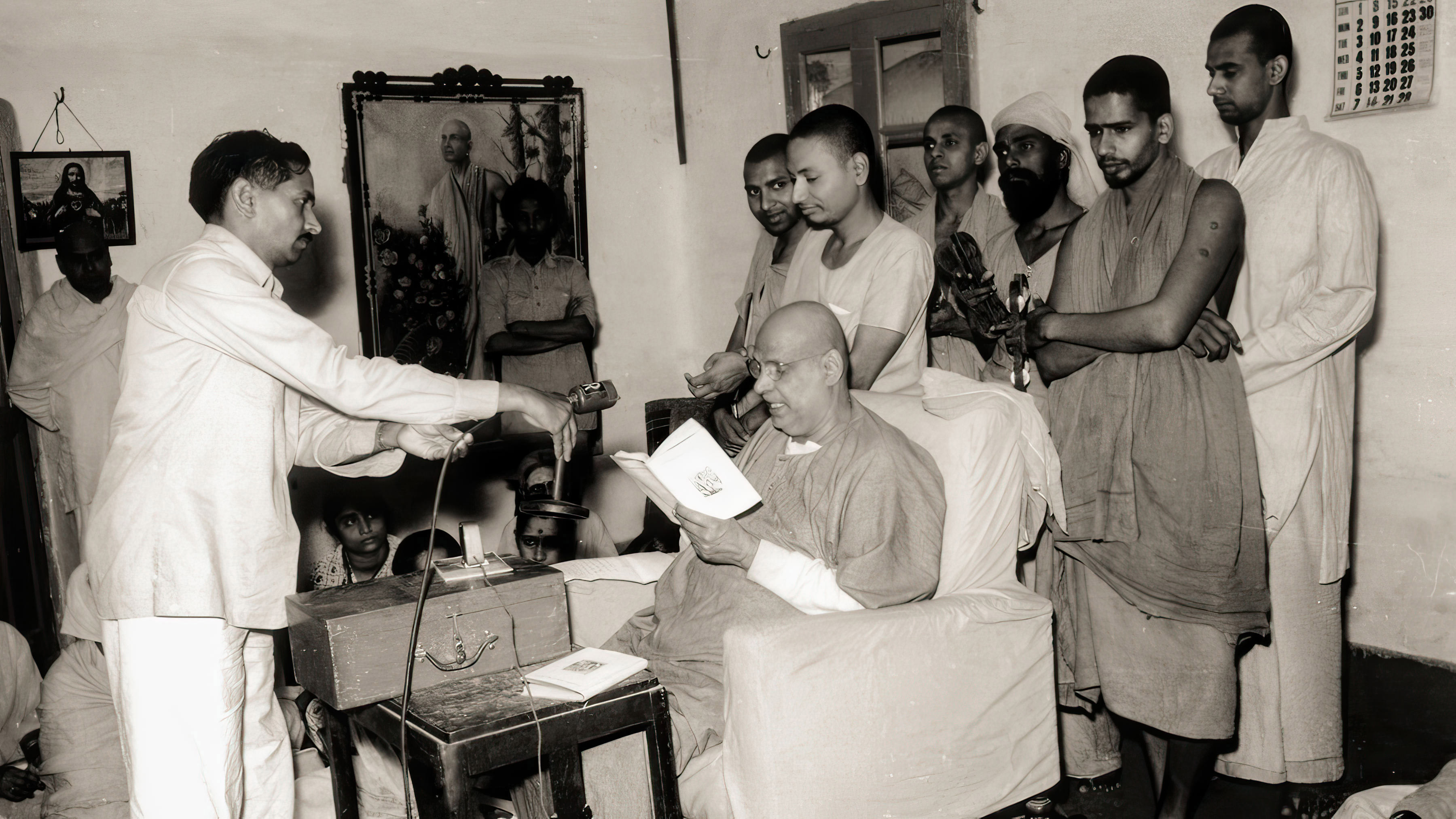
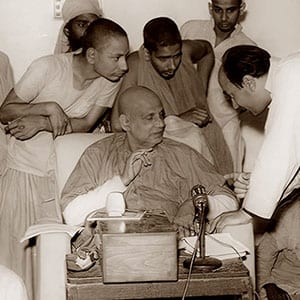
Swami Sivananda and devotees in preparation for recording session
Swami Sivananda was quick to adopt any technology that would allow him to reach a wider audience with the message of Divine Life. Here he prepares for a recording session featuring a short talk and the chanting of Kirtans. Swamis Venkatesananda and Satchidananda lean in closely to hear the instructions from the recording engineer and Swami Sivananda-Hridayananda is seated at his feet, second from his right.
-
 See full screen image
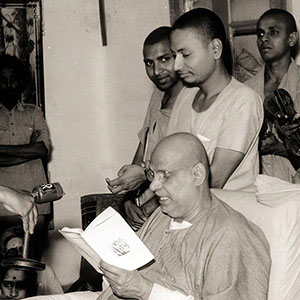
Recording in session
-
 See full screen image
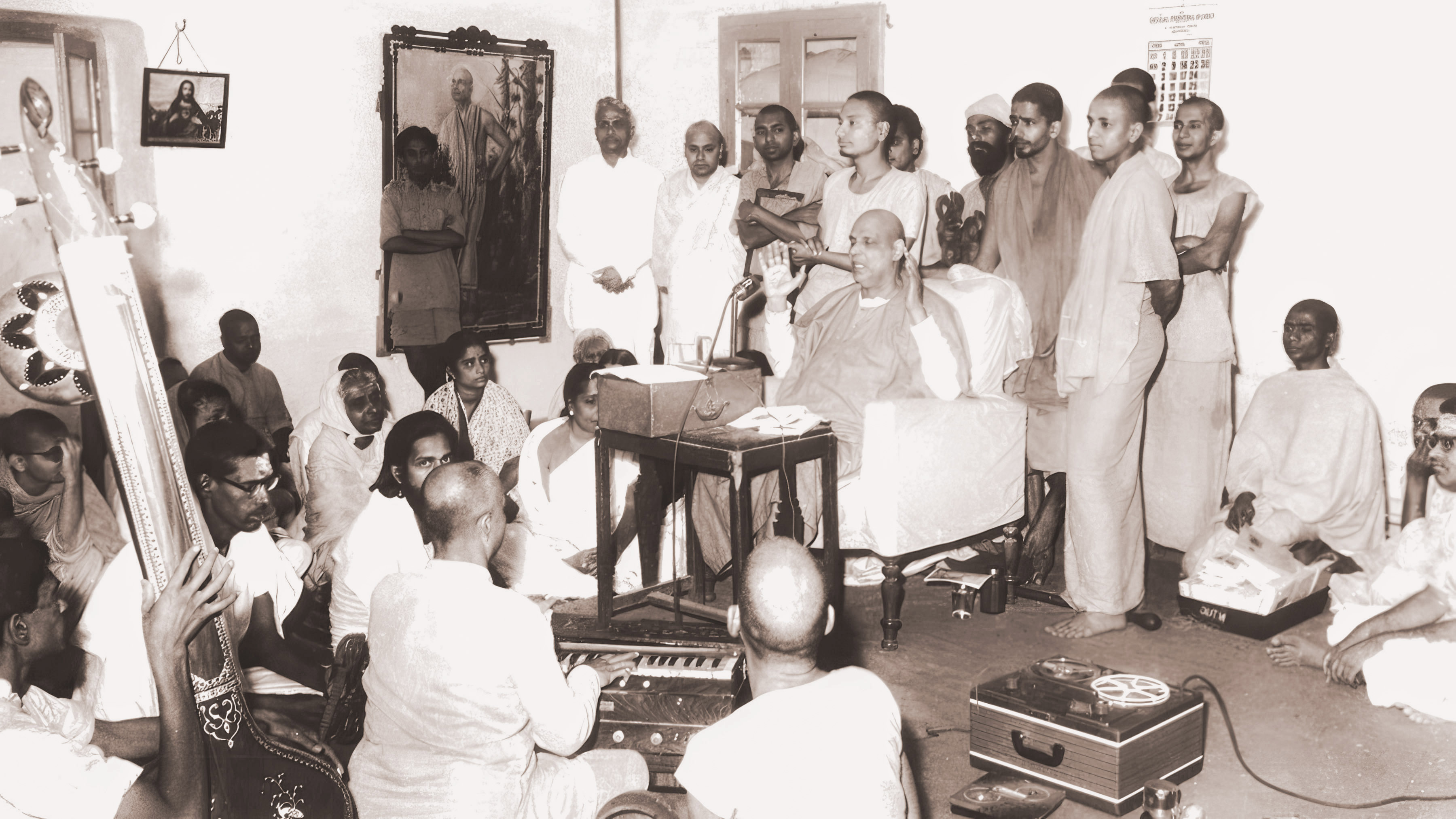
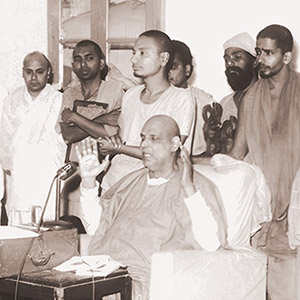
Recording in session 2
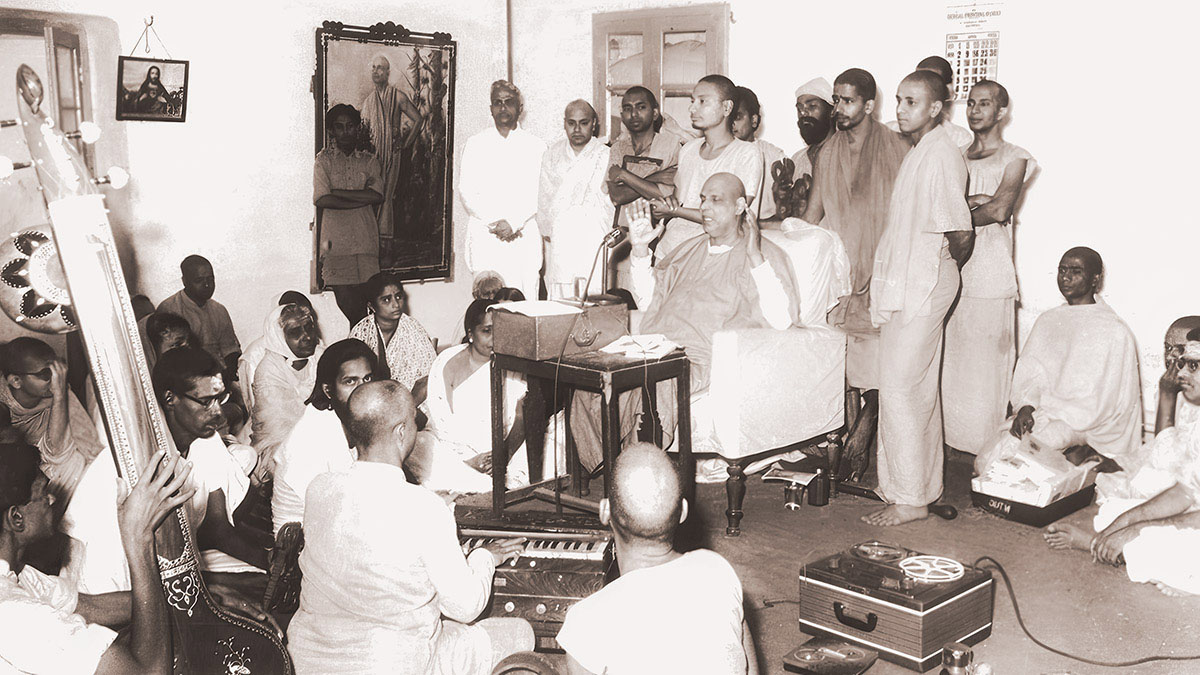
Swami Sivananda leads the chanting of Kirtans accompanied by the tampura and the harmonium played by Swami Nada Brahmananda, a master musician.
-
 See full screen image
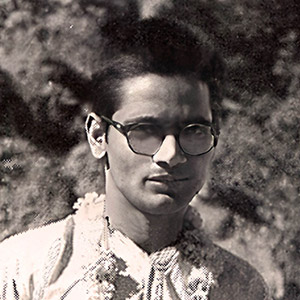
Devotees Swami Sivananda with Swami Omkarananda
Swami Omkarananda came to the Ashram when he was only seventeen, yet even at that tender age his keen intelligence and dedication were evident to Swami Sivananda. His literary skills shone and he, along with several other young sannyasin devotees, worked tirelessly preparing Swami Sivananda’s words for publication. In 1953, Swami Sivananda placed him in charge of the ashram press, a role a the heart of the Divine Life Mission.
-
 See full screen image
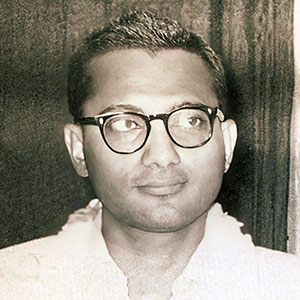
Swami Sivananda with Swami Shivapremananda
Swami Shivapremananda was another of those bright and dedicated young sannyasin devotees who came to Swami Sivananda in the in the 1940s, helping to craft his message for the world. In 1945, at the age of nineteen, he was supple clay in the loving hands of the Master who molded him into an editor, author and later a teacher, carrying Swami Sivananda’s message to North and South America where he founded centers for his teaching in numerous cities. He also was the editor of the Divine Life Society’s journal, Wisdom-Light from its inception in 1949.
-
 See full screen image
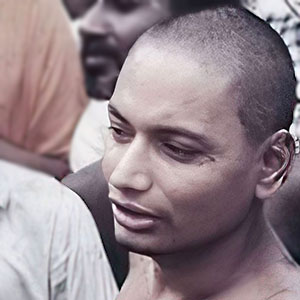
Devotees offer Arati to Swami Sivananda
For a Master, the ardent fervor of devotees can sometimes onerous! Here as an eager crowd offers Arati to Swami Sivananda, Swami Venkatesananda appears to act as a buffer.
-
 See full screen image
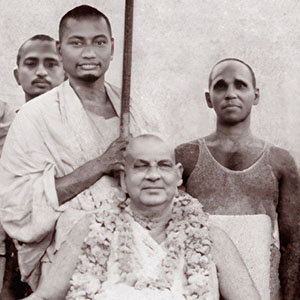
Formal Photo of Swami Sivananda and his Sannyasi devotees
Holding the umbrella is Swami Venkatesnanda ,holding the bag is Swami Satchidananda (Swami Sivananda’s personal attendant), while standing btween them is Swami Krishna (Swami Sivananda’s personal cook). Seated on the chairs are Swami Jyotirmayananda (first from the left), Swami Mdhavananda (second from the left), Swami Krishnananda (third from the left), Swami Chidananda (second from the right), Swami Vishnudevananda (far right), while standing next to him is Swami Paramananda, Swami Nadabrahmananda, and Swami Bhumananda are seated in front of Swami Sivananda.
-
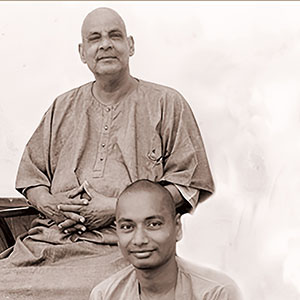 See full screen image
Gurudev Sivananda and his disciple, Swami Venkatesananda
(more to fill in about Swamijis service of Sivananda)
Second Draft
(Note to Richard: This photo was taken at the same time as photo 112 which includes Swamiji’s homeopathic Guru, Swami Achintyananda–should we place them together?)
Swami Sivananda and Swami Venkatesananda
He wrote of his Beloved Disciple:
“Crest-Jewel of my Mission, the resplendence of my work—will I ever see anyone shine brighter than he, Swami Venkatesanandaji? Surely none have I seen so far.” Swami Sivananda
-
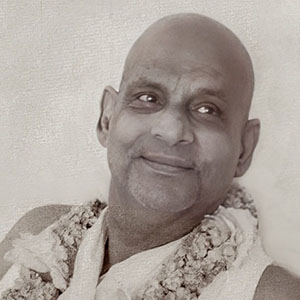 See full screen image
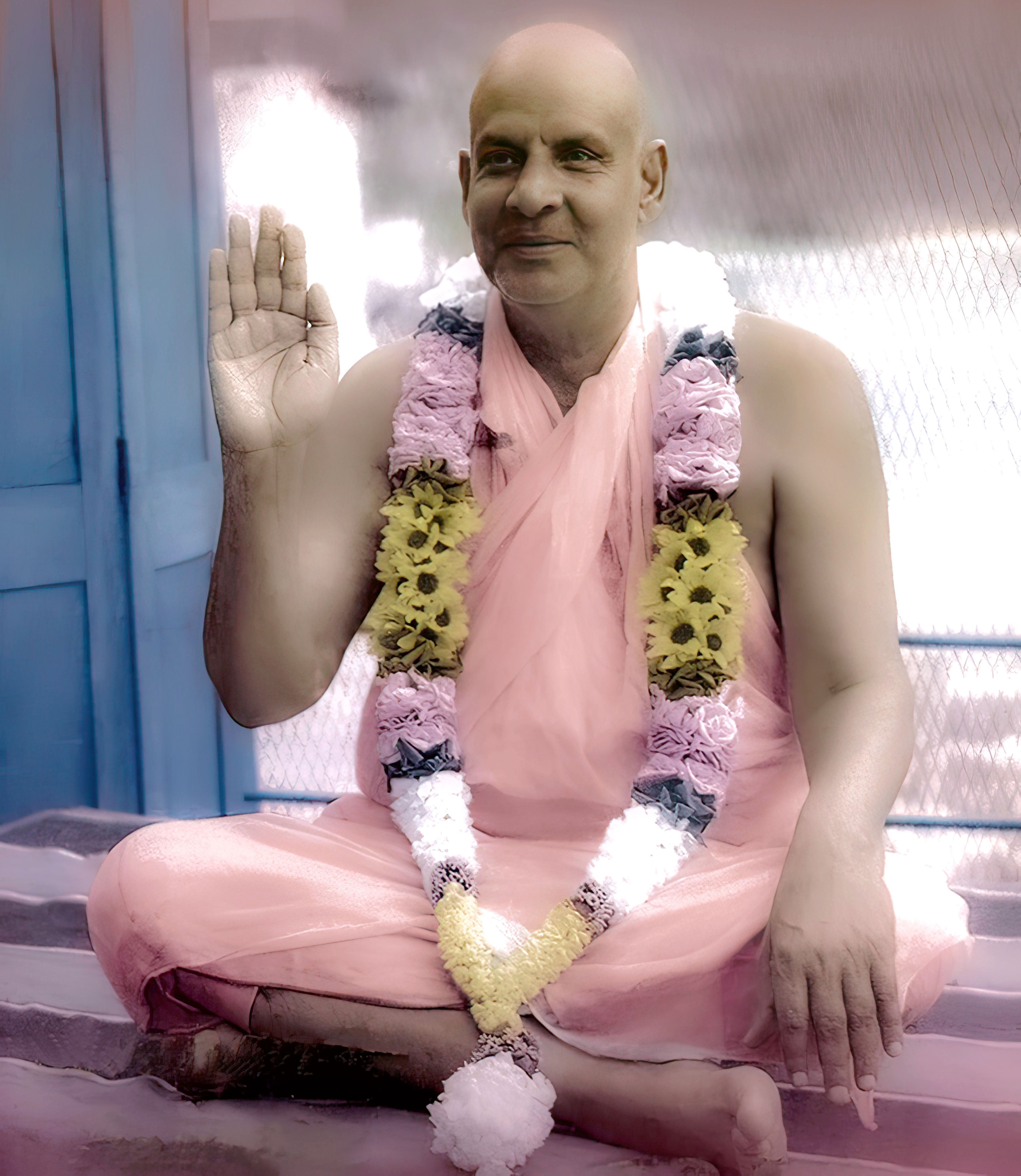
A candid smile from Swami Sivananda sitting in chair.
Second draft
Swami Sivananda’s blessings came in so many forms: perhaps a letter, or an awakening passage in one of his books, but most precious to his devotees was his radiant smile, penetrating the heart and sealing itself in memory.
-
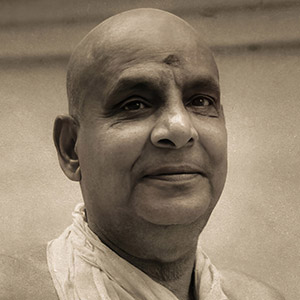 See full screen image
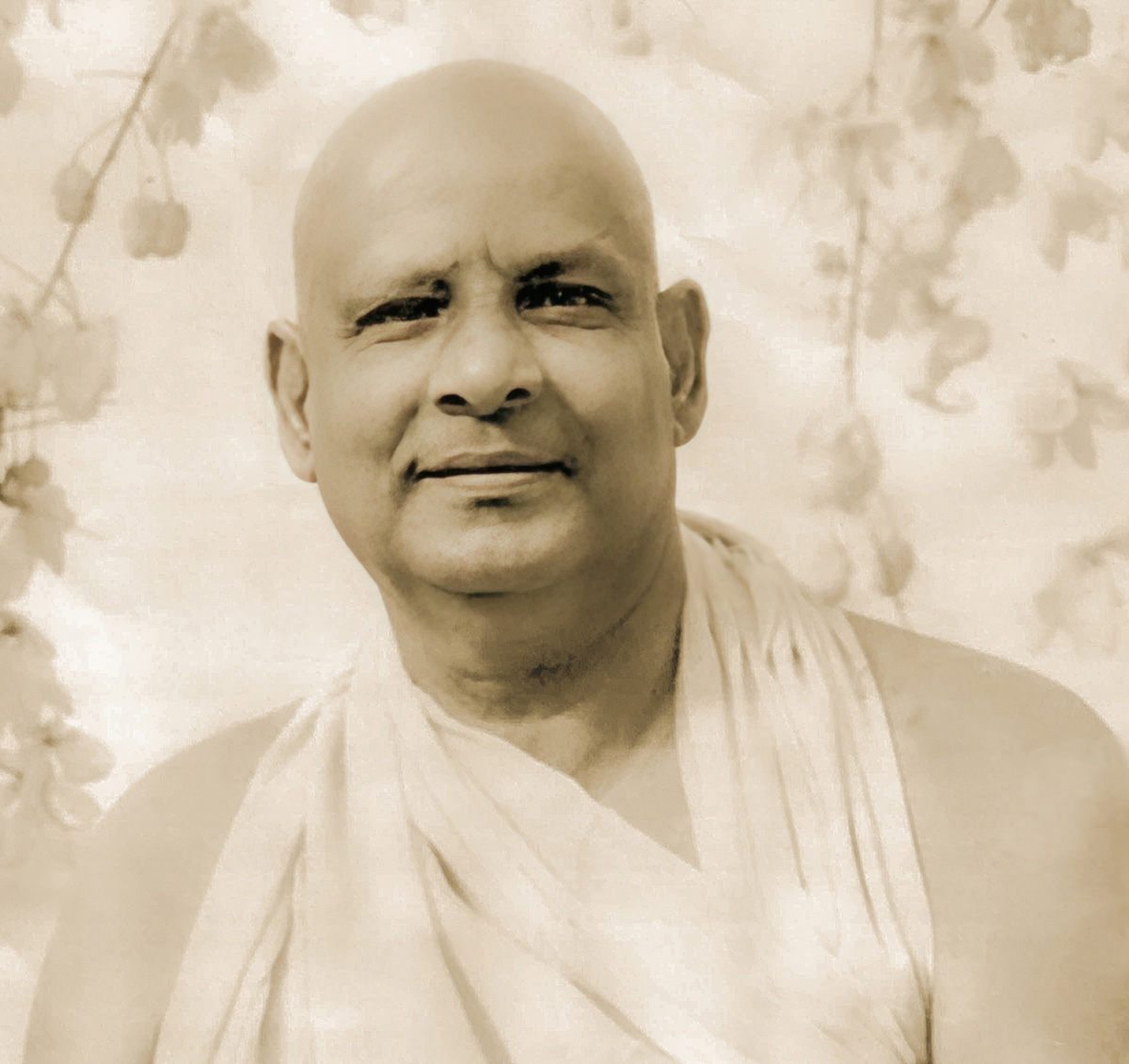
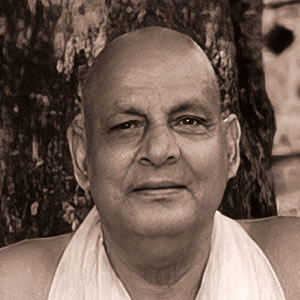
Portrait of Swami Sivananda, beautifully capturing his loving compassion
-
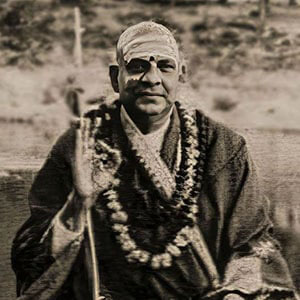 See full screen image
This is one of those classic iconic photos of Swami Sivananda and his disciples that you’ll find many places online. It’s also been used as a photo for Swami Sivananda’s Yoga-Vedanta Forest Accademy, with Swami Sivananda sitting elequently showing the Gyan mudra while some of his main disciples sit upright with ancient texts and Ganges Holy Water water pots. Sitting from left to right, Swami Venkatesananda, Swami Krishnananda, Gurudev Swami Sivananda, Swami Chidananda, and Swami Satchidananda
Second draft
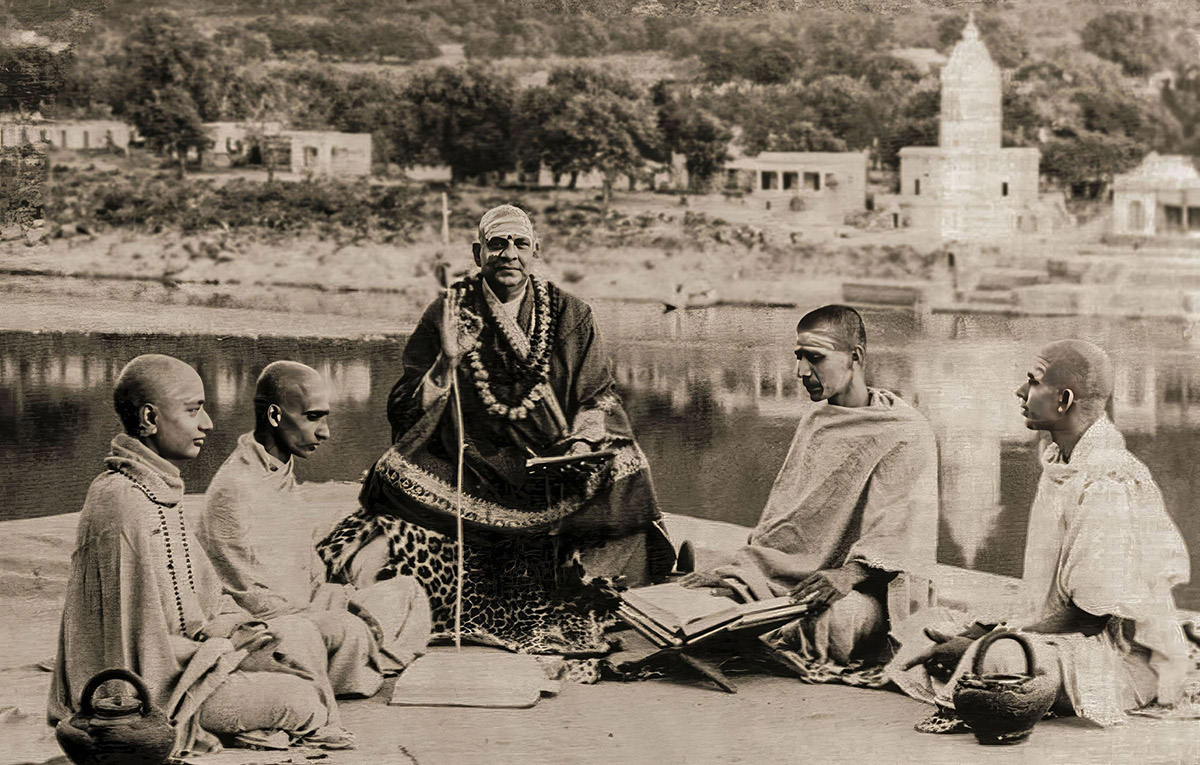
Swami Sivananda and disciples recreate iconic tableau of Adi Shankaracharya
In this photo, Swami Sivananda poses with four of his close disciples recreating the classic scene with Adi Shankaracharya and his disciples: the Master sits on a tiger skin, holding a staff, his right hand in Ghan or Chin mudra; the disciples are pictured with Kamandalus (water pots made from gourds), holy texts open for study, and all with holy ash (vibhuti) on their foreheads. From left to right: Swami Venkatesananda, Swami Krishnananda, Swami Sivananda, Swami Chidananda and Swami Satchidananda.
-
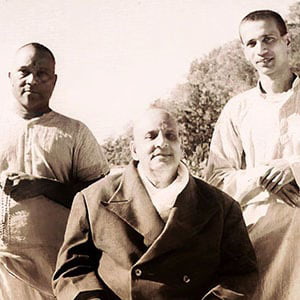 See full screen image
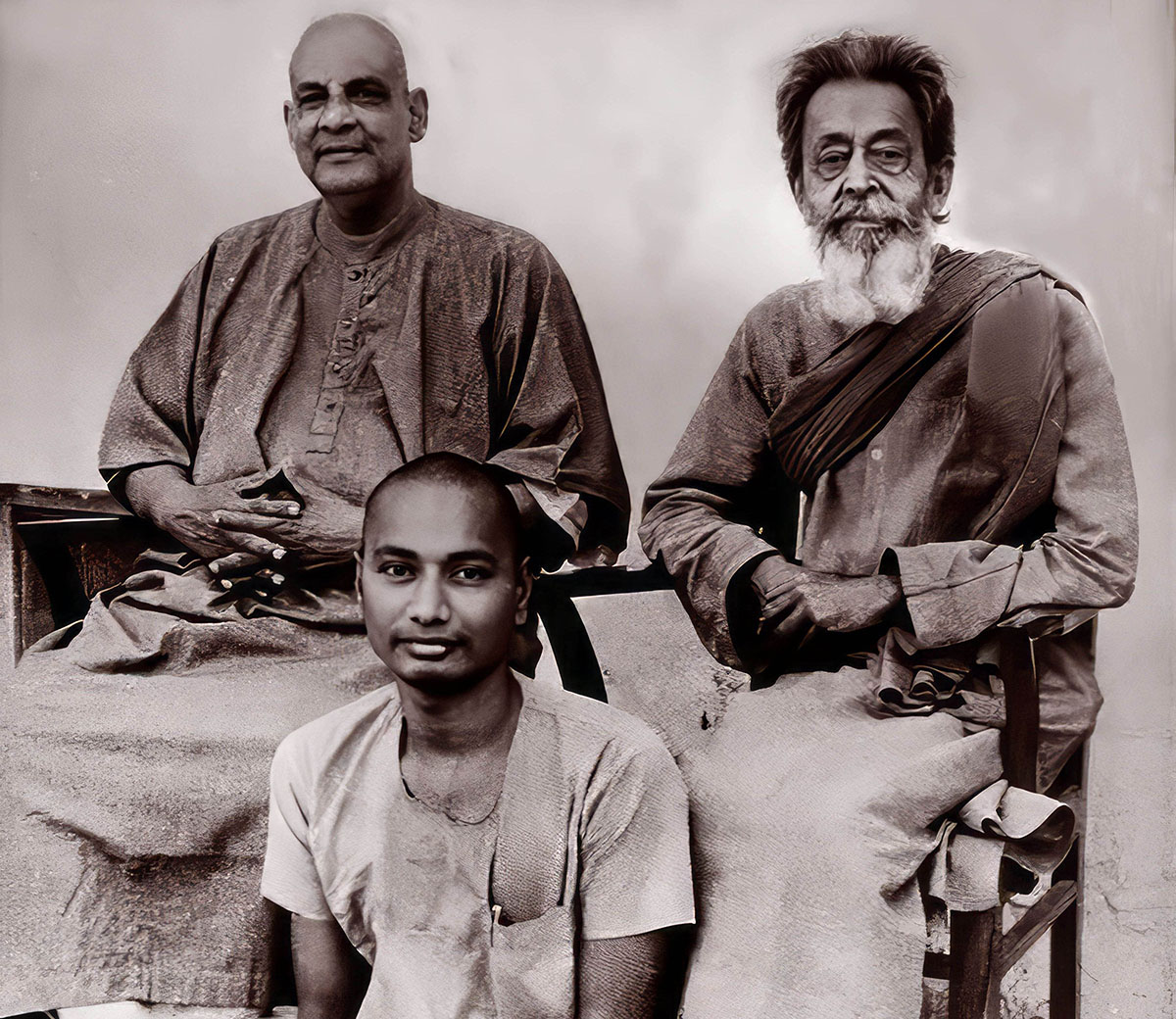
Swami Sivananda seated with Swami Paramananda on his left, and Swami Chidananda to his right.
(This would be a good place to emphasize the importance of Swami Paramananda to Sivananda’s mission.
Second draft
Swami Sivananda is seated between two of his senior disciples: Swami Paramananda on the left and Swami Chidananda on the right. Both were vital to Swami Sivananda’s mission. Swami Paramananda joined him in the Swarg Ashram days and was the meticulous organizer of the All-India Tour in 1950. Swami Chidananda took many roles including teaching in the Yoga Vedanta Forest Academy from its inception in 1948 and later carrying the responsibility of General Secretary of the Divine Life Society.
-
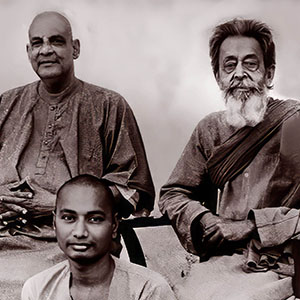 See full screen image
(fill in)
Second draft
Swami Venkatesananda sitting at the feet of Swami Sivananda and his homeopathic Guru, Swami Achintyananda
Swami Venkatesananda’s meeting with Swami Achintyananda saved his life. He had gone across the Ganges to pick up medicine for an Ashram swami and Swami Achintyananda noticed that he was himself ill, diagnosing severe aluminum poisoning. (Swamiji used to boil tea in an aluminum pot for much of the night while he worked on Swami Sivananda’s manuscripts.) Swami Achintyananda prescribed remedies but added that for them to be effective, he would also need to drink a cup of fresh milk each day. Swami Venkatesananda replied that he could not ask Swami Sivananda for this special treatment and so Swami Achintyananda himself bought him milk each day. Swamiji then trained as a homeopathic physician with this homeopathic Master and years later treated him during his own final illness.
-
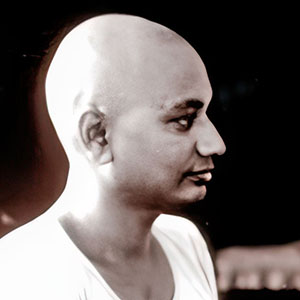 See full screen image
Swami Venkatesananda presenting a new Sivananda book publication to Sivananda. Might be a place to mention in brief the history of helping Sivananda with his book publications, writing down from memory, editing them into books, helping edit and proofing, etc. , as you think appropriate.
Swami Venkatesananda presenting a newly published book to Swami Sivananda
Swami Sivananda knew that books were powerful beacons, reaching readers who were not even aware of spiritual yearning. A book could change a life and therefore, he wrote each day. The ashram press could not begin to publish all his manuscripts and Swami Venkatesananda decided to do something about this. For over two years he only slept for two hours a night, preparing manuscripts for publication, solicitating donations from devotees to have them published, and sending them to presses all over India for printing—and all done in secret until the newly minted books could be presented to Swami Sivananda as a glorious birthday surprise.
Not only did Swami Venkatesanada facilitate the publication of Swamiji’s books, he also mentally recorded his private discourses with devotees each day. Afterwards, he would go to his room, type them out from memory, and preserve them in volumes for posterity.
-
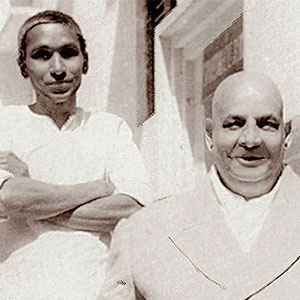 See full screen image
From left to right, Narasimhulu, Swami Sivananda, young boy, Swami Jnananda.
Good place to speak about the relationship with Narasimhulu?
Second draft
Seated: Swami Sivananda and Swami Jnanananda. Standing behind, Sri Veeraraghavulu (left) and Sri Narasimhulu (right). Sri Veeraraghavulu and Sri Narasimhulu oversaw the ashram press—Narasimhulu the printing and Veeraraghavulu the binding. Both joined Swami Sivananda at an early age and remained in the Ashram throughout their lives. Narasimhulu worked closely with Swami Venkatesananda and remained his close contact in the Ashram in all the years after Swamiji left Rishikesh. They remained fast friends right until Swami Venkatesananda’s death.
-
 See full screen image
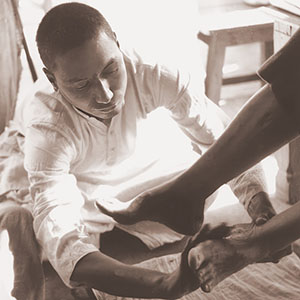
Pada-Puga 1
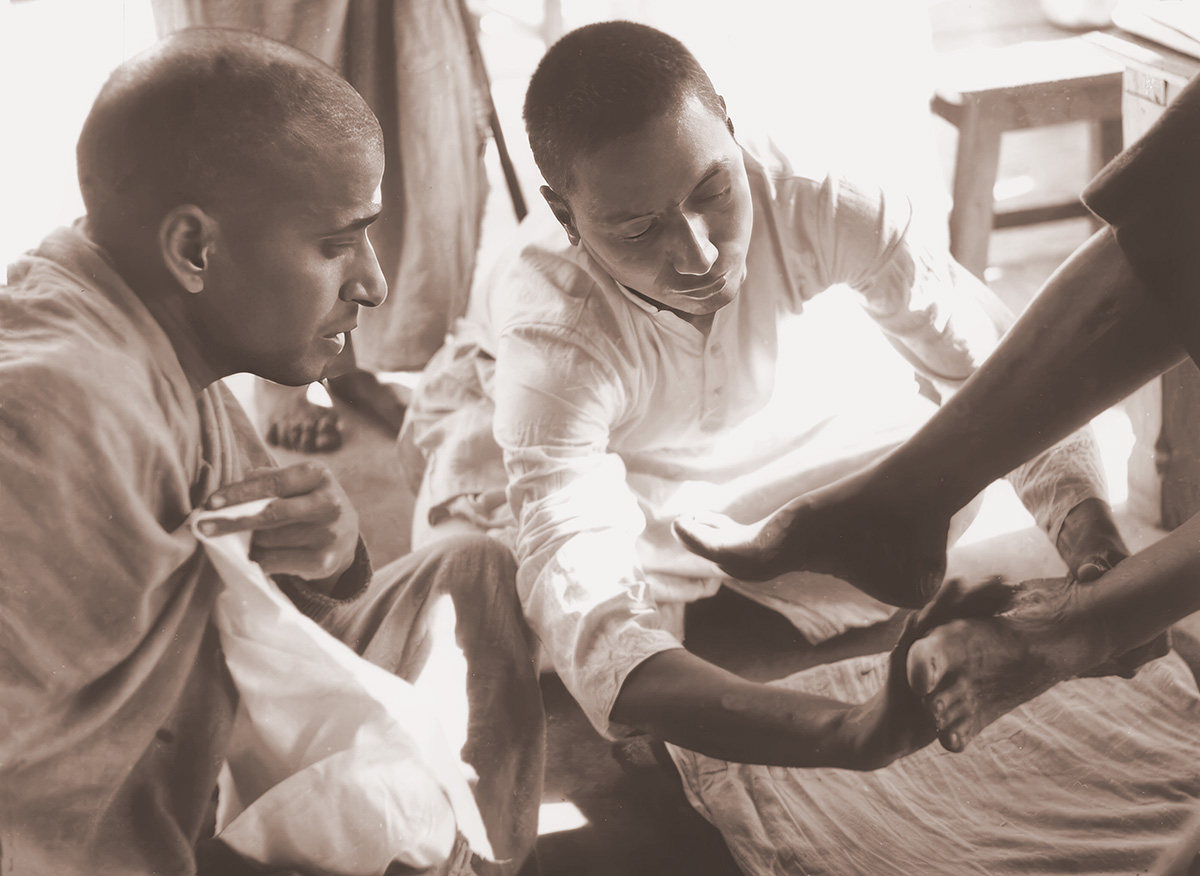
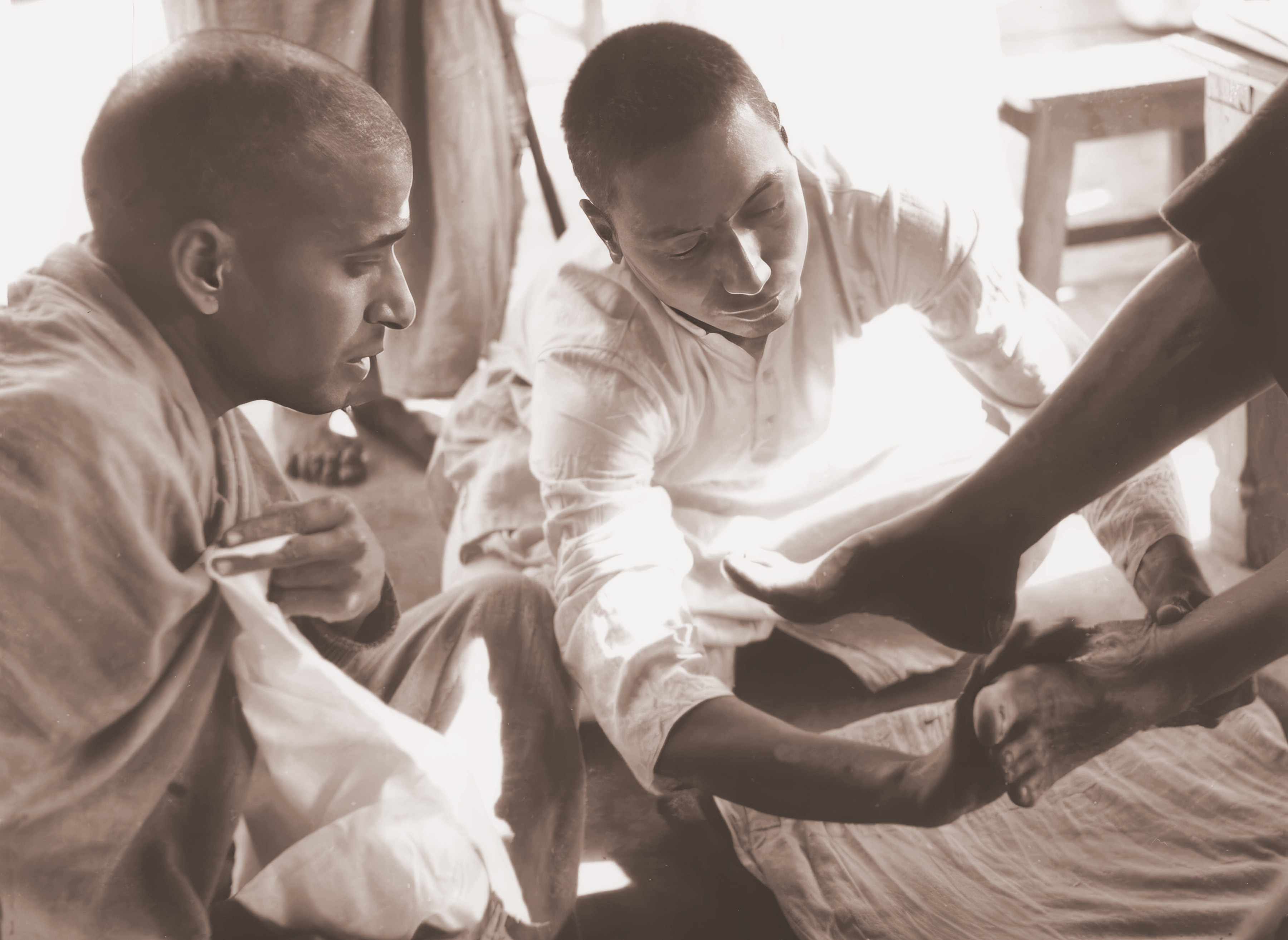
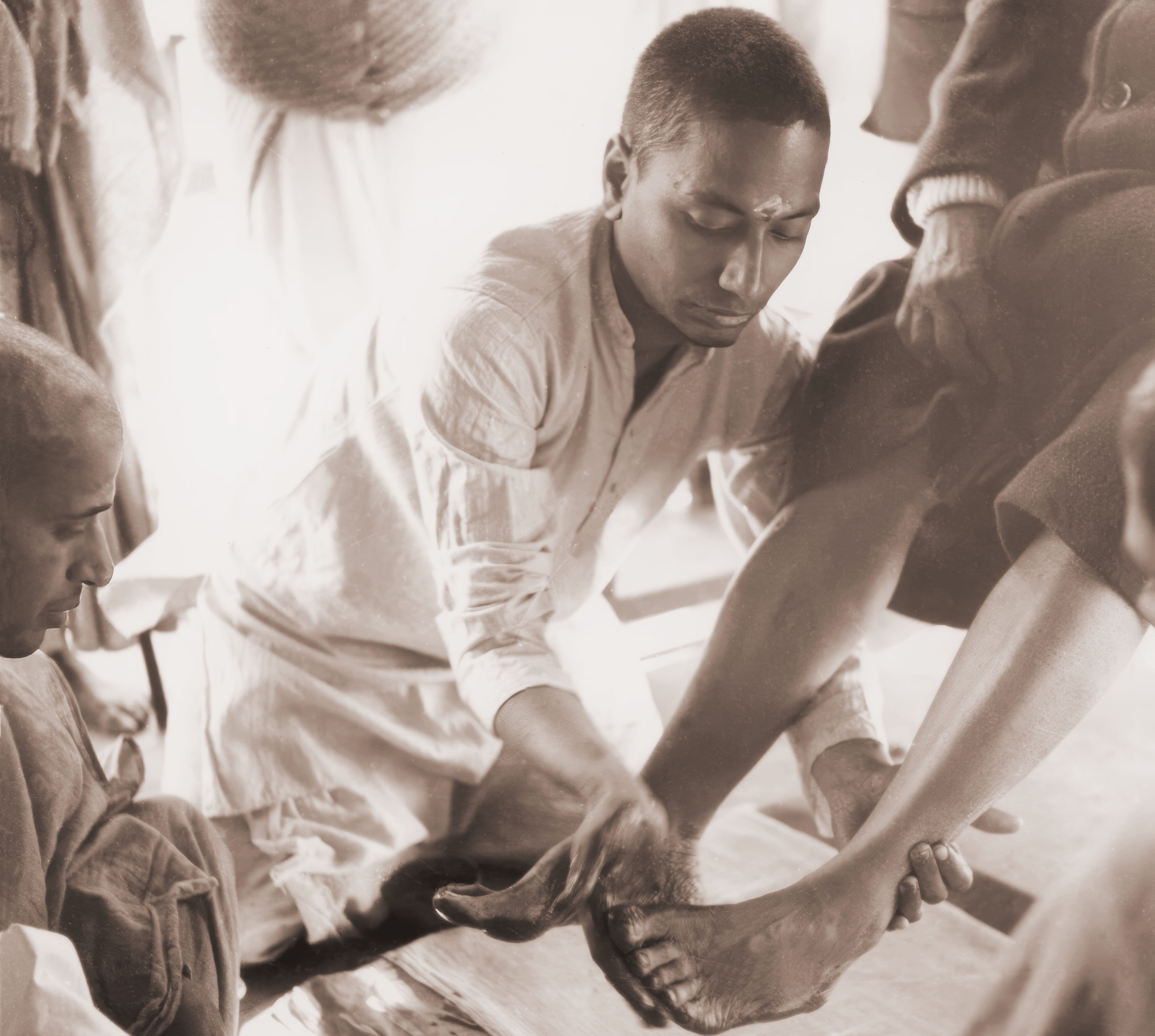
Swami Venkatesananda washes the feet of his Master, Swami Sivananda in preparation of Pada-puja.
Second draft
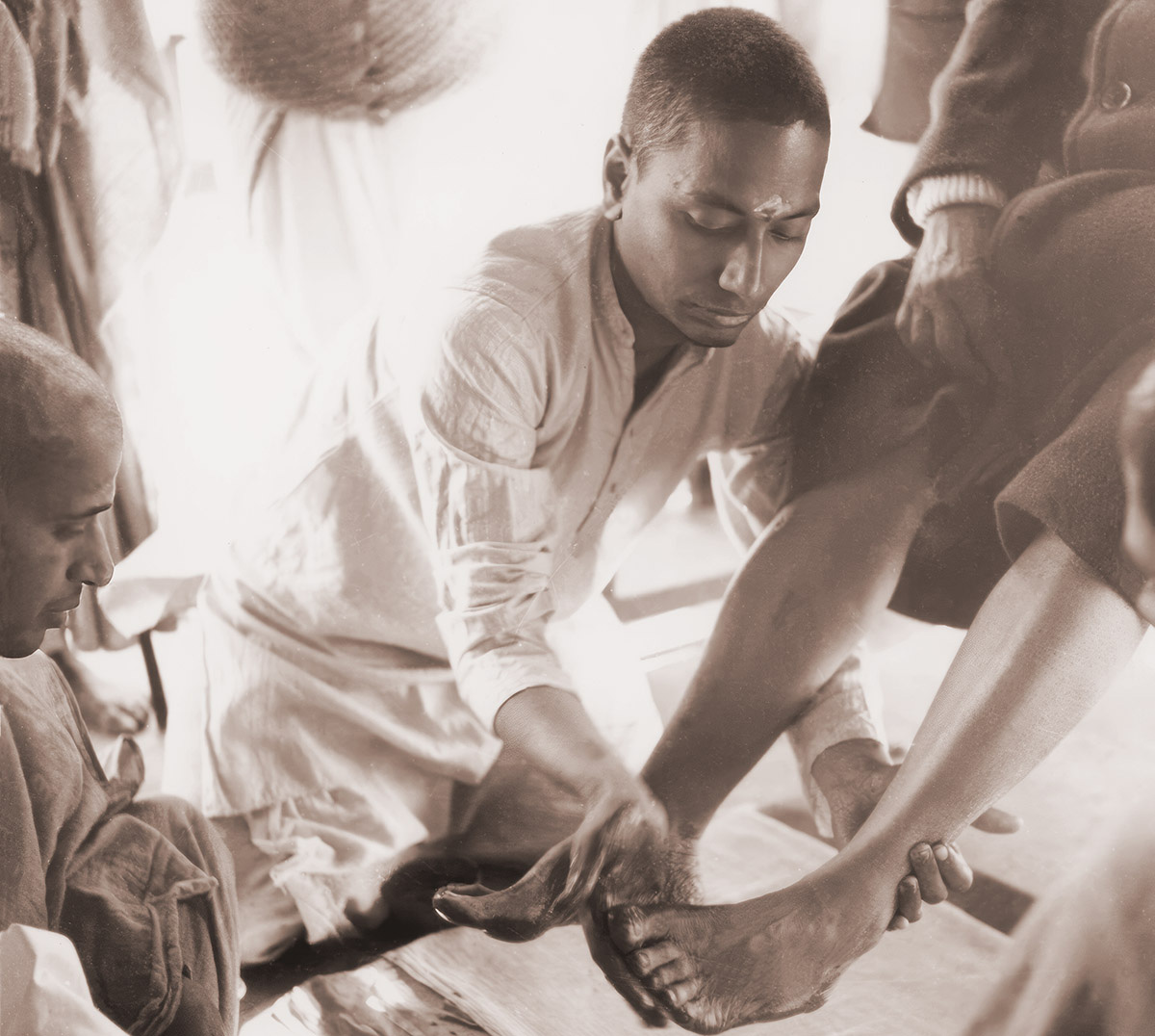
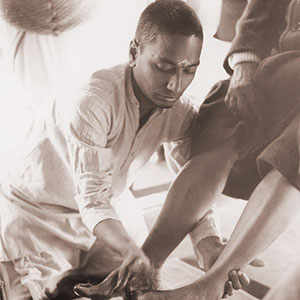
Swami Venkatesananda reverently coats the soles of his Master’s feet with sandalwood paste
Swami Sivananda gave Swami Venkatesananda the rare privilege of making an imprint of his feet in sandalwood paste onto a piece of cloth. This treasured memento–the actual footprints of his Master–remained one of Swami Venkatesananda’s most cherished possessions throughout his life.
-
 See full screen image
Pada-Puga 2
Second draft
Here Swami Venkatesananda, with gentle reverence, places his Master’s feet onto a cloth, completing the sacred relic of Swami Sivananda’s footprints in sandalwood paste.
-
 See full screen image
Pada-Puga 2
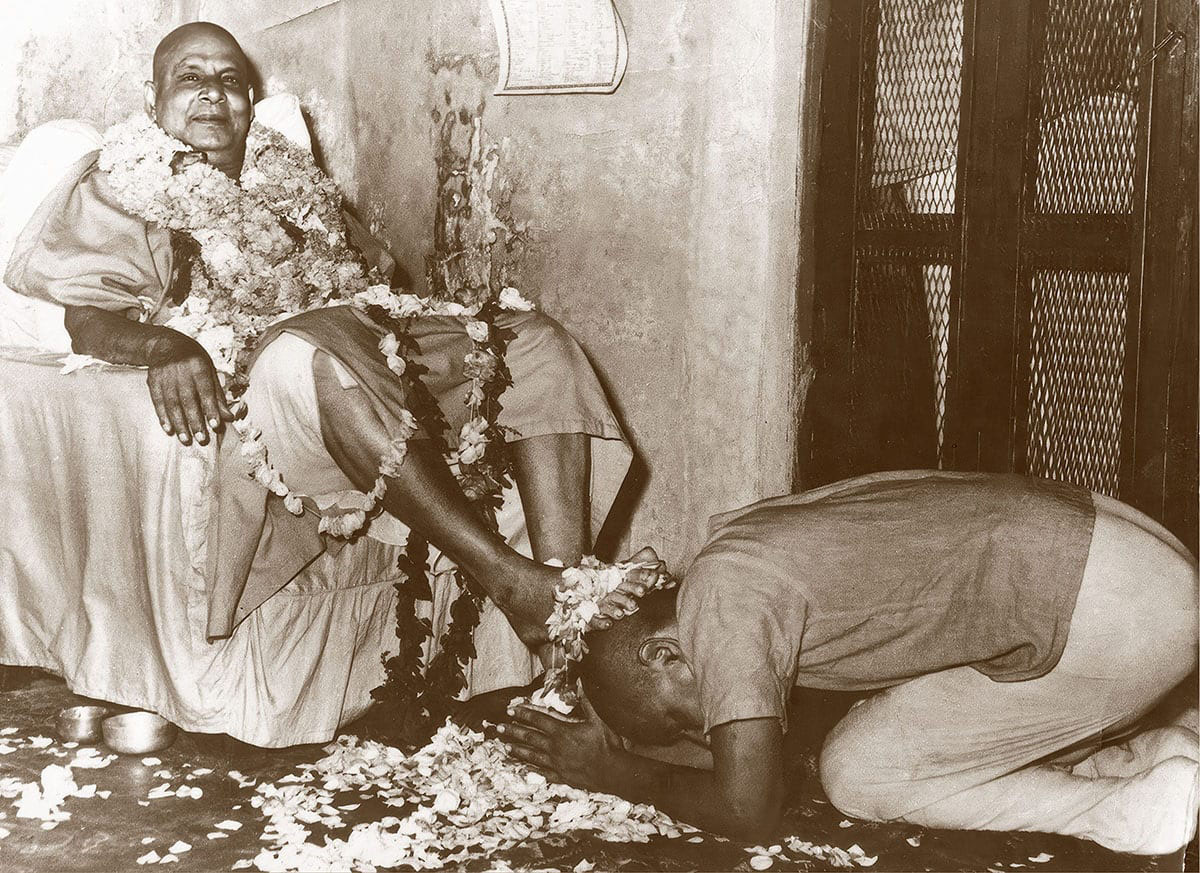
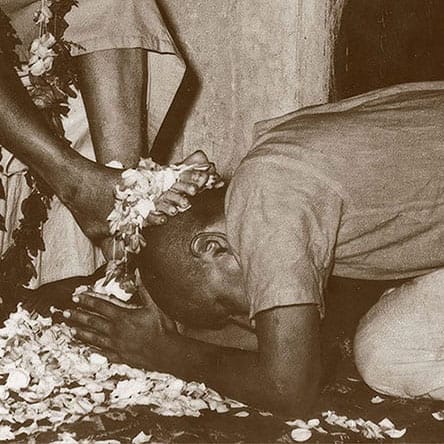
If you think about it, it really makes a great deal of sense thatg this photo happens to be Swami Venkatesananda’s favorite photo of Swami Sivananda.
Second draft
Swami Sivananda’s ultimate gesture of blessing
Swami Sivananda gave Swami Venkatesananda the title Siva-Pada-Renu (dust of Siva’s feet), and this photograph depicts that cherished title in life, as the Master literally crowns his disciple with the dust of his feet. The feet of a Master are conduits for sacred prana and by placing his feet directly on the devotee’s head, the Master channels this sacred prana into the Sahasrara, the thousand-petalled lotus chakra, crowning the head.
-
 See full screen image
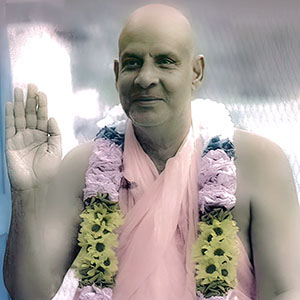
Sending HIm Off
Second draft
With every look and gesture, Swami Sivananda conveyed his love and blessing. Here, with his hand in Abaya Mudra and an expression of exquisite tenderness on his face, he blesses his devotees with reassurance and protection.
-
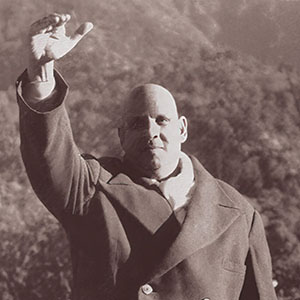 See full screen image
Swami Sivananda raising his hand as if in farewell
Swami Venkatesananda left Sivananda Ashram and his Master’s physical presence on March 9, 1961. Devotees in South Africa had asked to “borrow” him for six months to support the work of the Divine Life Society in Southern Africa, but both Guru and disciple knew that they would never meet again in this world. With a tear in his eye, Swami Sivananda told Swamiji that in all the 16 years he had served him in the Ashram, he had never said or done anything that displeased him. These words were a priceless gift for Swamiji, who had offered his life to his Master. Years later, he commented to friends: “That is enough — all I want in life.”
For the next 21 years he continued to serve him in everyone whom he met, in every country he visited, and in a strange full circle moment, this service ended in South Africa with his death on December 2, 1982. He had carried the spirit of his Master throughout the world, but his service outside Rishikesh ended where it began in 1961.
he had never said or done anything that displeased him.